The cornucopia (horn of plenty Myth Meaning & Symbolism
A divine horn, broken from a god, spills forth an endless bounty of nature's fruits, symbolizing the psyche's capacity for infinite nourishment and creative overflow.
The Tale of The Cornucopia
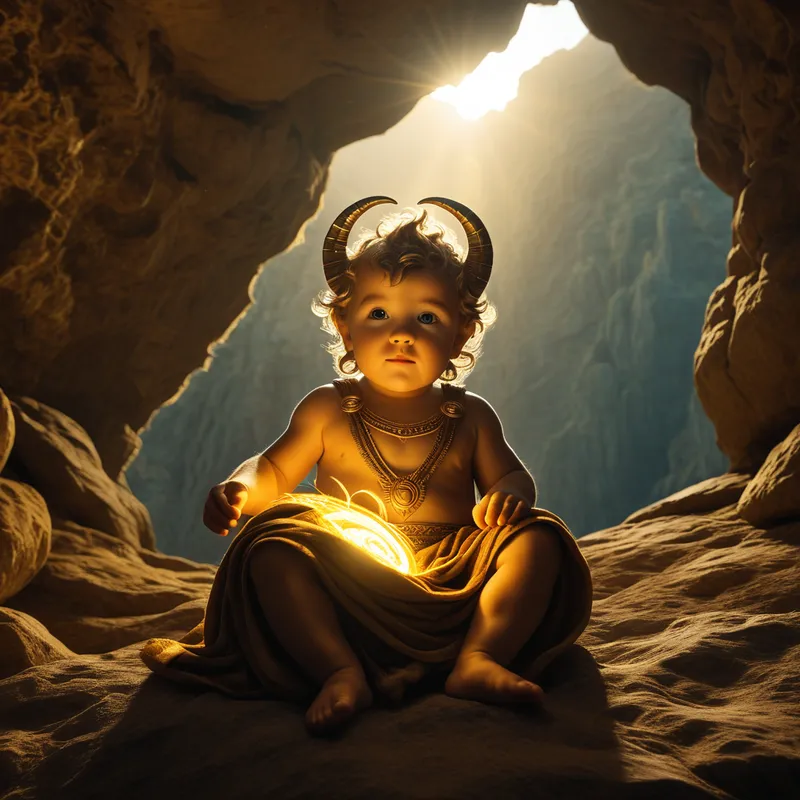
In the time before time, when the world was young and raw with the cries of newborn gods, a great tyranny cast its shadow. The Titan Kronos, fearing a prophecy, swallowed his children whole. But his wife, Rhea, her heart a secret well of defiance, hid her youngest son. She wrapped a stone in swaddling clothes and gave it to her husband’s gaping maw, while the true child, a spark of thunder named Zeus, was spirited away to the hidden folds of a Cretan mountain.
There, in a cave veiled by whispering oaks and the scent of wild thyme, the infant god was given to the care of gentle spirits. His cries were soothed by the sweet melodies of the Kouretes, who danced and clashed their shields to mask the sound from his vengeful father. But his true sustenance came from a being of profound, earthy grace: the she-goat Amalthea. Her coat was the color of storm clouds at dusk, and her eyes held the deep patience of the earth itself. From her udder flowed milk richer than any nectar, nourishing the future king of the gods.
Zeus was a vigorous child, his divine strength burgeoning with each passing day. In a moment of playful, clumsy might, he reached for the goat, his tiny hands grasping not her side, but one of her magnificent, spiraling horns. With a sound like a cracking oak branch, the horn broke off at its base. A silence fell in the cave. Amalthea did not cry out in pain, but merely bowed her head, as if in acceptance of a strange destiny.
Then, the miracle unfolded. Where there should have been marrow and bone, there was a hollow, and from that hollow, a cascade began. Not of blood, but of life itself. Ripe figs tumbled forth, their purple skins splitting with sweetness. Golden sheaves of wheat whispered as they fell. Bunches of grapes, heavy with dew, plopped onto the soft earth. Flowers bloomed mid-air, and the scent of honey and ripe orchard fruit filled the cavern. The horn, now separate from its source, had become a vessel of endless, spontaneous generation—a horn of plenty. It was a gift born not from careful crafting, but from an accident of nurturing love and raw, nascent power. The brokenness was not an end, but the beginning of infinite giving.
Cultural Origins & Context
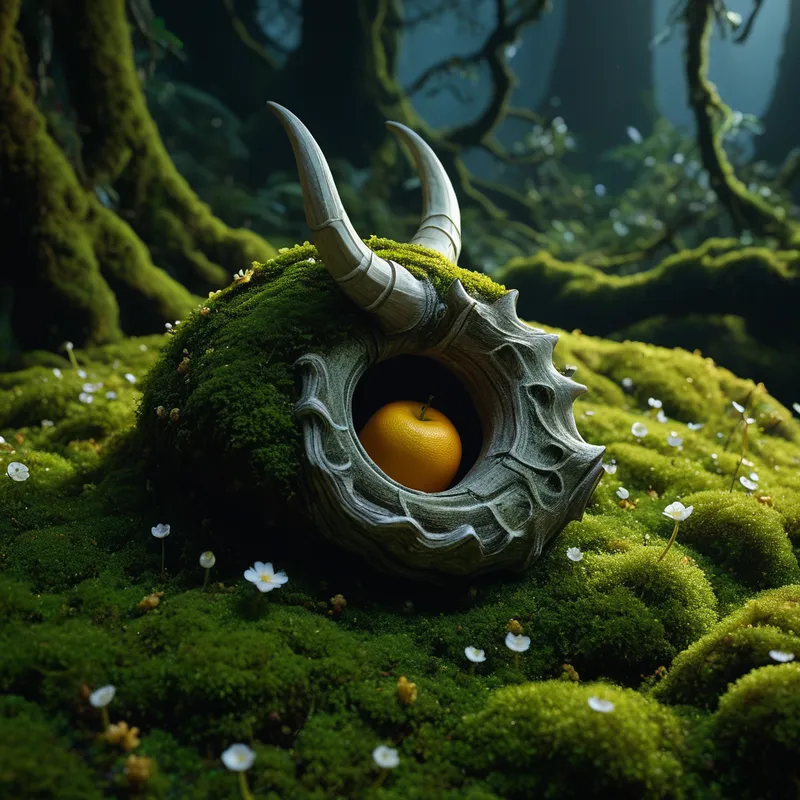
The cornucopia, or keras Amaltheias (horn of Amalthea), is a symbol whose roots are firmly planted in the soil of Greco-Roman antiquity, yet its branches reach into a universal canopy of human hope. While its most canonical telling is tied to the infancy of Zeus, variations abound. Some traditions suggest the horn belonged to the river god Achelous, broken off by Heracles in a struggle. This multiplicity points to its core function: it was less a fixed historical artifact and more a living, evolving symbol in the oral and artistic traditions of the Mediterranean.
It was a myth told not just in epic poetry but enacted in ritual and displayed in art. During the Thesmophoria, festivals dedicated to Demeter, and in the rites of Gaia, the image of the overflowing horn served as a potent prayer and a representation of desired agrarian bounty. It adorned coins, frescoes, and statues, often held by deities of fortune like Tyche or the Roman Abundantia. Its societal function was dual: it was a concrete symbol of hope for material security—good harvests, wealth, prosperity—and a metaphysical reminder that the divine world was the ultimate source of this nourishment.
Symbolic Architecture
At its heart, the cornucopia is an archetypal symbol of abundance, but its psychology is far richer than mere material wealth. It represents the paradox of generative brokenness. The horn is not filled by human labor; its bounty is innate and spontaneous, flowing from a sacred source.
The true cornucopia is not a trophy earned by conquest, but a gift revealed through a rupture in the ordinary course of care.
Psychologically, the horn symbolizes the nourishing, overflowing aspect of the Great Mother archetype—the Mother Goddess in her most benevolent form. Amalthea is the caregiver whose very substance transforms into everlasting provision. The breaking of the horn signifies a necessary separation: the child (consciousness, the ego) must differentiate from the primal source to come into its own power, but in doing so, it does not lose the source’s nourishment; it gains it in a new, portable, and limitless form. The horn becomes a symbol of internalized nourishment—the psyche’s own capacity to generate creativity, insight, and emotional wealth from within.
The Dreamer’s Resonance
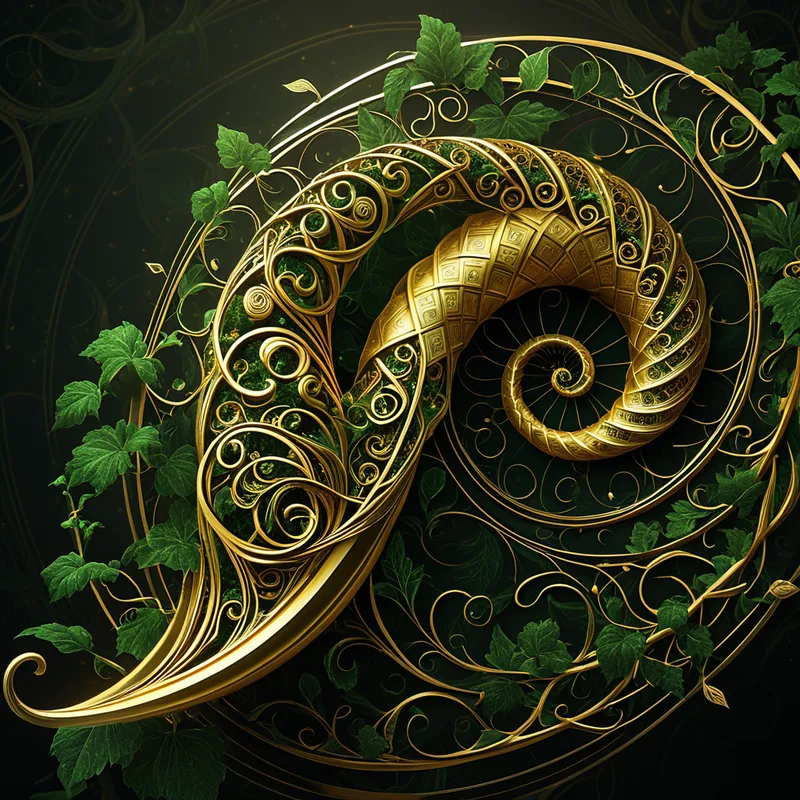
When the cornucopia appears in modern dreams, it rarely manifests as a classical Greco-Roman artifact. Instead, it appears in the dreamer’s native symbolic language. One might dream of a cracked vase in their grandmother’s attic that spills never-ending fresh water, or a torn backpack from which they can pull any tool they need. The somatic feeling is often one of relief, wonder, or awe, but sometimes anxiety—a fear that the flow will stop, or that they cannot contain it.
This dream signals a psychological process related to inner resource and trust. It often emerges when the dreamer feels externally depleted—burned out, creatively blocked, or emotionally starved. The cornucopia dream is the unconscious asserting, “The source is not out there; it is within the very fabric of your experience, even in what feels broken.” The conflict in the dream mirrors the myth: the bounty follows an act of rupture or breaking from an old dependency. The dreamer is being shown that their perceived lack or “broken” state (a failed project, a lost relationship, a personal flaw) may be the very hollow from which a new, unexpected kind of abundance can flow.
Alchemical Translation
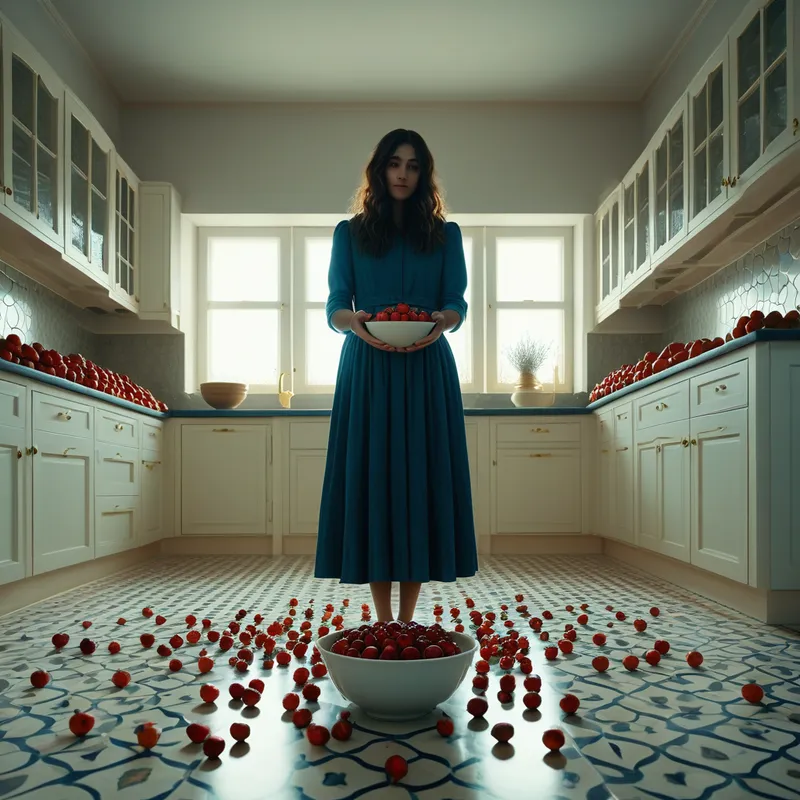
The alchemical journey modeled by the cornucopia myth is one of transmuting the caregiver complex into inner fecundity. We all internalize nourishing and depriving figures from our early lives. The process of individuation requires us to “break the horn” from the literal, external mother (or any primary nurturing source) and discover that its nourishing principle is now an internal possession.
The alchemical vessel is not forged in the fire of will, but discovered in the hollow left by surrender.
The initial state is one of passive reception (the infant Zeus suckling). The nigredo, or darkening, is the rupture—the feeling of loss, separation, or broken dependency. The albedo, or whitening, is the revelation that the hollow vessel itself is sacred. The rubedo, or reddening, is the continuous, overflowing generation from this vessel—the mature ego, having internalized the nourishing archetype, now becomes a source of creativity and abundance for itself and its world. For the modern individual, this translates to moving from seeking validation and sustenance purely from external roles, relationships, or achievements, to identifying and trusting one’s own inner, often unexpected, wellsprings of generative power. The horn teaches that our deepest abundance is not what we acquire, but what flows forth from the sacred hollow of our own transformed nature.
Associated Symbols
Explore related symbols from the CaleaDream lexicon: