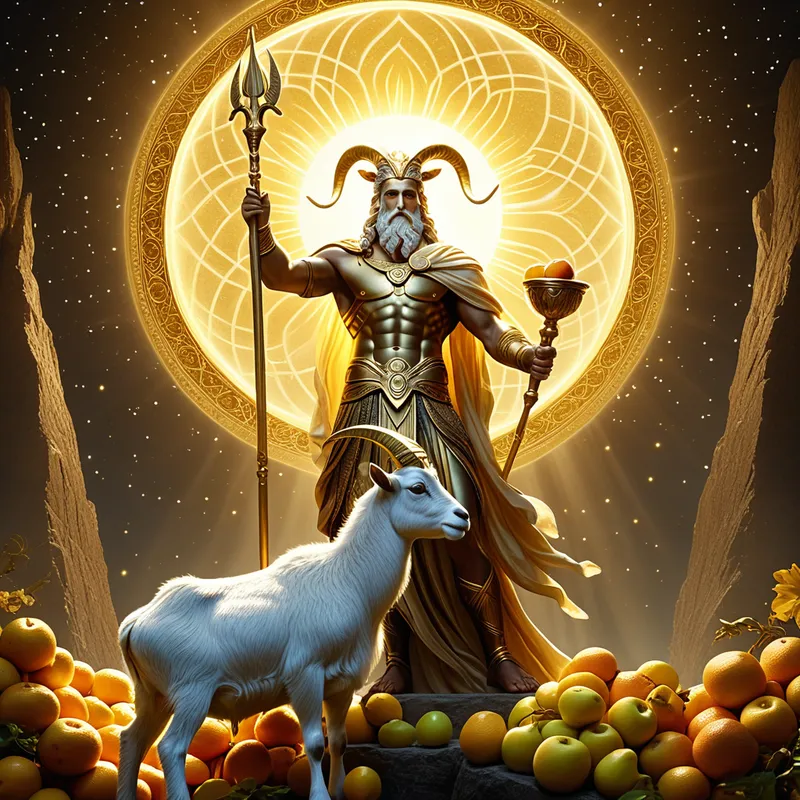
The Cornucopia (Greek mytholog Myth Meaning & Symbolism
The horn of the nurturing goat Amalthea, broken off by the infant Zeus, became an eternal symbol of unending nourishment and the bounty born from primal sacrifice.
The Tale of The Cornucopia (Greek mytholog
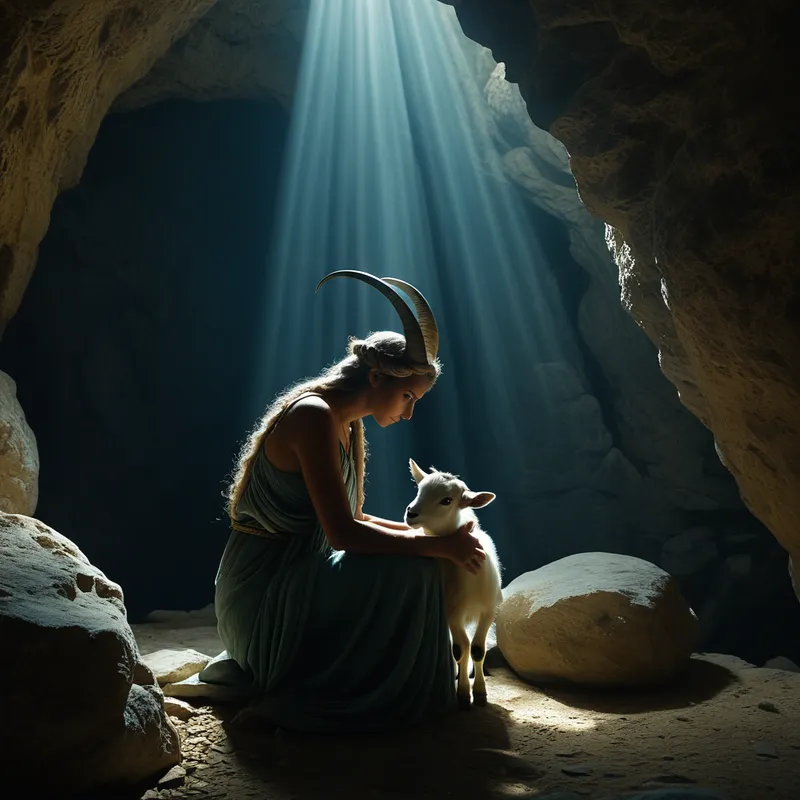
Listen, and hear the story of the first horn that overflowed. Before [the world](/myths/the-world “Myth from Tarot culture.”/) knew order, when [the sky](/myths/the-sky “Myth from Persian culture.”/) was a prison of stone and [the earth](/myths/the-earth “Myth from Hindu culture.”/) groaned under the tyranny of a paranoid king, a secret was born in a Cretan cave. The air there was cool and smelled of damp earth and sweet milk. This was the hiding place of the last hope: a wailing infant, son of the deposed [Ouranos](/myths/ouranos “Myth from Global/Universal culture.”/), destined to challenge his own father, the devouring [Kronos](/myths/kronos “Myth from Greek culture.”/).
His name was Zeus. But here, he was just a child, fed not by a mother’s hand, but by the gentle [nymphs](/myths/nymphs “Myth from Greek culture.”/) Adrasteia and Ida. And there was another, a creature of quiet majesty: the she-goat Amalthea. Her coat was the color of storm clouds and sunlight, and her eyes held the patience of the mountains. From her udder flowed not simple milk, but a nectar of potential—the very substance of strength and sovereignty. The infant god suckled greedily, his tiny hands clutching at her fur, his divine energy growing with each drop.
One day, as [the child](/myths/the-child “Myth from Alchemy culture.”/) played with his foster-mother, his power, still wild and unformed, surged. In a moment of infantile exuberance or divine necessity—the stories whisper both—he grasped one of Amalthea’s magnificent, spiraling horns. There was no malice, only the raw, unbounded force of a god coming into his own. With a sound not of breaking bone, but of a seal being sundered, the horn came away in his hand.
But there was no blood, no cry of pain from the gentle goat. Instead, from the place where the horn had been, a soft, golden light emanated. And the horn itself, now cradled in Zeus’s hands, did not lie empty. It brimmed. It overflowed. Where there had been keratin and curve, there was now a cascade: ripe figs burst from its lip, clusters of grapes tumbled like jewels, grains of wheat shimmered like gold dust, and the sweet scent of honey and autumn orchards filled [the cave](/myths/the-cave “Myth from Platonic culture.”/). The broken [thing](/myths/thing “Myth from Norse culture.”/) had become a vessel of unending giving. The nymphs gasped. Amalthea merely bowed her head, her sacrifice transmuted into a font of everlasting bounty. This was the first miracle of the new order: the Cornucopia, born not from conquest, but from an accident of nurture, a symbol that true abundance flows from a source that is never depleted.
Cultural Origins & Context
The myth of [the Cornucopia](/myths/the-cornucopia “Myth from Global/Universal culture.”/) is woven into the very fabric of the Hesiodic Theogony, the foundational text that mapped the Greek cosmos. Its primary tellers were the oral bards and, later, poets like Hesiod, who used it not merely as an etiological tale (explaining the origin of an object), but as a crucial narrative device in the epic struggle for cosmic sovereignty. The myth served a profound societal function. In an agrarian society perpetually balanced on the edge of scarcity, [the Cornucopia](/myths/the-cornucopia “Myth from Global/Universal culture.”/) represented the ultimate divine guarantee of fertility and provision. It was not a symbol of luxury, but of survival and prosperity granted by a stable, benevolent order—the order of Zeus.
The horn’s imagery was quickly adopted into the cults of other deities associated with earth, harvest, and fortune, such as Demeter, Dionysus, and Eirene. It moved from a specific biographical detail of Zeus’s infancy to a universal emblem of the blessings that flow from a rightly ordered relationship with the divine and the natural world. It told the people that their nourishment was sacred, rooted in a primal, nurturing sacrifice that preceded even the gods’ full power.
Symbolic Architecture
At its core, the Cornucopia is a [paradox](/symbols/paradox “Symbol: A contradictory yet true concept that challenges logic and perception, often representing unresolved tensions or profound truths.”/) made manifest: a [symbol](/symbols/symbol “Symbol: A symbol can represent an idea, concept, or belief, serving as a powerful tool for communication and understanding.”/) of infinite flow born from a break. The [horn](/symbols/horn “Symbol: A horn symbolizes primal power, warning signals, and spiritual connection, often representing strength, alertness, or divine communication in dreams.”/) is a classic symbol of potency, [strength](/symbols/strength “Symbol: ‘Strength’ symbolizes resilience, courage, and the ability to overcome challenges.”/), and natural [authority](/symbols/authority “Symbol: A symbol representing power structures, rules, and control, often reflecting one’s relationship with societal or personal governance.”/). To break it is an act of violence, even if unintended. Yet, this [rupture](/symbols/rupture “Symbol: A sudden break or tear in continuity, often representing abrupt change, separation, or the shattering of established patterns.”/) does not create a wound that drains; it creates an opening that gives.
The most profound abundance is not gathered, but released. It emerges when the hardened shell of a familiar strength is cracked open by the demands of growth.
Psychologically, Amalthea represents the ultimate [anima](/symbols/anima “Symbol: The feminine archetype within the male unconscious, representing soul, creativity, and connection to the inner world.”/) or [caregiver](/symbols/caregiver “Symbol: A spiritual or mythical figure representing nurturing, protection, and unconditional support, often embodying divine or archetypal parental energy.”/) [archetype](/symbols/archetype “Symbol: A universal, primordial pattern or prototype in the collective unconscious that shapes human experience, behavior, and creative expression.”/)—the nourishing [source](/symbols/source “Symbol: The origin point of something, often representing beginnings, nourishment, or the fundamental cause behind phenomena.”/) of our early psychic and emotional [life](/symbols/life “Symbol: The symbol of ‘Life’ represents a journey of growth, interconnectedness, and existential meaning, encompassing both the joys and challenges that define human experience.”/). The [infant](/symbols/infant “Symbol: The infant symbolizes new beginnings, innocence, and the potential for growth and development.”/) Zeus symbolizes the nascent, often disruptive, potential of the developing Self. His breaking of the horn is the necessary, if painful, [separation](/symbols/separation “Symbol: A spiritual or mythic division between realms, states of being, or consciousness, often marking a transition or loss of connection.”/) from the primal [source](/symbols/source “Symbol: The origin point of something, often representing beginnings, nourishment, or the fundamental cause behind phenomena.”/) of nourishment. We must, in a sense, “break” the literal, dependent form of our nurturing to internalize its essence. The horn that becomes the Cornucopia signifies that internalization: the source is no longer external (the [goat](/symbols/goat “Symbol: The goat symbolizes independence, resilience, and various traits associated with adaptability across diverse cultures.”/)), but is now a [capacity](/symbols/capacity “Symbol: A measure of one’s potential, limits, or ability to contain, process, or achieve something, often reflecting self-assessment or external demands.”/) within the [psyche](/myths/psyche “Myth from Greek culture.”/) itself—an inner wellspring of creativity, resourcefulness, and emotional plenty that we ourselves can pour forth.
The Dreamer’s Resonance
To dream of a cornucopia is to dream of potential. But in the dream-logic of the unconscious, it is rarely a simple, cheerful symbol. One might dream of a horn overflowing with strange, unidentifiable fruits, or of a cornucopia that is beautiful but empty, or one that pours forth a troubling, uncontrollable flood.
Such dreams often surface during life transitions where one’s inner resources are being called into question: starting a new creative endeavor, becoming a caregiver, or feeling the pressure to be a perpetual source of sustenance for others. The somatic feeling can be one of fullness to the point of overwhelm, or a haunting emptiness in the face of expected bounty. The dream asks: What is the source of your nourishment? Have you internalized the horn, or are you still desperately suckling at an external source? What have you broken in your growth, and has that break become an opening for giving, or merely a scar? The dream Cornucopia confronts us with the responsibility and the mystery of our own inner abundance.
Alchemical Translation
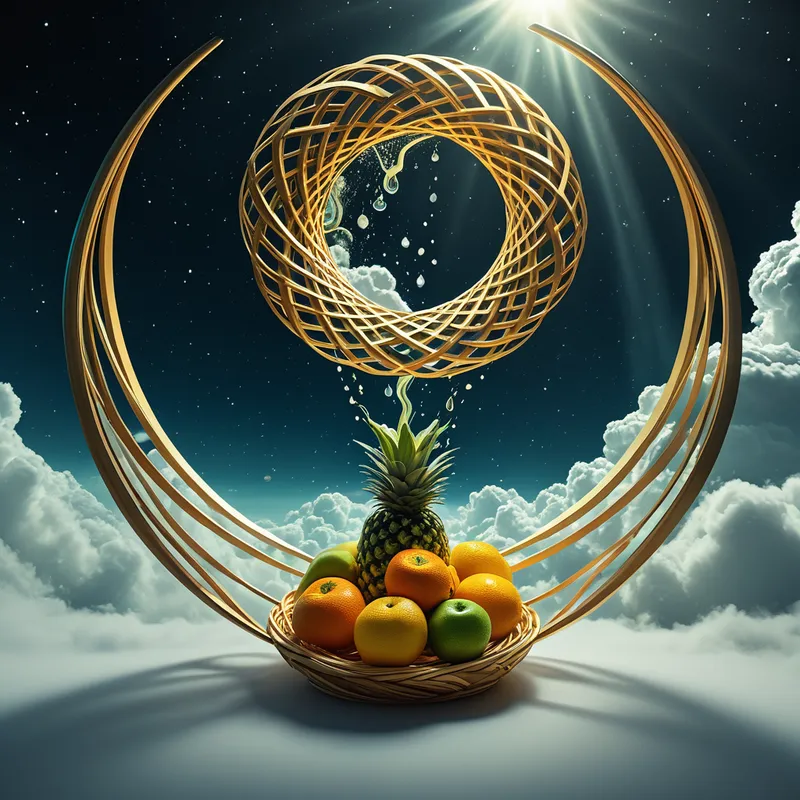
The alchemical journey mirrored in this myth is the opus of transmuting the [prima materia](/myths/prima-materia “Myth from Alchemical culture.”/) of raw, dependent need into the philosophical gold of self-sustaining generosity. The process begins in the [nigredo](/myths/nigredo “Myth from Alchemical culture.”/), the dark cave of childhood and unconscious nurturing (the hidden infant Zeus). The first agent of change is the solve: the breaking of the horn, the dissolution of the original, natural form of support. This feels like a loss, a deprivation.
The alchemy of the soul requires a sacred rupture. The vessel must be broken for the infinite to be revealed.
But this is followed by the coagula, the coagulation of a new substance. The horn does not vanish; it is filled. The milk of passive reception is transmuted into the active, overflowing bounty of the Cornucopia. For the modern individual striving toward individuation, this is the process of moving from being a consumer of life to a creator within it. We all have our Amalthea—a parent, a mentor, a tradition that nourished us. Individuation demands we “break” our literal, infantile attachment to that form, not out of ingratitude, but so we can take its nourishing principle into ourselves. The goal is not to become the helpless infant nor [the self](/myths/the-self “Myth from Jungian culture.”/)-sacrificing goat, but to become the god who holds the [Horn of Plenty](/myths/horn-of-plenty “Myth from Norse culture.”/): a sovereign Self whose capacity to nurture, create, and provide—for oneself and for the world—is born from a deep, internalized well of sacred sacrifice and is, in its essence, boundless.
Associated Symbols
Explore related symbols from the CaleaDream lexicon: