The Coracle of Manannán mac Lir Myth Meaning & Symbolism
A tale of the sea god's magical vessel, a coracle that carries heroes between worlds, embodying the soul's journey through the unconscious.
The Tale of The Coracle of Manannán mac Lir
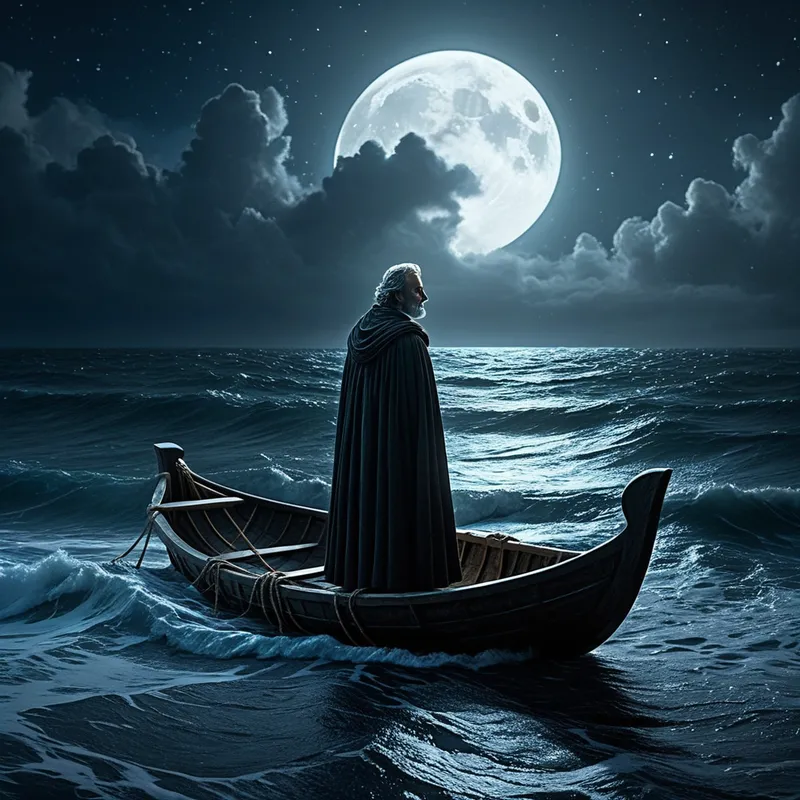
Hear now the whisper that rides the salt wind, the tale that laps against the shores of waking and sleep. In the time when [the world](/myths/the-world “Myth from Tarot culture.”/) was thinner, when [the veil](/myths/the-veil “Myth from Various culture.”/) between the land of the living and the [Tír na nÓg](/myths/tr-na-ng “Myth from Celtic culture.”/) was but a breath of mist, there ruled a lord who was master of that boundary. His name was [Manannán mac Lir](/myths/manannn-mac-lir “Myth from Celtic culture.”/), son of [the sea](/myths/the-sea “Myth from Greek culture.”/), and his chariot was the foam-crested wave, his cloak the shifting fog.
He possessed a craft not of oak and iron, but of mystery and intent. It was his coracle, Sguaba Tuinne – the Wave-Sweeper. Woven from the supple willow of the [sacred groves](/myths/sacred-groves “Myth from Celtic culture.”/) and stretched with the hide of a bull that knew no master, it required neither oar nor sail. It moved to the rhythm of Manannán’s will, a thought given form upon the [water](/myths/water “Myth from Chinese culture.”/). It could be as small as a hazelnut or expand to carry a host. It did not merely travel across the sea; it traveled between the seas—the sea of salt and the sea of stars, the mortal ocean and the shimmering waters that encircled [the Land of Youth](/myths/the-land-of-youth “Myth from Celtic culture.”/).
This vessel was a gift and a test. When the hero Cú Chulainn, weary from the bloodshed of the mortal realm, sought training in [the Otherworld](/myths/the-otherworld “Myth from Celtic culture.”/) to master his terrible fury, it was in Manannán’s coracle that he was carried. He stepped into that fragile-looking bowl and felt not the lurch of a boat, but the sudden stillness of being held. The shores of Ireland melted into a silver haze. The sounds of the world—the cry of gulls, the sigh of wind through grass—were swallowed by a profound, singing silence. He was not sailing on water, but through the very substance of potential, the liquid threshold of transformation.
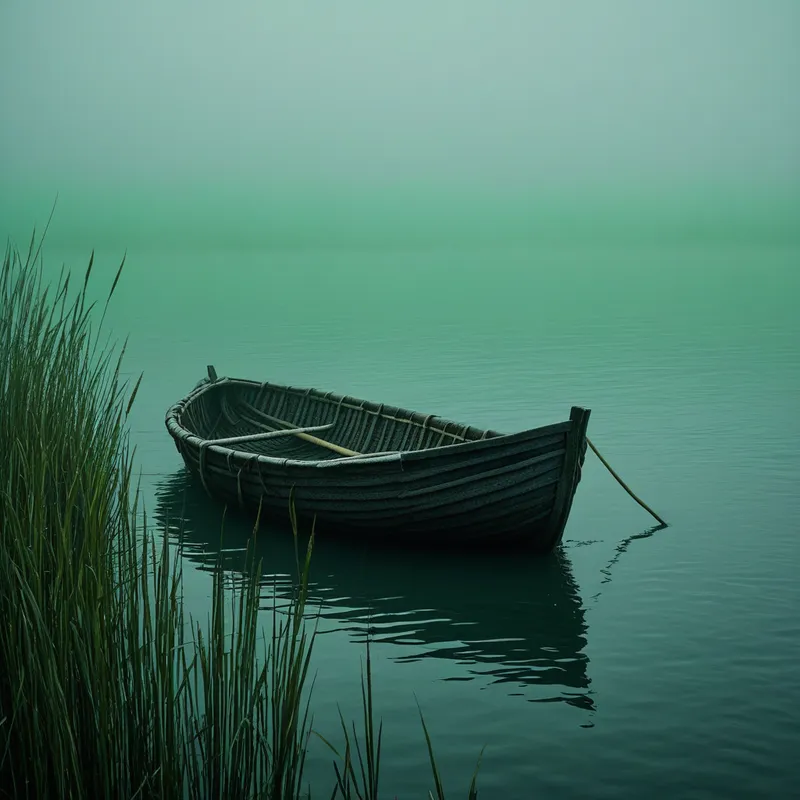
Again, when the sorrowing lovers, [the Children of Lir](/myths/the-children-of-lir “Myth from Celtic culture.”/), had endured their nine hundred years of exile on the wild waters, it was Manannán who came at the end of their curse. Not with a fanfare, but with the quiet appearance of his craft upon the lake where they wept. The coracle was a promise of an ending and a return. It did not rescue them from the water; it transformed the nature of their journey. In stepping from their swan-shapes into that vessel, they crossed the final, merciful boundary from suffering to peace, carried not away from their ordeal, but through its ultimate meaning.
Cultural Origins & Context
This myth emerges from the rich, oral tapestry of the Gaelic world, primarily preserved within the later medieval manuscript traditions of Ireland, such as the Ulster and Mythological Cycles. It is crucial to understand that “Celtic” is a broad linguistic and cultural umbrella; this story is specifically Irish, a product of an island culture for whom the sea was both provider and perimeter, a daily reality and a cosmic mystery.
The tales of Manannán were not mere entertainment. They were the cognitive maps of a people who perceived reality as layered. The function of such a myth was pedagogical and cosmological. It explained how interaction with the divine or the ancestral was possible: not by climbing a mountain, but by crossing a subtle, psychic sea. The fili, the poet-seers, were the keepers of these stories. In recounting the journey of the coracle, they were teaching about the nature of boundaries, the etiquette of transition, and the proper vessel—both literal and ritual—required to navigate the dangerous, sacred currents between the human world and the [sídhe](/myths/sdhe “Myth from Celtic / Irish culture.”/).
Symbolic Architecture
The coracle is the perfect [symbol](/symbols/symbol “Symbol: A symbol can represent an idea, concept, or belief, serving as a powerful tool for communication and understanding.”/) of the liminal. It is a container for transition. Its round shape mirrors the Celtic reverence for the circle—the sun, the [moon](/symbols/moon “Symbol: The Moon symbolizes intuition, emotional depth, and the cyclical nature of life, often reflecting the inner self and subconscious desires.”/), the cyclical [nature](/symbols/nature “Symbol: Nature symbolizes growth, connectivity, and the primal forces of existence.”/) of [life](/symbols/life “Symbol: The symbol of ‘Life’ represents a journey of growth, interconnectedness, and existential meaning, encompassing both the joys and challenges that define human experience.”/), [death](/symbols/death “Symbol: Symbolizes transformation, endings, and new beginnings; often associated with fear of the unknown.”/), and [rebirth](/symbols/rebirth “Symbol: A profound transformation where old aspects of self or life die, making way for new beginnings, growth, and renewal.”/). It has no bow or stern, no inherent [direction](/symbols/direction “Symbol: Direction in dreams often relates to life choices, guidance, and the path one is following, emphasizing the importance of navigation in personal journeys.”/); its [course](/symbols/course “Symbol: A course represents direction, journey, or progression in life, often choosing paths to follow.”/) is set by [consciousness](/symbols/consciousness “Symbol: Consciousness represents the state of awareness and perception, encompassing thoughts, feelings, and experiences.”/) itself.
The coracle does not conquer the sea; it negotiates a relationship with it. It is the ego, fragile yet buoyant, that must learn to be guided by the deeper currents of the Self.
Manannán himself is the archetypal [psychopomp](/myths/psychopomp “Myth from Greek culture.”/), the guide of souls. His coracle is the [vehicle](/symbols/vehicle “Symbol: Vehicles in dreams often symbolize the direction in life and the control one has over their journey, reflecting personal agency and decision-making.”/) of that [guidance](/symbols/guidance “Symbol: The act of receiving or seeking direction, advice, or leadership in a dream, often representing a need for clarity, support, or a higher purpose on one’s life path.”/). It represents the necessary [structure](/symbols/structure “Symbol: Structure in dreams often symbolizes stability, organization, and the framework of one’s life, reflecting how one perceives their environment and personal life.”/)—a [ritual](/symbols/ritual “Symbol: Rituals signify structured, meaningful actions carried out regularly, reflecting cultural beliefs and emotional needs.”/), a therapy, a disciplined practice—that allows an individual to traverse the chaotic, unconscious “sea” of the [psyche](/myths/psyche “Myth from Greek culture.”/) without drowning in its contents. To enter the coracle is to willingly submit to a process larger than one’s own will, to be carried into the [depths](/symbols/depths “Symbol: Represents the subconscious, hidden emotions, or foundational aspects of the self, often linked to primal fears or profound truths.”/) for the [purpose](/symbols/purpose “Symbol: Purpose signifies direction, meaning, and intention in life, often reflecting personal ambitions and core values.”/) of healing (the Children of Lir) or for acquiring difficult wisdom (Cú Chulainn).
The Dreamer’s Resonance
When this myth stirs in the modern dreamer, it often manifests as dreams of profound transition. One might dream of a small, simple boat waiting in floodwaters, of crossing a vast, calm sea in utter silence, or of a vehicle that changes size or traverses impossible landscapes.
Somatically, this can correlate with feelings of weightlessness, suspension, or a quiet, focused calm amidst life’s turbulence. Psychologically, it signals a process of being “in transit” between psychic states. [The ego](/myths/the-ego “Myth from Jungian culture.”/) is not in control of the journey’s direction but is held within a protective, purposeful container. This is the dream equivalent of being in therapy, in a creative flow, or in the midst of a spiritual practice that is gently dismantling an old identity. The conflict is not with monsters, but with the anxiety of surrendering control. The resolution is the dream-image of arriving at an unknown, yet strangely familiar, shore—a new inner landscape.
Alchemical Translation
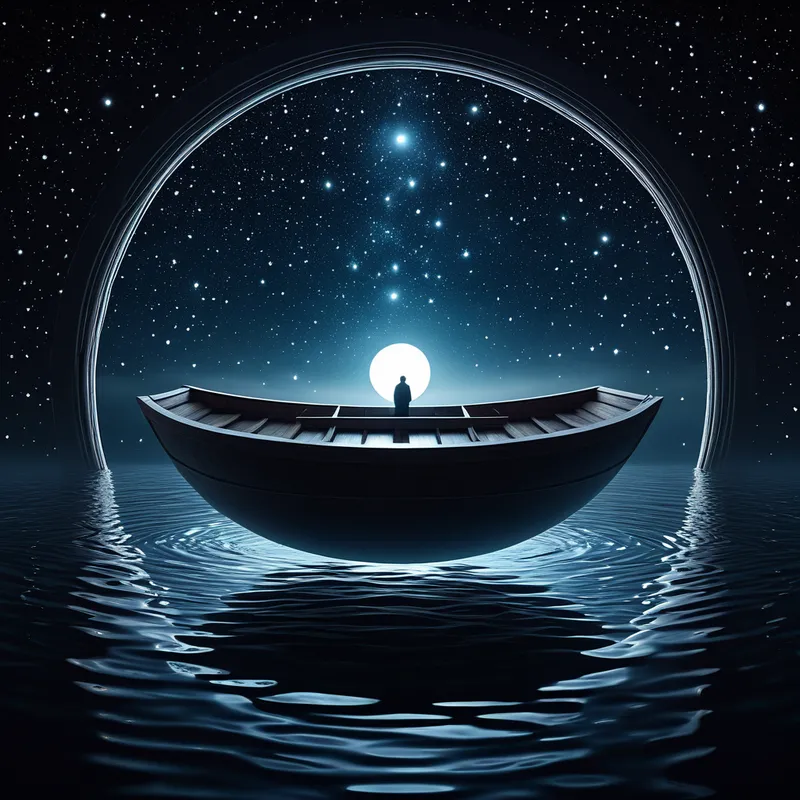
In the alchemy of individuation, the process of becoming whole, the myth of the coracle models the stage of [solutio](/myths/solutio “Myth from Alchemical culture.”/)—dissolution. The rigid, land-bound ego (the hero on the shore) must be dissolved in the waters of the unconscious to be reformed. But dissolution is terrifying; it feels like annihilation.
The coracle is the alchemical vessel, the vas hermeticum. It allows the psyche to be immersed in the transformative waters without losing its essential coherence.
For the modern individual, building one’s “coracle” is the work of creating a reliable inner structure—a grounding philosophy, a mindfulness practice, a creative outlet, a trusted relationship. This structure is what allows us to voluntarily enter our own emotional and psychic depths. We do not jump into the sea; we construct a vessel and invite the Manannán-aspect of our own psyche to take the helm. The journey is one of inversion: we move from doing to being carried, from fighting currents to understanding their flow. The [triumph](/myths/triumph “Myth from Roman culture.”/) is not reaching a destination, but mastering the art of the liminal voyage itself, learning to dwell in the fertile, foggy space where the old self dissolves and the new has not yet fully taken form. We become, like Manannán’s craft, navigators of the between.
Associated Symbols
Explore related symbols from the CaleaDream lexicon: