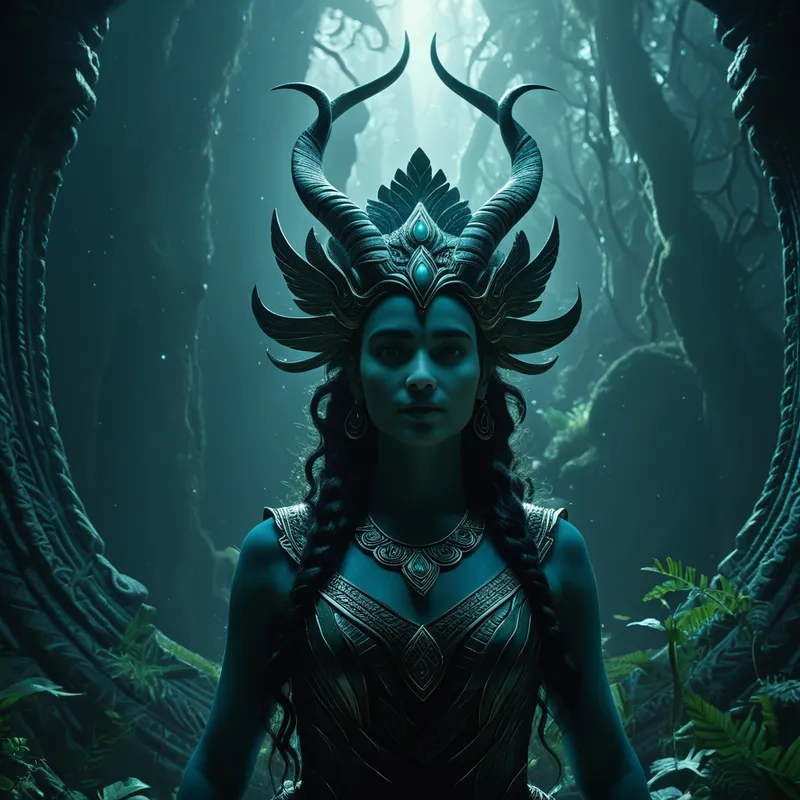
The City of Ubar Iram
A legendary Arabian city, said to have been destroyed by divine wrath for its arrogance, now lost beneath the desert sands.
The Tale of The City of Ubar Iram
In the time before time, when the sands were younger and the stars hung closer, there existed a city of such splendor it seemed to mock the heavens. This was Ubar, known also as Iram of the Pillars, the capital of the tribe of ʿĀd. Its towers, carved from living rock and adorned with precious metals, pierced [the sky](/myths/the-sky “Myth from Persian culture.”/). Its gardens, fed by miraculous springs, bloomed in defiance of the encircling desert. The people of Ubar grew mighty and wealthy, their caravans threading the Empty Quarter, trading in frankincense, myrrh, and spices from lands unseen. Their power was as vast as their domain.
But with this power came a profound forgetting. They forgot the source of their bounty, attributing it solely to their own cunning and strength. They turned from the old ways, from the simple tents and the worship of the One. In their gleaming halls, they erected idols, believing their own hands had fashioned gods worthy of praise. Their laughter grew loud and hollow, echoing through colonnades built not for community, but for spectacle. They believed themselves eternal, masters of their fate, architects of a reality that would bend to their will. [The desert](/myths/the-desert “Myth from Biblical culture.”/), they thought, was a servant to be commanded, not a teacher to be respected.
The prophet Hūd was sent to them, a voice from the old, true desert. He walked their polished streets, a man of weathered skin and quiet eyes, speaking of humility, of gratitude, of the transience of all things built on sand and pride. “Remember your origin,” he urged. “Your strength is a loan, not a possession. Turn back, lest you bring upon yourselves a ruin from which there is no return.”
They met his words with derision. Who was this austere wanderer to lecture the masters of Iram? They pointed to their towering pillars, their overflowing granaries, their invincible armies. “Is this the work of the weak?” they scoffed. “We have built what no one before us has built. What god could destroy such a work?” Their hubris was complete, a fortress of the soul more impregnable than any city wall.
Then, the silence came. Not the peaceful silence of the dunes, but a heavy, waiting stillness. The birds ceased their song. [The wind](/myths/the-wind “Myth from Various culture.”/) died. For seven nights and eight days, the sky over Ubar held its breath, a dome of oppressive, cloudless brass. A sense of dread, long buried beneath pride, began to seep through the marble floors.
On the eighth day, a cloud appeared on [the horizon](/myths/the-horizon “Myth from Various culture.”/)—a dark, roiling smudge. A murmur of relief passed through the city: rain at last to fill their reservoirs. But Hūd, and the few who had heeded him, saw the truth. This was no bringer of life.
The cloud descended, revealing itself as a monstrous, howling sandstorm, but one directed by a will, a focused, divine wrath. It was not a phenomenon of nature; it was an instrument of judgment. The wind, al-ṣarṣar, screamed with the voice of a thousand jinn, a scorching, abrasive force that stripped the gold from the pillars and the flesh from the bone. [The earth](/myths/the-earth “Myth from Hindu culture.”/) itself shook and then opened. The ingenious wells and subterranean channels, the source of Ubar’s life, betrayed them. The ground swallowed its own bounty. The mighty towers, the proud pillars, groaned and cracked, consumed not by flame, but by the very desert they had sought to dominate.
When the roaring ceased, there was nothing. No ruin, no scar. Only the smooth, undulating dunes, shifting endlessly under a pitiless sun. Ubar was erased, as if it had never been. The sands closed over it like [water](/myths/water “Myth from Chinese culture.”/) over a stone, leaving no marker, no memory in the landscape. Only the story remained, a whisper on the wind, a tale of a city that reached for the stars and was returned to the dust.
Cultural Origins & Context
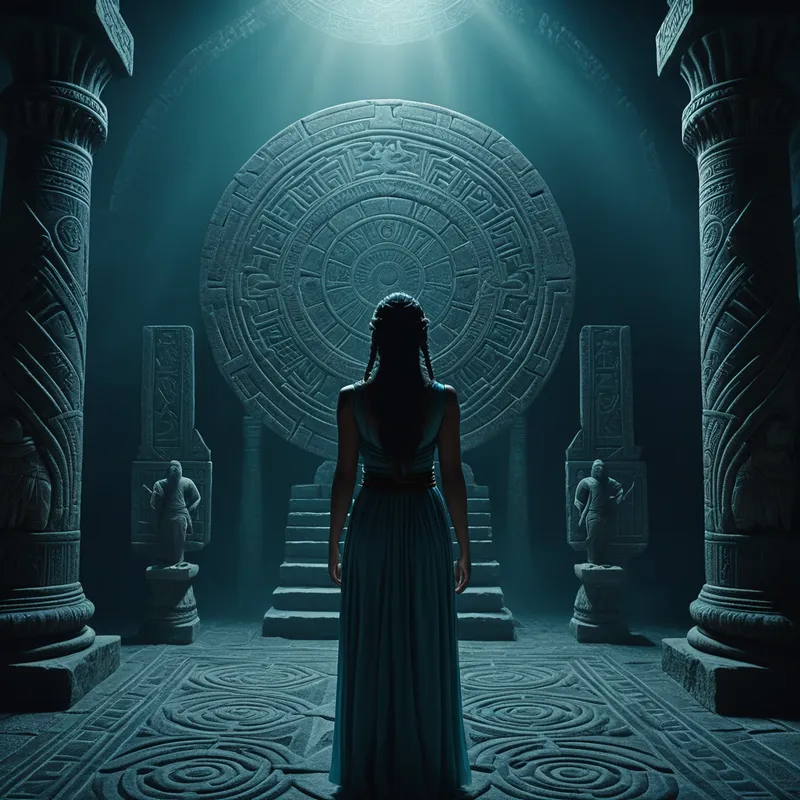
The legend of Ubar Iram is woven deeply into the fabric of pre-Islamic and Islamic Arabian consciousness. Its most definitive anchor is in the Quran (Surah Al-Fajr, 89:6-14), where God asks, “Have you not considered how your Lord dealt with ‘Ād—[with] Iram—who had lofty pillars, The likes of whom had never been created in the lands?” This scriptural [reference](/myths/reference “Myth from Global/Universal culture.”/) transformed older, perhaps fragmentary, Bedouin oral traditions into a potent theological parable. It served as a direct warning to the mercantile, tribe-centric society of the Jāhiliyyah: civilization, no matter how materially advanced, is contingent upon moral and spiritual alignment.
The city is intrinsically linked to the ʿĀd, often regarded as the foundational civilization of the Arabs, paralleling how the Babylonians or Pharaohs function in other mytho-histories. They represent a primordial peak of human achievement and, consequently, a primordial fall. The tale functions as a desert-born counterpart to the story of [Sodom and Gomorrah](/myths/sodom-and-gomorrah “Myth from Biblical culture.”/), though the sin here is less about specific vice and more about the overarching condition of istikbār—arrogant, God-denying pride. In the vast, indifferent landscape of the desert, where human life is so clearly fragile, the myth of Ubar reinforces a core existential truth: survival and prosperity are never guaranteed; they are a [covenant](/myths/covenant “Myth from Christian culture.”/), easily shattered by forgetfulness.
Symbolic Architecture
The [city](/symbols/city “Symbol: A city often symbolizes community, social connection, and the complexities of modern life, reflecting the dreamer’s relationships and societal integration.”/) itself is a [psyche](/myths/psyche “Myth from Greek culture.”/) in [stone](/symbols/stone “Symbol: In dreams, a stone often symbolizes strength, stability, and permanence, but it may also represent emotional burdens or obstacles that need to be acknowledged and processed.”/). Its famed “lofty pillars” are not merely structural; they are the pillars of [the ego](/myths/the-ego “Myth from Jungian culture.”/), erected to create an illusion of permanence and self-sufficiency. They represent a vertical striving that has lost its [connection](/symbols/connection “Symbol: Connection symbolizes relationships, communication, and bonds among individuals.”/) to the horizontal, to the [community](/symbols/community “Symbol: Community in dreams symbolizes connection, support, and the need for belonging.”/) and the [earth](/symbols/earth “Symbol: The symbol of Earth often represents grounding, stability, and the physical realm, embodying a connection to nature and the innate support it provides.”/). Ubar is a [monument](/symbols/monument “Symbol: A structure built to commemorate a person, event, or idea, often representing legacy, memory, and cultural identity.”/) to the conscious mind’s attempt to deny the unconscious—the desert, the unknown, the divine.
The desert is not merely a setting; it is the active, archetypal background of the soul, representing both the barrenness of a life devoid of meaning and the fertile void from which all meaning can emerge. Ubar’s attempt to wall itself off from the desert is the ego’s attempt to wall itself off from the Self.
Its destruction is notably not by fire or flood, but by reabsorption. The [sandstorm](/symbols/sandstorm “Symbol: Sandstorms convey themes of chaos, transformation, and the power of nature, often obscuring clarity and direction.”/) and the swallowing earth signify the return of the repressed. The unconscious, in the form of the elemental desert, reclaims what the inflated [consciousness](/symbols/consciousness “Symbol: Consciousness represents the state of awareness and perception, encompassing thoughts, feelings, and experiences.”/) had tried to carve out as its exclusive domain. There is no battle, only a seamless, terrifying [integration](/symbols/integration “Symbol: The process of unifying disparate parts of the self or experience into a cohesive whole, often representing psychological wholeness or resolution of internal conflict.”/). The city is not defeated; it is taken back, demonstrating that all [human](/symbols/human “Symbol: The symbol of a human represents individuality, complexity of emotions, and social relationships.”/) [construction](/symbols/construction “Symbol: Construction symbolizes creation, building, and the process of change, often reflecting personal growth and the need to build a solid foundation.”/) is, ultimately, a temporary [arrangement](/symbols/arrangement “Symbol: An arrangement symbolizes organization, intention, and the systematic structure in one’s life or surroundings.”/) of borrowed materials.

The Dreamer’s Resonance
To encounter Ubar in the dreamscape is to confront the Orphan archetype in its most profound manifestation. It speaks to a deep, often unconscious, fear of foundational loss—not just the loss of home or family, but the loss of an entire world of meaning, a personal civilization one has built. The dreamer who wanders the shimmering, empty halls of Ubar may be living a life of impressive external achievement that feels internally hollow, a “city of the soul” constructed on the sands of performance, status, or intellectual pride, soon to be swallowed by a rising tide of depression, anxiety, or existential dread.
The myth resonates with the modern condition of burnout and spiritual desolation. We build careers, identities, and digital personas—our own lofty pillars—only to feel a silent, sand-like emptiness eroding them from within. The punishment of Ubar is not an external vengeance, but the inevitable psychological collapse that occurs when the psyche is too long divided. The city’s fate is the fate of any life that refuses to acknowledge its own shadow, its own dependence on forces greater than its will. The dream asks: What have I built that is truly mine? And what arid pride is preventing the rains of genuine feeling and connection from falling?
Alchemical Translation
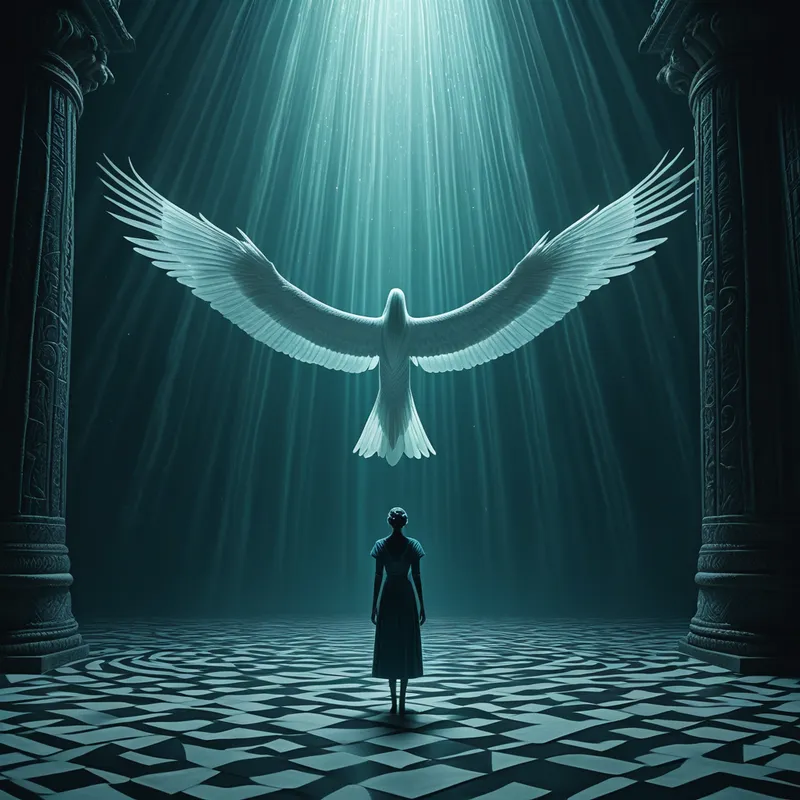
The alchemical process mirrored in Ubar’s tale is [solutio](/myths/solutio “Myth from Alchemical culture.”/)—dissolution—but of a particularly absolute kind, preceding [nigredo](/myths/nigredo “Myth from Alchemical culture.”/). It is the reduction of the complex, differentiated, and inflated (the ornate city) back into the [prima materia](/myths/prima-materia “Myth from Alchemical culture.”/), the undifferentiated mass (the desert sands). This is the necessary, if terrifying, step that must occur when an structure has become corrupt, rigid, or too far removed from its source. The gold leaf must be stripped, the marble pulverized, to return to the essential grain of sand.
The destruction of Ubar is not an end, but a radical return to origin. In the alchemical vessel of the desert, the spiritus mercurialis—the divine wind—reduces the fixed (the city) to the volatile (the dust), preparing it for a potential future coagulation that is not yet promised. The work is erased so that a truer work might one day begin.
Psychologically, this translates to the necessary disintegration of a false personality. When the ego-structure becomes a prison of arrogance, a catastrophic breakdown—a depression, a life crisis—can perform this same function. It is a brutal, unwanted grace that reduces one to essentials, to the “dust” of raw, unadorned being. From this place of utter humility, where all monuments have fallen, the possibility of a life built on more authentic, grounded foundations can, like a single resilient plant, tentatively emerge.
Associated Symbols
Explore related symbols from the CaleaDream lexicon:
- City — A complex symbol of the constructed self, civilization, and the ordered psyche; its loss represents the collapse of a personal world.
- Sand — The elemental, shifting ground of being; represents time, [impermanence](/myths/impermanence “Myth from Buddhist culture.”/), and the unconscious that eventually reclaims all things.
- Punishment — The inevitable consequence of hubris, often experienced internally as the collapse of meaning or the uprising of repressed truth.
- Pride — The inflation of the ego that severs connection to the source, building towers that blind one to the approaching storm.
- Wind — The invisible, animating spirit of change and judgment; a force that can both give life and scour all life away.
- Desert — The archetypal landscape of the soul in its aspects of austerity, trial, purification, and vast, silent potential.
- Lost — A state of profound disorientation and grief, the aftermath of a fall where familiar landmarks have been erased from the map of [the world](/myths/the-world “Myth from Tarot culture.”/).
- Door — [The threshold](/myths/the-threshold “Myth from Folklore culture.”/) between the constructed world (the city) and the unknown (the desert); in Ubar, it is the point of no return when judgment enters.
- Stone — The material of permanence and monument-building, which in this myth is revealed to be as transient as sand when divorced from sacred purpose.
- Shadow — The repressed, denied aspects of [the self](/myths/the-self “Myth from Jungian culture.”/) and the civilization, which return in the form of the annihilating desert storm.
- Dream — The mode through which such lost cities are often visited, offering glimpses of ruined magnificence and warnings from the depths of time.
- Fate — The inescapable destiny woven by actions and character; for Ubar, a fate of erasure born from the choice of arrogance over humility.