The Ceque System Myth Meaning & Symbolism
The sacred lines of Cusco, a living myth of memory, ritual, and the divine order woven into the landscape by the ancestors and the sun.
The Tale of The Ceque System
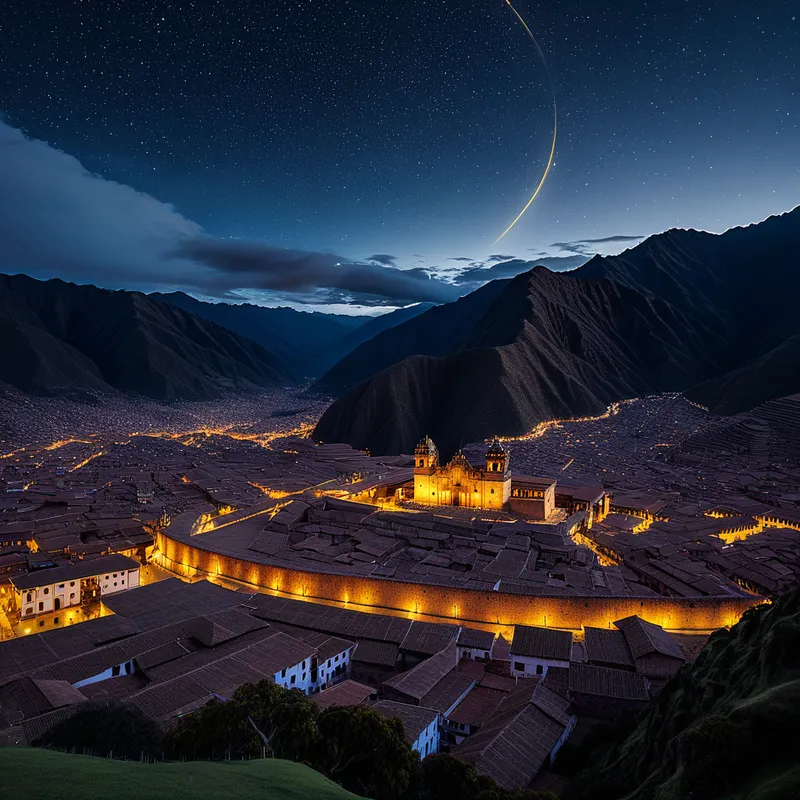
Listen. The world was not born flat. It was born from a center, a navel, a point of first light. In the high, thin air where the condor is born, there lies a valley cradled by stone giants. And in that valley, the first children of Inti built not just a city, but a prayer made of earth and sky. They called it Cusco.
From the heart of this prayer, from the golden walls of the Coricancha, a secret was woven. It was not a secret of words, but of lines. Forty-one lines, like threads of sunlight spun from the very disc of Inti himself. They did not cut the earth; they consecrated it. They flowed outward, invisible to the untrained eye, but felt in the pulse of the stones and the whisper of the wind.
These were the ceques. And along each line, like beads on a divine necklace, were placed the huacas. A spring that wept from the mountain’s side. A peculiar stone that held the shape of a puma. An ancient tree that remembered the first rain. Each huaca was a word in a story written across the land, a story of creation, of clan, of the celestial movements that governed life and death.
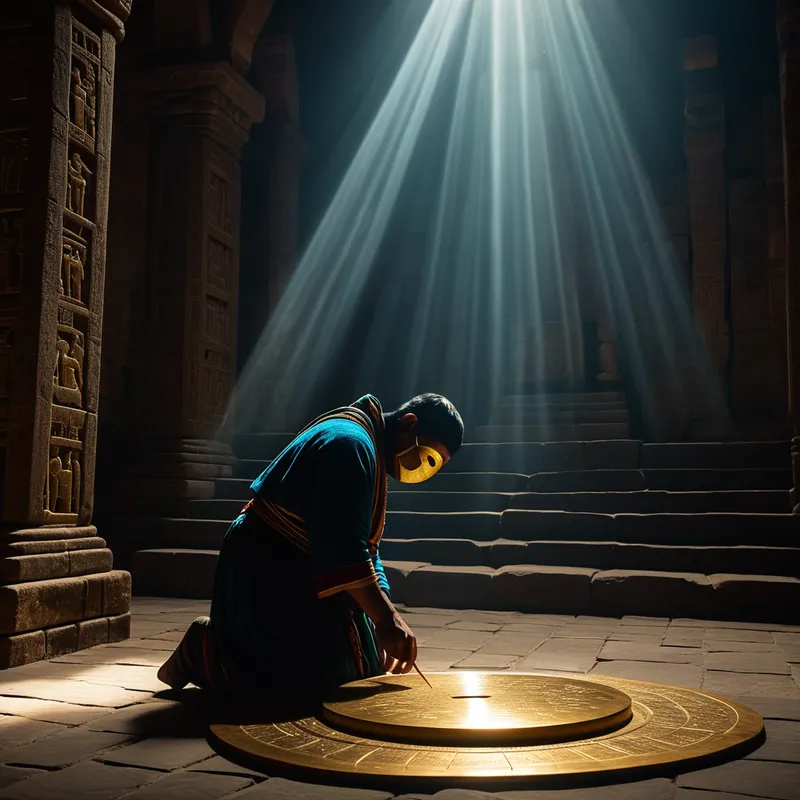
The Sapa Inca, the child of the sun, was the keeper of this living scripture. He knew that to walk a ceque was to recite a chapter of the world’s memory. Priests and runners would move from huaca to huaca, offering shells, maize, or the breath of a sacred flame. They did not merely travel; they performed the ritual of connection, stitching the social order to the cosmic order, the human realm to the divine. The system was a clock, a calendar, a map of kinship, and a hymn—all sung simultaneously into the bones of the earth. It was the empire’s soul, made visible in geography.
Cultural Origins & Context
The Ceque System was not a mere administrative tool; it was the central organizing principle of the Tawantinsuyu’s sacred and social cosmology. Historically anchored in Cusco, it functioned as a complex mnemonic device, a ritual calendar, and a social ledger. The forty-one ceques were divided among the four quarters of the empire, each line maintained by a specific royal ayllu. The 328 huacas along these lines marked the sequential order of rituals, ensuring that offerings to every mountain, spring, and ancestor were made on the correct day, binding time, space, and community into an unbreakable whole.
This knowledge was orally transmitted by the amautas and enacted by the priestly class. Its societal function was total: it dictated agricultural cycles, legitimized political hierarchy through sacred geography, and provided a complete model of reality where nothing—no person, no clan, no natural feature—existed outside this web of reciprocal relationship. To live within the Ceque System was to know one’s precise place in a living, breathing universe.
Symbolic Architecture
At its core, the Ceque [System](/symbols/system “Symbol: A system represents structure, organization, and interrelated components functioning together, often reflecting personal or social order.”/) is a supreme [symbol](/symbols/symbol “Symbol: A symbol can represent an idea, concept, or belief, serving as a powerful tool for communication and understanding.”/) of the psyche’s innate drive toward order and meaningful [connection](/symbols/connection “Symbol: Connection symbolizes relationships, communication, and bonds among individuals.”/). It represents the archetypal [axis](/symbols/axis “Symbol: A central line or principle around which things revolve, representing stability, orientation, and the fundamental structure of reality or consciousness.”/) mundi not as a single [tree](/symbols/tree “Symbol: In dreams, the tree often symbolizes growth, stability, and the interconnectedness of life.”/) or [mountain](/symbols/mountain “Symbol: Mountains often symbolize challenges, aspirations, and the journey toward self-discovery and enlightenment.”/), but as a radiating network. The Coricancha is the Self, the central organizing principle from which all psychic structures emanate.
The sacred lines are the threads of memory and meaning that connect the central self to the disparate contents of the inner world.
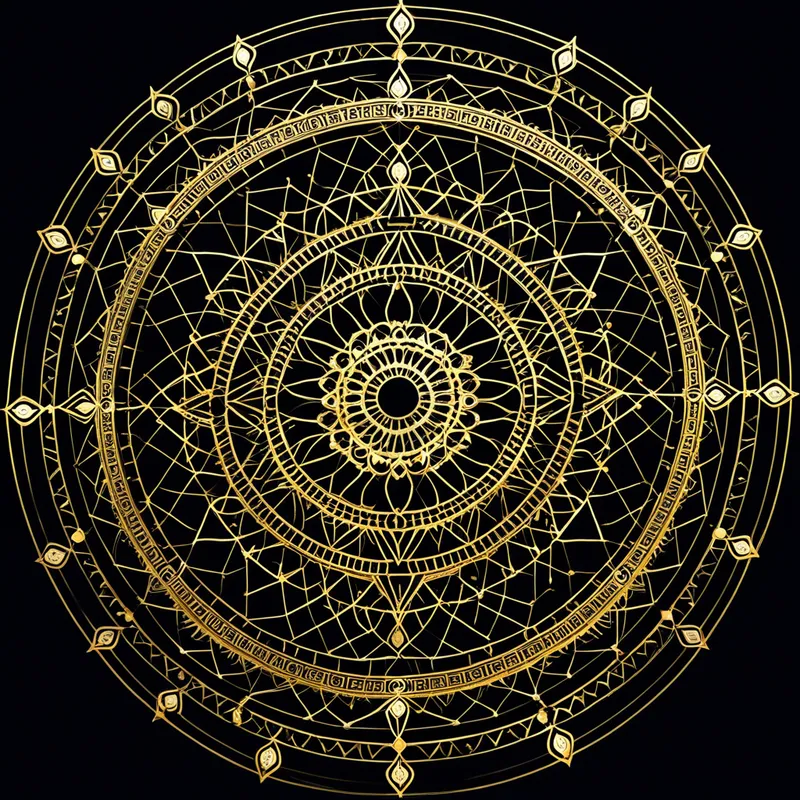
The ceques symbolize the connective pathways of libido or psychic [energy](/symbols/energy “Symbol: Energy symbolizes vitality, motivation, and the drive that fuels actions and ambitions.”/)—the routes of [attention](/symbols/attention “Symbol: Attention in dreams signifies focus, awareness, and the priorities in one’s life, often indicating where the dreamer’s energy is invested.”/), [ritual](/symbols/ritual “Symbol: Rituals signify structured, meaningful actions carried out regularly, reflecting cultural beliefs and emotional needs.”/), and [relationship](/symbols/relationship “Symbol: A representation of connections we have with others in our lives, often reflecting our emotional state.”/) that make the inner [landscape](/symbols/landscape “Symbol: Landscapes in dreams are powerful symbols representing the dreamer’s emotional state, personal journey, and the broader context of life situations.”/) coherent. The huacas are the complexes, the memories, the traumas, and the talents—the numinous points in the psyche that demand recognition and engagement. To ignore a huaca is to risk psychic [drought](/symbols/drought “Symbol: Drought signifies a period of emotional scarcity, lack of resources, or feelings of deprivation leading to anxiety or intense longing.”/); to honor it with [ritual](/symbols/ritual “Symbol: Rituals signify structured, meaningful actions carried out regularly, reflecting cultural beliefs and emotional needs.”/) is to integrate its power into the whole system. The system itself is a [mandala](/symbols/mandala “Symbol: A sacred geometric circle representing wholeness, the cosmos, and the journey toward spiritual integration.”/) of the individuated psyche, where every part, no matter how distant or humble, is seen, named, and connected to the radiant center.
The Dreamer’s Resonance
When this myth stirs in the modern dreamer, it often manifests as dreams of intricate maps, glowing networks, or searching for connections in a fragmented landscape. One might dream of a city where certain streets must be walked in a specific order to unlock a memory, or of trying to repair a vast, broken circuit board that represents their life.
Somatically, this can feel like a deep, almost architectural restructuring within the body—a sensation of lines of tension or energy being realigned. Psychologically, it signals a process of re-membering. The ego, from its central position, is attempting to locate and re-establish ritual relationship with lost or neglected parts of the self—the forgotten huacas of past grief, unexpressed creativity, or ancestral pride. The dreamer is not just recalling memories; they are actively weaving them back into a functional, living system of identity. The anxiety in such dreams is the fear of a “System Crash,” where the connections fail and one is left in chaotic, disconnected isolation.

Alchemical Translation
The alchemical work modeled by the Ceque System is the opus of creating inner order—not a rigid, sterile order, but a sacred, living geography. The modern individual’s “Cusco” is the conscious personality. The initial state is often one of disconnection: inner huacas (complexes) are either tyrannical shrines we compulsively orbit or forgotten ruins we avoid.
The first step is to establish the “Coricancha”—a practice of centering, perhaps through meditation, journaling, or therapy—that becomes the reliable point of observation. From here, one begins the ritual of “walking the ceques.” This is the disciplined, compassionate attention paid to the different lines of one’s life: the line of career, the line of relationship, the line of heritage, the line of body.
Individuation is the daily ritual of offering acknowledgment to each sacred site within, thereby transmuting raw, numinous psychic material into integrated aspects of the self.
Each complex—the huaca of a childhood wound, the huaca of a secret ambition—is approached not to be conquered, but to be honored with the “offering” of conscious understanding. This repeated ritual action builds the psychic infrastructure. The goal is not to control the inner world, but to establish such a resilient, connected system that it can withstand the inevitable earthquakes of fate and the erosive rains of time. The triumph is a soul that is not a fortress, but a sacred, interconnected landscape—a self that knows its own geography intimately and moves within it with reverence and purpose.
Associated Symbols
Explore related symbols from the CaleaDream lexicon:
- System — The Ceque System is the ultimate archetype of a sacred, living system, where every part is intentionally connected to a divine center, modeling psychic wholeness.
- Temple — The Coricancha represents the inner sanctum of the Self, the central, sacred space from which all order and meaning emanates.
- Mountain — The huacas often located on mountains symbolize the lofty, enduring, and sometimes daunting complexes and ideals we must integrate.
- River — The ceques function like rivers of ritual and memory, carrying the life-giving water of consciousness to all parts of the psychic landscape.
- Stone — The huacas as stones represent the foundational, enduring memories and traumas that form the bedrock of our personality.
- Ritual — The prescribed offerings along the lines symbolize the conscious, repeated actions necessary to maintain connection and harmony within the self.
- Circle — The radiating lines from a center form a circular, mandala-like pattern, symbolizing wholeness, completion, and the cyclical nature of psychic maintenance.
- Order — The entire myth is a profound narrative about imposing sacred, meaningful order upon the chaos of raw existence, both externally and internally.
- Memory — The system is a physical map of cultural and ancestral memory, reflecting the psyche’s need to organize and honor its past.
- Journey — Walking the ceques is a ritual journey, mirroring the inner pilgrimage required to visit and integrate all aspects of oneself.
- Sun — Inti, the sun god, whose temple is the center, represents the illuminating light of consciousness necessary to perceive and navigate the inner network.
- Root — The ceques are like roots digging into the landscape, connecting the present identity to the deep, nourishing soil of ancestry and the unconscious.