
The Celtic festival of Lughnas Myth Meaning & Symbolism
A harvest festival marking the sacrifice of the sacred king, the triumph of light, and the sacred marriage of land and sovereign.
The Tale of The Celtic festival of Lughnas
The air on the hill of Tara is thick with the scent of ripe grain and the promise of thunder. The long, bright days of the Lugh are numbered, and a palpable tension thrums in the land. It is the time of [Lughnasadh](/myths/lughnasadh “Myth from Celtic culture.”/), the assembly of Lugh, but this is no simple feast. It is a funeral game for a mother, a coronation of a king, and a marriage to [the earth](/myths/the-earth “Myth from Hindu culture.”/) itself.
Our tale begins not with a shout, but with a sigh—the last, weary exhalation of Tailtiu. She, a giantess of the old, wild world, had taken the whole of the wild, untamed land of Ireland upon her broad back. With impossible strength and profound love, she cleared the plains for her people, making the earth ready to receive seed. But the labor was a sacred contract that demanded a price. As the last tree fell and the last stone was rolled away, she lay down upon the now-fertile ground, her strength spent, and spoke her final decree: that a great festival of games and assembly be held in her name, so that her death would not be an end, but a beginning.
Hearing this, her foster-son, the shining Lugh Lamfada, felt a grief as sharp as his own spear. But his was not a passive sorrow. He was a god of action, of skill, of turning fate with a clever hand. He would not let her sacrifice be a silent fading. So he called the people—the Tuatha Dé Danann and the mortals alike—to the cleared plains of Tailtiu. He instituted the Óenach, not with somber rites, but with roaring life: chariot races that tore the turf, feats of strength that strained against [the sky](/myths/the-sky “Myth from Persian culture.”/), contests of music that could make the stones weep, and the telling of tales that wove the past into the present.
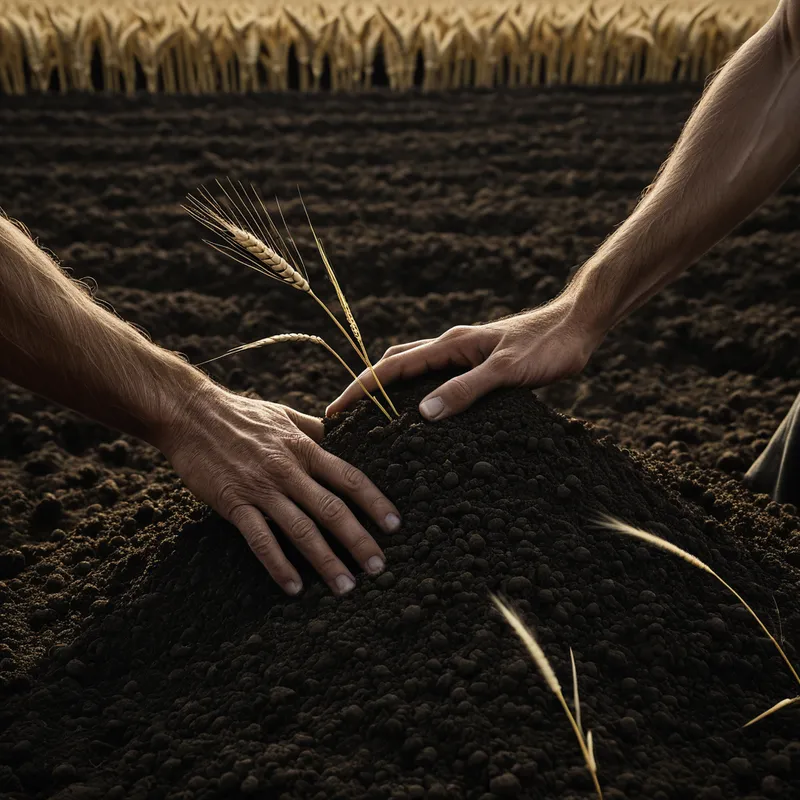
And at the heart of it all was the first cutting. Lugh himself, his face a mask of solemn duty, took up a sickle not of iron, but of bronze, its edge catching the slanting, late-summer light. He walked to the richest, fullest stand of grain, a field that had sprung from the very earth that cradled Tailtiu. The crowd fell silent. This was the moment. With a swift, sure motion, he bent and severed the first sheaf. A collective breath was held. This was not just harvest; it was a sacrifice. The golden head of the grain, the embodied spirit of the summer’s light and his mother’s life, fell into his hands. He lifted it high—an offering to the sky, a tribute to the earth, a signal to the people. The king had reaped the first fruits, and in that act, he accepted the terrible, beautiful bargain: life demands life. The feast could begin, the future was secured, but the wheel had turned. The brilliant Lugh, in honoring the dead, acknowledged his own inevitable dimming.
Cultural Origins & Context
Lughnasadh (pronounced LOO-nə-sə), traditionally held around August 1st, was one of the four great cross-quarter days of the Gaelic calendar. It was not merely a agricultural marker, but a profound socio-political and religious event. The myth of Lugh instituting the festival for Tailtiu served as the sacred charter for these gatherings. In historical times, these were the Óenach, temporary cities of tents and purpose that drew people from all territories.
The function was multifaceted. Economically, it was a time for trading livestock, crafts, and the year’s first harvest. Politically, it was where laws were proclaimed, disputes settled, and tribal kings affirmed their sovereignty through their presence and generosity. Socially, it was a prime time for matchmaking and strengthening alliances. The games—athletic, artistic, and martial—were not just entertainment; they were a ritual re-enactment of cosmic order, a display of the vital force (mísh) of the people and their king, ensuring the fertility of the land for the coming year. The myth, passed down by filid (poet-historians) and later recorded by Christian monks, encoded this entire complex of meaning: legitimate rule is born from sacrificial service to the land.
Symbolic Architecture
At its core, the Lughnasadh myth is a masterful depiction of the necessary sacrifice that underpins creation, sovereignty, and cyclical time.
The first fruit is always given, not taken. It is the conscious acknowledgment that sustenance is not a right, but a relationship.
Tailtiu represents the primal, raw potential of the land and the old order. Her self-sacrificial clearing is the act of culture itself—taming [chaos](/symbols/chaos “Symbol: In Arts & Music, chaos represents raw creative potential, uncontrolled expression, and the breakdown of order to forge new artistic forms.”/) to create the conditions for [community](/symbols/community “Symbol: Community in dreams symbolizes connection, support, and the need for belonging.”/) and growth. She is the archetypal Magna Mater who gives her [body](/symbols/body “Symbol: The body in dreams often symbolizes the dreamer’s self-identity, personal health, and the relationship they have with their physical existence.”/) so that her children may live. Lugh, the brilliant, [multi](/symbols/multi “Symbol: Multi signifies multiplicity and diversity, often representing various aspects of life or identity in dreams.”/)-skilled [hero](/symbols/hero “Symbol: A hero embodies strength, courage, and the ability to overcome significant challenges.”/), represents the new order of conscious kingship, law, and civilization. His [grief](/symbols/grief “Symbol: A profound emotional response to loss, often manifesting as deep sorrow, yearning, and a sense of emptiness.”/) transformed into [ritual](/symbols/ritual “Symbol: Rituals signify structured, meaningful actions carried out regularly, reflecting cultural beliefs and emotional needs.”/) [action](/symbols/action “Symbol: Action in dreams represents the drive for agency, motivation, and the ability to take control of situations in waking life.”/) is the pivotal [moment](/symbols/moment “Symbol: The symbol of a ‘moment’ embodies the significance of transient experiences that encapsulate emotional depth or pivotal transformations in life.”/). He does not deny the sacrifice; he institutionalizes it. The cutting of the first sheaf is a symbolic killing. The [spirit](/symbols/spirit “Symbol: Spirit symbolizes the essence of life, vitality, and the spiritual journey of the individual.”/) of the [grain](/symbols/grain “Symbol: Represents sustenance, growth cycles, and the foundation of civilization. Symbolizes life’s harvest, patience, and transformation from seed to nourishment.”/) (the Cailleach or corn [spirit](/symbols/spirit “Symbol: Spirit symbolizes the essence of life, vitality, and the spiritual journey of the individual.”/)) is sacrificed, just as the sacred [king](/symbols/king “Symbol: A symbol of ultimate authority, leadership, and societal order, often representing the dreamer’s inner power or external control figures.”/) (embodied by Lugh) symbolically offers himself to ensure the continuity of his people.
The [festival](/symbols/festival “Symbol: A festival typically symbolizes celebration, community, and a collective joy that brings people together for a shared experience.”/) itself becomes the symbolic “sacred [marriage](/symbols/marriage “Symbol: Marriage symbolizes commitment, partnership, and the merging of two identities, often reflecting one’s feelings about relationships and social obligations.”/)” (hieros gamos). The king (Lugh) weds the sovereignty of the land (Tailtiu, now transformed into fertile [earth](/symbols/earth “Symbol: The symbol of Earth often represents grounding, stability, and the physical realm, embodying a connection to nature and the innate support it provides.”/)) through the ritual of the first harvest. His [triumph](/myths/triumph “Myth from Roman culture.”/) in the games affirms his fitness to be this consort. Thus, the myth encapsulates the entire cycle: [death](/symbols/death “Symbol: Symbolizes transformation, endings, and new beginnings; often associated with fear of the unknown.”/) (Tailtiu), transformation (clearing/ritual), and [rebirth](/symbols/rebirth “Symbol: A profound transformation where old aspects of self or life die, making way for new beginnings, growth, and renewal.”/) (the harvest and the people’s prosperity).
The Dreamer’s Resonance
When this myth stirs in the modern dreamer, it often surfaces at a threshold of personal “harvest.” The somatic feeling is one of fullness coupled with acute vulnerability—the ache of muscles after great exertion, the bittersweet pang of a project completed, the anxious thrill before a major life announcement.
Dreams may manifest as being in a vast, sun-drenched field with a beautiful, heavy crop that must be cut, but the dreamer has no tool, or fears hurting the field itself. This reflects the psychological process of reaping what one has sown—confronting the results of one’s labor, choices, and growth. The conflict is between the desire to enjoy the fruit and the deep, often unconscious knowledge that to integrate an achievement, one must “kill” its potential phase and convert it into tangible, consumable reality. Another common pattern is the funeral games: dreaming of being in a contest or competition that feels simultaneously celebratory and deeply serious, where the prize is not just victory, but the right to move forward. This is the [psyche](/myths/psyche “Myth from Greek culture.”/) preparing for a necessary sacrifice of an old identity (the “Tailtiu” within—the exhausted caregiver, the relentless striver) to make way for a new, more sovereign mode of being.
Alchemical Translation
The alchemical journey modeled by Lughnasadh is the operation of Calcinatio and Ablutio followed by a conscious, ritualized Mortificatio. It is the process of psychic individuation where one must sacrifice a part of [the self](/myths/the-self “Myth from Jungian culture.”/) to feed the whole.
Individuation demands that we become both the grieving god and the cutting blade, honoring what must die in us so that we may truly reign.
First, the “clearing of Tailtiu” is the arduous, often exhausting work of confronting one’s inner chaos and unconscious patterns (the wild forest). This labor feels like it might kill us—and in a way, it does. An old complex, a dependent identity, is cleared away. The ensuing grief (Lugh’s sorrow) is not a sign of failure but of depth; it is the recognition of the cost of growth.
The institution of the “funeral games” is the crucial next step: the conscious ego (Lugh) must not collapse into melancholy but must actively create a new structure from the loss. This is the ritualization of life—establishing healthy practices, boundaries, and celebrations that honor the past while actively engaging the present. Finally, the “cutting of the first sheaf” is the moment of integration. The dreamer must consciously “sacrifice” the budding potential, the endless possibility, the protected idea, and turn it into something real, tangible, and shared. It is the writer publishing the manuscript, the professional accepting the promotion, the individual committing to a relationship. It is the act of claiming one’s sovereignty by courageously fulfilling the contract with life itself, accepting that every gain is preceded by a sacred loss. In this alchemical harvest, we become, at last, both the sacrificed and the sovereign, fully participating in the turning of our own inner wheel.
Associated Symbols
Explore related symbols from the CaleaDream lexicon: