The Cave of Plato's Allegory Myth Meaning & Symbolism
Prisoners chained in a cave mistake shadows for reality until one is freed, ascending to see the sun and returning with a transformative, unwelcome truth.
The Tale of The Cave of Plato’s Allegory
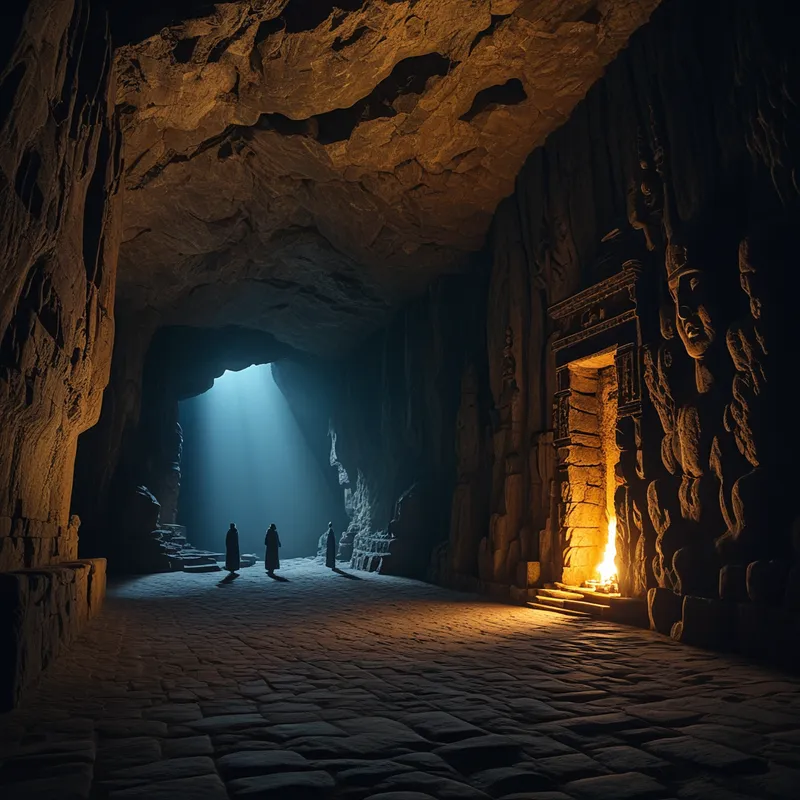
Imagine a place beneath the sun, a deep chamber in the belly of the earth. Here, from their childhood, a company of men and women are bound. Not with cruel ropes, but with chains that fasten their legs and necks, holding them fast so they can only look straight ahead at the wall of the cave. Behind and above them burns a great fire, and between the fire and the prisoners runs a low wall, like the screen at a puppet show.
Along this wall, other people carry all manner of artifacts: statues of men and animals, vessels of wood and stone, shapes of every kind. The fire casts the shadows of these carried things onto the wall the prisoners face. The voices of the carriers echo strangely off the stone, seeming to come from the shadows themselves.
For the prisoners, this is the whole of existence. The dance of shadows is reality. The echoes are true speech. They name the shadows as they pass: “horse,” “tree,” “god.” They devise honors and prizes for those who are quickest to name the shifting shapes, who are best at predicting the sequence of the shadow-play. Their world is a consensus of phantoms.
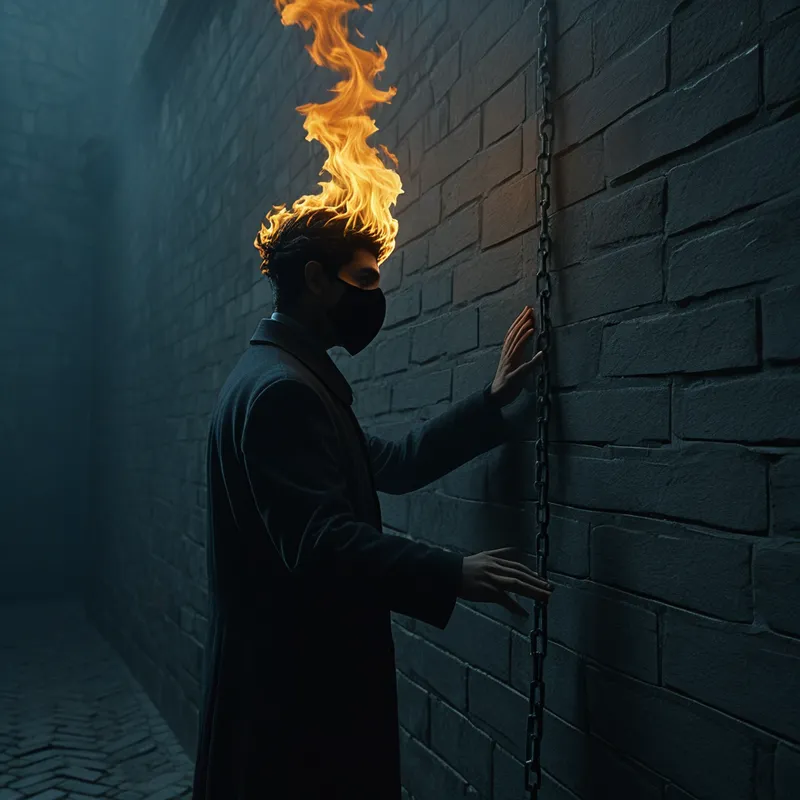
Now, picture one among them being freed. The chains are struck away. He is compelled to stand up, to turn around, to walk toward the light of the fire. The movement is agony. The light is pain. The shapes of the artifacts are blurred and confusing, less real-seeming than the clear shadows he has always known. He stumbles, he resists. He would rather return to his familiar chains and the comforting certainty of the wall.
But he is forced onward, up the rough, steep path out of the cave itself, into the world above. The light of the sun is a torment beyond imagining. He is utterly blinded. He can see nothing of the true things—the trees, the water, the animals, the stars—only a painful, overwhelming glare. Slowly, painfully, his eyes adjust. He sees reflections first, in pools of water. Then shadows of real things, cast by the sun. Finally, he can look upon the things themselves. And last of all, he can gaze upon the sun itself, not as a mere image in water, but as it is: the source of all light, the cause of the seasons, the guardian of all visible reality.
He understands. He pities his former companions in the cave. Their prizes are dust. Their knowledge is ignorance. Their reality is a prison.
His heart fills with a duty he does not want. He must return. He descends back into the familiar darkness. But his eyes, now accustomed to the sun, are blind in the gloom. He stumbles past the fire, a clumsy fool in the eyes of those still chained. He tries to tell them of the world above, of the sun, of true forms. He is met with ridicule. They laugh at his ruined sight. They declare his journey upward has destroyed his eyes, and that to even attempt such a thing is madness. If they could lay hands on him, they would kill the one who tries to free them.
Cultural Origins & Context
This is not a myth from a lost civilization, but a philosophical allegory crafted by the Athenian thinker Plato, recorded in Book VII of his dialogue The Republic (c. 375 BCE). Its culture is “Global/Universal” not by ancient provenance, but by profound and enduring adoption. Plato, a student of Socrates, used this story not for entertainment, but as a pedagogical and political tool. It was told within the context of a discussion on the nature of justice, education, and the ideal ruler—the Philosopher-King.
Its societal function was radical: to illustrate the core of Plato’s theory of Forms and to argue that true leaders must be those who have escaped the “cave” of public opinion and sensory illusion to behold the Form of the Good. It was passed down not by oral bards, but through the written word of philosophy, becoming a cornerstone of Western thought. Its universality stems from its abstract, archetypal structure, which has resonated across millennia and cultures, speaking directly to the human condition of perceptual and ideological confinement.
Symbolic Architecture
The allegory is a perfect symbolic map of the psyche’s journey from unconsciousness to consciousness.
- The Cave represents the phenomenal world as perceived by the senses—a world of mere appearances, of culturally conditioned reality. It is the personal unconscious and the collective consensus trance.
- The Prisoners are the unexamined ego, identifying completely with its projections and the shared narratives of its tribe. They live in psychic automatism.
- The Shadows are our perceptions, opinions, and the “realities” constructed by family, society, and media. They are the shadow of true reality.
- The Chains are the internal and external forces that limit perception: addiction, ideology, trauma, fear, and the comfort of the familiar.
- The Fire is the artificial light of the human intellect and culture—a dim reflection of a greater truth, but still a source of illusion.
- The Artifacts are the imperfect copies of ideal Forms that populate our world, the mediated objects that cast the shadows.
- The Ascent is the arduous process of education (periagoge) and philosophical awakening. It is the confrontation with the individuation process.
- The Sun symbolizes the ultimate source of truth and reality—the Form of the Good, or in psychological terms, the Self. It is the unifying principle that makes understanding possible.
The most painful light is not the fire that blinds you to the shadows, but the sun that reveals you were ever in chains.
The Dreamer’s Resonance
When this myth patterns a modern dream, the dreamer is undergoing a profound somatic and psychological shift in their perception of reality. Dreaming of being chained, staring at a screen or wall of shifting, meaningless images, speaks to a deep sense of existential confinement—feeling trapped in a job, a relationship, a belief system, or a pattern of behavior that feels inauthentic.
The dream of the ascent is often somatic: struggling up a dark tunnel, being pulled toward a blinding light at the end, feeling intense anxiety and disorientation. This mirrors the psychological process of confronting a repressed truth or embarking on a path of self-discovery that initially feels worse than the familiar misery. The body reacts to psychic danger.
Dreaming of returning to the cave blind and being mocked is the dream-work expressing the fear of alienation. It encapsulates the terror of insight: that seeing truth may isolate you from your community, your family, your former self. The dreamer is processing the real-world consequences of awakening, the loneliness of the one who sees what others choose to ignore.
Alchemical Translation
The allegory is a precise recipe for psychic alchemy—the transmutation of the leaden, shadow-identified ego into the golden, conscious Self.
- Nigredo (The Blackening): The initial state is the cave itself—a state of unconsciousness, confusion, and identification with the shadow (prima materia). The ego is in complete identification with its prison.
- Albedo (The Whitening): The liberation and turning toward the fire. This is the beginning of analysis and differentiation. It is a washing in the painful, intellectual light that burns away naive projections. The ego begins to separate from the shadow.
- Citrinitas (The Yellowing): The ascent into sunlight and the viewing of true things. This is the stage of integration and spiritual illumination. The ego aligns with the archetype of the Sage, gaining wisdom and perspective.
- Rubedo (The Reddening): The return to the cave. This is the ultimate alchemical stage, where the transformed substance (the enlightened individual) is returned to the world to act. It is the individuation made manifest in service. The Sun (Self) is now carried within, a guiding inner light, even in outer darkness.
The work is not complete upon seeing the sun. The final, most difficult transmutation is to become the sun for those still in shadow, and to bear the blindness this kindness induces in them.
The cave is never fully left behind, for we live in the world of phenomena. But the one who has seen the sun can no longer mistake the shadow for the substance. They carry the disorienting, glorious, and isolating light of reality within them, and their task—their curse and their purpose—is to learn to see in both worlds at once.
Associated Symbols
Explore related symbols from the CaleaDream lexicon: