The Camino de Santiago Myth Meaning & Symbolism
The myth of the Apostle James's journey to Iberia and the miraculous discovery of his tomb, birthing a thousand-year pilgrimage of faith and transformation.
The Tale of The Camino de Santiago
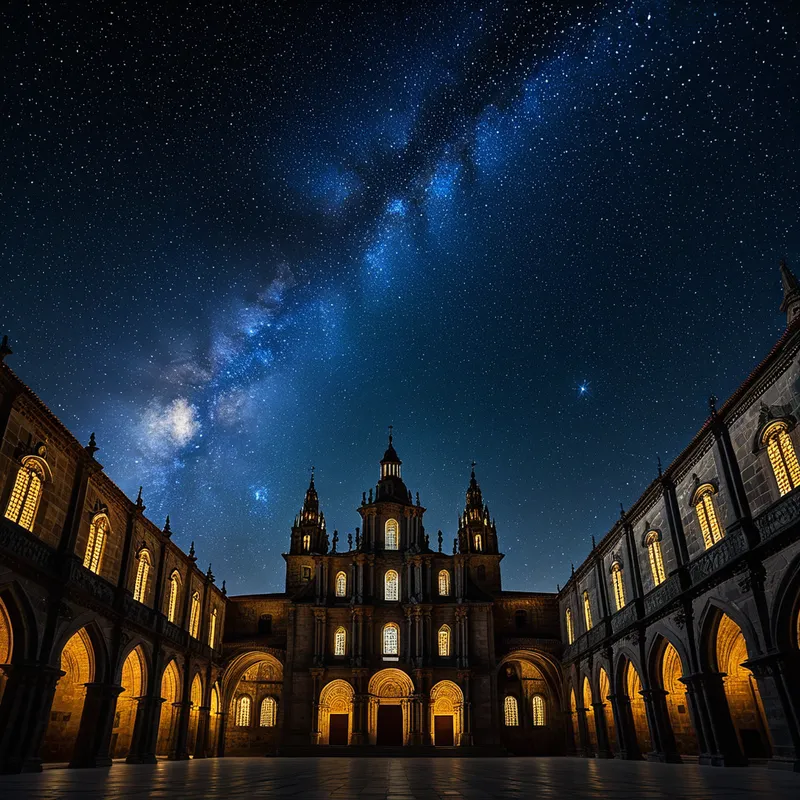
Listen, and hear a tale not of one journey, but of millions. It begins not with a map, but with a starfield. In the deep, dark years after the light of the Messiah was extinguished upon the cross, his disciples scattered like seeds to the four winds. One, Santiago, carried the word to the very edge of the known world, to the wild, green land of Hispania. His voice was a lone flame in a pagan twilight, until the sword of Herod Agrippa silenced it in Jerusalem, making him the first apostolic martyr.
His followers, hearts heavy with devotion and fear, placed his body upon a stone boat with neither sail nor oar. They entrusted him to the mercy of God and the waves. And the waves obeyed. Guided by angels, the vessel sailed for seven days and seven nights across the Middle Sea, past the Pillars of Hercules, and into the tempestuous Atlantic, finally coming to rest in the forgotten kingdom of Gallaecia. There, in a silent wood, they laid the saint to rest in a marble tomb… and then, history forgot.
Centuries passed. Kings rose and fell, empires crumbled, and the wood grew thick and deep. Then, in the early 800s, a hermit named Pelagius was drawn night after night to a lonely field. He saw not the moon, but a shower of stars falling upon a single, forgotten mound. Drawn by this celestial sign—Campus Stellae, the Field of the Star—he led the local bishop to the spot. Their spades struck marble. Within, they found the uncorrupted body of the apostle, a white scallop shell resting upon his breast.
Word flew faster than any bird. From this miraculous discovery, a path was born. Not drawn in ink, but worn into the earth by countless feet. Kings, queens, paupers, and thieves felt the pull. They left their homes, took up the simple staff and gourd, and sewed the scallop shell upon their cloaks. They walked. They walked through the Pyrenees’ biting wind, across the sun-scorched plains of the Meseta, through the dripping green forests of Galicia. They walked with blistered feet and hopeful hearts, following the road of stars, seeking not just a tomb, but an absolution, a miracle, a transformation. They walked to stand before the sacred Botafumeiro as it swung, a giant thurible of faith, filling the cathedral with sacred smoke. And in reaching the end, they found that the true destination had been seeded within them all along the stony, relentless, beautiful way.
Cultural Origins & Context
The myth of the Camino is a living palimpsest, written and rewritten over twelve centuries. Its origins are firmly planted in the 9th century, a pivotal moment for the Christian kingdoms of northern Iberia. The discovery of the apostle’s tomb was not merely a religious event; it was a geopolitical catalyst. In the face of the powerful Umayyad Caliphate to the south, the fledgling Kingdom of Asturias now possessed a potent spiritual champion—Santiago Matamoros (the Moor-slayer). This martial aspect of the myth fueled the Reconquista, making the pilgrimage a act of both faith and cultural identity.
The myth was passed down not by a single bard, but by an entire civilization. It was carved in stone on cathedral portals, sung in troubadours’ songs, recorded in the world’s first travel guide, the Codex Calixtinus. Its societal function was multifaceted: it was a penitential rite offering plenary indulgence, a vast economic network, a conduit for the exchange of art and ideas across Europe, and a supreme act of devotion that structured the very concept of a life well-lived for millions, from peasants to emperors.
Symbolic Architecture
At its core, the Camino is the archetypal Pilgrimage mythologized. It is external geography mapped onto internal topography. The path itself is the central symbol—not as a straight line to a goal, but as a serpentine, challenging process that is the transformation.
The destination is not a place, but a new way of seeing. The miles walked are not subtracted from a life, but are the currency with which one purchases a more authentic self.
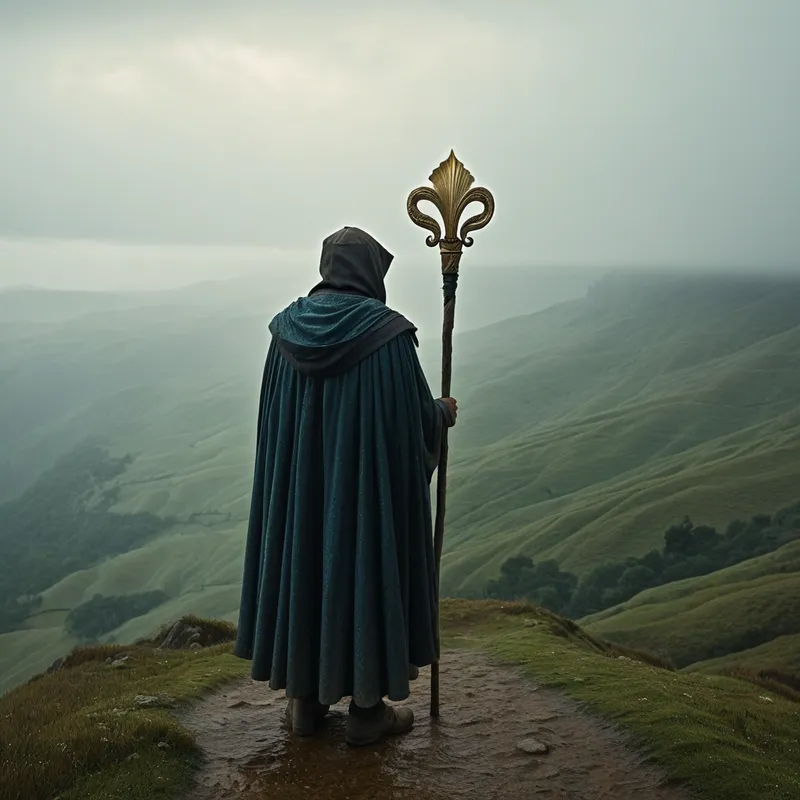
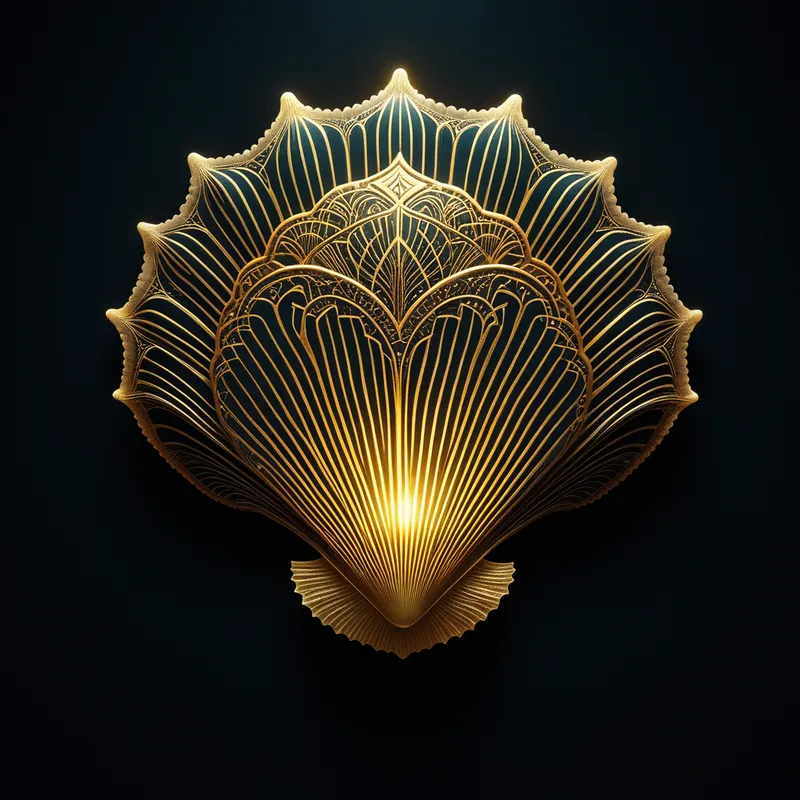
The Bordón is the pilgrim’s spine and will. The Calavera is the humble container of life’s essence. And the Vieira (scallop shell) is perhaps the richest symbol: its grooves, converging at a single point, represent the many paths of pilgrims converging on Santiago; it is a badge of identity, a humble bowl for food and water, and a metaphor for the pilgrim themselves—a hard, weathered exterior protecting a soft, vulnerable interior, washed by the waves of experience.
Psychologically, the myth represents the ego’s arduous journey toward the Self. The physical burdens—the pack, the blisters—are the psychic burdens of persona, trauma, and expectation we carry. Shedding weight from the pack is the act of shedding psychological armor. The camino forces a confrontation with the shadow in the loneliness of the Meseta, and offers communion with the anima/animus in the shared meals and stories of the albergues.
The Dreamer’s Resonance
When this myth activates in the modern psyche, it manifests in dreams of profound, often arduous, movement. One does not dream of arriving gloriously at the cathedral, but of being on the path. Common motifs include: walking an endless road where the landscape subtly shifts from familiar to alien; carrying a backpack that becomes inexplicably heavier; searching for waymarkers (the yellow arrows or scallop shells) that have faded or disappeared; or meeting enigmatic fellow travelers who offer cryptic advice or a shared silence.
Somatically, this dream pattern correlates with a psychological process of purgation and reorientation. The dreamer is likely at a life threshold, feeling the weight of an outdated identity or unresolved history. The dream-path is the nervous system and the psyche mapping a new route through a period of transition—a career change, the end of a relationship, a search for deeper meaning. The exhaustion felt in the dream is the soul’s fatigue from carrying what no longer serves. The appearance of the path itself is the unconscious affirming that a process, however difficult, has already begun. The dream is an invitation to consent to the journey, to embrace the necessary blisters of growth.
Alchemical Translation
The Camino is a perfect model for the alchemical process of individuation. It begins with the Nigredo—the blackening. This is the call, often born from crisis, disillusionment, or a deep, star-guided longing. The pilgrim leaves home (the known ego-state), entering the chaos and dissolution of the road, where all comforts are stripped away.
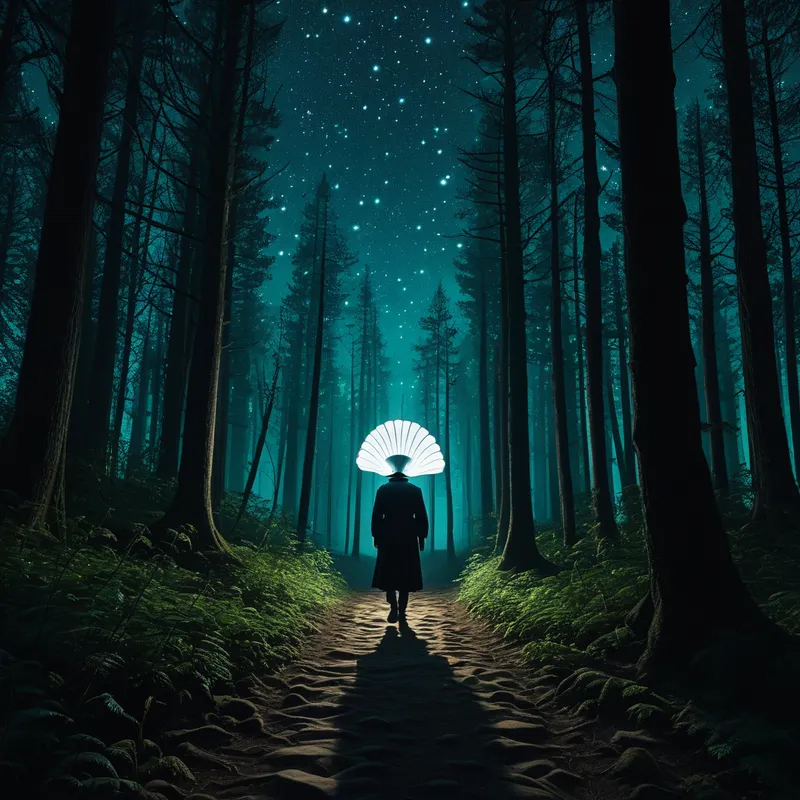
The walking itself is the Albedo—the whitening. The relentless, rhythmic pace under the sun and stars is the opus (the work). It is the distillation of the complex self into simpler, essential elements: walk, eat, sleep, commune. In this white heat of effort, projections fall away. One cannot blame the road for being long, only one’s own resistance to walking it. This is the purification.
The alchemy occurs not in the cathedral’s gold, but in the dust of the path. The leaden self, through the friction of the journey, is slowly ground into the gold of awareness.
The arrival in Santiago represents the Citrinitas—the yellowing, the dawning of spiritual insight. But the true Rubedo—the reddening, the final integration—is found in the return home. The transformed pilgrim must bring the wisdom of the path back into their old world. The shell on their pack is now a symbol not of seeking, but of having journeyed. The camino becomes an internalized compass, a psychic structure that reminds the individual that the path of becoming is endless, that every life is a series of caminos, and that the true Compostela is the fertile ground of a soul that has learned to find the sacred in the walking itself.
Associated Symbols
Explore related symbols from the CaleaDream lexicon: