The Calcination Stage Myth Meaning & Symbolism
The prima materia, the raw soul-stuff, is subjected to a purifying, all-consuming fire to burn away its dross, revealing its essential, indestructible nature.
The Tale of The Calcination Stage
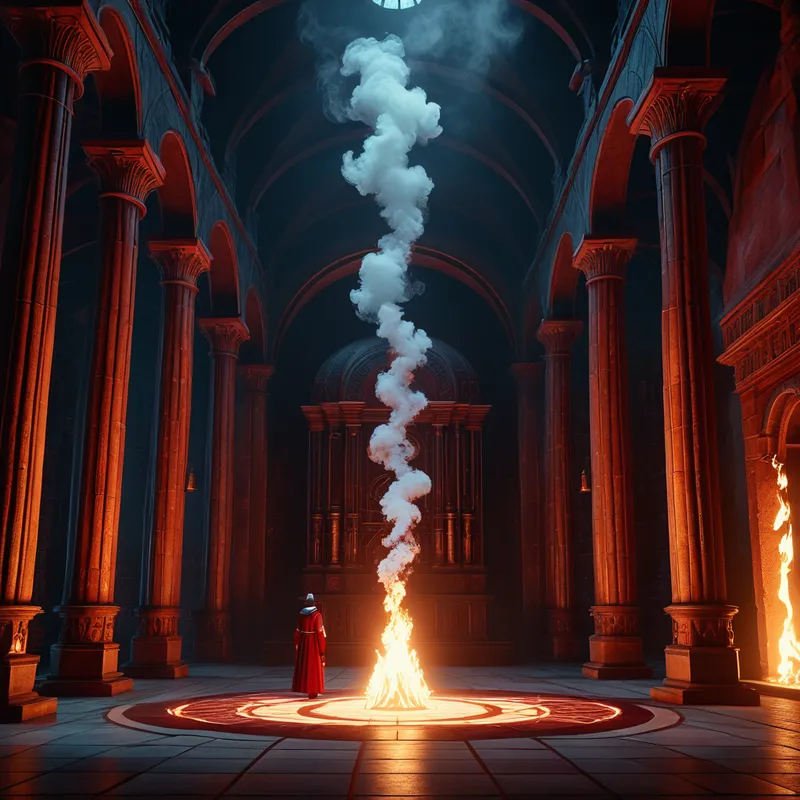
Listen. In the beginning, before the [Philosopher’s Stone](/myths/philosophers-stone “Myth from Alchemical culture.”/), there was only the [Prima Materia](/myths/prima-materia “Myth from Alchemical culture.”/). It was not a [thing](/myths/thing “Myth from Norse culture.”/), but the potential for all things—a swirling, formless mass of memory, desire, fear, and glory. It contained everything and nothing, a sleeping dragon of possibility curled in the dark womb of the Athanor.
But to become something, it first had to become nothing.
The call came not as a sound, but as a heat. A slow, gathering warmth at the heart of the chaos. The [Salamander](/myths/salamander “Myth from Alchemical culture.”/), spirit of the furnace, uncoiled from the foundations of [the world](/myths/the-world “Myth from Tarot culture.”/). It did not attack; it invited. It was a crucible of destiny, opening its maw beneath the dreaming Prima Materia.
There was no gentle ascent. The heat was absolute, a white, consuming embrace. The first to go were the vapors—the illusions, the fleeting identities, the stories the Prima Materia told itself about what it was. They hissed away as steam, ghostly shapes screaming into oblivion. Then the softer parts caught: the pretensions, the borrowed plumage, the comfortable lies. They blackened and curled, burning with a thick, acrid smoke that stung the eyes of the very stars.
The Prima Materia convulsed. It tried to become stone to resist, but the fire liquefied its resistance. It tried to become [water](/myths/water “Myth from Chinese culture.”/) to quench the flames, but the Salamander drank it and burned brighter. It shrieked in the voice of crumbling empires and wept in the salt of forgotten seas. This was not death, but a death of deaths—the annihilation of every form it had ever clung to.
As the outer layers burned away, a terrible groaning began from within. The core structures—the calcified hurts, the rigid beliefs, the ossified pride—began to crack. They did not melt, but shattered under the thermal shock of truth. This was the cacophony of calcination: the sound of a world-view breaking apart.
And then, silence. A moment of utter, ashen stillness. The fire died down. All that remained was a pile of grey, lifeless powder, scattered across the floor of the Athanor. It appeared to be a total defeat, the reduction of a universe to dust.
But within that dust, unseen, was a single, minute grain that did not glow, but was light. It was not burned, for it was of the same substance as the fire. It was the first, indestructible truth. The Salamander had not destroyed the Prima Materia. It had only burned away everything that was not it. The work could now begin.
Cultural Origins & Context
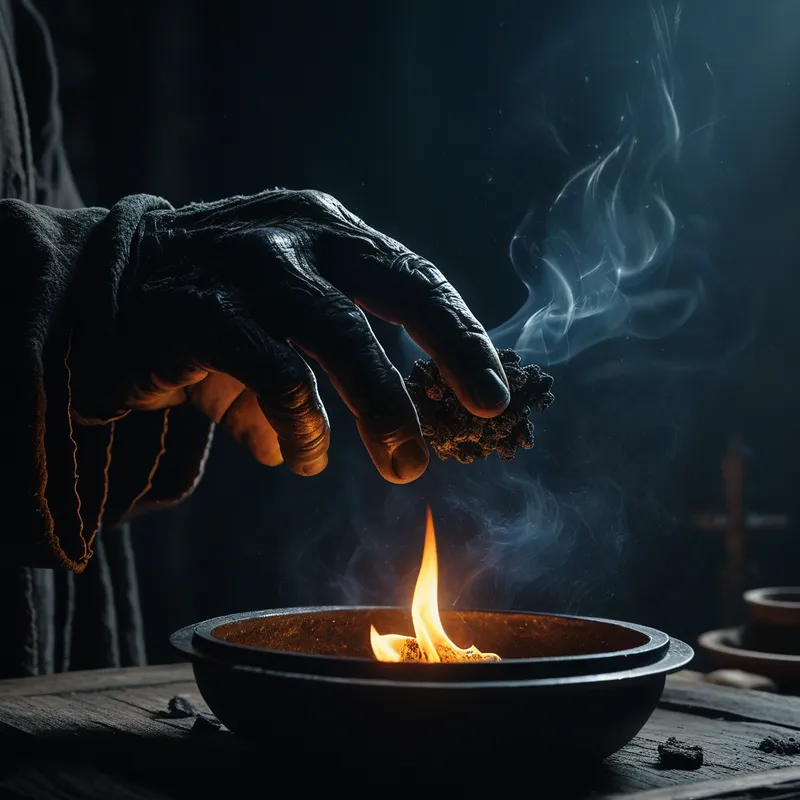
The myth of Calcination is the foundational narrative of the Western alchemical tradition, a corpus of knowledge that flourished from Hellenistic Egypt through the Islamic [Golden Age](/myths/golden-age “Myth from Universal culture.”/) and into the European Renaissance. It was never a single, standardized story but a core operational principle transmitted through cryptic texts, illustrated manuscripts (Mutus Liber), and oral instruction within guilds and secret societies.
Its tellers were not bards for the public, but masters for initiates—figures like [Hermes Trismegistus](/myths/hermes-trismegistus “Myth from Greek culture.”/), Arnaldus de Villa Nova, or the anonymous author of the [Rosarium Philosophorum](/myths/rosarium-philosophorum “Myth from Alchemical culture.”/). They wrote in a language of metaphor and symbol ([the Green Lion](/myths/the-green-lion “Myth from Alchemical culture.”/) devours the Sun) to protect the art from the profane and to describe spiritual processes that defy literal language. Its societal function was dual: as a practical guide for metallurgy and medicine, and as an esoteric map for inner transformation, offering a hopeful, structured narrative for confronting the necessary suffering of purification and change.
Symbolic Architecture
Psychologically, the myth maps the brutal but essential first stage of any profound transformation: the deconstruction of [the ego](/myths/the-ego “Myth from Jungian culture.”/)‘s complex. The Prima Materia represents the unconscious, undifferentiated [psyche](/myths/psyche “Myth from Greek culture.”/) in its “natural” state—a tangled [mass](/symbols/mass “Symbol: Mass often symbolizes a gathering or collective experience, representing shared beliefs, burdens, or the weight of emotions within a community.”/) of potentials, complexes, and inherited patterns. [The ego](/myths/the-ego “Myth from Jungian culture.”/), at this stage, is not a coherent ruler but a confused aggregate of these contents.
Calcination is the fire of consciousness turned upon itself. It is the willing submission of one’s cherished self-image to the searing question: “What remains when all I pretend to be is taken away?”
The [Salamander](/symbols/salamander “Symbol: Salamanders symbolize rebirth, transformation, and renewal.”/) is the archetypal force of Discrimination. It is the heat of a sudden, devastating [insight](/symbols/insight “Symbol: A sudden, deep understanding of a complex situation or truth, often arriving unexpectedly and illuminating hidden connections.”/), the slow burn of chronic [anxiety](/symbols/anxiety “Symbol: Anxiety in dreams reflects internal conflicts, fears of the unknown, or stress from waking life, often demonstrating the subconscious mind’s struggle for peace.”/), or the acute fire of a [life](/symbols/life “Symbol: The symbol of ‘Life’ represents a journey of growth, interconnectedness, and existential meaning, encompassing both the joys and challenges that define human experience.”/) [crisis](/symbols/crisis “Symbol: A crisis symbolizes turmoil, urgent challenges, and the need for immediate resolution or change.”/) that forces a reckoning. The “smoke and vapors” are the [persona](/symbols/persona “Symbol: The social mask or outward identity one presents to the world, often concealing the true self.”/)—the adaptable mask we show the world—and the transient emotional states. The “cracking core” is the [shadow](/symbols/shadow “Symbol: The ‘shadow’ embodies the unconscious, repressed aspects of the self and often represents fears or hidden emotions.”/), the rigid, often negative structures of the [personality](/symbols/personality “Symbol: Personality in dreams often symbolizes the traits and characteristics of the dreamer, reflecting how they perceive themselves and how they believe they are perceived by others.”/) that resist change. The resulting “ash” is the state of [Nigredo](/myths/nigredo “Myth from Alchemical culture.”/)—the dark [night](/symbols/night “Symbol: Night often symbolizes the unconscious, mystery, and the unknown, representing the realm of dreams and intuition.”/) of the [soul](/symbols/soul “Symbol: The soul represents the essence of a person, encompassing their spirit, identity, and connection to the universe.”/), where the old has died but the new is not yet born. The indestructible “[grain](/symbols/grain “Symbol: Represents sustenance, growth cycles, and the foundation of civilization. Symbolizes life’s harvest, patience, and transformation from seed to nourishment.”/) of light” is the first [glimpse](/symbols/glimpse “Symbol: A fleeting, partial view or moment of insight that suggests more lies beyond immediate perception, often hinting at hidden truths or future possibilities.”/) of the true Self, the central, organizing principle of the psyche, revealed only after the inauthentic has been stripped away.
The Dreamer’s Resonance
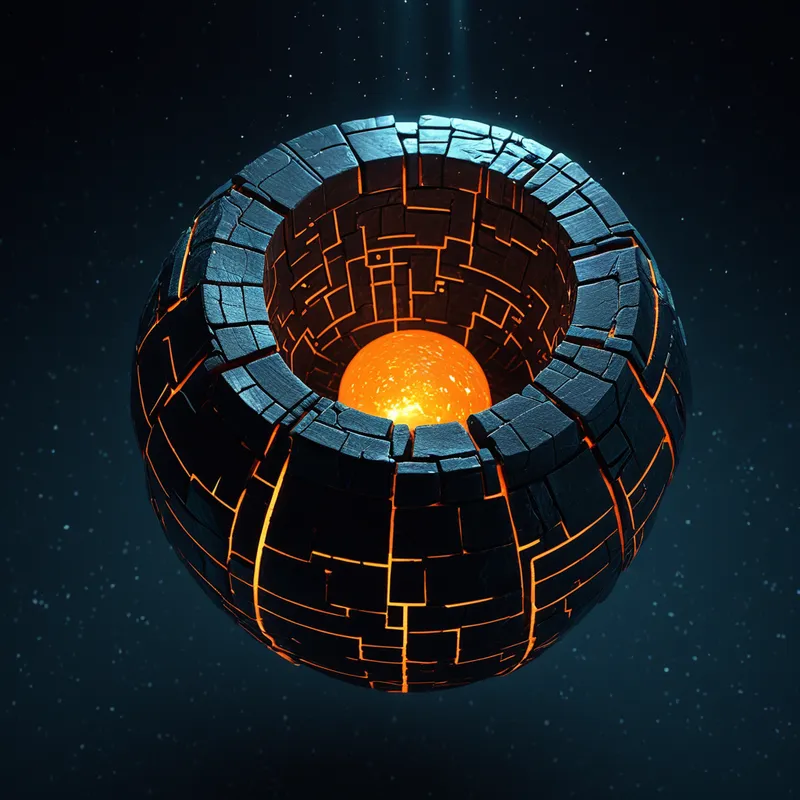
When this myth stirs in the modern unconscious, it announces itself not as a story, but as a somatic and emotional experience. The dreamer may not see a furnace, but they will feel [the calcination](/myths/the-calcination “Myth from Alchemical culture.”/).
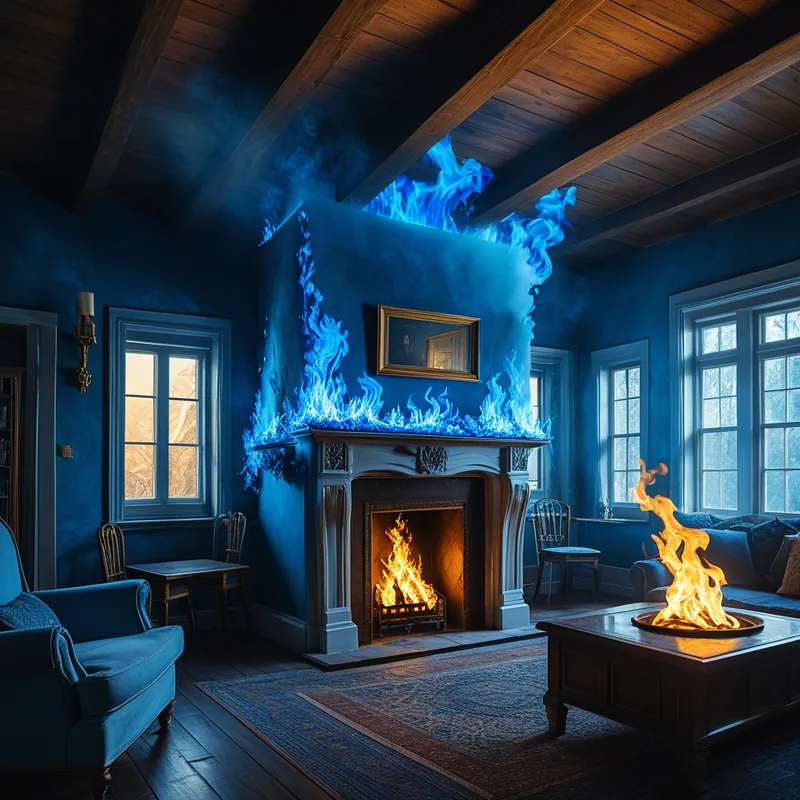
Common dream motifs include: houses or buildings burning down in a controlled, almost purposeful manner; teeth crumbling or falling out (a classic symbol of a foundational structure failing); being caught in a desert under a relentless sun that bleaches all color from the world; or watching one’s own skin blacken and peel away to reveal something raw and new underneath. The emotional tone is one of profound, inescapable exposure, anxiety, and loss. There is often a paradoxical sense of terror and inevitability—a knowing that this destruction is necessary.
Somnatically, this process can manifest in waking life as periods of intense fatigue, feverish states, skin inflammations, or a feeling of being “burned out.” Psychologically, it is the experience of a cherished identity—“the successful one,” “the caretaker,” “the victim”—collapsing under the weight of its own falsity. It is the devastating realization that a lifelong belief no longer holds truth, leaving one feeling reduced to ash.
Alchemical Translation
For the individual on the path of Individuation, the Calcination Stage is non-negotiable. It is the initiation. Our culture prizes accretion—adding more skills, more possessions, more accolades to [the self](/myths/the-self “Myth from Jungian culture.”/). Alchemy, and depth psychology, begin with subtraction.
The modern seeker must become both the Prima Materia and [the alchemist](/myths/the-alchemist “Myth from Various culture.”/). One must consciously consent to place one’s own confused identity—the amalgam of parental expectations, cultural scripts, and trauma responses—into [the crucible](/myths/the-crucible “Myth from Alchemical culture.”/) of honest self-examination.
The fire is fed by the question “Why?” Why do I hold this belief? Why does this pattern repeat? Why does that person’s opinion devastate me? This is not an intellectual exercise, but a devotional burning.
This is not a passive victimhood (“life is burning me”), but an active, if agonizing, participation in one’s own transformation (“I submit to the fire to find what is real”). The “ash” state that follows—the depression, the emptiness, the sense of meaninglessness—is not the end. It is the fertile, humbled ground from which something essential can grow. In that void, the ego, stripped of its grandiose pretensions, makes its first contact with the Self. The individual learns they are not the colorful, combustible vapors of their moods, nor the brittle stone of their defenses. They are [the vessel](/myths/the-vessel “Myth from Alchemical culture.”/) that contains the fire, and the indestructible essence that survives it. Only from this reduced, essential state can the subsequent alchemical stages of Ablution, Conjunction, and [Rubedo](/myths/rubedo “Myth from Alchemical culture.”/) proceed. The gold cannot be imagined. It must be revealed by fire.
Associated Symbols
Explore related symbols from the CaleaDream lexicon: