The Burial Mound of Baldr Myth Meaning & Symbolism
The death of the shining god Baldr, his grand funeral, and the failure to retrieve him from Hel reveal the inescapable shadow within the Norse cosmos.
The Tale of The Burial Mound of Baldr
Listen, and hear the tale of the day the light went out of [the world](/myths/the-world “Myth from Tarot culture.”/).
It began with a dream. Baldr the Beautiful, whose presence was like summer dawn, was haunted by visions of his own end. A chill had entered Ásgarðr, a shadow where before there was only radiance. In response, his mother [Frigg](/myths/frigg “Myth from Norse culture.”/) traveled to every corner of [the Nine Worlds](/myths/the-nine-worlds “Myth from Norse culture.”/). She extracted an oath from fire and [water](/myths/water “Myth from Chinese culture.”/), iron and stone, from every beast and bird, from every sickness and poison—from all things that exist—that they would not harm her son.
And so, a new game was born in the courts of the gods. They would take turns hurling spears, striking with axes, casting stones at the laughing Baldr, watching them all fall harmless at his feet. It was a celebration of invulnerability, a defiance of the dream. All joined in the sport—all but one. Loki, whose smile did not reach his eyes, watched from the shadows. In the guise of an old woman, he went to Frigg. “Is it true,” he whispered, “that all things swore the oath?” The weary goddess, proud of her work, confessed one small oversight: the young mistletoe growing west of [Valhalla](/myths/valhalla “Myth from Germanic culture.”/). It seemed too small, too soft, to ever be a threat.
Loki’s craft was swift. He plucked the mistletoe and fashioned a dart. He found Höðr, standing apart from the merriment, and placed the dart in his hand. “Here,” Loki said, guiding the blind god’s aim. “Let Baldr share in your joy.” Höðr, trusting, threw.
The sound was not of clattering stone, but a wet, terrible gasp. The shining god fell, and the laughter died in every throat. A silence fell upon Ásgarðr so complete it was a sound of its own. The oath had been broken by the one [thing](/myths/thing “Myth from Norse culture.”/) that had not sworn it. The dream was truth.
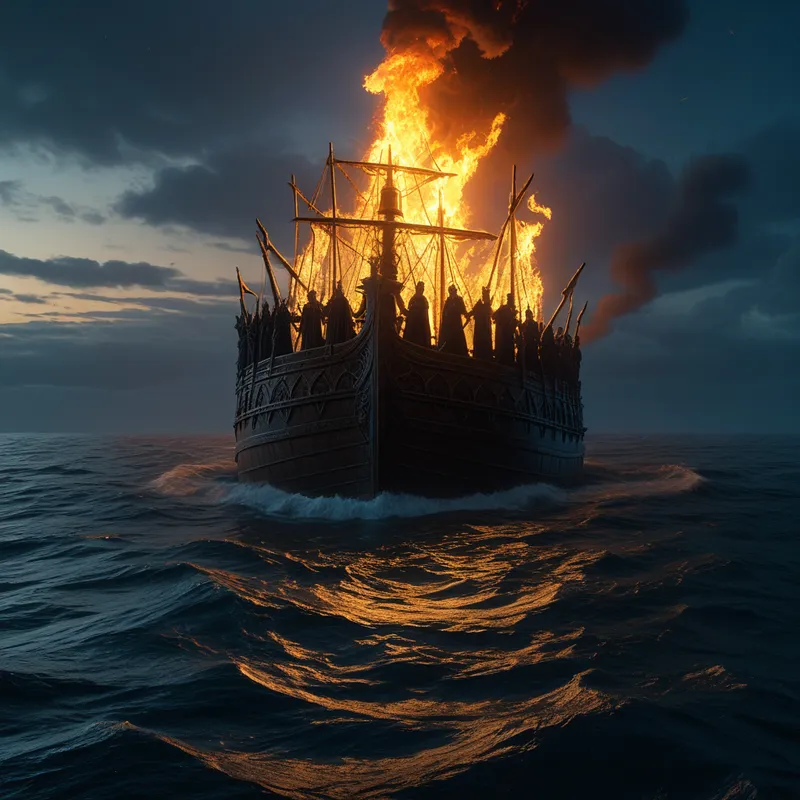
What followed was not a battle, but a funeral. The gods were paralyzed, not by an enemy, but by a grief so vast it immobilized them. They could not even lift Baldr’s body to prepare it for the pyre. They had to summon a giantess, Hyrrokkin, who came riding a wolf with vipers for reins. With a single push, she sent the greatest of all ships, Hringhorni, grinding into [the sea](/myths/the-sea “Myth from Greek culture.”/). Upon its deck they built a mound of treasures, of weapons, of all things fair. They placed Baldr there, and with him they placed his wife Nanna, who died of a broken heart. Óðinn himself laid upon the pyre his golden ring, Draupnir. Then the giantess touched the kindling with her fire, and the ship was set ablaze, pushed out to sea by a weeping giant. The light of the flames was a poor imitation of the light they had lost.
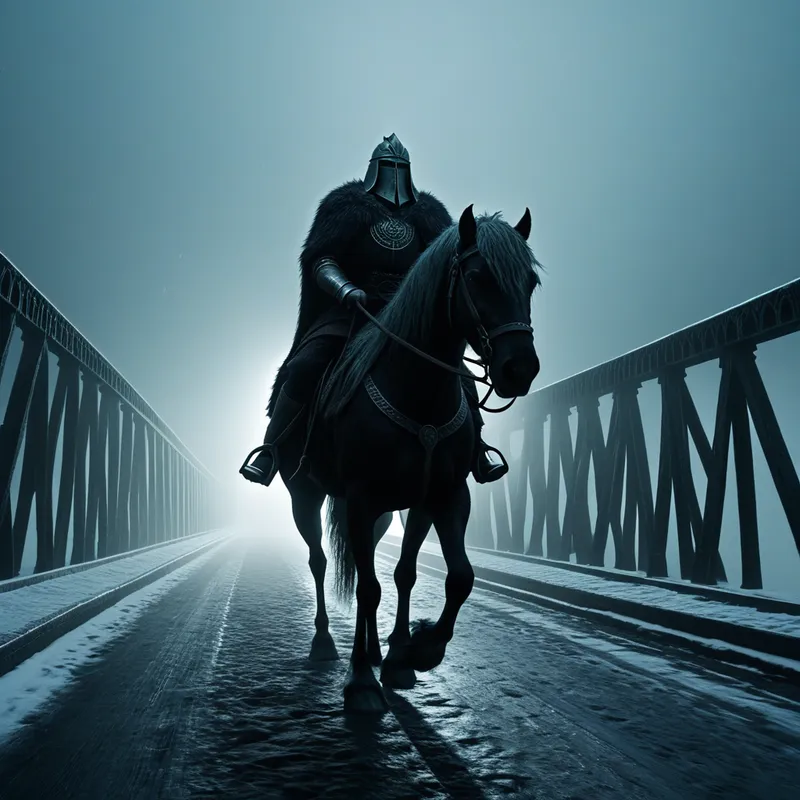
But the story does not end with the burial mound sinking beneath the waves. A desperate hope remained. The bravest of the gods, Hermóðr, volunteered to ride to Hel and plead for Baldr’s release. For nine nights he rode [Sleipnir](/myths/sleipnir “Myth from Norse culture.”/) down through ever-deepening darkness, across the echoing bridge Gjallarbrú, until he stood before the goddess Hel herself. He made his plea: the whole world wept for Baldr. Surely this proved his worth? Hel, cold and implacable, set a condition. “If all things in the world, living and dead, weep for Baldr, then he shall return to you.”
Messengers flew out across the Nine Worlds. Stones wept. Metals shed tears of rust. Every creature mourned. Almost every creature. For in a dark cave, they found a giantess named Þökk. “Let Hel keep what she holds,” she spat, dry-eyed. And so, the condition was broken. The hope was extinguished. Baldr would remain in the mound of Hel’s hall until the world’s end. The burial was complete, and with it, the first, irrevocable step toward [Ragnarök](/myths/ragnark “Myth from Norse culture.”/) had been taken.
Cultural Origins & Context
This central, heartbreaking narrative comes to us primarily from the Prose Edda of Snorri Sturluson, with key stanzas in the older Poetic Edda. It was not merely a story of a god’s death, but a foundational myth explaining the nature of the cosmos. For the Norse, the world was not inherently safe or just. It was a glorious, fragile construct besieged by entropy and chaos.
The tale was likely told in halls during the long winter nights, a poetic and ritualistic remembrance. Its function was profound: it modeled how to face inevitable, catastrophic loss with dignity. It showed gods, the mightiest beings, rendered helpless by grief, yet still performing the necessary rites—building the mound, launching the ship, making the impossible journey to treat with death itself. It taught that even the most perfect order contains the seed of its own downfall (the overlooked mistletoe), and that the universe’s response to profound loss is a conditional, collective mourning. The failure of that condition—Þökk’s refusal to weep—reinforced a hard, Norse truth: consensus is fragile, and fate often hinges on the stubbornness of a single, contrary will.
Symbolic Architecture
Psychologically, Baldr represents the conscious ego in its ideal state—[the principle](/symbols/the-principle “Symbol: A fundamental truth, law, or doctrine that serves as a foundation for a system of belief, behavior, or reasoning, often representing moral or ethical standards.”/) of light, [harmony](/symbols/harmony “Symbol: A state of balance, agreement, and pleasing combination of elements, often associated with musical consonance and visual or social unity.”/), and conscious goodness. He is the part of the [psyche](/myths/psyche “Myth from Greek culture.”/) that believes itself invulnerable, protected by the [mother](/symbols/mother “Symbol: The symbol of ‘Mother’ represents nurturing, protection, and the foundational aspect of one’s emotional being, often associated with comfort and unconditional love.”/)-complex (Frigg’s oaths), living in a state of naive perfection.
The shadow cannot be banished by oath; it can only be overlooked.
The [mistletoe](/symbols/mistletoe “Symbol: Mistletoe symbolizes love, peace, and friendship, traditionally used as a decoration during Christmas with the famous practice of kissing underneath it.”/) is the critical [symbol](/symbols/symbol “Symbol: A symbol can represent an idea, concept, or belief, serving as a powerful tool for communication and understanding.”/). It is the “insignificant” detail, the soft, overlooked, and unconscious element. It represents the repressed content—the weakness, [jealousy](/symbols/jealousy “Symbol: A complex emotion signaling perceived threat to valued relationships or status, often revealing insecurities and unmet needs.”/), or unacknowledged flaw—that the conscious self (Baldr) and its protective structures (Frigg) deem irrelevant. Loki, the [trickster](/symbols/trickster “Symbol: A boundary-crossing archetype representing chaos, transformation, and the subversion of norms through cunning and humor.”/) [archetype](/symbols/archetype “Symbol: A universal, primordial pattern or prototype in the collective unconscious that shapes human experience, behavior, and creative expression.”/), is the catalyst of [consciousness](/symbols/consciousness “Symbol: Consciousness represents the state of awareness and perception, encompassing thoughts, feelings, and experiences.”/). He is not pure evil, but the necessary force that knows the flaw exists and engineers the confrontation with [reality](/symbols/reality “Symbol: Reality signifies the state of existence and perception, often reflecting one’s understanding of truth and life experiences.”/). He forces the [integration](/symbols/integration “Symbol: The process of unifying disparate parts of the self or experience into a cohesive whole, often representing psychological wholeness or resolution of internal conflict.”/) of the [shadow](/symbols/shadow “Symbol: The ‘shadow’ embodies the unconscious, repressed aspects of the self and often represents fears or hidden emotions.”/) by guiding the blind [brother](/symbols/brother “Symbol: In dreams, a brother often symbolizes kinship, support, loyalty, and shared experiences, reflecting the importance of familial and social bonds.”/), Höðr, who symbolizes the unconscious, instinctual force that unwittingly carries out the act. The [death](/symbols/death “Symbol: Symbolizes transformation, endings, and new beginnings; often associated with fear of the unknown.”/) of Baldr is the inevitable and necessary shattering of the naive ego-complex. Perfection is an illusion; to be whole, one must die to [innocence](/symbols/innocence “Symbol: A state of purity, naivety, and freedom from guilt or corruption, often associated with childhood and moral simplicity.”/).
The [burial mound](/symbols/burial-mound “Symbol: A burial mound represents the passage of life and the transition into the afterlife, serving as a powerful symbol of memory, reverence, and ancestral connection.”/) on the ship is a magnificent [image](/symbols/image “Symbol: An image represents perception, memories, and the visual narratives we create in our minds.”/) of containment. The psyche, in [trauma](/symbols/trauma “Symbol: A deeply distressing or disturbing experience that overwhelms the psyche, often manifesting in dreams as unresolved emotional wounds or psychological injury.”/), encases the lost ideal in a tomb of [memory](/symbols/memory “Symbol: Memory symbolizes the past, lessons learned, and the narratives we construct about our identities.”/) and [ritual](/symbols/ritual “Symbol: Rituals signify structured, meaningful actions carried out regularly, reflecting cultural beliefs and emotional needs.”/) (the treasures, the ring Draupnir). It sends it out to sea—into the vast, unconscious waters—in a spectacular act of letting go. Hermóðr’s [journey](/symbols/journey “Symbol: A journey in dreams typically signifies adventure, growth, or a significant life transition.”/) is the [soul](/symbols/soul “Symbol: The soul represents the essence of a person, encompassing their spirit, identity, and connection to the universe.”/)’s brave descent into the [underworld](/symbols/underworld “Symbol: A symbolic journey into the unconscious, representing exploration of hidden aspects of self, transformation, or confronting repressed material.”/) of [the personal unconscious](/myths/the-personal-unconscious “Myth from Jungian Psychology culture.”/) (Hel) to bargain with our own inner ruler of the dead, seeking to reclaim what was lost. The [condition](/symbols/condition “Symbol: Condition reflects the state of being, often focusing on physical, emotional, or situational aspects of life.”/)—that all things must weep—is the requirement for total, uncompromising [acceptance](/symbols/acceptance “Symbol: The experience of being welcomed, approved, or integrated into a group or situation, often involving validation of one’s identity or actions.”/). Every part of [the self](/myths/the-self “Myth from Jungian culture.”/) must acknowledge the [loss](/symbols/loss “Symbol: Loss often symbolizes change, grief, and transformation in dreams, representing the emotional or psychological detachment from something or someone significant.”/). The refusal of Þökk (often interpreted as Loki in another disguise) is the final, bitter [truth](/symbols/truth “Symbol: Truth represents authenticity, honesty, and the quest for knowledge beyond mere appearances.”/): some part of us will always be recalcitrant, will cling to the old injury or refuse the sentimentality of [grief](/symbols/grief “Symbol: A profound emotional response to loss, often manifesting as deep sorrow, yearning, and a sense of emptiness.”/). The lost ideal cannot be restored to its former, untarnished state. It must remain in [the underworld](/myths/the-underworld “Myth from Greek culture.”/), transformed, until the entire psychic [landscape](/symbols/landscape “Symbol: Landscapes in dreams are powerful symbols representing the dreamer’s emotional state, personal journey, and the broader context of life situations.”/) is reborn (Ragnarök).
The Dreamer’s Resonance
When this myth patterns a modern dream, the dreamer is in a profound state of mourning for a lost ideal. This is not merely grief for a person, but for a state of being: lost innocence, a shattered self-image, a failed project that held one’s identity, the death of a perfect plan.
Somatically, one may feel the paralysis of the gods—a heavy, immobilizing depression, a feeling that life’s mechanisms have ground to a halt. The dream may feature images of a radiant person or object being felled by something small and unexpected (the mistletoe-dart), or of a grand, futile funeral (the ship-mound). The journey of Hermóðr may manifest as a dream of traveling through tunnels, crossing bridges over abysses, or pleading with a cold, authoritative figure.
The psychological process is the arduous work of acknowledging the death. [The ego](/myths/the-ego “Myth from Jungian culture.”/) is being forced to relinquish its claim to perfection or total control. The dream is the psyche’s ritual, building the burial mound for what can no longer be. It is a necessary descent, where the conscious mind must confront the fact that some losses are permanent and some conditions for healing cannot be met because a part of ourselves (the inner Þökk) refuses to comply with the program of neat recovery.
Alchemical Translation
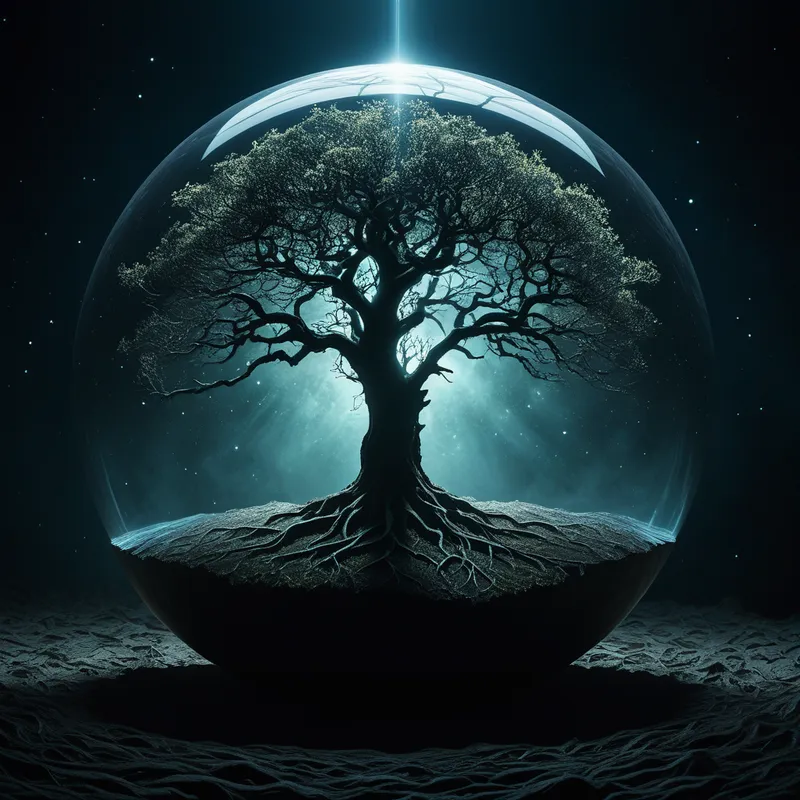
The alchemical process mirrored here is the [Nigredo](/myths/nigredo “Myth from Alchemical culture.”/)—the blackening, the putrefaction, the first and essential stage where the base material is dissolved and reduced to primal matter. Baldr, the albedo or white stage of purity, must be killed and buried for any further transformation to occur.
The gold of the spirit is forged in the acceptance of the black earth.
For the modern individual seeking individuation, the myth maps the unavoidable crisis. First, one must recognize the Frigg-like over-protectiveness that creates a false sense of invulnerability. Then, one must welcome the Loki-like insight that points to the overlooked flaw—the mistletoe of one’s own character. The confrontation, often felt as a catastrophic failure or betrayal (Höðr’s throw), is the initiation.
The work is in the burial. One must consciously perform the rites for the dead ideal: honor what it was, give it its due (the treasures on the pyre), and then let it go into the unconscious (the sea). The Hermóðr-journey is the active engagement with the depression, the therapy, the deep introspection, to see if the lost self can be reclaimed. The ultimate revelation at the end of that journey is Hel’s condition: total acceptance. The final stage of this alchemy is the integration of Þökk’s refusal. One must make peace with the part of oneself that will not mourn “properly,” that is bitter, angry, and dry-eyed. This recalcitrant piece is also part of the whole self.
Baldr does not return before Ragnarök. Similarly, the transformed self does not emerge until the old psychic structures have undergone their own end-time. The myth teaches that the death of the innocent is not a mistake, but a prerequisite. The burial mound is not merely a grave; it is the sealed vessel in which the first, crucial transformation begins, holding the promise of something that can only return when the world—the totality of the self—is made new.
Associated Symbols
Explore related symbols from the CaleaDream lexicon: