The Book of the Dead Myth Meaning & Symbolism
A guide for the soul's perilous journey through the underworld, facing judgment and transformation to achieve eternal life among the stars.
The Tale of The Book of the Dead
The sun has set for the final time. [The world](/myths/the-world “Myth from Tarot culture.”/) you knew—the scent of [lotus](/myths/lotus “Myth from Hindu culture.”/) on [the river](/myths/the-river “Myth from Buddhist culture.”/), the warmth of bread from the oven, the sound of your name spoken by loved ones—has receded into a memory. Now, you stand at [the threshold](/myths/the-threshold “Myth from Folklore culture.”/) of Duat. Darkness, thick and absolute, presses in, but in your hands you clutch a map of light: the Book of the Dead.
Your ka has left the mummified body. Your ba takes flight. The journey begins not with a path, but with a door—the first of forty-two. Before each, a terrifying guardian demands your name. Not the name given at birth, but your true name, the name of your essence. You speak the words from your scroll: “I am the one who knows the secret of the portal. I am the one who does not tread in wickedness. Let me pass.”
You traverse a landscape of paradox. Rivers of fire flow beside lakes of crystal. You evade the coils of the serpent Apep, whose goal is un-creation. You navigate barges of reed across silent waters, guided by the faces of gods painted on your [papyrus](/myths/papyrus “Myth from Egyptian culture.”/) shield. You must know the names of the parts of the boat, the spells to calm the waters, the charms to become air itself. To falter in a word is to be swallowed by [the void](/myths/the-void “Myth from Buddhist culture.”/).
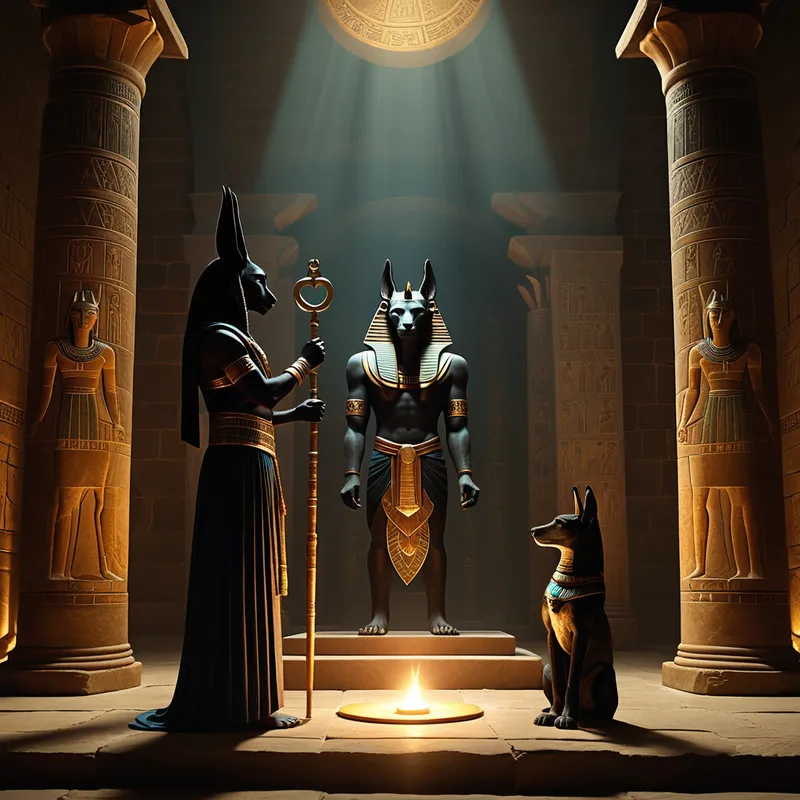
The journey culminates in a hall of impossible scale, the Hall of Two Truths. The air is still, heavy with the scent of incense and ancient dust. At the far end, upon a throne of malachite and gold, sits [Osiris](/myths/osiris “Myth from Global/Universal culture.”/), lord of the peaceful land, his crook and flail crossed upon his chest. His eyes are jet and [pearl](/myths/pearl “Myth from Chinese culture.”/), seeing everything and nothing.
Before him, the jackal-headed Anubis, guide of souls, beckons you forward. His hands, precise and gentle, lead your trembling ib to the great golden scales. On one plate, he places your heart. On the other, the feather of Maat, symbol of perfect balance and cosmic order. The feather is deceptively light; your heart feels like a mountain of deeds.
The ibis-headed [Thoth](/myths/thoth “Myth from Global/Universal culture.”/) stands ready with his palette to record the verdict. And nearby, crouching, waits Ammit, the Eater of Hearts, her jaws slightly parted.
The scales tremble. This is the moment of truth, not told by another, but weighed by the universe itself. If your heart balances with the feather, Thoth proclaims, “True of voice!” Osiris grants you passage to the Field of Reeds, a luminous mirror of Egypt, where you join the circumpolar stars. If your heart is heavy with falsehood, it drops. Ammit lunges. The second death is total, final—an end to the soul’s journey. There is no appeal. The scroll in your hands holds the final spells, the declarations of innocence to the forty-two assessor gods: “I have not caused pain. I have not caused tears. I have not stolen. I have not told lies.” You must speak them, and you must have lived them. The book is your guide, but your heart is your witness.

Cultural Origins & Context
This was not a single, canonical “book” but a evolving collection of spells, prayers, and incantations known to the Egyptians as the “The Book of Coming Forth by Day.” Its mythic narrative emerged from a civilization that saw death not as an end, but as a critical transition—a dangerous journey to be meticulously prepared for. These texts first appeared painted on royal tomb walls (the [Pyramid Texts](/myths/pyramid-texts “Myth from Egyptian culture.”/)), then on the coffins of nobles (the Coffin Texts), before becoming democratized in the New Kingdom as personalized papyri placed in the tombs of any who could afford them.
The myth was enacted, not merely read. Priests performed the “Opening of the Mouth” ceremony to restore the senses to the mummy. The papyrus scroll was a functional artifact, a divine tool. Its power lay in the correct performance—knowing the names, speaking the words, visualizing the gods. This was a collective cultural [psyche](/myths/psyche “Myth from Greek culture.”/) projecting its deepest fears and highest hopes onto the cosmos, creating a detailed cartography of the afterlife where morality (Maat) was the fundamental law of reality.
Symbolic Architecture
At its core, the myth is a profound [allegory](/symbols/allegory “Symbol: A narrative device where characters, events, or settings represent abstract ideas or moral qualities, conveying deeper meanings through symbolic storytelling.”/) for the [integration](/symbols/integration “Symbol: The process of unifying disparate parts of the self or experience into a cohesive whole, often representing psychological wholeness or resolution of internal conflict.”/) of [the self](/myths/the-self “Myth from Jungian culture.”/). The perilous [journey](/symbols/journey “Symbol: A journey in dreams typically signifies adventure, growth, or a significant life transition.”/) through Duat represents the descent into the unconscious after a profound [rupture](/symbols/rupture “Symbol: A sudden break or tear in continuity, often representing abrupt change, separation, or the shattering of established patterns.”/)—the “[death](/symbols/death “Symbol: Symbolizes transformation, endings, and new beginnings; often associated with fear of the unknown.”/)” of an old [identity](/symbols/identity “Symbol: Identity represents the sense of self, encompassing personal beliefs, cultural background, and social roles.”/), a [trauma](/symbols/trauma “Symbol: A deeply distressing or disturbing experience that overwhelms the psyche, often manifesting in dreams as unresolved emotional wounds or psychological injury.”/), or a necessary ending.
The judgment is not a punishment imposed from without, but a revelation of the inner state. The heart weighed is the accumulated self.
The forty-two assessor gods symbolize the fragmented aspects of our own conscience—every small [betrayal](/symbols/betrayal “Symbol: A profound violation of trust in artistic or musical contexts, often representing broken creative partnerships or artistic integrity compromised.”/), every unkind [word](/symbols/word “Symbol: Words in dreams often represent communication, expression, and the power of language in shaping our realities.”/), every neglected duty. To declare [innocence](/symbols/innocence “Symbol: A state of purity, naivety, and freedom from guilt or corruption, often associated with childhood and moral simplicity.”/) before them is to consciously acknowledge and take [responsibility](/symbols/responsibility “Symbol: Responsibility in dreams often signifies the weight of duties and the expectations placed upon the dreamer.”/) for these [shadow](/symbols/shadow “Symbol: The ‘shadow’ embodies the unconscious, repressed aspects of the self and often represents fears or hidden emotions.”/) elements, not to deny them. The [feather](/symbols/feather “Symbol: A feather represents spiritual elevation, lightness, and the freedom of the spirit. It often symbolizes messages from the divine and connection to ancient wisdom.”/) of Maat is the [archetype](/symbols/archetype “Symbol: A universal, primordial pattern or prototype in the collective unconscious that shapes human experience, behavior, and creative expression.”/) of objective [truth](/symbols/truth “Symbol: Truth represents authenticity, honesty, and the quest for knowledge beyond mere appearances.”/) and inner integrity. The goal is not to be weightless, but to be in balance—to have a [heart](/symbols/heart “Symbol: The heart symbolizes love, emotion, and the core of one’s existence, representing deep connections with others and self.”/) whose substance aligns with the fundamental order of things.
Ammit represents the terrifying consequence of a [life](/symbols/life “Symbol: The symbol of ‘Life’ represents a journey of growth, interconnectedness, and existential meaning, encompassing both the joys and challenges that define human experience.”/) lived in denial of this order: psychic [disintegration](/symbols/disintegration “Symbol: A symbol of breakdown, loss of form, or fragmentation, often reflecting anxiety about personal identity, control, or stability.”/), the [dissolution](/symbols/dissolution “Symbol: The process of breaking down, dispersing, or losing form, often representing transformation, release, or the end of a state of being.”/) of the self into [chaos](/symbols/chaos “Symbol: In Arts & Music, chaos represents raw creative potential, uncontrolled expression, and the breakdown of order to forge new artistic forms.”/). Conversely, justification before Osiris—the mummified god who was himself murdered and restored—symbolizes the [achievement](/symbols/achievement “Symbol: Symbolizes success, mastery, or reaching a goal, often reflecting personal validation, social recognition, or overcoming challenges.”/) of a cohesive, enduring selfhood, reborn into a new, more authentic state of being.
The Dreamer’s Resonance
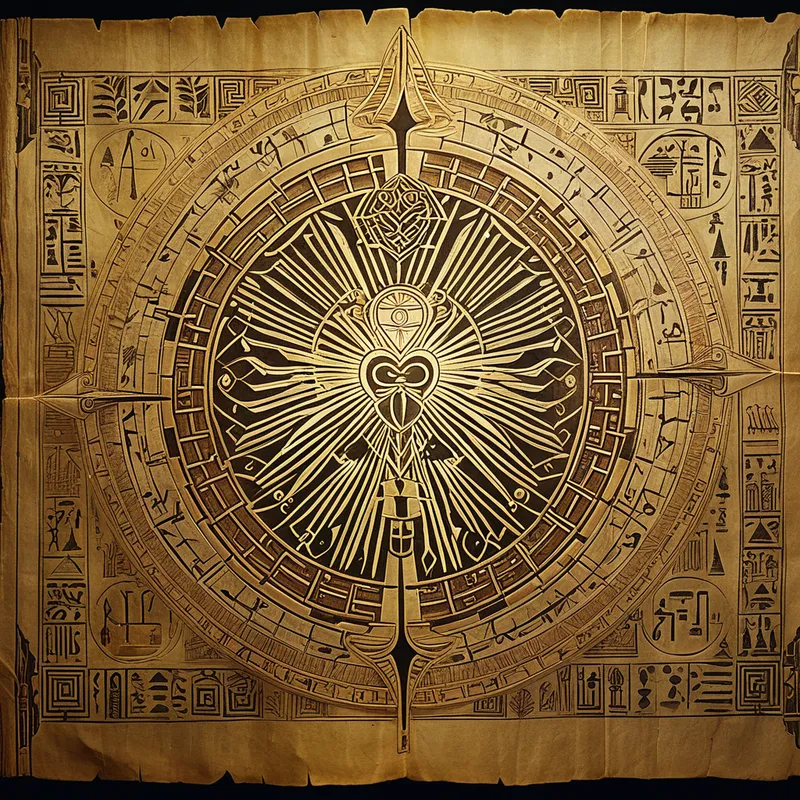
When this mythic pattern stirs in modern dreams, it often manifests as a profound process of self-assessment. The dreamer may find themselves in a vast, bureaucratic building (the Hall), awaiting a test or evaluation for which they feel unprepared. They may be searching frantically for a lost document or password (the Book). The somatic feeling is one of dread, gravity, and naked exposure.
Such dreams surface during life transitions: the end of a relationship, a career change, a moral crisis, or the approach of middle age. The psyche is conducting its own “[Weighing of the Heart](/myths/weighing-of-the-heart “Myth from Egyptian culture.”/).” The dream images are the assessor gods. To dream of passing the test suggests [the ego](/myths/the-ego “Myth from Jungian culture.”/) is aligning with deeper values. To dream of failure or being pursued by a monstrous creature (Ammit) signals a urgent call from the unconscious to confront a denied truth, a “heaviness” in the heart that threatens psychic integrity.
Alchemical Translation
The individuation process modeled here is one of radical honesty and re-composition. The journey through Duat is the [nigredo](/myths/nigredo “Myth from Alchemical culture.”/), [the dark night of the soul](/myths/the-dark-night-of-the-soul “Myth from Christian Mysticism culture.”/), where the old [persona](/myths/persona “Myth from Greek culture.”/) is stripped away. The confrontation with the forty-two assessors is the painful but necessary [separatio](/myths/separatio “Myth from Alchemical culture.”/), where every aspect of the self is examined and acknowledged.
The spellbook is the active, conscious engagement with the unconscious—the work of therapy, journaling, art, or meditation that provides the “words” to navigate inner chaos.
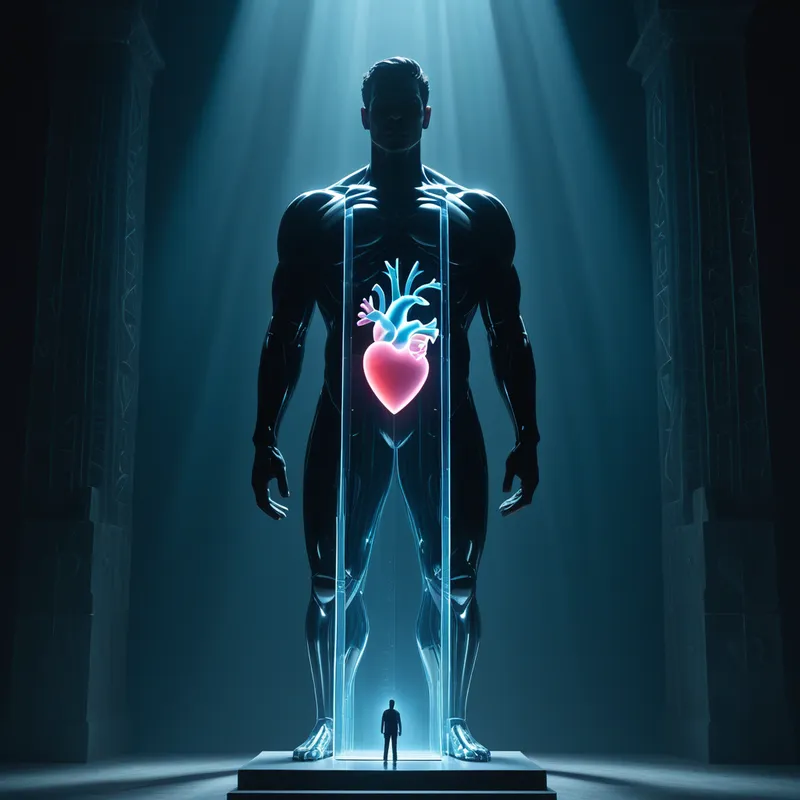
The weighing is the crucial coniunctio—the marriage of the conscious ego with the objective truth of the Self (symbolized by Maat). Success does not mean perfection, but wholeness. The heart that balances is one that has owned its shadows. This justified state—“True of Voice”—is the albedo, the dawn. The individual no longer speaks from the fractured ego, but from the integrated Self. They gain access to their personal Field of Reeds: a life lived with authenticity, purpose, and a hard-won peace, having successfully navigated [the underworld](/myths/the-underworld “Myth from Greek culture.”/) of their own psyche and returned, transformed, to the daylit world.
Associated Symbols
Explore related symbols from the CaleaDream lexicon: