The Binding of Fenrir Myth Meaning & Symbolism
The gods, fearing a prophecy, betray and bind the great wolf Fenrir with a magical fetter, securing their doom and his inevitable, world-ending rage.
The Tale of The Binding of Fenrir
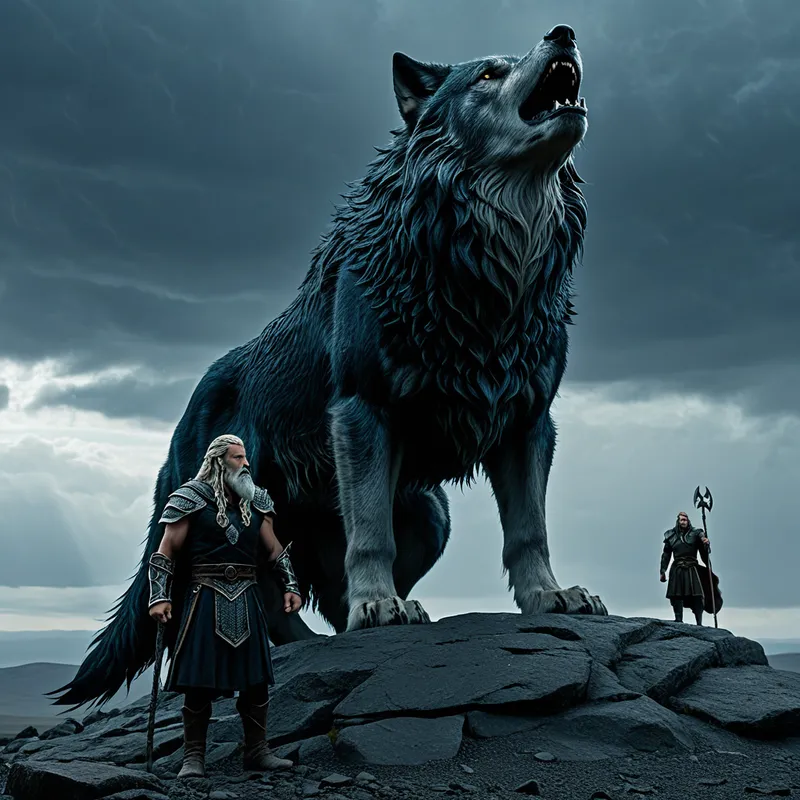
Hear now the tale of the binding, a story woven not of glory, but of dread necessity. In the high halls of Asgard, a chill had taken root in the marrow of the gods. It was the cold breath of a prophecy whispered by the [Norns](/myths/norns “Myth from Nordic culture.”/) at the foot of [Yggdrasil](/myths/yggdrasil “Myth from Global/Universal culture.”/): that from the line of [the trickster](/myths/the-trickster “Myth from Various culture.”/) Loki, great ruin would come. And it had taken form—three forms. There was Hel, who ruled the dead. There was [Jörmungandr](/myths/jrmungandr “Myth from Norse culture.”/), cast into [the sea](/myths/the-sea “Myth from Greek culture.”/). And there was [Fenrir](/myths/fenrir “Myth from Norse culture.”/), the wolf.
He was no ordinary beast. He grew each day, not in size alone, but in presence, a force of untamed hunger and raw power that dimmed the light in the eyes of even Odin. His eyes were twin pools of amber fire; his breath steamed in the air of Asgard like a coming winter. The gods saw in him the shape of their ending, the jaws that would one day devour the sun and the All-Father himself. Fear, cold and pragmatic, dictated their counsel. They would bind him.
First, they brought a chain called Læðingr, feigning a test of strength. “Break this, great one, and prove your might,” they said. Fenrir looked at the heavy links, snorted, and with a single flex of his shoulders, shattered them like glass. Next came Drómi, forged with twice the cunning. Again, the wolf strained, the metal screaming, and again it burst apart.
Then came the third fetter, [Gleipnir](/myths/gleipnir “Myth from Norse culture.”/). It was a deception made manifest, crafted from six impossible things: the sound of a cat’s footfall, the beard of a woman, the roots of a mountain, the sinews of a bear, the breath of a fish, and the spittle of a bird. It was smooth as a silk ribbon, light as a thought, yet stronger than any iron. The gods brought it to the wolf on the isolated island of Lyngvi.
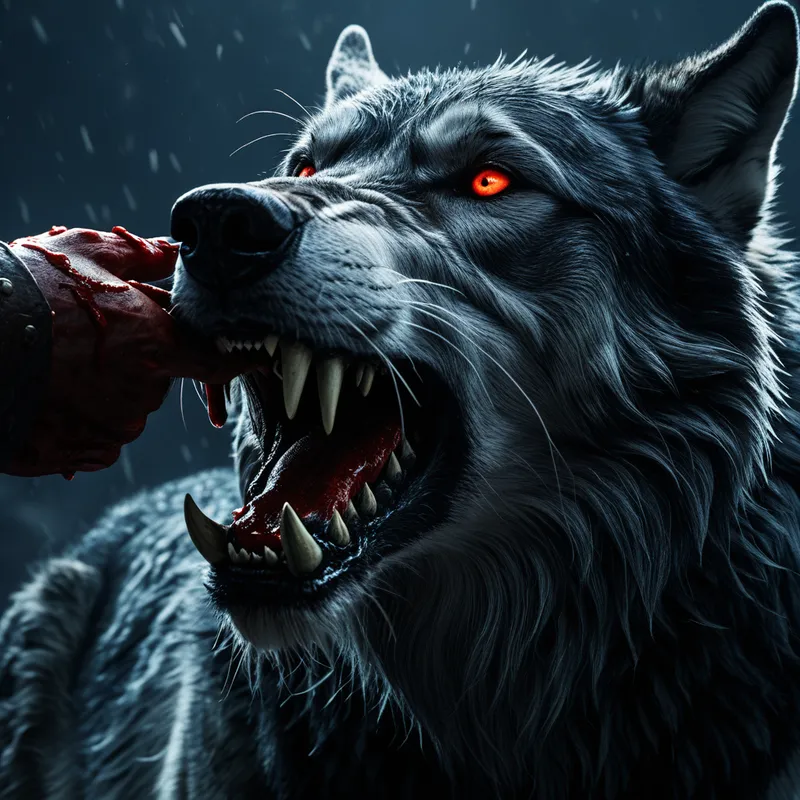
Fenrir was wary. The slender band seemed no threat, yet his spirit sensed the trickery woven into its core. “I will not be bound by this,” he growled, his voice like stones grinding deep in [the earth](/myths/the-earth “Myth from Hindu culture.”/), “unless one of you places a hand in my mouth as a pledge of good faith.” A silence fell, heavier than any chain. The gods looked at one another, their courage faltering. Then one stepped forward: Tyr, whose word was law. Without a word, he placed his right hand between the wolf’s jaws.
The binding began. The more Fenrir struggled, the tighter the magical fetter grew, biting into his flesh, fusing with his fate. When he realized the trick was absolute and his freedom lost, his rage was a sound to break [the world](/myths/the-world “Myth from Tarot culture.”/). His jaws snapped shut. Tyr did not cry out, but stood, his hand severed, his sacrifice complete. The gods laughed, but it was a hollow, joyless sound. They took a great cord, Gelgja, fastened it to Gleipnir, threaded it through a massive stone slab, Gjöll, and buried it deep. For a final insult, they wedged a sword between his jaws, its hilt in his lower gum, its point in the upper, so that his howls of endless fury became a river of frothing saliva, Ván, flowing from his jaws.
There he lies, bound, until the day the bonds of the world break.
Cultural Origins & Context
This myth, like all Norse mythology, was not scripture but a living, breathing body of stories passed orally through the skalds—the poet-historians of the Viking Age. It was recorded centuries later, primarily in the 13th-century Poetic Edda and Prose Edda by the Icelandic scholar Snorri Sturluson. Its function was multifaceted: it was a cosmological explanation for natural phenomena (the wolf’s drool becoming a river), a narrative exploration of societal values like oath-keeping and courage, and a profound meditation on the inescapable nature of fate, or ørlög.
In a culture that valued strength, honor, and facing one’s destiny squarely, the myth served as a dark mirror. It showed the gods—the supposed upholders of order—acting through fear, deception, and betrayal to postpone a fate they themselves had set in motion. It was a story told in mead halls not just to inspire awe, but to provoke uneasy questions about the price of order and the morality of power when faced with its own annihilation.
Symbolic Architecture
At its [heart](/symbols/heart “Symbol: The heart symbolizes love, emotion, and the core of one’s existence, representing deep connections with others and self.”/), the binding is not a [story](/symbols/story “Symbol: The symbol of ‘Story’ represents the narrative woven through our lives, embodying experiences, lessons, and emotions that shape our identities.”/) about subduing an external [monster](/symbols/monster “Symbol: Monsters in dreams often symbolize fears, anxieties, or challenges that feel overwhelming.”/), but about the [psyche](/myths/psyche “Myth from Greek culture.”/)‘s attempt to manage its own most terrifying potentials. Fenrir represents the raw, untamed, and ultimately destructive [aspect](/symbols/aspect “Symbol: A distinct feature, quality, or perspective of something, often representing a partial view of a larger whole.”/) of the unconscious—the [Shadow](/symbols/shadow “Symbol: The ‘shadow’ embodies the unconscious, repressed aspects of the self and often represents fears or hidden emotions.”/) in its most absolute form. He is the instinctual rage, the boundless [hunger](/symbols/hunger “Symbol: A primal bodily sensation symbolizing unmet needs, desires, or emotional voids. It represents craving for fulfillment beyond physical nourishment.”/), the chaotic force that civilization (the gods of Asgard) must ostensibly control to exist.
The greatest chains are forged not from iron, but from the fear of what we might become.
The gods’ actions symbolize [the ego](/myths/the-ego “Myth from Jungian culture.”/)‘s desperate, often dishonest, strategies of repression. The first two chains, Læðingr and Drómi, are brute force—failed attempts to suppress [the shadow](/myths/the-shadow “Myth from Jungian culture.”/) through willpower alone. Gleipnir, however, is different. It is crafted from “impossible” or intangible things, representing the subtle, psychological mechanisms of repression: rationalization, denial, and the binding power of unspoken societal contracts. It is the “law” that restrains the “wild,” the superego’s elegant, inescapable trap for the id.
Tyr’s sacrifice is the pivotal moral [transaction](/symbols/transaction “Symbol: An exchange of value, energy, or information between parties, representing balance, reciprocity, and the flow of resources in life.”/). He is the god of law and [justice](/myths/justice “Myth from Tarot culture.”/), and his lost hand is the price of a broken [oath](/symbols/oath “Symbol: A solemn promise or vow, often invoking a higher power or sacred principle, binding individuals to specific actions or loyalties.”/), the necessary collateral damage when order resorts to dishonor to preserve itself. It signifies that to bind the shadow through [betrayal](/symbols/betrayal “Symbol: A profound violation of trust in artistic or musical contexts, often representing broken creative partnerships or artistic integrity compromised.”/), a part of [the self](/myths/the-self “Myth from Jungian culture.”/) that values integrity must be sacrificed. The wound is permanent, a lasting flaw in the [architecture](/symbols/architecture “Symbol: Architecture in dreams often signifies structure, stability, and the framing of personal identity or life’s journey.”/) of the conscious self.
The Dreamer’s Resonance
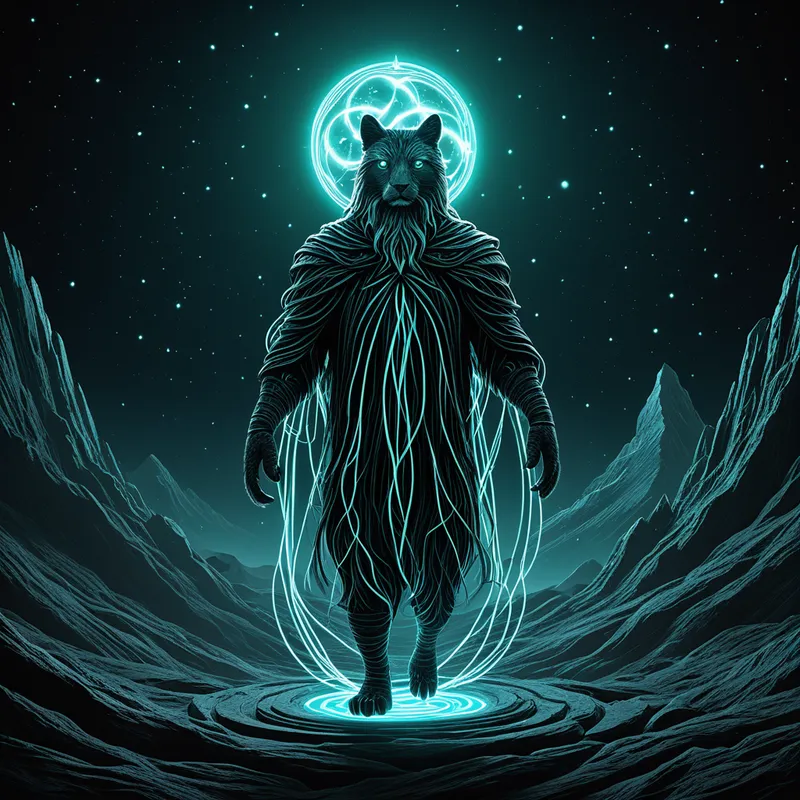
When this myth stirs in the modern dreamer, it often manifests as a profound somatic and psychological process of constraint and impending eruption. One might dream of being trapped in a small space, of jaws clenched shut, or of a powerful, beloved animal suddenly turning and being locked away. There is a feeling of immense pressure, of a vital force being stifled.
This is the psyche signaling that a fundamental aspect of the Self—perhaps a creative drive, a justified anger, or a deep passion—has been bound by the Gleipnir of one’s own life: by societal expectations, by internalized “shoulds,” or by fear of one’s own power. [The river](/myths/the-river “Myth from Buddhist culture.”/) of drool, Ván, translates as “Expectation” or “Hope,” suggesting that the bound energy leaks out as anxiety, obsessive thinking, or a simmering, unfulfilled longing. The dream is an alarm from the depths: the binding is causing a pathological buildup, and the integrity of the Self (the Tyr function) has been wounded in the process.
Alchemical Translation
The individuation process, the journey toward psychic wholeness, does not aim to leave Fenrir bound forever. The prophecy of [Ragnarök](/myths/ragnark “Myth from Norse culture.”/) ensures he will break free. The alchemical translation of this myth is not about perpetual repression, but about the conscious relationship with the bound force.
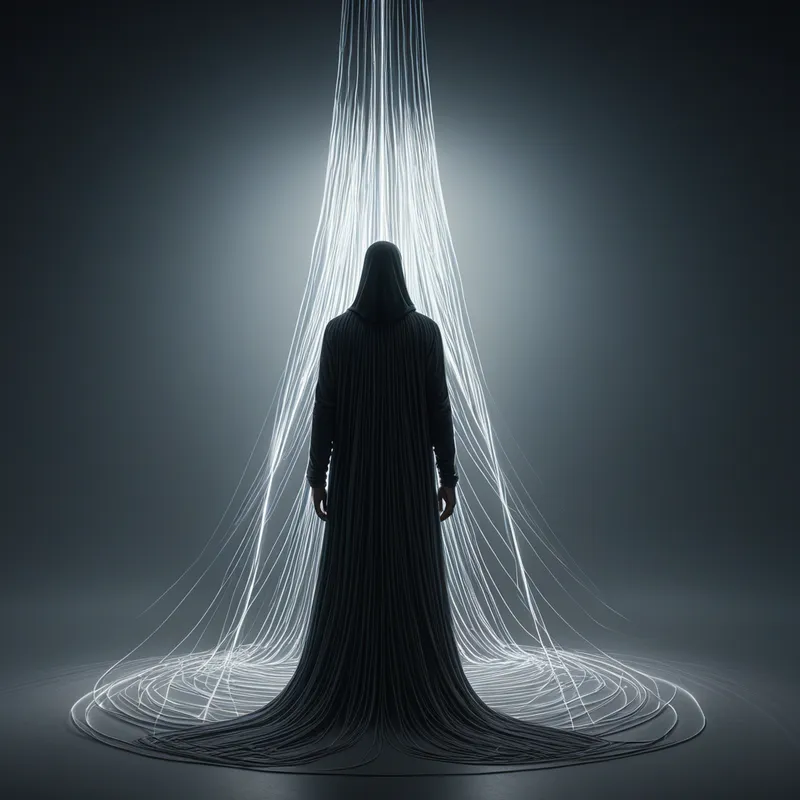
[The first stage](/myths/the-first-stage “Myth from Alchemical culture.”/) is recognizing the Gleipnir in one’s own life—identifying the subtle, “impossible” threads of fear and conditioning that hold our wildness in check. The next is acknowledging Tyr’s sacrifice: admitting what part of our honor or authenticity we have forfeited to maintain this false peace.
The goal is not to unleash the wolf, but to sit at the edge of the cliff on Lyngvi, to hear its howl, and to begin the long, terrifying negotiation for a truce that does not require a chain.
The ultimate alchemical work is to turn and face the bound shadow, not as gods full of fear, but as conscious beings willing to integrate. This means giving voice to the repressed rage in a safe container, honoring the deep hungers of the soul, and ultimately, withdrawing the sword from the wolf’s jaws—ceasing to gag our deepest instincts. When Fenrir is met with consciousness instead of fear, his energy can be transmuted from a world-ending force into a source of fierce protection, unwavering loyalty, and raw, creative life force. He becomes not the destroyer of the Self, but its most powerful guardian. The binding, then, is merely the long, dark night before the necessary and transformative dawn.
Associated Symbols
Explore related symbols from the CaleaDream lexicon: