The Bektashi Path Myth Meaning & Symbolism
A Sufi tale of a mystic who finds God not in the mosque but in the human heart, the tavern of the outcast, and the wine of divine love.
The Tale of The Bektashi Path
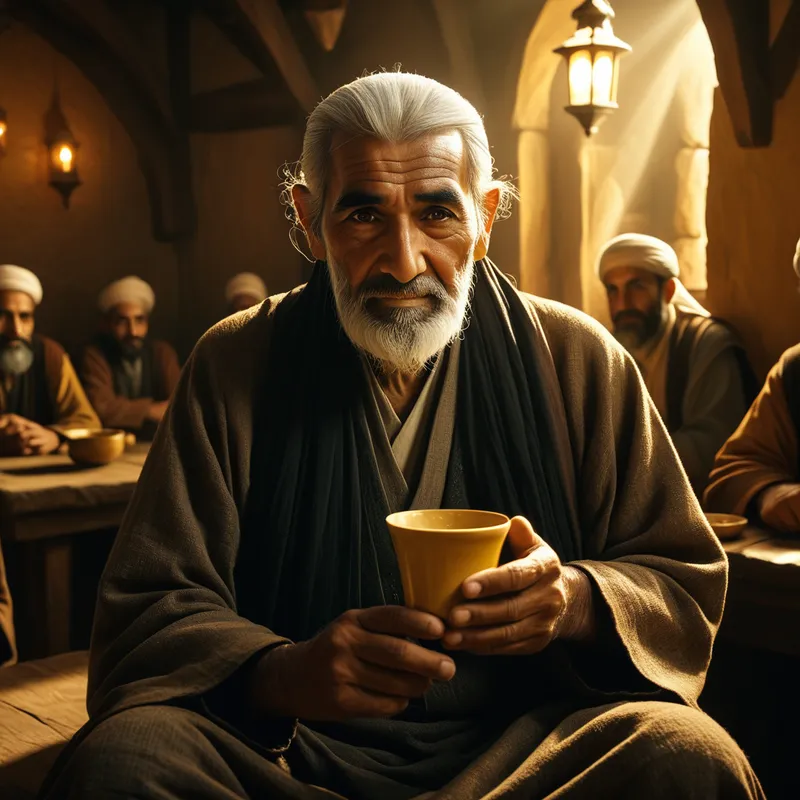
Listen, and let the dust of the caravan settle. In a time when minarets scratched the sky and law was etched in stone, there walked a man whose name was a whisper and a storm: Haji Bektash Veli. He did not come with an army, but with a cup. He did not build a fortress, but opened a door.
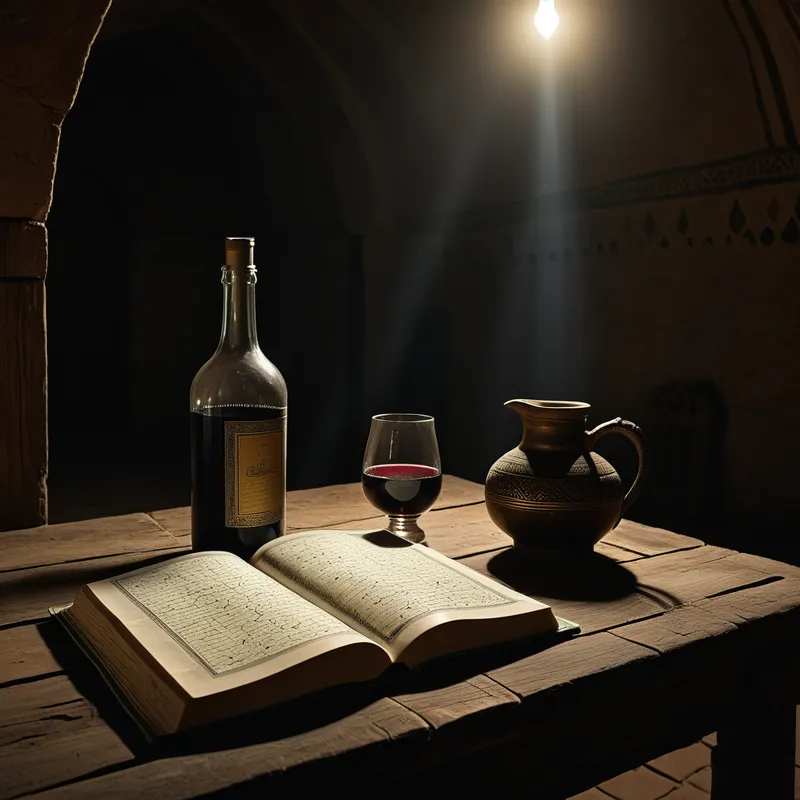
They say he arrived at the caravanserai of souls when the world was brittle with certainty. The scholars debated in shaded courtyards; the powerful built walls of rule. Haji Bektash walked past them, his gaze holding the softness of twilight. He sought not the polished marble of the grand mosque, but the worn threshold of the meyhane, the tavern of the forgotten. There, amidst the scent of spilled wine and honest sweat, he sat.
The people were afraid. “Holiness resides in purity,” they cried, “in ritual, in separation!” They pointed to his simple cloak, to his fellowship with the drinker, the laborer, the broken-hearted. A conflict arose, silent and profound—not of swords, but of visions. The conflict was the straight line against the circle, the word against the sigh, the throne against the heart.
The rising action was not a battle, but a deepening. He took the cup from the hands of the drunkard. He did not condemn its shape, but asked of its content. “What is this wine,” he murmured, his voice like a low wind, “that makes you forget the world? Let us find the Wine that makes you remember the Source.” He looked into the eyes of the outcast and saw not sin, but a dervish in exile. He took the tools of the cobbler and the blacksmith and spoke of shaping the soul. The tavern itself began to transform; the air grew thick not with fumes, but with a poignant longing. The laughter softened into prayer, the clink of cups became the sound of a broken chain.
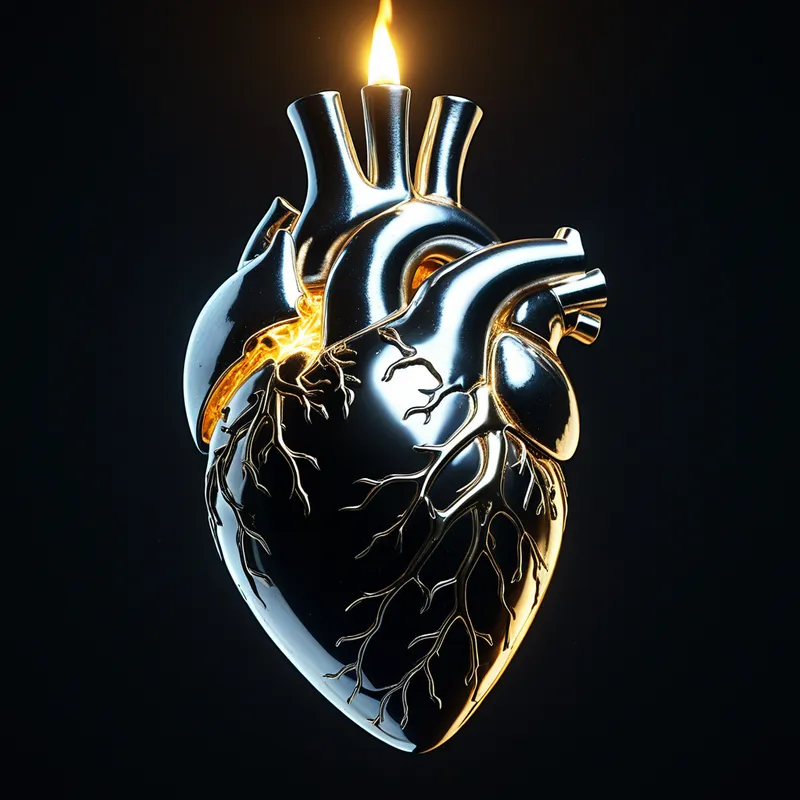
And the resolution? It was not a decree, but a recognition. One evening, as the last light bled from the sky, a hardened judge, troubled by these tales, sought him in that humble place. He expected heresy. Instead, Haji Bektash offered him a single grape. “The law is the vine,” he said. “Rigorous, structured, giving life. But the purpose of the vine is the grape. And the secret of the grape is the wine. The wine is not the law; it is the love that the law exists to protect.” He placed his hand over his own chest. “The true Kaaba is here.”
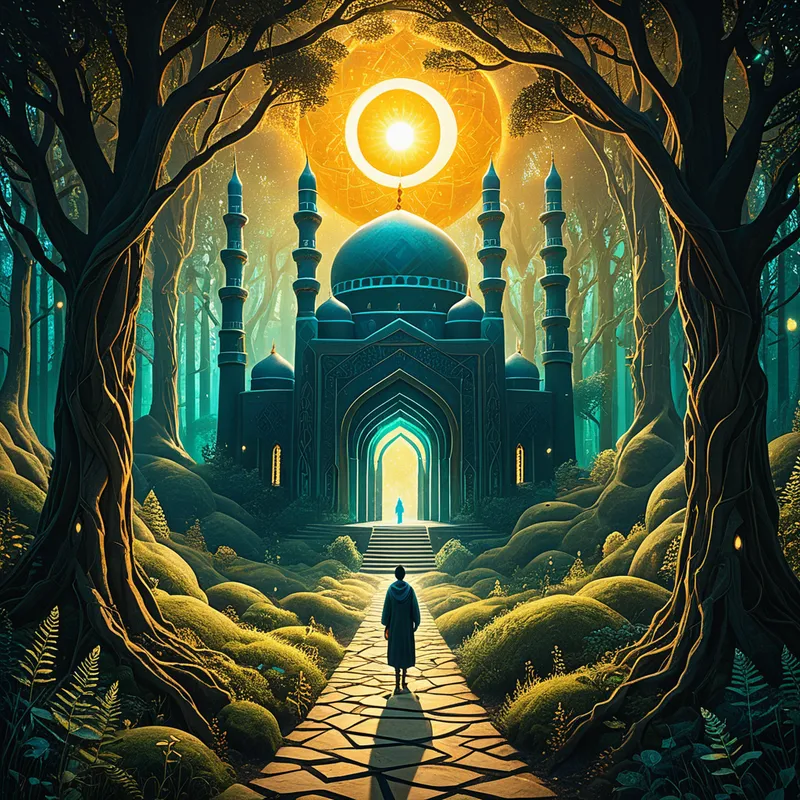
The judge did not hear an argument. He felt a key turn in a lock he did not know he carried. The path was not a line from sin to virtue, but a spiral into the center of one’s own being. The tavern and the mosque became two doors to the same endless courtyard. The Path was born—not of stone, but of footsteps; not of prohibition, but of embrace.
Cultural Origins & Context
The mythos of the Bektashi Path springs from the fertile, syncretic soil of 13th-century Anatolia, a crossroads of cultures, religions, and empires. Historically centered on the figure of Haji Bektash Veli, the narrative is the foundational lore of the Bektashi order, a Sufi tradition deeply intertwined with the spiritual fabric of the Ottoman Janissaries and rural Anatolian communities.
It was never a single, fixed text, but a living oral tradition passed down through generations of dervishes in lodges (tekkes). It was told in poetry, sung in mystical hymns (nefes), and enacted in the symbolic ritual of the sema. Its societal function was revolutionary: it provided a spiritual identity that transcended rigid dogma, embraced cultural pluralism (often incorporating pre-Islamic Anatolian and Shia motifs), and championed the dignity of the common person. It was a myth for the marginalized, offering a God found in community and heartfelt experience rather than in institutional authority alone.
Symbolic Architecture
The myth’s power lies in its radical re-symbolization of the world. Every element is turned [inward](/symbols/inward “Symbol: A journey toward self-awareness, introspection, and the exploration of one’s inner world, thoughts, and unconscious mind.”/), toward the [microcosm](/symbols/microcosm “Symbol: A small, self-contained system that mirrors or represents a larger, more complex whole, often reflecting the universe within an individual.”/) of the [human](/symbols/human “Symbol: The symbol of a human represents individuality, complexity of emotions, and social relationships.”/) [heart](/symbols/heart “Symbol: The heart symbolizes love, emotion, and the core of one’s existence, representing deep connections with others and self.”/).
The Tavern (meyhane) is not a place of vice, but the sanctum sanctorum of the world-weary [soul](/symbols/soul “Symbol: The soul represents the essence of a person, encompassing their spirit, identity, and connection to the universe.”/). It represents the state of spiritual [poverty](/symbols/poverty “Symbol: A state of lacking material resources or essential needs, often symbolizing feelings of inadequacy, vulnerability, or spiritual emptiness in dreams.”/) (faqr), where all pretensions are stripped away. The [Wine](/symbols/wine “Symbol: Wine often symbolizes celebration, indulgence, and the deepening of personal connections, but it can also represent excess and escape.”/) is the intoxicating essence of Divine Love (‘ishq), the direct, unmediated experience of God that dissolves the ego’s boundaries.
The straight path is a journey to God. The Bektashi Path is the realization that God is the journeyer.
The Cup is the human heart itself, the [vessel](/symbols/vessel “Symbol: A container or structure that holds, transports, or protects something essential, representing the self, emotions, or life journey.”/) made to receive this [ecstasy](/symbols/ecstasy “Symbol: A state of overwhelming joy, rapture, or intense emotional/spiritual transcendence, often involving a loss of self-awareness.”/). The figure of Haji Bektash embodies the Insan-i Kamil, who sees the divine [reality](/symbols/reality “Symbol: Reality signifies the state of existence and perception, often reflecting one’s understanding of truth and life experiences.”/) (haqiqa) behind all apparent forms (zahir). His [rejection](/symbols/rejection “Symbol: The experience of being refused, excluded, or dismissed by others, often representing fears of inadequacy or social belonging.”/) of the [mosque](/symbols/mosque “Symbol: A sacred Islamic place of worship representing spiritual connection, community, and divine guidance.”/) for the tavern is not anti-religious, but a profound [statement](/symbols/statement “Symbol: A statement in a dream can symbolize the need to express one’s thoughts or beliefs, reflecting a desire for honesty or clarity.”/) that true worship occurs in the authenticity of human encounter and the raw [material](/symbols/material “Symbol: Material signifies the tangible aspects of life, often representing physical resources, desires, and the physical world’s influence on our existence.”/) of [life](/symbols/life “Symbol: The symbol of ‘Life’ represents a journey of growth, interconnectedness, and existential meaning, encompassing both the joys and challenges that define human experience.”/). The [Path](/symbols/path “Symbol: The ‘path’ symbolizes a journey, choices, and the direction one’s life is taking, often representing individual growth and exploration.”/) itself is therefore paradoxical—it is a [pilgrimage](/symbols/pilgrimage “Symbol: A spiritual or transformative journey toward a sacred destination, representing personal growth, devotion, and the search for meaning.”/) with no external [destination](/symbols/destination “Symbol: Signifies goals, aspirations, and the journey one is on in life.”/), a [journey](/symbols/journey “Symbol: A journey in dreams typically signifies adventure, growth, or a significant life transition.”/) into the immanent [presence](/symbols/presence “Symbol: Presence in dreams often signifies awareness or acknowledgment of something significant in one’s life.”/) of the Beloved within.
The Dreamer’s Resonance
When this myth stirs in the modern dreamer, it signals a profound crisis and opportunity in one’s relationship with authority, structure, and authentic feeling. To dream of being drawn to a warm, noisy tavern while obligated to a cold, pristine temple is to feel the psyche’s rebellion against lifeless dogma—be it religious, professional, or societal.
The somatic feeling is often one of constriction in the chest (the “heart” conflict) giving way to a warming expansion. Psychologically, the dreamer is navigating the tension between the Persona—the respectable, rule-following self—and the call of the Shadow, represented by the “outcasts” and “intoxicants” of the dream. The process is one of reclamation: integrating rejected aspects of passion, creativity, or vulnerability that have been deemed “impure” by the inner critic or external world. The dream asks: Where have you built a mosque of shoulds, and where does your heart whisper of a more humble, human tavern?
Alchemical Translation
In the alchemy of individuation, the Bektashi Path is a recipe for the opus contra naturam—the work against one’s own conditioned nature. It models the transmutation of base, rejected elements (shame, desire, non-conformity) into the gold of spiritual wholeness.
The first stage is nigredo, the blackening. This is the dreamer’s feeling of alienation, of being an “outcast” from their own prescribed path. The myth honors this, inviting the seeker into the “tavern” of their own shadow. The second, albedo, is the whitening, represented by the clarifying “wine” of self-knowledge. Here, one drinks the truth of their own complex humanity, washing away false binaries of pure/impure.
The crucible is not a sterile laboratory, but the messy, crowded inn of your own unlived life.
Finally, rubedo, the reddening, is achieved in the glowing “heart” that becomes the new center. The external authority (the distant God in the mosque) is internalized as immanent love (the God in the tavern, in the companion, in the cup). The psychic transmutation is complete when the individual no longer seeks God as an external object, but recognizes their own journey of love, service, and embrace as the very manifestation of the Divine. The Path is no longer followed; it is lived, and in living it, one becomes it.
Associated Symbols
Explore related symbols from the CaleaDream lexicon:
- Heart — The central symbol of the Bektashi Path, representing the true temple where the Divine resides, the cup that holds the wine of direct experience.
- Cup — The vessel of the heart and the body, meant to be filled with the intoxicating wine of divine love and spiritual ecstasy.
- Wine — Symbolizes the transformative, intoxicating essence of divine knowledge and love that dissolves the ego and reveals unity.
- Tavern — Represents the state of spiritual poverty and authenticity, where pretenses are dropped and the seeker encounters God in the raw material of life and community.
- Path — The journey of return to the source, which is paradoxically discovered to be an inward spiral into the heart’s core, not a linear external trek.
- Door — The threshold between the outer world of dogma and the inner world of experience; the entrance to the tavern of the heart.
- Mirror — The polished heart that reflects the divine face, and the principle that the outer world is a reflection of one’s inner state.
- Shadow — The outcasts and rejected aspects of self and society that are embraced and integrated on the Bektashi Path as carriers of sacred truth.
- Fire — The burning love for the Divine that purifies intention and consumes separation, often symbolized by the heart’s flame.
- Key — The teachings and practices that unlock the heart-temple, often found in unexpected places and through unconventional guides.
- Love — The ultimate force and goal of the path, the ‘ishq’ or passionate divine love that is both the seeker’s motivation and the destination.
- Rebirth — The spiritual awakening that occurs when one is “reborn” from the constraints of literalist religion into the living faith of the heart.