
The Bed of Odysseus and Penelo Myth Meaning & Symbolism
A secret, immovable bed becomes the ultimate test of identity, revealing the unbreakable bond between the wandering soul and its rooted, knowing center.
The Tale of The Bed of Odysseus and Penelo
Hear now, a tale not of monsters slain nor seas crossed, but of a secret carved in wood and rooted in earth. The great hall of Ithaca echoed with the boasts of strangers. Years had bled into decades since the king had sailed for Troy, and vultures in fine robes now perched upon his stools, devouring his wealth and demanding his queen. Penelope, her face a mask of patient stone, endured. Her famed ruse—weaving by day, unraveling by night—had finally been pierced. The time for a choice, they said, had come.
But in the shadows of the palace, a stranger arrived. A beggar, broken by time and tide, his eyes holding the grey of distant storms. He was Odysseus, though none, not even his own son, knew him beneath the grime and years. He watched the suitors’ feasting, a cold fire banked in his heart. And he watched Penelope.
Moved by a fate she could not name, the queen descended. She spoke to the beggar of her grief, of her lord lost, and of a final test she would set for the rapacious men: string the great bow of Odysseus, and shoot an arrow through twelve axe-heads. The beggar’s gaze was a hook in her soul. Later, after the bow was strung, after the arrows flew and the hall ran red with justice, she stood before the man who claimed to be her husband. Twenty years is a chasm. Ghosts and memories are poor proof.
“Come,” she said, her voice a thread in the silence. “There is a matter of a bed.” She turned and led him to the innermost chamber, the heart-room of their marriage. She spoke to her maid, a command wrapped in old grief: “Bring the great bed from the bridal chamber. Pile it with fleeces and blankets.”
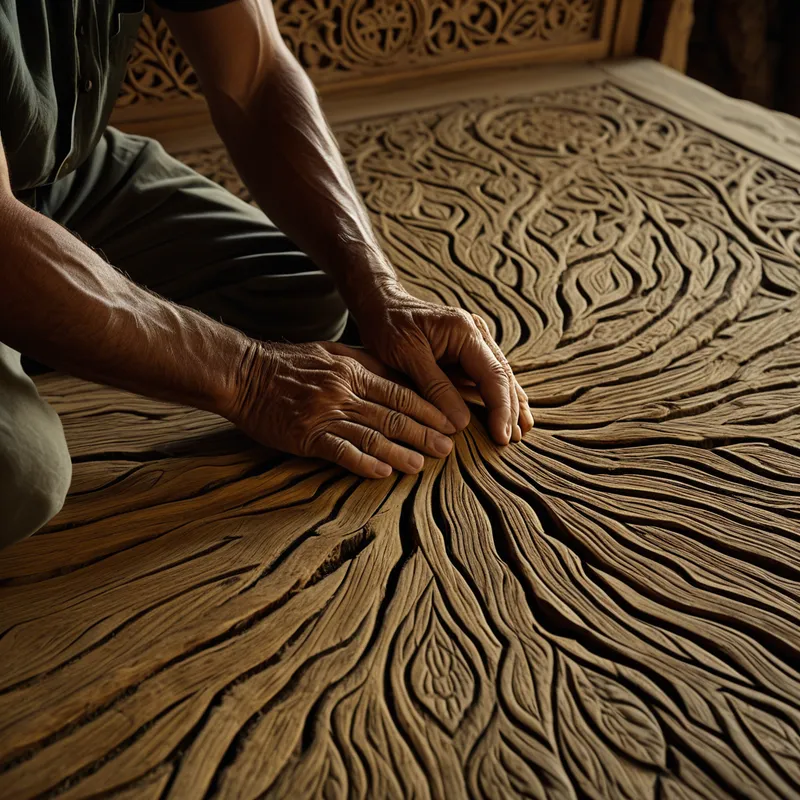
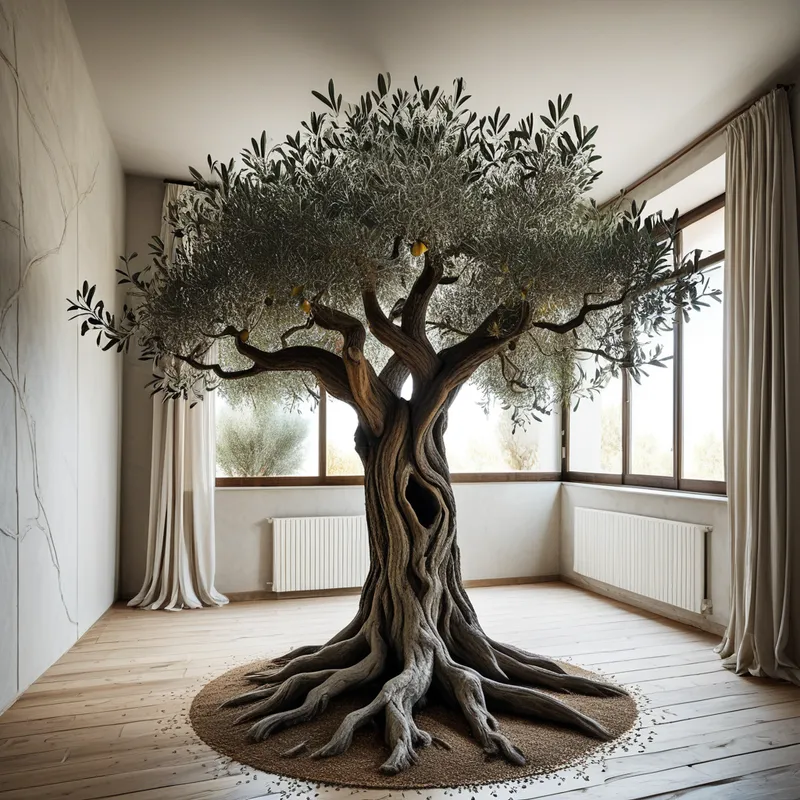
The beggar-king stiffened. A ripple crossed his weathered face, a crack in the mask. And from that crack, his true voice emerged, not as a roar, but as a blade of pure, agonized memory. “Woman! Your words cut the heart from me. Who has moved my bed? That bed… I built it myself. No other man could have. Around a living olive tree, thick as a pillar, I constructed our chamber. I planed the trunk smooth for the bedpost, inlaid it with gold and silver, and stretched ox-hide thongs across. Is it still fast, or has someone cut the tree from its roots and shifted it?”
The air in the room stilled. The scent of aged wood and olive oil, of memories sealed in timber, grew potent. Penelope’s knees gave way. The sound he described—the secret of its making—was a key that turned a lock rusted shut for a generation. No impostor, no god, no trick of sorcery could know this. Only the man whose hands had shaped it, whose love had anchored it to the very soul of their land. The bed was immovable because it was part of the living earth of Ithaca, and so was their bond. In that moment, the decades of separation collapsed. The wanderer and the weaver were no longer ghosts to one another. They were real, found in the truth of a rooted, living thing they had made together.
Cultural Origins & Context
This myth is the luminous core of Homer’s Odyssey, a foundational pillar of Global/Universal culture passed down through an oral tradition of bards before being crystallized in text. It was not merely a story of adventure, but a societal anchor. Told in aristocratic halls and public gatherings, it served multiple functions: as a handbook on cunning and endurance, a meditation on the nature of fidelity and xenia (the sacred guest-host relationship), and a profound exploration of what it means to be a self in a world of disguise and deception.
The bed scene is the ultimate narrative payoff. In a culture where identity was tied to lineage, land, and public recognition, this moment privatizes the final, incontrovertible proof. It moves the climax from the public, violent re-conquest of the hall to the intimate, verbal re-conquest of a marriage. It was told to remind listeners that beyond the hero’s public deeds lies a private, rooted truth that defines him more deeply than any monster he has slain. The storyteller, channeling the Muse, thus wove a tale where the ultimate victory is not over others, but over alienation itself.
Symbolic Architecture
The bed is the central symbol, a perfect coniunctio oppositorum. It is both a crafted object of culture (the bedframe) and a living being of nature (the olive tree). This fusion represents the sacred marriage of the conscious, shaping mind (Odysseus the craftsman) and the unconscious, rooted, fertile ground of being (Penelope and the land of Ithaca).
The ultimate truth is not something you find in the world, but something you have built with the world, rooted so deeply it becomes indistinguishable from your own soul.
Odysseus represents the ego on its heroic, yet often dissociative, journey. He accumulates experiences (the Cyclops, Circe, the Underworld) but risks losing his core identity. Penelope embodies the anima and the Self—the patient, weaving, knowing center that holds the pattern of wholeness and waits, unwavering. The suitors are the psychic inflation and false identities that swarm when the ego is absent, threatening to consume the resources of the soul. The revelation through the bed is the moment of re-integration: the wandering ego recognizes and is recognized by the abiding Self. The secret is the knowledge of their intrinsic, crafted unity.
The Dreamer’s Resonance
When this myth stirs in the modern dreamer, it often manifests as dreams of a forgotten room, a secret compartment in one’s childhood home, or a tree growing through the foundation of a house. The somatic sensation is one of profound grounding mixed with revelation—a solid, immovable truth discovered amidst chaos.
Psychologically, this dream pattern signals a critical phase of discernment. The dreamer is likely besieged by external demands, impostor syndromes, or a fragmentation of identity (“the suitors”). The psyche is staging the final test: can you remember what you have rootedly built? Can you distinguish the authentic, living core of your being from the movable furniture of persona and adaptation? The dream is an invitation to speak the “secret of the bed”—to articulate the unique, foundational truth of one’s own history, choices, and loves that cannot be falsified. It is the process of moving from a state of being identified with one’s wanderings and trials to being defined by one’s rooted creations.
Alchemical Translation
The alchemical process mirrored here is the rubedo, the reddening, the stage of reunion and embodied truth. The long journey (nigredo) and the whitening (albedo) of purification are complete. Odysseus has been stripped, humbled, and washed ashore. The final transmutation is not an addition, but a recognition.
Individuation is not about becoming someone new, but about remembering, with shocking clarity, the immutable thing you have always been at the core, and which you have built your life around.
For the modern individual, the “Bed” is that unique, non-negotiable complex of values, relationships, or creative acts that are literally built into your life’s ground. It could be a commitment, a moral code, an artistic practice, or a love. The “suitors” are the endless pressures to cut it free, to make it portable, convenient, or marketable. The alchemical work is to defend its rootedness, and to use the knowledge of its making as the ultimate test of authenticity. The triumph is the moment you realize your true identity is not the “hero” with a list of accomplishments, but the “craftsman-lover” whose essence is forever intertwined with that one, immovable, living thing you have nurtured and which, in turn, holds you fast. In that recognition, the soul comes home to itself.
Associated Symbols
Explore related symbols from the CaleaDream lexicon: