The Beacon Fires of Agamemnon Myth Meaning & Symbolism
A chain of fire signals victory at Troy, but its light guides the king not to triumph, but to a fatal homecoming long foretold.
The Tale of The Beacon Fires of Agamemnon
Hear now of the fire that raced across the dark spine of [the world](/myths/the-world “Myth from Tarot culture.”/). For ten long years, the black soil of Troy drank the blood of heroes, and in the high citadel of Mycenae, a queen waited in a silence as deep as a tomb. Agamemnon was gone, and with him, the heart of the kingdom. His wife, Clytemnestra, ruled in his stead, her eyes forever turned eastward, where the sun rose over a land of endless war.
But on this night, no sun would rise. Only fire.
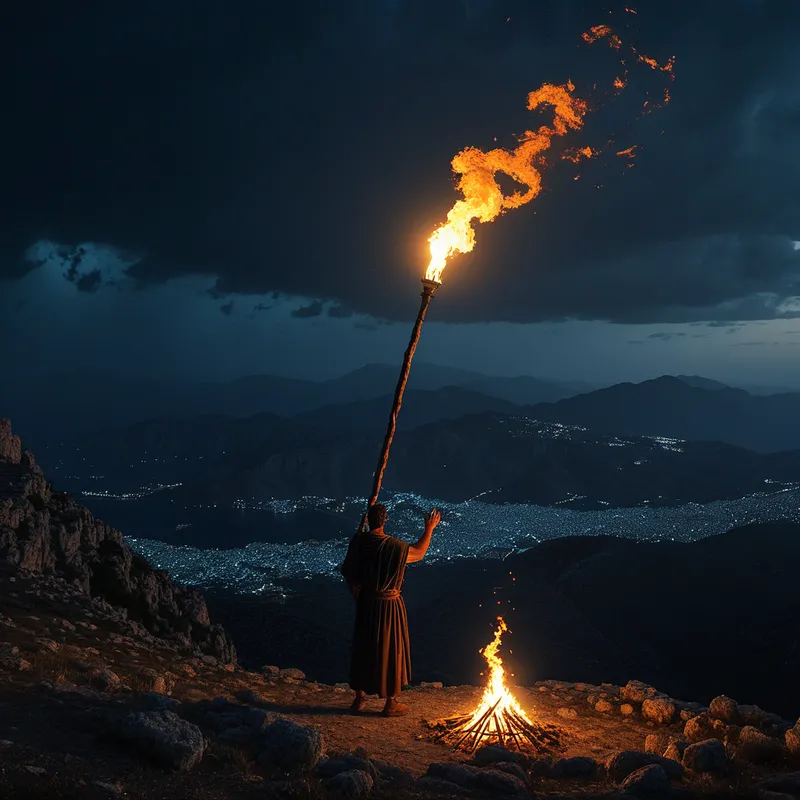
It began on the furthest peak of Mount Ida, where a watchman loyal not to a king, but to a queen’s command, stood shivering in [the wind](/myths/the-wind “Myth from Various culture.”/). His eyes were raw from staring into the perpetual gloom across the strait. Then—a spark. A bloom of orange in the absolute black. The great wooden horse had been wheeled within the walls. The sack had begun. The watchman did not cheer. With hands numb from cold and fate, he lifted his own great pile of dried brush and timber and thrust his torch into its heart. A second sun was born on that mountain, a silent, roaring shout into [the void](/myths/the-void “Myth from Buddhist culture.”/).
And the void answered. From Ida to the isle of Lemnos, a fire sprang to life. From Lemnos to the peak of Athos, another answered, a golden bead strung on the necklace of night. Across the dark sea, the fire leaped, a living [thing](/myths/thing “Myth from Norse culture.”/), racing over Macon, caught and flung onward by the watchman on Messapion. It crossed the waters of the Euripus, danced on the shoulders of Cithaeron, flashed to Aegiplanctus, and finally, with the last desperate strength of a messenger spent, it surged up the rocky flank of Arachnaeus.
In Mycenae, Clytemnestra did not sleep. She stood on the palace roof, the night air cold on her skin. Then she saw it—the final, triumphant flame blooming in the near distance, a golden eye opening in the face of the mountain. It was the sign. The long war was over. Troy had fallen. The king was returning.
A smile touched her lips, but it was a winter smile. She turned and descended into the palace, where the baths were being prepared and the purple tapestries, rich as congealed blood, were being laid upon the ground. The beacon’s light, which spoke of victory to all of Argos, spoke to her of a different promise. It was not a light of homecoming, but of reckoning. The fire had crossed a thousand stadia in a single night, but it had been traveling for ten years. It had finally reached its true destination: not the eyes of the people, but the hardened heart of the queen. The king was coming home. And she would be waiting.
Cultural Origins & Context
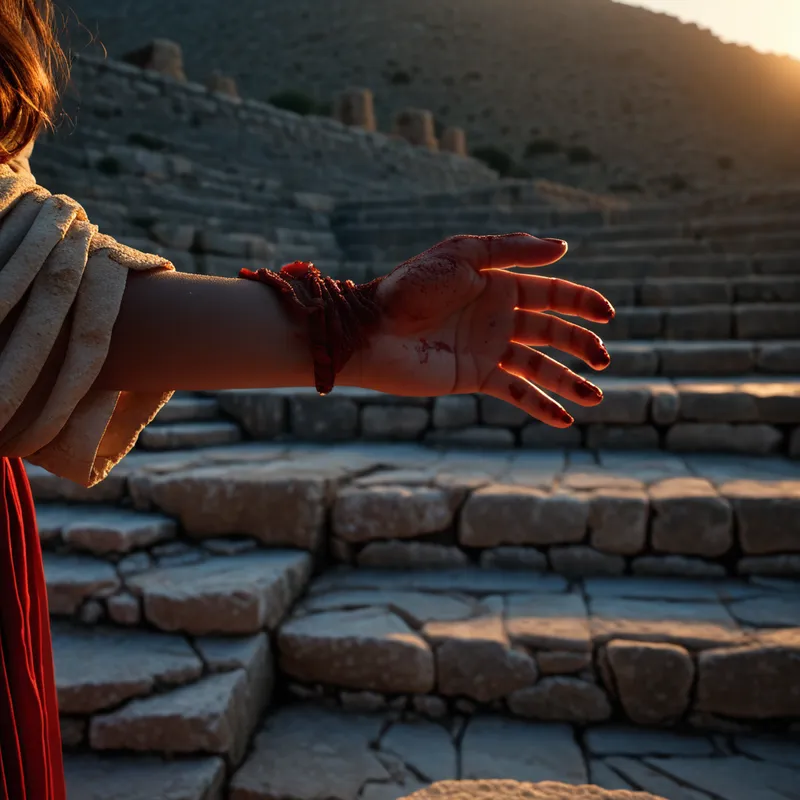
This vivid narrative of the beacon chain is the invention of the tragedian Aeschylus, the central, breathtaking device in his Agamemnon. While the broader myth of Agamemnon’s return and murder is older, woven into the epic cycle, the specific, dramatic relay of fires is Aeschylus’s masterstroke. It served a profound purpose in the civic and religious context of 5th-century BCE Athens. Performed during the City Dionysia, the play used this technological marvel—a rapid communication network—to explore the terrifying speed with which fate, once set in motion, arrives at its conclusion.
The beacons represent the pinnacle of human ingenuity and order, a royal system of control and information. Yet, in Aeschylus’s hands, this system is immediately co-opted by Clytemnestra, becoming an instrument of her own vengeful design. The myth thus functioned for its original audience as a deep meditation on the paradox of civilization: our greatest tools can serve our most primal urges. It asked the Athenian citizenry to consider the distance between a public victory and a private catastrophe, and how the very signals of [triumph](/myths/triumph “Myth from Roman culture.”/) can illuminate the path to a long-awaited doom.
Symbolic Architecture
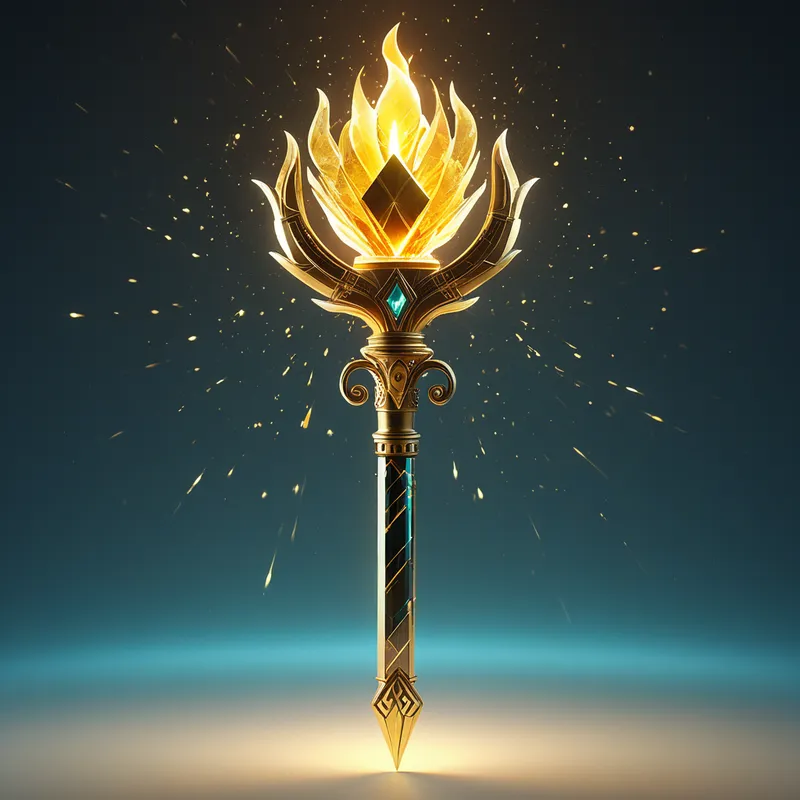
The [beacon](/symbols/beacon “Symbol: A guiding light or signal that provides direction, warning, or hope, often representing guidance, safety, or a call to action.”/) fires are far more than a [plot](/symbols/plot “Symbol: A plot symbolizes the unfolding of a story, representing personal narratives and life direction.”/) [device](/symbols/device “Symbol: A device in dreams often symbolizes the tools or mechanisms that we use to navigate our inner or outer worlds.”/); they are the central nervous [system](/symbols/system “Symbol: A system represents structure, organization, and interrelated components functioning together, often reflecting personal or social order.”/) of the myth’s meaning. They symbolize the fatal [connection](/symbols/connection “Symbol: Connection symbolizes relationships, communication, and bonds among individuals.”/) between [action](/symbols/action “Symbol: Action in dreams represents the drive for agency, motivation, and the ability to take control of situations in waking life.”/) and consequence, the inescapable linkage of past [crime](/symbols/crime “Symbol: Crime in dreams often symbolizes guilt, inner conflict, or societal rules that are being challenged or broken.”/) to future retribution.
The beacon is the light of consciousness that reveals not what we wish to see, but what has always been true in the dark.
The chain itself is a perfect [symbol](/symbols/symbol “Symbol: A symbol can represent an idea, concept, or belief, serving as a powerful tool for communication and understanding.”/) of causality. The first fire on Ida is lit by the act of Troy’s fall, an act born from Agamemnon’s earlier sacrifice of his [daughter](/symbols/daughter “Symbol: In dreams, a daughter symbolizes innocence, potential, and the nurturing aspects of oneself or one’s relationships.”/), Iphigenia. Each subsequent fire is an inevitable link, carrying that [original sin](/myths/original-sin “Myth from Christian culture.”/) across sea and [mountain](/symbols/mountain “Symbol: Mountains often symbolize challenges, aspirations, and the journey toward self-discovery and enlightenment.”/) until it arrives at its [source](/symbols/source “Symbol: The origin point of something, often representing beginnings, nourishment, or the fundamental cause behind phenomena.”/): the [king](/symbols/king “Symbol: A symbol of ultimate authority, leadership, and societal order, often representing the dreamer’s inner power or external control figures.”/) himself. The light is not benevolent; it is accusatory. It does not guide Agamemnon home so much as it exposes him, naked and vulnerable, to the [justice](/myths/justice “Myth from Tarot culture.”/) that has been patiently waiting for a [decade](/symbols/decade “Symbol: A ten-year period representing a distinct era of personal or collective experience, often symbolizing cycles, progress, or nostalgia.”/). In psychological terms, the beacons represent the [moment](/symbols/moment “Symbol: The symbol of a ‘moment’ embodies the significance of transient experiences that encapsulate emotional depth or pivotal transformations in life.”/) of traumatic [insight](/symbols/insight “Symbol: A sudden, deep understanding of a complex situation or truth, often arriving unexpectedly and illuminating hidden connections.”/), when a long-repressed [truth](/symbols/truth “Symbol: Truth represents authenticity, honesty, and the quest for knowledge beyond mere appearances.”/) finally breaks through the defenses of the [psyche](/myths/psyche “Myth from Greek culture.”/) and arrives, undeniable and brilliant, at the center of one’s being.
The Dreamer’s Resonance
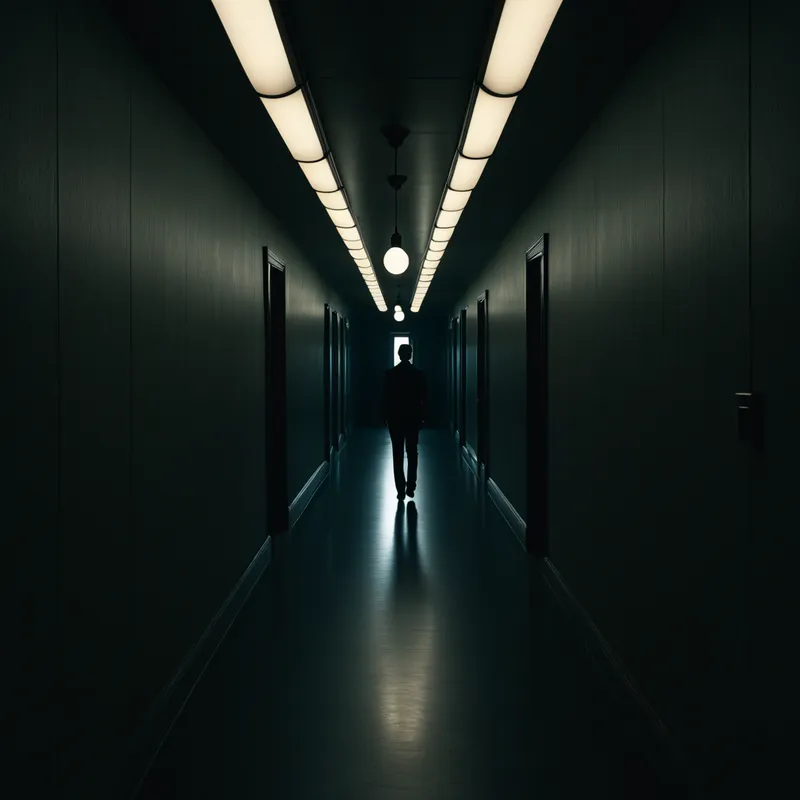
When this mythic pattern ignites in the modern dreamscape, it often manifests not as literal fires, but as a sudden, illuminating connection. The dreamer may experience a chain of linked events—a sequence of doors opening, phones ringing in succession, or lights switching on in a corridor—that culminates in a profound and often unsettling realization. The somatic feeling is one of simultaneous acceleration and dread; the heart races as understanding dawns, but the understanding itself is cold.
This dream signals that a long-buried psychological process—a consequence of an old choice, a buried guilt, or an unacknowledged truth—has completed its journey through the unconscious and is now arriving at [the threshold](/myths/the-threshold “Myth from Folklore culture.”/) of awareness. The “beacon” in the dream is [the Self](/myths/the-self “Myth from Jungian culture.”/)’s mechanism for forcing integration. The dreamer is both the watchman lighting the fire (the part that is ready to know) and Clytemnestra waiting at the destination (the part that has known all along and is prepared to act). The dream is an announcement: the period of unconscious waiting is over. The repressed is returning, and it will demand an audience.
Alchemical Translation
The alchemical journey modeled here is the [nigredo](/myths/nigredo “Myth from Alchemical culture.”/)—the blackening, the descent into the darkest material of the soul. Agamemnon’s triumphant return is the ultimate illusion of [the ego](/myths/the-ego “Myth from Jungian culture.”/). He believes he brings home glory (the gold of Troy), but the beacons show he is actually delivering himself to his own shadow. The brilliant, public light of the fires is the antithesis of the private, shadowy work that must be done.
The king must die so that the man may be born. The triumphant ego, encrusted with the spoils of external conquest, must be sacrificed to make way for a consciousness that acknowledges its own shadow.
For the modern individual, the “beacon fires” are those synchronicities, crises, or piercing insights that irrevocably shatter a cherished self-narrative. They force a “homecoming” not to a place of comfort, but to the interior site of one’s original wound or moral failure. This is not a failure of life, but the necessary precondition for psychic transmutation. One must be lured, by the seemingly glorious light of one’s own achievements or self-image, back to the very spot where the unintegrated shadow lies in wait. The murder of the old king (the rigid, blindered ego) is a brutal but essential stage. It clears the psychic palace for the long, tortuous work of the individuation that follows—the work of the [Orestes](/myths/orestes “Myth from Greek culture.”/) who must later confront [the Furies](/myths/the-furies “Myth from Greek culture.”/) of his own conscience. The fire that destroys is also the fire that purifies, initiating the ordeal from which a more complete, and more humble, consciousness can eventually emerge.
Associated Symbols
Explore related symbols from the CaleaDream lexicon: