The Bardo State Myth Meaning & Symbolism
A mythic map of the liminal state between death and rebirth, a 49-day journey through luminous visions and terrifying apparitions toward liberation or a new life.
The Tale of The Bardo State
Listen. The great breath has ceased. The anchor of the body is cut loose, and what remains is cast adrift on a vast, soundless ocean. This is the Bardo. For forty-nine days and nights, the voyager journeys, unmoored from time and solid ground.
In the first stillness, a profound peace descends. A clear, empty light dawns—brilliant, blinding, and serene as a mountain lake at dawn. It is the Dharmata, the very essence of reality, calling the voyager home. But fear, the old ghost, often arises. The light seems too vast, too naked. The habit of self clings, and the voyager turns away.
Then, the visions begin.
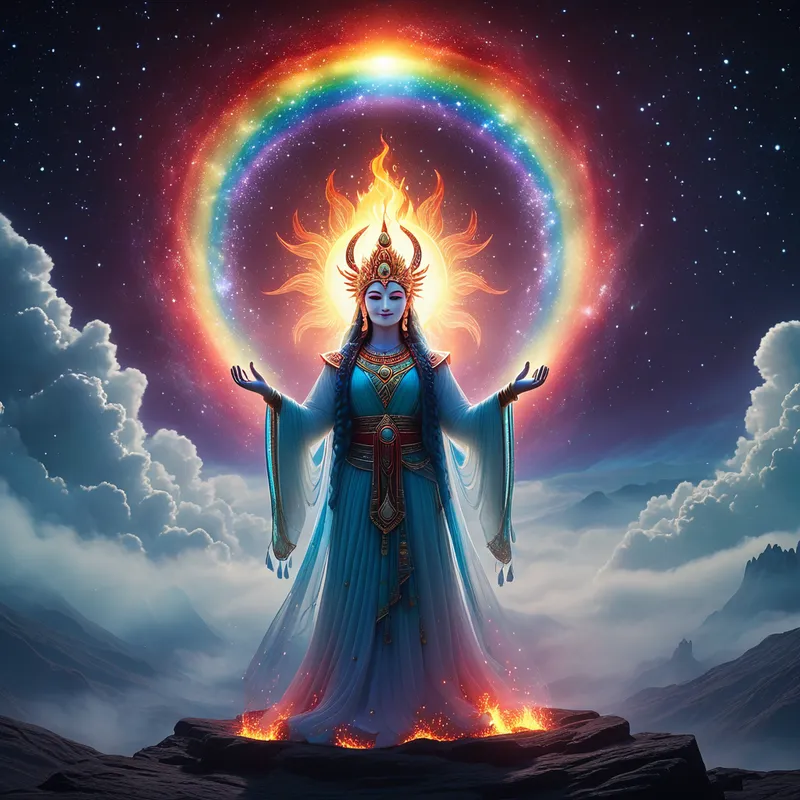
From the luminous emptiness, forms coalesce. Peaceful deities emerge, radiant and majestic. They are the Buddhas of the directions, emanating colors that are not colors but states of being: white, yellow, red, green, blue. Their light is love and wisdom itself, a silent invitation to recognize one’s own true nature. Their realms are palaces of jeweled light, and their mantras are the hum of the universe. Yet, if the voyager, tangled in the threads of past karma, meets them with confusion or terror, these benevolent ones fade.
And from their fading light, the wrathful ones are born.
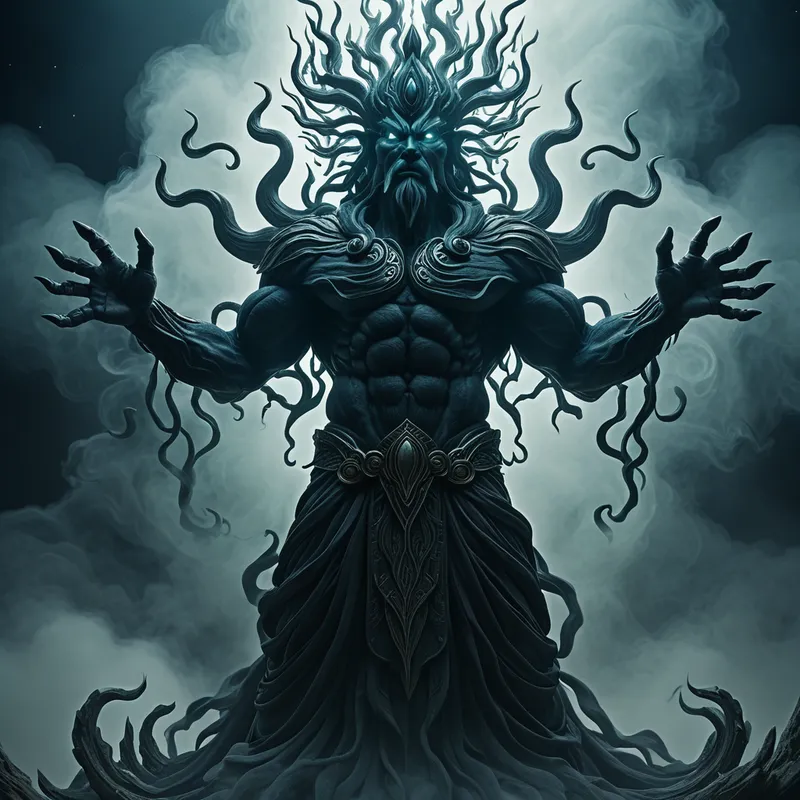
They erupt from the void with a fury that is not anger, but the fierce energy of liberation. They are the Herukas, adorned with bone ornaments, dancing on corpses of ego, their faces a bestial pantheon of buffalo, lion, and hawk. Flames roar from their halos; their howls shatter illusion. To the unprepared mind, they are the stuff of absolute nightmare—judges, demons, avengers. But their terrifying visage is a mirror, reflecting the voyager’s own hidden passions, aggression, and delusion back in a form too potent to ignore. The instruction whispers on the wind: Do not flee. Recognize. These, too, are you.
The journey turns inward, a procession of karmic echoes. The voyager sees the pull of six realms of existence flicker like projections on a screen: the god’s pride, the jealous god’s strife, human desire, animal ignorance, hungry ghost craving, hell realm aggression. A great wind of karma begins to blow, driving the voyager toward a light that feels like home—but it may be the seductive, familiar glow of a womb, the doorway to another life of suffering.
At the final threshold, a choice hangs in the balance. To recognize the luminous nature of every vision as one’s own mind is to step into the light and be free. To grasp at an identity, to flee from wrath or crave peace, is to be swept into the current of rebirth. On the forty-ninth day, the journey culminates. Either liberation dawns like a sun that never sets, or a new life is taken, and the great wheel turns once more.
Cultural Origins & Context
The detailed narrative of the Bardo, particularly the Bardo Thödol, is a cornerstone of Tibetan Vajrayana Buddhism. Its origins are esoteric, attributed to the great 8th-century tantric master Padmasambhava, who concealed it as a terma to be discovered centuries later. It was never meant as mere folklore but as a precise spiritual technology—a guidebook for the greatest transition.
Traditionally, a lama would read the text aloud to a recently deceased person for the full 49 days, its rhythmic, poetic instructions serving as a “post-death psychotherapy” to navigate the bewildering psychic landscape. Its societal function was profound: it demystified death, provided a map for the ultimate journey, and, perhaps most importantly, served as a mirror for the living. By studying the Bardo Thödol, one prepares for death by learning to recognize the nature of mind in life, transforming existential terror into a path of awakening.
Symbolic Architecture
The Bardo is not merely a post-mortem itinerary; it is a master symbol of the liminal space inherent in every moment of profound change. It represents the psychic gap between one state of being and another—between job loss and new career, relationship end and new beginning, a shattered identity and a reformed self.
The Bardo is the eternal present where the past has died but the future is not yet born. It is the crack where the light—and the darkness—gets in.
The peaceful and wrathful deities are not external gods but archetypal projections of the psyche’s own pure and defiled energies. The peaceful Buddhas symbolize innate wisdom, compassion, and clarity. The wrathful Herukas represent the necessary, violent dissolution of egoic structures—the repressed shadow in its most potent, transformative form. The entire drama is an internal one: consciousness confronting its own luminous essence and its own terrifying creations.
The Dreamer’s Resonance
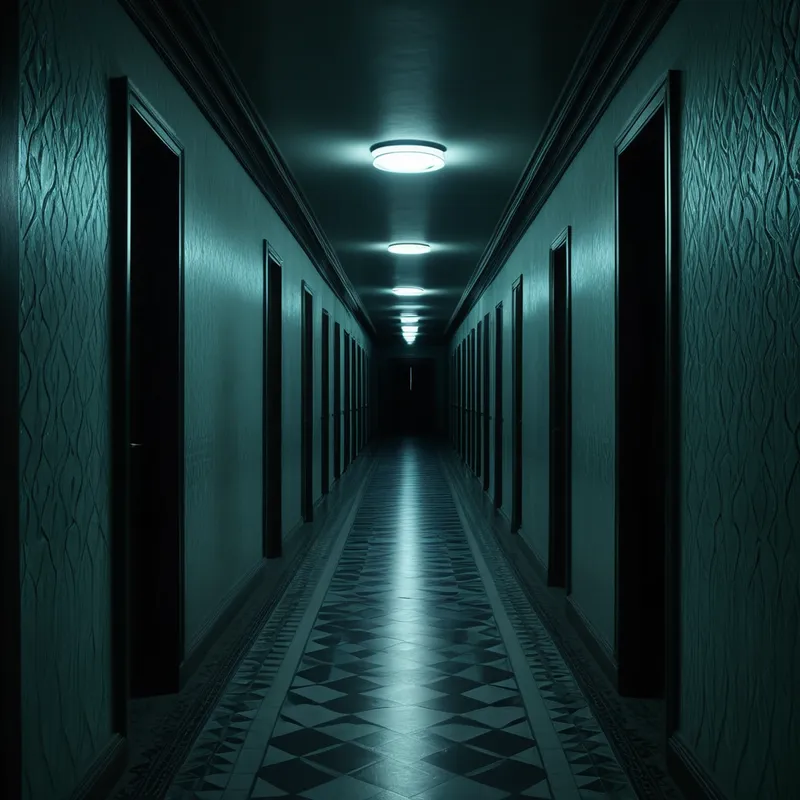
When this mythic pattern surfaces in modern dreams, it signals the dreamer is in a personal Bardo. Dreams of endless, unfamiliar hallways, of being judged by a panel, of encountering benevolent guides that morph into monsters, or of a blinding light one feels compelled to approach or flee—these are the somatic echoes of the Bardo journey.
Psychologically, the dreamer is navigating a state of psychic deconstruction. The old “I” has died (a role, a belief, a self-image), but a new one has not yet coalesced. The dream deities are the emerging contents of the unconscious: the peaceful figures may be nascent potentials or healing energies, while the wrathful ones are the raw, unintegrated aspects of anger, passion, or fear that must be faced, not exorcised. The dreamer is undergoing the core Bardo instruction: to hold presence in the liminal chaos, to observe the projections without identifying with them.
Alchemical Translation
The alchemical work modeled by the Bardo myth is the ultimate individuation process. It is the transmutation of the lead of ego-identification into the gold of Self-awareness. The journey maps the path from being a passive victim of psychic contents (karma) to becoming the conscious witness and ultimately the sovereign of one’s own inner reality.
Liberation in the Bardo is not an escape from reality, but the final, full-bodied recognition that you are the reality in which all visions arise and dissolve.
For the modern individual, this translates to cultivating “Bardo awareness” in daily life. It means learning to pause in the gap between stimulus and reaction—the micro-Bardo of every choice. It involves facing the “wrathful deities” of our own crises—failure, grief, rage—not as punishments, but as fierce allies breaking down outworn structures. It requires recognizing the “peaceful deities” in moments of insight, beauty, and connection as glimpses of our fundamental nature. The goal is to become so familiar with the landscape of our own mind through meditation, reflection, and shadow-work that when the great transitions come, we do not flee from the clear light of truth, but merge with it. We learn to die to who we were, moment by moment, so that we may be truly born.
Associated Symbols
Explore related symbols from the CaleaDream lexicon: