The Augurs Myth Meaning & Symbolism
The story of ancient seers who read the will of the gods in the flight of birds, teaching humanity to find order and meaning in the chaos of the world.
The Tale of The Augurs
Hear now, and listen well, for the wind carries more than scent. It carries the whispers of the gods. Before the great temples of marble rose, before the philosophers spoke in the agora, there were the lonely hilltops. There stood the first interpreters, the ones who dared to ask the sky a question.
They were called the Augurs, though their art is far older than Rome. In the dawn of Greece, when the world was raw and the gods walked close, a profound hunger awoke in the human soul. It was not a hunger for bread, but for meaning. The thunder was not just noise; it was a shout. The flight of a hawk was not just hunting; it was a script written on the air. But who could read it?
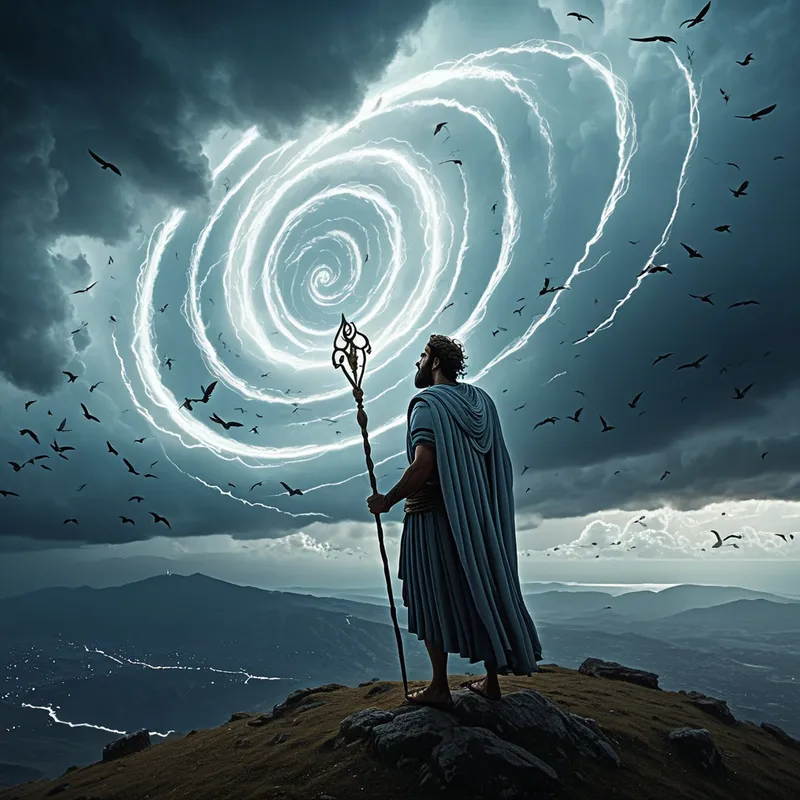
The first to try was a man whose name is lost to the mist. He was a shepherd, they say, who spent more time watching the sky than his flock. One day, as a great storm gathered, he saw a flock of crows not flee, but split into two perfect halves, swirling in opposite directions before the lightning struck a sacred oak. In that moment, he did not see chaos. He saw a decision. He saw Zeus dividing his will. From that day, he climbed the highest rock, the templum he marked upon the earth with his staff. He would stand, his face salted by the wind, his eyes aching from the sun, watching.
He watched the aves—the birds. The high-flying eagles of Zeus, whose straight path meant favor, whose erratic circle warned of wrath. The screeching owls of Athena, whose sudden appearance in daylight was a portent of sharp intellect or hidden strategy. He learned their language—the oscines, who spoke with their voices, and the alites, who spoke with their wings. A bird on the left, the sinister side, was an ill omen. A bird on the right, the dexter side, brought the blessing of the divine.
But the gods spoke in more than wings. The hunger for certainty grew. The art deepened, turning inward, becoming more intimate and more terrible. The hieroskopia was born. Now, the augur would take a sacred animal—a pure white lamb or a dove—and offer it to the flames. As the smoke coiled towards Zeus, the seer would read the very entrails. The liver was the mirror of the cosmos; a smooth, healthy lobe meant the gods were pleased, the path clear. A spot, a lesion, a strange shape—these were the stutters in divine speech, the warnings written in flesh.
Kings would come to these men and women, trembling before a battle or a coronation. “Tell us,” they would beg, “what do the gods will?” And the augur, face inscrutable as stone, would perform the rites. The people would hold their breath, the world hanging on the flight of a single sparrow or the color of a spleen. A nod, and an empire would march. A frown, and armies would halt. The augurs stood as the fragile bridge between the chaos of fate and the order of human action, translating the terrifying poetry of the divine into a simple, dreadful yes or no.

Cultural Origins & Context
The practice of augury, while famously systematized by the Romans, finds its deep roots in the prehistoric soil of Greece and the wider Mediterranean. It belongs not to the age of Homeric epic, but to a more primal, animistic layer of consciousness. Before the Olympians were given their splendid human forms and complex personalities, the divine was perceived as a raw, immanent force within nature itself. Every rustle, every bird call, every pattern in the flames was a god speaking.
This mythic complex was not a single story told by bards, but a living, breathing discipline passed down through priestly colleges and familial lines. The Pythia at Delphi spoke in ecstatic verse, but the augur worked with a silent, meticulous grammar. His “text” was the world itself. In a society where the line between the natural and supernatural was blurred, augury served a critical societal function: risk management. To found a city, to pass a law, to wage a war—these were actions that placed the entire community in potential conflict with divine law (themis). The augur was the technician of the sacred, whose ritual observation (observatio) created a sanctioned moment to “check in” with the cosmic order.
His tool was the templum, not a building, but a sacred space he marked upon the ground and projected onto the sky, dividing it into regions of auspicious and inauspicious meaning. Within this ritual frame, the random became significant. The function was to alleviate the paralyzing terror of an unpredictable universe by providing a protocol for reading it. It gave the polis the courage to act, believing its actions were aligned with the will of the gods.
Symbolic Architecture
At its heart, the myth of the Augurs is not about predicting the future. It is about the human psyche’s heroic struggle to find pattern in chaos, to extract meaning from phenomena.
The augur does not command the birds; he learns their grammar. He does not invent the message; he discovers the text that was always there.
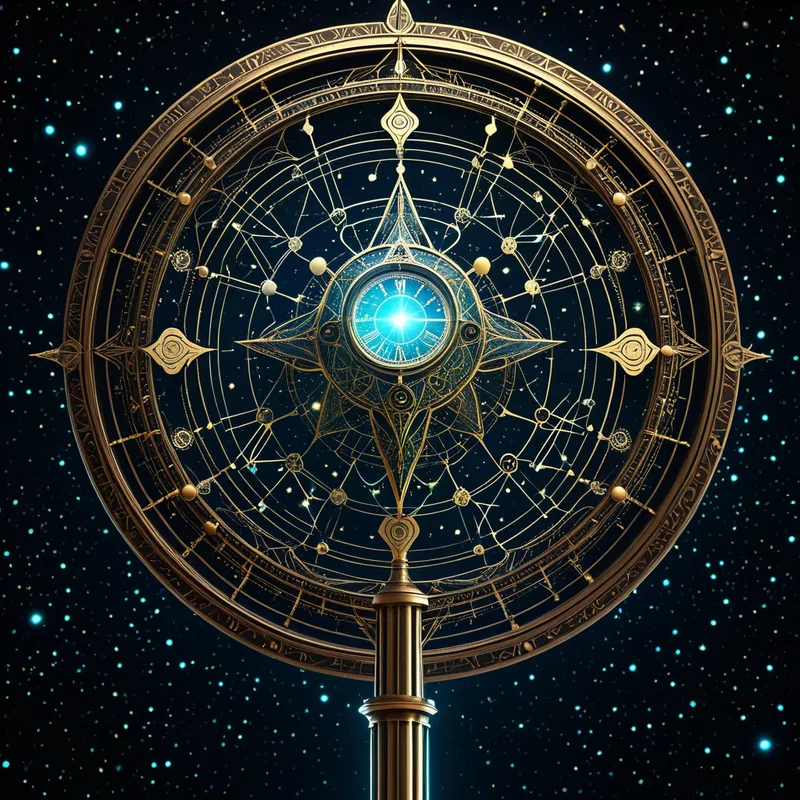
The birds symbolize the fragmented, fleeting, and often contradictory impulses of the unconscious mind and the external world. Their flight is pure event, raw data. The augur’s staff (lituus) represents the axis of consciousness, the tool by which we impose a framework of understanding—a templum—onto the boundless sky of experience. The ritual act of observation is the disciplined focus of the ego, attempting to discern signal in the noise.
The entrails take this symbolism into a darker, more profound interiority. To read the liver is to engage in a form of brutal introspection, to open up the soft, vital core of a situation (the sacrificial victim) to see its true, often hidden, condition. It is the symbolic equivalent of psychological analysis—cutting through the surface to examine the health and structure of the psychic organs that govern our fate. A diseased liver in the sacrifice reflects a diseased foundation in the enterprise.
Thus, the Augur archetype embodies the Sage, but a specific kind of sage: not the philosopher who reasons from first principles, but the interpreter who derives wisdom from attentive, humble observation of the world’s own signs. His knowledge is inductive, not deductive. He teaches that meaning is not superimposed, but revealed through a sacred, structured attention.
The Dreamer’s Resonance
When this myth stirs in the modern soul, it rarely appears as a man in a robe on a hill. Instead, it manifests as dreams of overwhelming, chaotic information that yearns for interpretation.
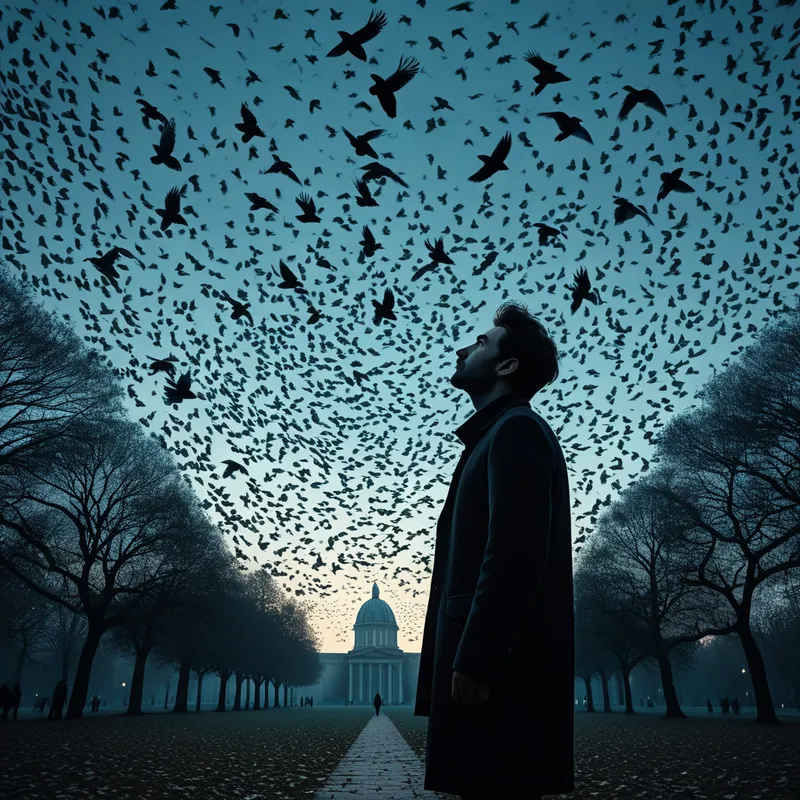
You may dream of being lost in a library where all the books are written in shifting, avian script. You may see flocks of birds forming and re-forming into ominous or beautiful shapes that feel vitally important, yet just beyond comprehension. You may dream of trying to read a map that changes as you look at it, or of hearing a crucial message drowned out by static. These are the dreams of the templum collapsing, where the ego’s ability to categorize and understand is overwhelmed.
Somatically, this can feel like anxiety—a fluttering in the chest, a racing mind, a sense of being bombarded by signs and portents (emails, news alerts, social cues, bodily sensations) with no key to their meaning. The psychological process at work is the unconscious presenting the raw, undigested data of one’s life—relationships, career choices, inner conflicts—in its native, symbolic state. The dream is an invitation to become your own augur: to take up the staff of conscious attention, mark out a sacred space for reflection, and begin the patient, non-judgmental work of observing the patterns in your own chaos.
Alchemical Translation
The alchemical journey mirrored in the Augur’s myth is the opus of interpretation, which is the precursor to all transformation. Before lead can become gold, one must first correctly identify the substance and understand the laws governing its change.
The first transmutation is not of matter, but of perception: from seeing random events to recognizing a meaningful language.
For the modern individual pursuing individuation, the “birds” are the swarm of daily experiences, emotions, memories, and synchronicities. The initial state is nigredo—the black chaos of unprocessed life. The augur’s first act, marking the templum, is the creation of the vas or sacred vessel: the therapeutic container, the journal, the meditative practice. This is the albedo, the whitening, where space is cleared for observation.
The careful, disciplined observation of patterns—in one’s relationships (what “birds” consistently appear on the “left”?), in one’s work, in one’s emotional reactions—is the slow citrinitas, the yellowing or dawn. You begin to see your own myths, your repetitive flights. Finally, the hieroskopia, the deep introspection, is the rubedo, the reddening. It is the courageous act of looking within at the visceral truth of one’s motivations, wounds, and desires (the “entrails”). This is not fortune-telling; it is truth-telling.
The triumph of the Augur is not in controlling fate, but in aligning one’s actions with a deeper, perceived order. The psychic gold produced is not a guaranteed future, but meaningful action—the ability to make decisions from a place of profound inner attunement, rather than from fear or reaction. One becomes, in a sense, both the seeker and the sign, the interpreter and the text, fully participating in the mysterious dialogue between the soul and the world.
Associated Symbols
Explore related symbols from the CaleaDream lexicon: