The Athanor Myth Meaning & Symbolism
The tale of the sealed vessel, the patient fire, and the slow, sacred work of turning base matter into the philosopher's stone.
The Tale of The Athanor
Listen, and I will tell you of the work that is not work, of the fire that does not consume, of the vessel that is both womb and tomb.
In the beginning, there is the Massa Confusa—a dark, heavy, and formless thing. It is the slag of the world, the dross of experience, the unspoken shame and the forgotten longing. This is the burden the Artificer bears into the sanctum, a chamber thick with the scent of salt, sulphur, and old parchment. The air itself is pregnant with potential, humming a silent note only the prepared soul can hear.
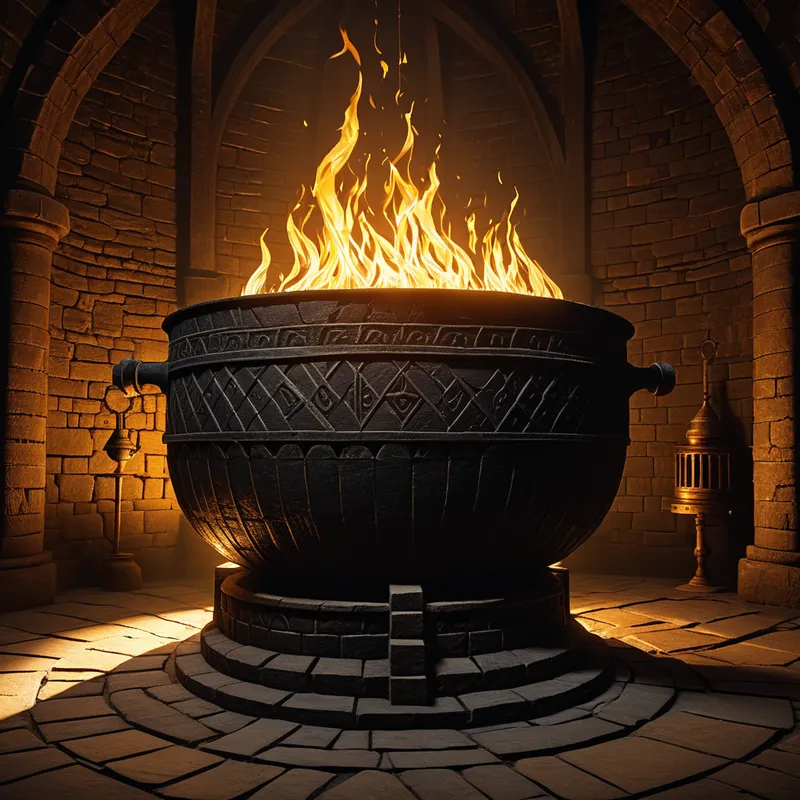
Here, in the absolute stillness, stands the Athanor. It is not merely a furnace of brick and clay; it is a living architecture. Its form is an ovum, a sealed universe, built with the patience of a coral reef growing in the deep. Its fire is not the roaring blaze of the forge, but the ignis innaturalis—the unnatural fire, a patient, persistent, and secret heat. It is the warmth of a brooding bird, the slow digestion of the earth, the hidden fever of a fermenting thought.
The Artificer, whose face is lost to time and soot, performs the sacred Operatio. The chaotic mass is placed within the innermost crucible, the Vas Philosophorum. With rituals of earth and word, the vessel is sealed. No spirit may escape; no foreign influence may enter. The Athanor is shut.
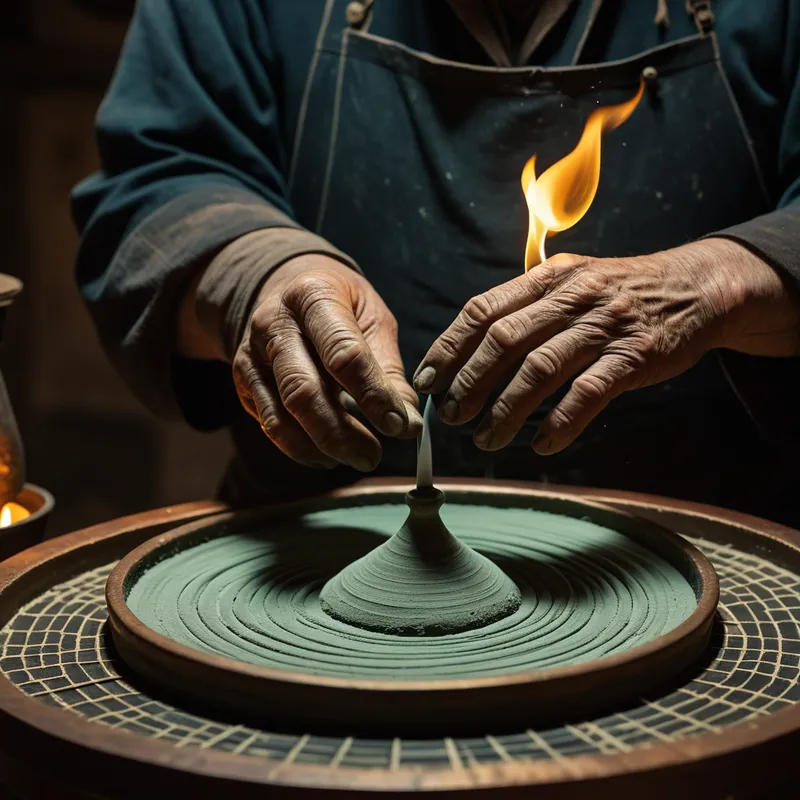
Then begins the Long Night. The fire is lit—not with common tinder, but with the focused will of the operator. It is fed not with wood, but with attention. For days that bleed into months, and months that dissolve into years, the Artificer tends. This is the true labor: the Vigil. He watches the subtle play of colors through the Specularium: the descent into the black Nigredo, a midnight of despair where all form dissolves. He fans the flame with the bellows of his own breath, maintaining the gentle, relentless heat.
Conflict rages within the sealed egg. The elements war: Sulphur fights Mercury, both trapped by Salt. It is a microcosm of civil war. The matter screams in silence, putrefies, dies. But the Athanor holds. Its patient fire does not allow stagnation. From the blackness emerges the white Albedo, a dawn of washed silver. Then, the glorious, terrifying Citrinitas, a sunburst of searing insight. Finally, the culmination: the Rubedo. A light of deep, ruby crimson glows from the heart of the vessel, a light that sings.
Only then, when the song is pure and the light constant, does the Artificer move. With hands steady from a lifetime of waiting, he opens the sealed womb. Within lies no common metal, but the Lapis Philosophorum—a stone that is not a stone, a radiant, crystalline gold that holds the secret of transformation within itself. The work is complete. The base has become noble. The Athanor, its task fulfilled, cools, holding the memory of the fire in its very bricks.
Cultural Origins & Context
The myth of the Athanor is not a story told around fires, but one enacted in the solitary laboratorium. It emerged from the coded manuscripts of European alchemists between the 12th and 17th centuries, a period when the boundaries between science, spirituality, and art were profoundly porous. This was a culture of secrecy and revelation, communicating through a dense language of symbols—the green lion, the winged dragon, the chemical wedding—to protect sacred knowledge from both the profane and the persecution of the church.
The myth was passed down not by bards, but through codices like the Rosarium Philosophorum or the cryptic texts attributed to Hermes Trismegistus. Its societal function was dual. Exoterically, it was an allegorical manual for the literal transmutation of metals. Esoterically, and more importantly, it was a precise psychological map for what they called the Magnum Opus—the transformation of the human soul from a state of leaden unconsciousness to golden enlightenment. The Athanor was the central technology in this inner work, a model for the disciplined container necessary for such a dangerous and glorious undertaking.
Symbolic Architecture
The Athanor is the myth of the necessary container. It symbolizes the total psychic environment required for profound transformation.
The self cannot be remade in the chaos of the world; it requires a sanctum, a sealed vessel where the raw materials of the psyche can undergo their necessary dissolution without interference or premature escape.
The Massa Confusa represents the unprocessed contents of the personal and collective unconscious—our complexes, traumas, potentials, and instincts in their raw, conflicting state. The Artificer is the conscious ego, not as a ruler, but as a devoted servant to the process. His vigil is the discipline of attention, the act of holding a steady, non-judgmental awareness on the inner turmoil.
The sealed vessel is perhaps the most critical symbol. It represents the therapeutic container, the sacred space of analysis, the committed relationship, or simply the individual’s vow to themselves to see the process through. It means setting boundaries against distracting influences (the vulgar) and containing volatile emotions so they may be transformed, not acted out. The ignis innaturalis is the heat of conscious suffering—the anxiety, friction, and emotional energy that, when contained and sustained, becomes the engine of change, not destruction.
The Dreamer’s Resonance
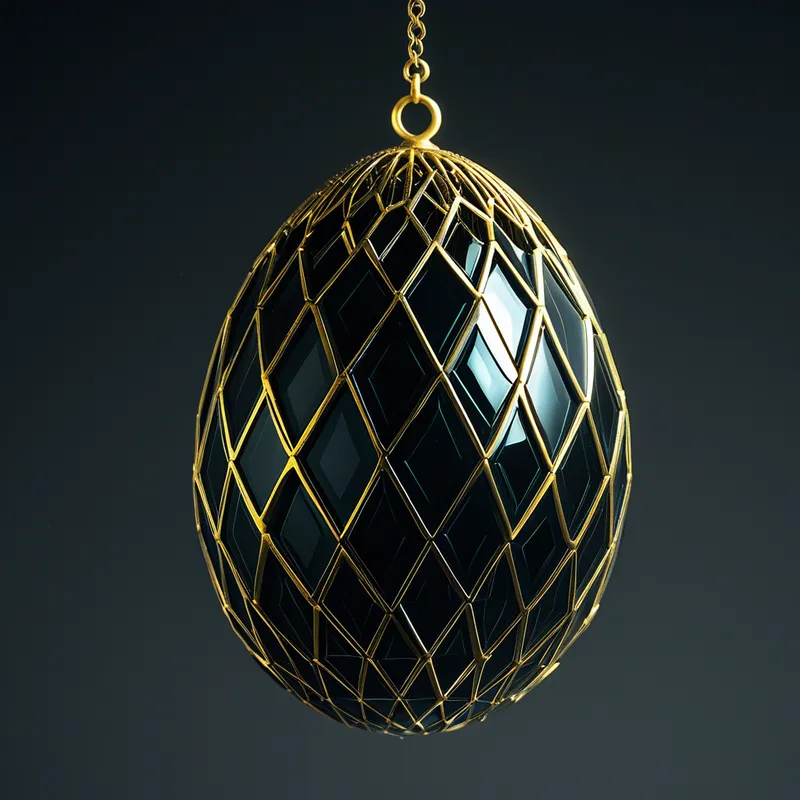
When the Athanor appears in modern dreams, it rarely manifests as a literal furnace. Instead, one dreams of a sealed room, a basement laboratory suddenly discovered in one’s own home, a perfectly insulated pod, or a heart encased in a glass bell jar. These are dreams of the vas, the container being formed.
The somatic experience is one of pressurized heat and patient waiting. The dreamer may feel a slow, building warmth in their chest or gut, not painful but intense and constant. Psychologically, this myth-pattern emerges when the individual is in the midst of a slow, deep, and often invisible process of integration. It is the dream of the analyst in the long middle phase of therapy, the artist incubating a masterpiece, the person patiently working through grief or trauma. The dream confirms: the vessel holds. The process is underway, even if nothing seems to be happening. A dream of the Athanor cracking or cooling is a profound warning of abandoning the inner work, of releasing the pressure too soon and losing the potential for gold.
Alchemical Translation
For the modern individual, the Athanor models the entire architecture of individuation. We are both Artificer and raw material.
The first operation is to build your Athanor—to create a container in your life. This is the commitment to a practice (journaling, meditation, therapy), the establishment of boundaries that protect your inner space, and the cultivation of patience. You place your own Massa Confusa—a relationship conflict, a career crisis, a creative block—into this container.
The fire is applied not to destroy the problem, but to grant it the dignity of a process. The base metal of a symptom is honored as the prima materia of the soul.
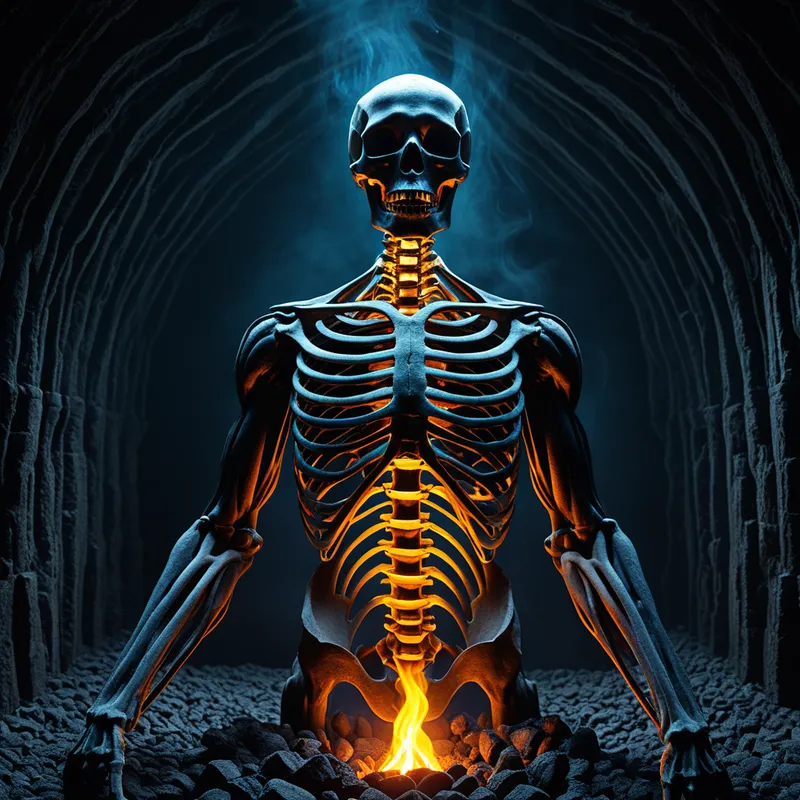
Then you must tend the ignis innaturalis: the heat of staying with the feeling, of examining the complex, of enduring the anxiety of not-knowing. You observe the Nigredo—the depression, the confusion, the sense of disintegration. This is not failure; it is solve (dissolution). You witness the Albedo—the insights, the wash of clarity, the purification of intention. This is coagula (coagulation).
The triumph of the myth is not a dramatic battle victory, but the achievement of a sustained, transformative environment. The Lapis that emerges is the integrated Self, the “philosophical gold.” It is not a state of perfect happiness, but of resilient wholeness—the psychic substance that can now, like the legendary stone, touch the leaden aspects of life and transmute them into meaning. The Athanor teaches that the goal is inseparable from the vessel that makes it possible. We do not find the stone; we become the alchemist who can endure the fire long enough for the stone to find itself within us.
Associated Symbols
Explore related symbols from the CaleaDream lexicon: