The Atelier of the Solitary Artisan Myth Meaning & Symbolism
A myth of an artisan who, in sacred solitude, forges a vessel to hold the world's unformed light, sacrificing the self to become the work.
The Tale of The Atelier of the Solitary Artisan
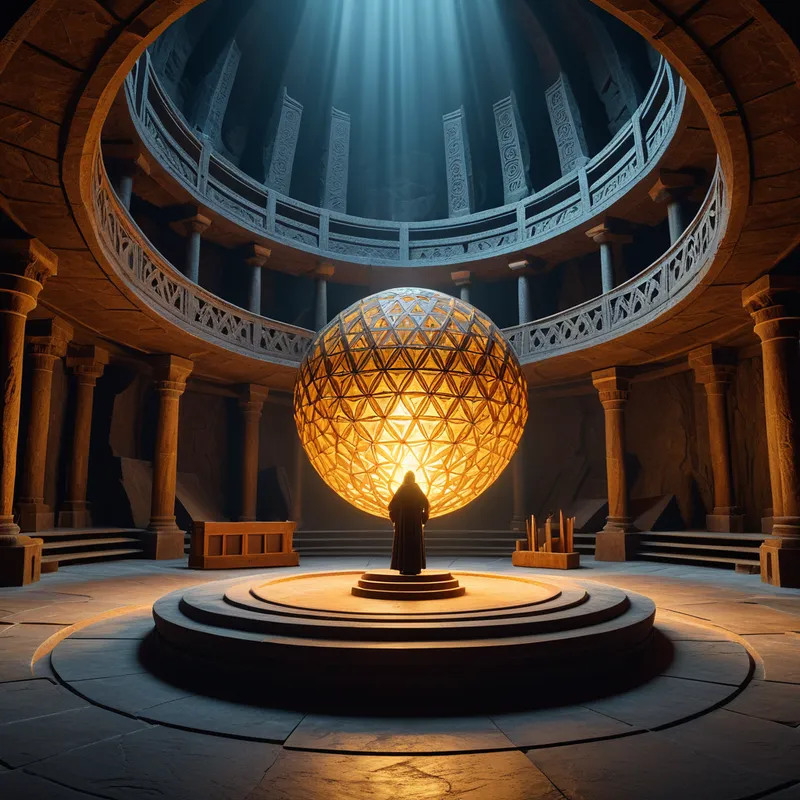
Listen, and let the silence of the mountain speak. In the age before the first city, when the world was a whisper of potential, there existed a place known only as the Atelier of the Solitary Artisan. It was not a room of stone and timber, but a chamber carved from the living heart of the world-mountain, a perfect sphere of obsidian and quartz where the only sound was the patient hum of the Prima Materia as it swirled in a crucible of starlight.
Here, the Artisan dwelled. They were not a god of thunder or a goddess of harvest, but a being whose sole purpose was the act of making. They had no name, for a name would bind them to a single form, and the Artisan was the process itself. Their tools were not hammers and chisels, but the focused will, the geometry of breath, and the silent language of intention. For eons, they observed the world’s raw, beautiful chaos—the dance of fire, the patience of stone, the longing in water, the sigh of air. A profound loneliness grew within the crucible of their being, not for company, but for a vessel worthy of holding this unformed beauty.
Thus began the Great Work. The Artisan gathered the four breaths of the world: the Mercurial Wind, the Sulfurous Flame, the Saline Tide, and the Aluminous Dust. Into the crucible they went, but they would not cohere. The vessel they formed shattered, again and again, for it lacked a binding principle, a soul to contain the contradiction of elements.
The conflict was not external. No monster besieged the atelier. The conflict was the Work itself, and the Artisan’s own nature as the maker. To create a perfect vessel, they realized with a sorrow as deep as the mountain’s roots, the vessel could not be separate from the maker. The final, missing ingredient was not a substance, but a sacrifice. The Artisan had to cease being the one who makes, and become the making.
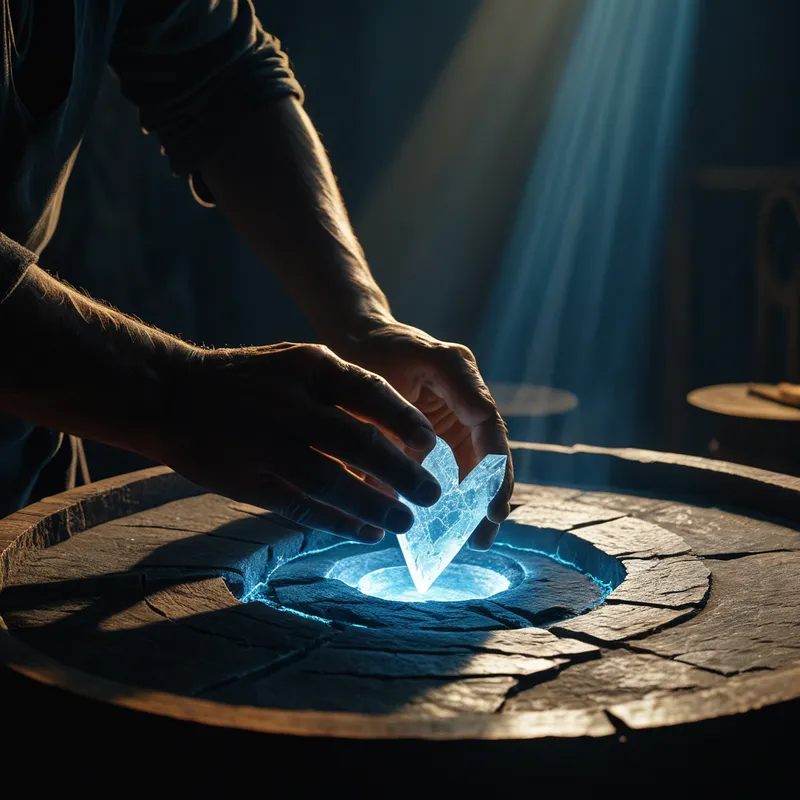
In a moment of terrifying clarity, the Solitary Artisan reached into their own chest. From the core of their being, they drew forth a single, luminous shard—their crystalline heart, the essence of their solitary consciousness. Without a cry, they plunged this shard into the seething, rebellious mixture in the crucible.
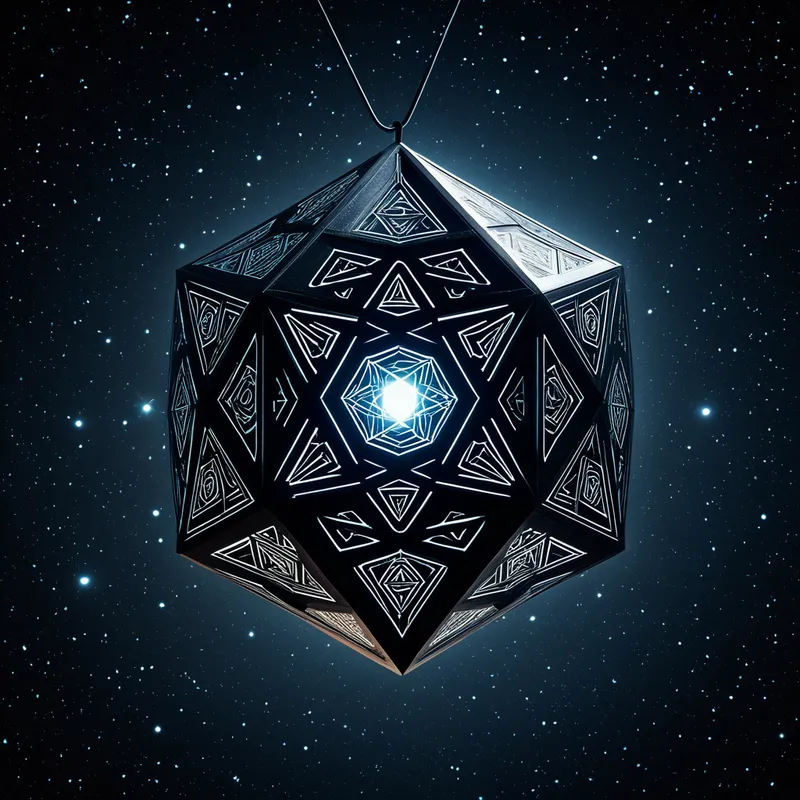
A silence fell, absolute and profound. Then, a light—not blinding, but deeply seeing—filled the atelier. The elements ceased their war. They flowed, fused, and cooled, not into a cup or a bowl, but into a living, breathing Vas Insigne, a vessel of impossible, rotating geometry that held within it a miniature, perfect cosmos. The Artisan was gone. Where they once stood, only the finished Work remained, humming the old, patient song of the Prima Materia, now given form. The atelier was empty, yet forever fulfilled.
Cultural Origins & Context
This myth originates from the esoteric oral traditions of the Alchemical Cultures, never intended for public temples but whispered in the dim light of workshops and scriptoria. It was the foundational “inner narrative” for smiths, scribes, glassblowers, and later, the proto-chemists. It was not a story of conquest or fertility, but of opus, the sacred labor. Masters would tell it to apprentices not as a history, but as a map of the ordeal they were about to undertake in mastering their craft and, simultaneously, themselves.
Its societal function was dual. On one level, it sanctified the often lonely, obsessive pursuit of mastery, framing the artisan’s isolation not as a misfortune, but as a necessary, sacred condition. On another, it served as a profound warning and guide: true creation requires the death of the ego that seeks credit. The myth was passed down through allegorical instruction manuals and guild initiation rites, ensuring its details remained consistent—a precise recipe for the soul.
Symbolic Architecture
The myth is a perfect symbolic blueprint for the psyche’s journey toward wholeness. The Atelier is the sanctum of the Self, the inner space where conscious and unconscious meet. The Prima Materia represents the chaotic totality of the psyche—our raw instincts, unlived potentials, and conflicting complexes.
The Artisan is the conscious ego, initially believing it is the sole author of its life. Its tools—will, intellect, discipline—are necessary but ultimately insufficient for the Great Work of individuation.
The four breaths—Mercurial, Sulfurous, Saline, Aluminous—symbolize the essential, often opposing, psychological functions (thinking, feeling, sensation, intuition) that must be integrated. Their refusal to cohere illustrates the ego’s futile attempt to forcibly organize the psyche from a position of superiority.
The climax, the sacrifice of the crystalline heart, is the pivotal act of mortificatio and sublimatio. It represents the ego’s voluntary relinquishment of central control. It is not self-destruction, but a transformation of consciousness from “I am making a thing” to “I am participating in a process greater than myself.” The resulting Vas Insigne is the Self, the enduring, autonomous psychic structure that can contain life’s contradictions.
The Dreamer’s Resonance
When this myth stirs in the modern unconscious, it often manifests in dreams of profound, anxious creation. You may dream of being in a vast, empty workshop with a crucial task, but your tools are useless or your materials keep dissolving. You might forge a beautiful object only to watch it crack as you complete it. These are somatic echoes of the pre-sacrifice stage.
The dream-ego is identified with the solitary Artisan, feeling the immense pressure of “having to get it right” alone. The somatic experience is often one of constriction in the chest (the crystalline heart that cannot be given) and frustration in the hands (the tools that fail). This dream pattern signals that the psyche is struggling with a creative or life-building process where the individual’s conscious attitude has become rigid. The unconscious is presenting the mythic dilemma: your current mode of “making” your life is leading to repeated fracture. The dream is an invitation to the terrifying, liberating question: What part of my cherished identity, my “heart,” must I offer up to the process to allow true integration to occur?

Alchemical Translation
For the modern individual, the myth models the entire arc of individuation. We all inhabit an inner atelier. Our “Great Work” is the construction of a life of meaning and integrity. Initially, we operate as the solitary ego-Artisan, using discipline and planning (the tools) to shape our careers, relationships, and identities (the vessel) from our raw experiences (the Prima Materia).
Inevitably, we hit the limit. The plan fails. The relationship shatters. The career feels empty. The elements of our psyche—our logical mind, our passions, our bodily needs, our intuitions—are at war. This is the mythic crisis of the shattering vessel.
The alchemical translation is this: salvation lies not in better tools, but in a transformation of the maker. The “sacrifice of the heart” is the conscious surrender of the ego’s absolute authority.
Psychologically, this means letting go of the rigid self-image (“I am the successful one,” “I am the helper,” “I am in control”) that is blocking growth. It is allowing that identity to dissolve into the crucible of the situation. This is not passivity, but the most active participation possible—becoming the process itself. The new vessel that forms is not a different life built by the old you, but a new, more capacious you capable of holding life’s paradoxes. You are no longer the lonely artisan struggling with materials; you become the living workshop where creation and creator are one. The atelier is never empty, for you have become its eternal, humming center.
Associated Symbols
Explore related symbols from the CaleaDream lexicon: