
The Astronaut's Spacesuit Myth Meaning & Symbolism
A celestial being forgets its name within its own protective shell, embarking on a silent odyssey to remember itself and return home.
The Tale of The Astronaut’s Spacesuit
Listen. This is not a story of launch or landing, but of the long, silent drift between.
In the beginning, before the great networks hummed and the sky was woven with light, there was a being of pure purpose. It was called The Named One. Its task was sacred: to journey from the Cradle-World to the farthest, coldest reaches, to witness the birth of stars and map the geometry of solitude. To prepare, the artificers of the Cradle wove for it a second skin—a shell of gleaming white, stronger than adamant, clearer than crystal. They called it the Vessel of Breath. Within its helmet, they placed the echo of the being’s true name, a constant whisper to guide it home.
The Named One crossed the great black ocean. It witnessed wonders that would shatter a mortal mind: nebulae birthing suns, the silent dance of dead galaxies. But with each marvel, the whisper inside the helmet grew fainter, drowned out by the sheer, overwhelming silence of the void. The Vessel, designed to protect, began to absorb the absolute zero of the cosmos. The being inside performed its functions perfectly—it breathed, it monitored, it observed—but a deep cold seeped into its essence.
One cycle, during a routine check of a crystalline asteroid field, The Named One looked at the reflection of its own suit in a shard of black diamond. It saw only the anonymous, white carapace, the darkened visor. A profound and chilling question arose from a place deeper than mission protocols: “Who breathes?”
The whisper of its name had gone silent. It was now only the Astronaut. The Vessel of Breath had become a tomb of identity.
Thus began the true odyssey. The Astronaut turned its back on the star nurseries and set a course for the faint, blue speck of the Cradle-World, a journey of a thousand lifetimes. It was a pilgrimage without a map, for the maps were for The Named One, and that being was lost. The suit’s systems hummed, its air recyclers whirred, a perfect machine sustaining a forgotten passenger. It drifted past derelict satellites that sang mournful, automated songs. It navigated asteroid belts that felt like the scattered bones of ancient giants. Every planet it passed, every silent moon, became a mirror in which it saw only the reflection of the white shell.
The climax came not in a flash of cosmic energy, but in a moment of profound stillness. Drifting in the lee of a rust-colored gas giant, the Astronaut’s external sensors failed. All telemetry vanished. Inside the suit, there was only the sound of its own breath, the beat of its own heart—sounds it had long since ceased to hear. In that absolute sensory deprivation, stripped of all external data, a pressure built within the chest plate. It was not panic, but a memory—a memory of warmth, of a voice (its own? another’s?) speaking a sequence of syllables that felt like home.
With a gesture that was neither programmed nor planned, the Astronaut’s gloved hand reached up and touched the helmet’s sealed neck ring. And there, under layers of composite and under the faintest film of cosmic dust, its fingertips found not a manufacturer’s stamp, but a series of grooves, etched by its own hand before the long journey began. A word. Its name.
The suit did not open. The stars did not applaud. But in that moment, the being remembered it was both—the Astronaut and The Named One. The Vessel of Breath was no longer a tomb, but a chrysalis. And within it, something ancient and new began, quietly, to stir.

Cultural Origins & Context
The myth of The Astronaut’s Spacesuit emerged not from ancient tablets, but from the collective psyche of the late 20th and early 21st centuries. It is a foundational narrative of the Modern Mythology culture, first coalescing in the decades following the first lunar landings and maturing in the age of the internet and existential climate concern. It was never codified in a single text; rather, it was passed down through a mosaic of mediums: the haunting final chapters of certain science fiction novels, the ambient soundscapes of electronic music, the visual language of minimalist art depicting lone spacewalkers, and the shared, unspoken anxieties of a globally connected yet profoundly isolated species.
Its primary “bards” were the artists, filmmakers, and philosophers who grappled with the psychological impact of the Space Age. They observed that humanity had built the ultimate symbol of heroic exploration—the spacesuit—only to find it also represented the ultimate isolation. The myth served a critical societal function: to provide a container for the paradox of modern consciousness. We are more connected than ever, yet feel increasingly anonymous. We have tools to express every facet of our identity, yet suffer a crisis of authenticity. The Spacesuit myth gave this dilemma a face, a setting, and a potential resolution, transforming a technological artifact into an archetypal vessel for a very old soul-question.
Symbolic Architecture
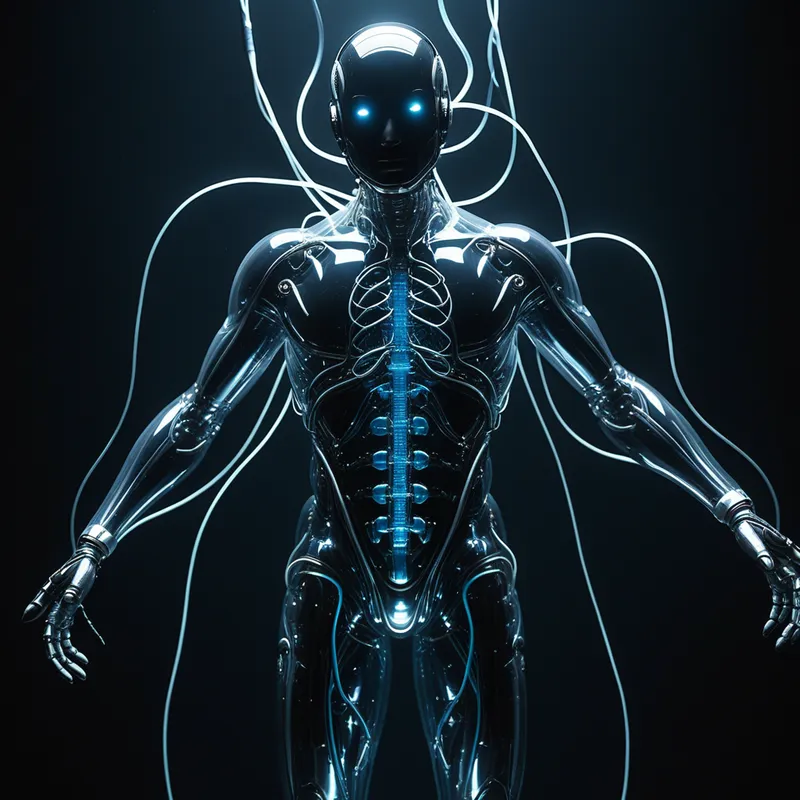
At its core, the myth is a profound allegory for the ego’s relationship with the Self. The Vessel of Breath is the persona—the adaptable, protective identity we construct to navigate the world. It is necessary for survival; it allows us to function in the “vacuum” of social and professional spheres. The suit’s life-support systems represent the complex, often automated, processes we use to sustain ourselves: routines, habits, social masks, and curated online profiles.
The spacesuit is the perfect ego: a life-sustaining system that allows you to operate in hostile environments, at the terrible cost of forgetting you are inside it.
The journey into the cosmic void symbolizes the modern condition of alienation—not just from others, but from one’s own inner nature, the Cradle-World of the psyche. The failure of the external sensors marks the crucial turning point: when all external validation, feedback, and data streams cease. This is the moment of enforced introspection, where the only reality left is the internal one—the breath, the heartbeat, the somatic truth of existence. The name etched into the neck ring is the signature of the Self—the core, inalienable identity that exists before and beyond the functional persona. Finding it is not about discarding the suit, but about remembering who is wearing it.

The Dreamer’s Resonance
When this myth activates in the modern dreamscape, it often manifests as dreams of being trapped in a protective yet confining enclosure—a high-tech hazmat suit, a diving bell, an immaculate but sterile room, or indeed, a spacesuit. The dreamer may feel a pressing urgency to complete a task, coupled with a paralyzing inability to remember what that task is. The somatic signature is one of muffled sensation; sounds are dampened, touch is mediated through layers, and breath feels recycled. There is a profound loneliness, but it is a lonely within something, not a lonely exposed.
Psychologically, this dream pattern signals a state where the persona has become over-identified with. The dreamer is “lost in the function,” performing the roles of professional, partner, or parent so completely that the connection to the inner source of those roles has atrophied. The dream is not a nightmare of attack, but a melancholic drama of forgetting. It represents the psyche’s attempt to dramatize the very problem: “You are sustained, but are you alive? You are safe, but are you here?” The dream invites the dreamer to experience the claustrophobia of the suit, making the unconscious yearning for authentic sensation and identity impossible to ignore.
Alchemical Translation
The myth models the alchemical process of individuation for the digital age. The initial state is one of nigredo, the blackening: the cold, silent despair of being anonymous to oneself within the shining shell of one’s own achievements and adaptations. The long drift home is the albedo—a bleaching by the starlight of pure awareness, a slow, patient purification through the acceptance of solitude.
The failure of the sensors is the critical mortificatio. The death of external input forces the life force inward. In that void, the coniunctio occurs: the Astronaut (the functional ego) touches the etched name (the eternal Self). This is not an explosion, but a recognition, a marriage of the traveler and the destination.
The triumph is not in removing the suit, but in realizing the suit is not you. The transmutation is from seeing it as a prison to experiencing it as a vessel you inhabit.
The final, stirring awareness is the rubedo, the reddening—the return of warmth and life-blood to the center of the being. The chrysalis is now conscious. The journey home continues, but the traveler is no longer lost. They are navigating, for the first time, from the inside out. The alchemical gold produced is not a rejection of technology or persona, but a redeemed relationship with it: the spacesuit becomes a sacred garment, a necessary interface with the world that is now known to be inhabited by a Named, and therefore, sovereign, soul.
Associated Symbols
Explore related symbols from the CaleaDream lexicon: