The Arm Ring Draupnir Myth Meaning & Symbolism
A magical arm ring, forged in grief and sacrifice, becomes a symbol of endless renewal, born from death and given back to the source.
The Tale of The Arm Ring Draupnir
Hear now a tale of craft and cunning, of loss that begets gain, and of a treasure born from a god’s deepest wound. It begins not in the golden halls of Asgard, but in the shadowed forges of Svartalfheim, where the earth’s bones are heated and hammered into wonders.
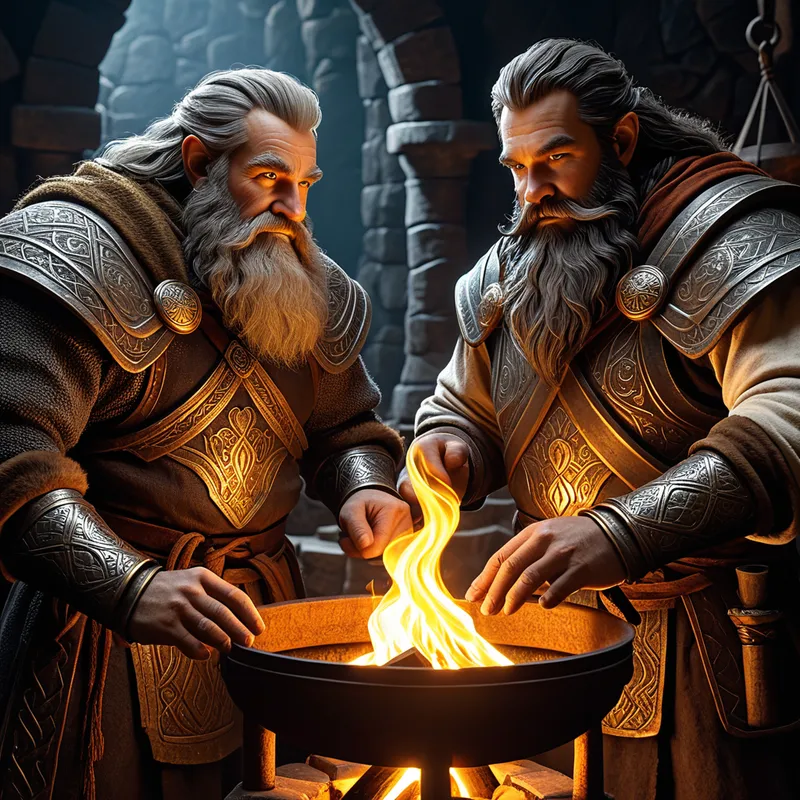
The smiths were brothers, Brokkr and Eitri, whose hands could coax soul from stone and song from metal. Into their realm came Loki, silver-tongued and fire-hearted, fleeing the wrath of the All-Father, Odin. For Loki, in his mischief, had sheared the radiant hair of Sif, and only a replacement forged by dwarf-craft could appease the thunderous anger of her husband. But Loki, ever the gambler, saw a greater game. He wagered his own head with Brokkr that the brothers could not create three treasures to surpass those he would procure from other smiths.
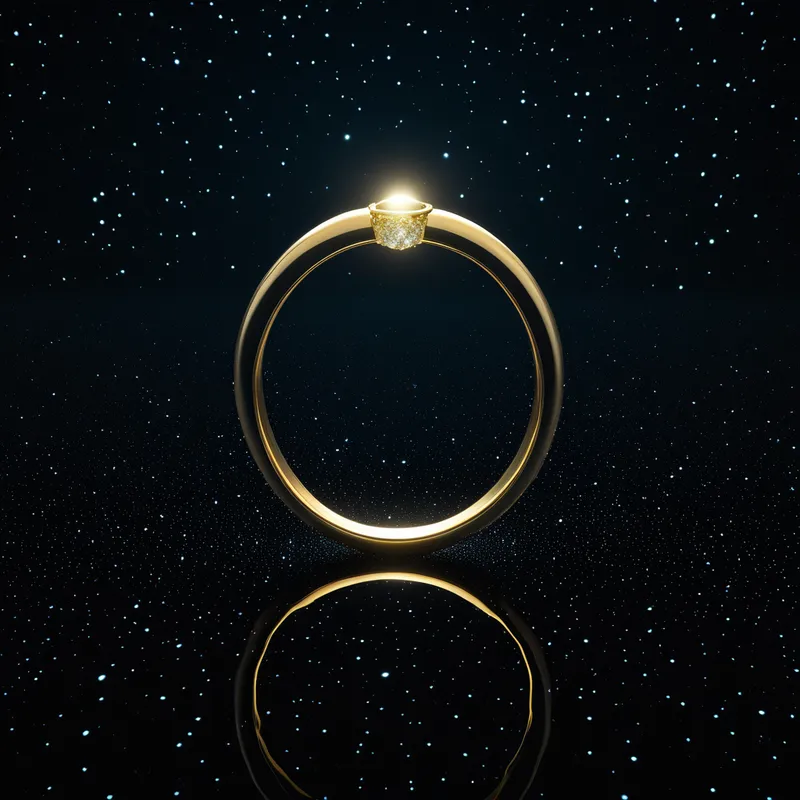
The brothers accepted. The air in their forge grew thick with purpose and primal magic. Eitri placed a boar’s skin in the hearth. “Work the bellows, brother,” he commanded Brokkr. “Do not cease your breath until I return.” As Eitri left to gather more power, a gadfly—Loki in disguise—stung Brokkr’s hand. The dwarf did not flinch. The bellows roared. From the fire sprang Gullinbursti, a living sun of a boar. Next, Eitri threw gold into the crucible. Again, he commanded the unceasing breath of the bellows. Again, the gadfly came, biting Brokkr’s neck until blood flowed. The dwarf ground his teeth but held fast. From the molten gold, he drew forth a ring of pure, seamless light. This was Draupnir. “Every ninth night,” Eitri intoned, his voice echoing in the heat-haze, “eight rings of equal weight shall drip from its circumference, a never-ending seed of itself.”
The final creation was a hammer, and though Loki-as-gadfly stung Brokkr’s eyelid, blurring his vision, the work was done. Mjolnir was born, short in the handle but terrible in power. The brothers brought their creations to Asgard. The gods judged them supreme. Loki lost his wager, and though he escaped with his head, his lips were sewn shut—a temporary silence for the bringer of such profound gifts.
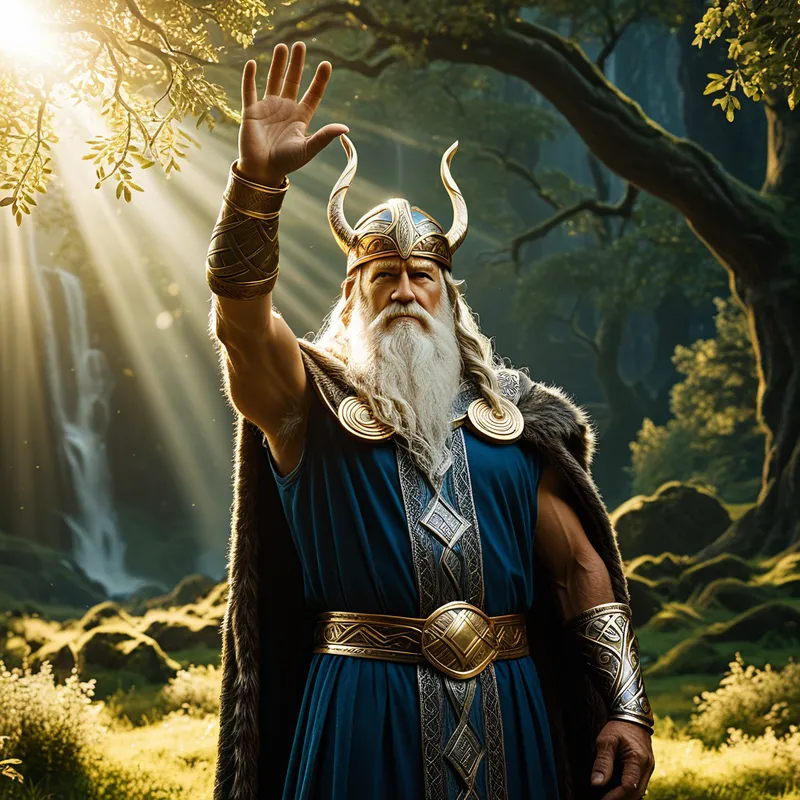
And so Draupnir came to Odin. The All-Father, who gave an eye for wisdom and hung nine nights on Yggdrasil to grasp the runes, understood the ring’s deep nature. It was not mere wealth. It was a covenant, a promise written in gold: from a single source, endless return. He wore it on his arm, a pulsating heart of potential. Yet the tale does not end in possession. In time, Odin’s beloved son, Baldr, the most beautiful and gracious of all, was slain. As the gods gathered to send his ship, Hringhorni, aflame out to sea, Odin stepped forward. In the ultimate gesture, he bent and placed Draupnir upon his son’s silent breast. The seed of endless renewal was given to the realm of death, a father’s impossible hope cast into the pyre’s heart.
Cultural Origins & Context
This myth reaches us through the fragmented, shimmering lens of the Poetic Edda and the later, more systematic Prose Edda. It was a story told in halls smoky with firelight, where the skald’s voice wove together the divine, the dwarven, and the human. In a culture where material wealth was measured in arm rings and hack-silver, the concept of a self-multiplying ring spoke directly to a deep-seated yearning for security and legacy in a harsh, unpredictable world.
The myth functioned on multiple levels. It explained the origins of divine artifacts central to other stories. It reinforced the value of craft, oath, and consequence—Brokkr’s endurance, Loki’s binding. Most importantly, it presented a cosmological model. Draupnir, especially in its final journey with Baldr, symbolizes a fundamental Norse understanding: abundance and fertility are not static possessions but dynamic cycles requiring investment, often a painful one. The greatest gift goes into the ground, into the funeral mound, trusting it will generate life anew. It is a myth of sacred economy, where the gods themselves obey the law that true gain springs from profound loss.
Symbolic Architecture
Draupnir is the ultimate symbol of the fertile void, the prima materia that contains its own infinite potential. It is not a closed circle but an open torus, a generative loop. Its magic—“dripping” new rings—connects it to primal images of lactation, sap-flow, and the nourishing dew from Yggdrasil. It represents the principle of return on sacrifice.
The ring is the paradox made manifest: to hold the source of endless giving, one must first be willing to give it all away.
Odin’s journey with the ring maps the soul’s progression. First, he acquires it through a wager of life and death (Loki’s head). He then wears it, integrating this principle of cyclical abundance into his sovereign identity. Finally, he surrenders it in his ultimate sacrifice, placing it on Baldr’s funeral pyre. This act transcends hoarding; it actively seeds the underworld with the potential for rebirth. The ring’s journey from dwarf-forge to god’s arm to death-ship charts the full cycle of creation, possession, and release that governs all things.
The Dreamer’s Resonance
To dream of Draupnir is to dream of one’s own generative core. It may appear as a piece of jewelry that multiplies, a tree that sheds identical fruit, or a well that refills itself as it is emptied. The somatic sensation is often one of fullness in the chest or a pulsing in the palm. Psychologically, this dream emerges when the individual is at a point of depletion or has made a significant sacrifice—of time, energy, a relationship, or an old identity.
The dream is the psyche’s reassurance and its challenge. It whispers that the investment was not in vain, that the self possesses an inner, regenerative principle. Yet it also poses a question: Where have you placed your “gold”? Are you hoarding your creative potential, or are you, like Odin, brave enough to commit it to the dark, fertile ground of the unknown? The dream of Draupnir signals a turning point where loss is alchemized from a story of emptiness into one of potential fertility.
Alchemical Translation
The myth of Draupnir is a precise allegory for the alchemical process of individuation. The nigredo, the initial blackening and dissolution, is found in the intense heat of the dwarven forge and in the death of Baldr—the necessary decay. The forging of the ring itself is the albedo, the whitening, where a pure, incorruptible form is extracted from the primal matter.
The individuated Self is not a static trophy but a living process, a Draupnir-circuit that continuously generates new facets of consciousness from its integrated core.
Odin’s final act represents the rubedo, the reddening or culmination. He does not keep the purified treasure for personal glorification. He consciously returns it to the source, to the unconscious (symbolized by Baldr’s journey to Hel). This is the essence of psychic transmutation: the conscious ego, having attained a symbol of wholeness (the ring), must willingly offer it back to the larger psyche. This sacrifice ensures the cycle continues. It transforms the personality from a consumer of resources into a node of generation. For the modern individual, the myth instructs that our deepest wounds and greatest losses—the “forge” and the “funeral pyre”—are the very crucibles where we discover our capacity for endless, resilient renewal. We must wear our hard-won wisdom, but we must also be prepared to give it away, trusting it will return to us, and to the world, multiplied.
Associated Symbols
Explore related symbols from the CaleaDream lexicon: