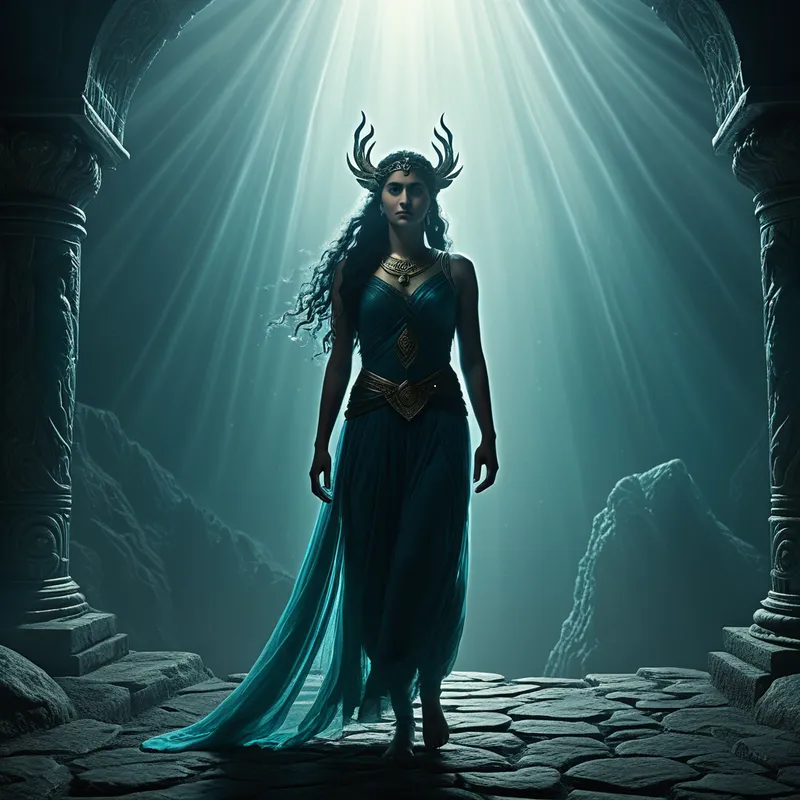
The Ari Isaac Luria
Isaac Luria, the 16th-century Jewish mystic whose profound Kabbalistic teachings on creation, divine sparks, and cosmic repair transformed Jewish mystical thought.
The Tale of The Ari Isaac Luria
In the holy city of Safed, nestled in the Galilee hills, a light was kindled that would forever change the landscape of the soul. [Isaac](/myths/isaac “Myth from Biblical culture.”/) Luria, known to his disciples as Ha’Ari, “The Lion,” arrived not with fanfare, but with a profound, unsettling silence. He had spent years in seclusion on the Nile, in whispered conversation with the prophet Elijah, immersing himself in the Zohar. When he emerged, he carried not scrolls of new law, but a living, breathing cosmology—a story of cosmic catastrophe and sacred responsibility that pulsed with the urgency of the approaching dawn.
His teaching was not written; it was breathed into the hearts of a small, fervent circle, most notably his scribe, Chaim Vital. In the cool dawn hours, they would walk among the ancient graves of mystics, and the Ari would unfold the drama of existence. He spoke of a time before time, when the Infinite One, [Ein Sof](/myths/ein-sof “Myth from Kabbalistic culture.”/), filled all. To make room for creation, the Divine contracted—[Tzimtzum](/myths/tzimtzum “Myth from Kabbalistic culture.”/)—withdrawing Its light into Itself, leaving a primordial void. Into this void, vessels of light were emanated, but they were too fragile, too pure, to hold the intensity of the Divine influx. They shattered.
This was not a mere accident; it was the central trauma of being. The vessels fractured, and the holy sparks of the [Divine Light](/myths/divine-light “Myth from Christian culture.”/) fell, cascading down through all levels of reality, becoming trapped in the “shells” of material existence—Kelippot. The universe itself was born from this rupture, a world of fragments longing for wholeness. And then, the Ari proclaimed the purpose of humanity: Tikkun Olam, the mending of [the world](/myths/the-world “Myth from Tarot culture.”/). Every human soul, he taught, is a constellation of these exiled sparks. Every righteous thought, every commanded action performed with pure intention (Kavanah), every word of prayer, acts as a spiritual magnet, drawing the sparks upward from their imprisonment, restoring them to their Divine source. The exile of Israel mirrored the exile of the sparks; redemption was not a political event, but a cosmic one, woven into the fabric of daily, mindful living.
He lived this truth with uncanny intensity. They said he could see the history of a soul in a person’s forehead, could converse with the trees and stones, hearing the sparks within them cry out for liberation. His life was short—he died in a plague at just thirty-eight—but the myth he wove, the map of a broken and redeemable cosmos, blazed through the Jewish world like a spiritual wildfire, offering a profound answer to the recent trauma of the Spanish Expulsion: the world is broken, yes, but you are here to mend it.
Cultural Origins & Context
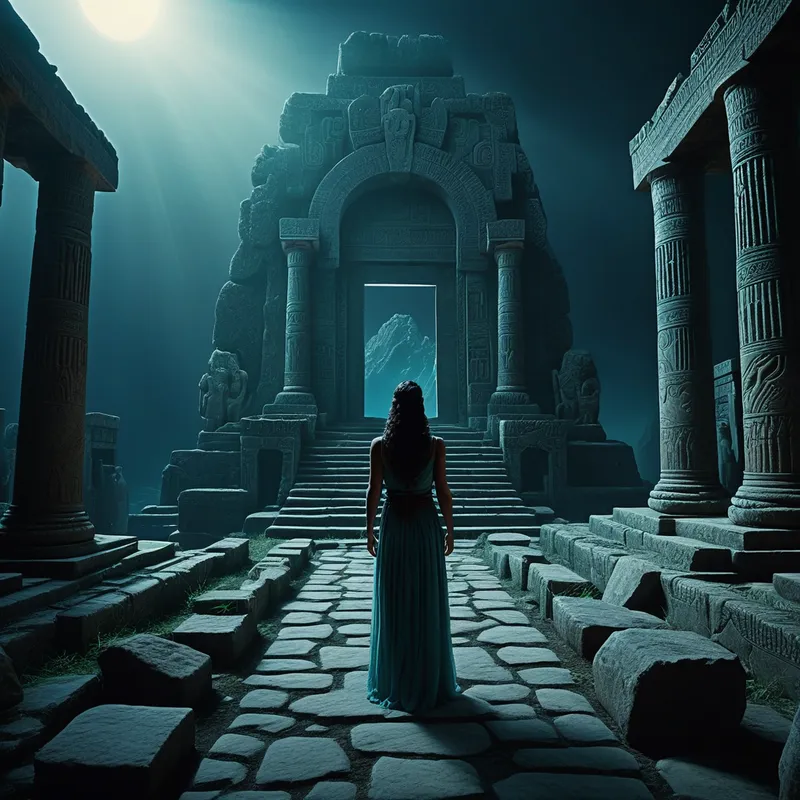
The Ari’s myth erupted in the wake of profound collective trauma. The expulsion of Jews from Spain in 1492 was not just a geographical displacement; it was a cataclysm that shattered the medieval Jewish worldview. The comfortable, rational philosophy of Maimonides seemed inadequate to explain such divine abandonment. Refugees streamed into the Ottoman Empire, and many found their way to Safed in Palestine, which became a cauldron of mystical yearning.
Here, the Kabbalah of [the Zohar](/myths/the-zohar “Myth from Kabbalistic culture.”/), which had circulated for centuries, was studied with new fervor. But it was Luria who synthesized these strands into a dynamic, psychologically potent system that gave meaning to the suffering. His mythos reframed the exile from a punishment into a cosmic condition. The Jewish people’s dispersion was now a sacred mission: to gather the scattered Divine Light from the four corners of [the earth](/myths/the-earth “Myth from Hindu culture.”/). Lurianic Kabbalah provided a theodicy—an explanation for divine [justice](/myths/justice “Myth from Tarot culture.”/)—that was deeply internal and activist. Evil (Kelippah) was not a foreign force, but the husk surrounding trapped goodness. Salvation was not passive waiting, but active, daily repair. This turned the despair of the exile into a engine of spiritual purpose, resonating powerfully with a people in diaspora, and laying the groundwork for the ecstatic populism of the later Hasidic movement.
Symbolic Architecture
Luria’s cosmology is a grand symbolic [architecture](/symbols/architecture “Symbol: Architecture in dreams often signifies structure, stability, and the framing of personal identity or life’s journey.”/) of the [psyche](/myths/psyche “Myth from Greek culture.”/). The primal [drama](/symbols/drama “Symbol: Drama signifies narratives, emotional expression, and the exploration of human experiences.”/) of Tzimtzum, [contraction](/symbols/contraction “Symbol: A symbolic process of compression, reduction, or inward movement, often representing preparation, transition, or the tension between opposing forces.”/), is the ultimate act of divine [empathy](/symbols/empathy “Symbol: The capacity to understand and share the feelings of others, often manifesting as emotional resonance or intuitive connection in dreams.”/)—making [space](/symbols/space “Symbol: Dreaming of ‘Space’ often symbolizes the vastness of potential, personal freedom, or feelings of isolation and exploration in one’s life.”/) for the Other. It is the necessary withdrawal that allows for [relationship](/symbols/relationship “Symbol: A representation of connections we have with others in our lives, often reflecting our emotional state.”/), the silence that makes speech possible. The shattered vessels represent the inevitable [fragmentation](/symbols/fragmentation “Symbol: The experience of breaking apart, losing cohesion, or being separated into pieces. Often represents disintegration of self, relationships, or reality.”/) that occurs when ideal forms meet the resistant [density](/symbols/density “Symbol: Represents the concentration of matter, energy, or meaning in a given space, often symbolizing complexity, weight, or substance.”/) of manifestation. Our world is built from these [shards](/symbols/shards “Symbol: Fragments of a broken whole, representing destruction, potential reconstruction, or irreparable loss.”/).
The breaking of the vessels is not the fall of man, but the birth of the world. It is the original scattering that makes gathering the fundamental human task.
The trapped sparks symbolize the core of [innocence](/symbols/innocence “Symbol: A state of purity, naivety, and freedom from guilt or corruption, often associated with childhood and moral simplicity.”/), potential, and divine [truth](/symbols/truth “Symbol: Truth represents authenticity, honesty, and the quest for knowledge beyond mere appearances.”/) buried within every [aspect](/symbols/aspect “Symbol: A distinct feature, quality, or perspective of something, often representing a partial view of a larger whole.”/) of existence, even within darkness and [confusion](/symbols/confusion “Symbol: A state of mental uncertainty or disorientation, often reflecting internal conflict, lack of clarity, or overwhelming choices in waking life.”/). Tikkun Olam, then, is the process of psychological [integration](/symbols/integration “Symbol: The process of unifying disparate parts of the self or experience into a cohesive whole, often representing psychological wholeness or resolution of internal conflict.”/)—the conscious work of retrieving lost parts of [the self](/myths/the-self “Myth from Jungian culture.”/), healing inner fractures, and restoring meaning to fragmented experience. [Prayer](/symbols/prayer “Symbol: Prayer represents communication with the divine or a higher power, often reflecting inner desires and spiritual needs.”/) and commandment become technologies of [attention](/symbols/attention “Symbol: Attention in dreams signifies focus, awareness, and the priorities in one’s life, often indicating where the dreamer’s energy is invested.”/), ways to focus the [soul](/symbols/soul “Symbol: The soul represents the essence of a person, encompassing their spirit, identity, and connection to the universe.”/)’s light to liberate the light within the world.
The Dreamer’s Resonance
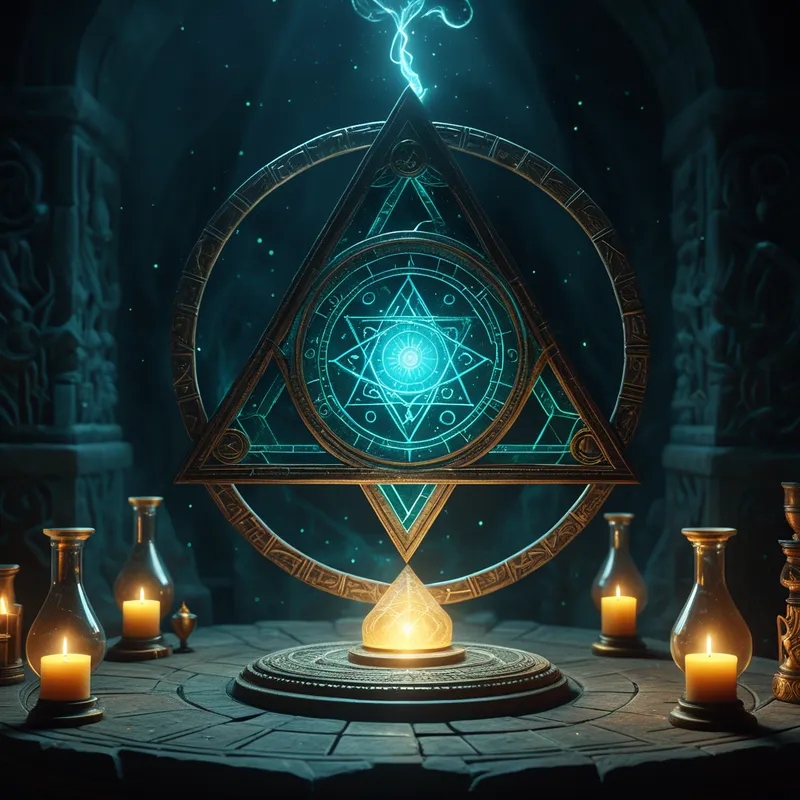
For the modern dreamer, the Lurianic myth offers a profound framework for understanding personal and collective suffering. It suggests that a sense of brokenness is not a personal failing, but a fundamental condition of embodied life. We are all born into a world of scattered light, and we carry within us both the shards and the sparks.
The call to Tikkun is a call to conscious living. It asks: Where in your life do you sense trapped potential? What “shells” of habit, fear, or trauma hold fragments of your vitality captive? The work of redemption is intimate and immediate—it is the act of bringing mindful intention to a daily task, of seeking the hidden spark in a moment of conflict, of integrating a rejected part of the self. It transforms the victim of circumstance into an active participant in the cosmos’s healing. The myth validates the feeling that the world is not as it should be, while granting the power to act, implying that every small act of integrity or compassion literally repairs the structure of reality.
Alchemical Translation
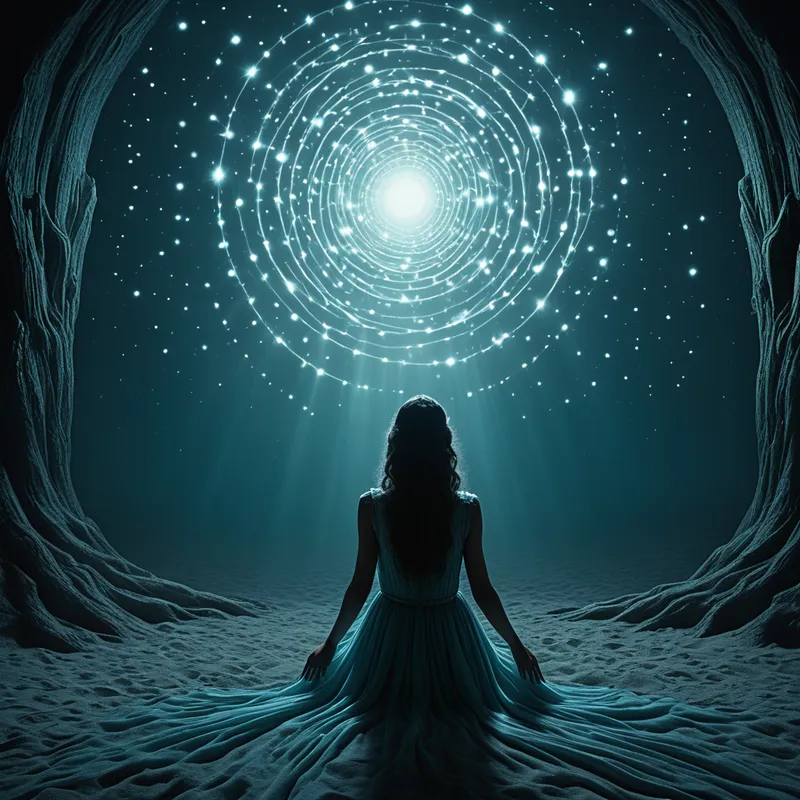
Psychologically, Lurianic Kabbalah is a profound alchemy of the soul. The Tzimtzum mirrors the necessary ego contraction that allows the contents of the unconscious to emerge. The shattered vessels represent the dissolution of old, rigid structures of the personality that cannot contain new levels of psychic energy—a nervous breakdown, a life crisis, the end of an identity.
The gathering of the sparks is the work of individuation: collecting the projected, split-off, and forgotten aspects of the Self from the matter of our lives and relationships.
The Kelippot, the shells, are akin to neurotic complexes or defensive structures: they appear hard and negative, but they exist only to protect a vulnerable, valuable spark of life that was once too exposed. Spiritual practice (Kavanah) is the focused attention of therapy, meditation, or artistic creation, which softens the shell and liberates the energy within. Redemption is not a one-time event but the continuous process of becoming whole, where the divine (the Self) and the world (the psyche) are increasingly reconciled.
Associated Symbols
Explore related symbols from the CaleaDream lexicon:
- Shattered Vessel — The primordial fragmentation of divine unity, symbolizing the inherent brokenness of the world and the psyche from which creation emerges.
- [Divine Spark](/myths/divine-spark “Myth from Gnostic culture.”/) — The trapped fragment of holy light within all matter and soul, representing core innocence, potential, and the essential self awaiting liberation.
- Gathering — The sacred act of Tikkun, the conscious collection of scattered sparks through intention and action, mirroring the integration of the psyche.
- Contraction (Tzimtzum) — The divine self-withdrawal to make space for the other, symbolizing the necessary silence, emptiness, or limitation that allows for relationship and creation.
- Shell (Kelippah) — The hardened husk of materiality and negativity that encases the spark, representing protective defenses, trauma, or the opaque face of evil that hides wounded light.
- Exile — The state of the sparks and the soul separated from their source, embodying the fundamental human experience of alienation, longing, and diaspora.
- Intention (Kavanah) — The focused direction of the heart and mind that empowers action to repair the world, symbolizing conscious awareness as a transformative force.
- Dawn — The time of the Ari’s teachings and the promised era of completed Tikkun, representing hope, revelation, and the approaching redemption of all things.
- Breath — The unwritten, oral transmission of the Ari’s wisdom, symbolizing living spirit, direct revelation, and the animation of cosmic secrets.
- Walking — The Ari’s practice of teaching while moving among the graves, representing the journey of the soul through the world, gathering light from every step.