The Areopagus Myth Meaning & Symbolism
The myth of the first murder trial, where Athena transforms the Furies' ancient wrath into civic justice, establishing law over blood feud on a sacred hill.
The Tale of The Areopagus
Hear now of the hill that learned to judge, of the stone that drank the first blood of kin and was cleansed not by [water](/myths/water “Myth from Chinese culture.”/), but by wisdom. The air on the Areopagus is thick with memory, older than the city that would one day spread below it. It begins not with a gavel, but with a curse.
In the deep, sunless halls of [Hades](/myths/hades “Myth from Greek culture.”/), the shade of Atreus groaned, and his line was poisoned. [Orestes](/myths/orestes “Myth from Greek culture.”/), young and haunted, stood over two cooling bodies—his mother, Clytemnestra, and her lover, Aegisthus. The blood on his hands was familial, a dark mirror of the blood his mother had spilled when she slew his father, Agamemnon. The deed was done for [justice](/myths/justice “Myth from Tarot culture.”/), for the father, yet the air curdled with a wrongness deeper than any mortal law.
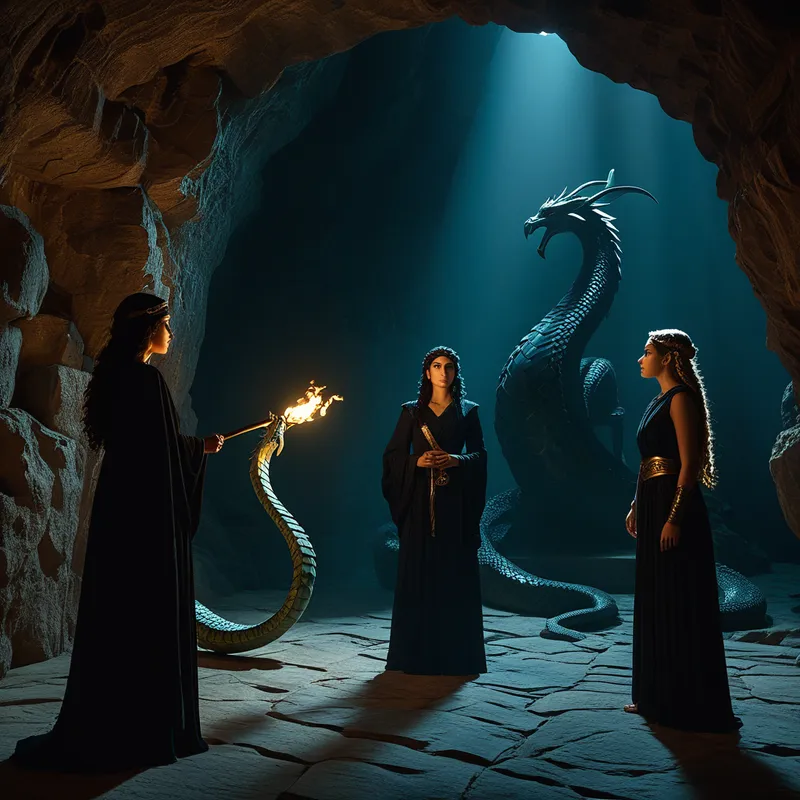
Then came the sound—a dry rustling, like dead leaves scuttling across stone, yet alive with a terrible purpose. From the deepest cracks in [the earth](/myths/the-earth “Myth from Hindu culture.”/), from [the shadow](/myths/the-shadow “Myth from Jungian culture.”/) behind the throne, they emerged: the Erinyes. Their forms were of nightmare—women, yet not women, with eyes that wept black tears and hair that hissed with living serpents. The stench of bronze and old blood followed them. They did not walk; they flowed, relentless as tide, and their voices were the buzzing of a thousand flies. “Matricide,” they chanted, a single word that became [the world](/myths/the-world “Myth from Tarot culture.”/) for Orestes. “Blood for blood. The old law demands it.”
Driven, harried, a stag run to ground by spectral hounds, Orestes fled across the world. He found no sanctuary. The kindly god Apollo, who had commanded the vengeance, offered purification at his shrine in Delphi, washing the mortal stain. But [the Erinyes](/myths/the-erinyes “Myth from Greek culture.”/) waited at [the threshold](/myths/the-threshold “Myth from Folklore culture.”/), unmoved. “The young gods may wash you,” they hissed. “We are older. We remember the first blood spilled on the first earth. Our law is older than Olympus.”
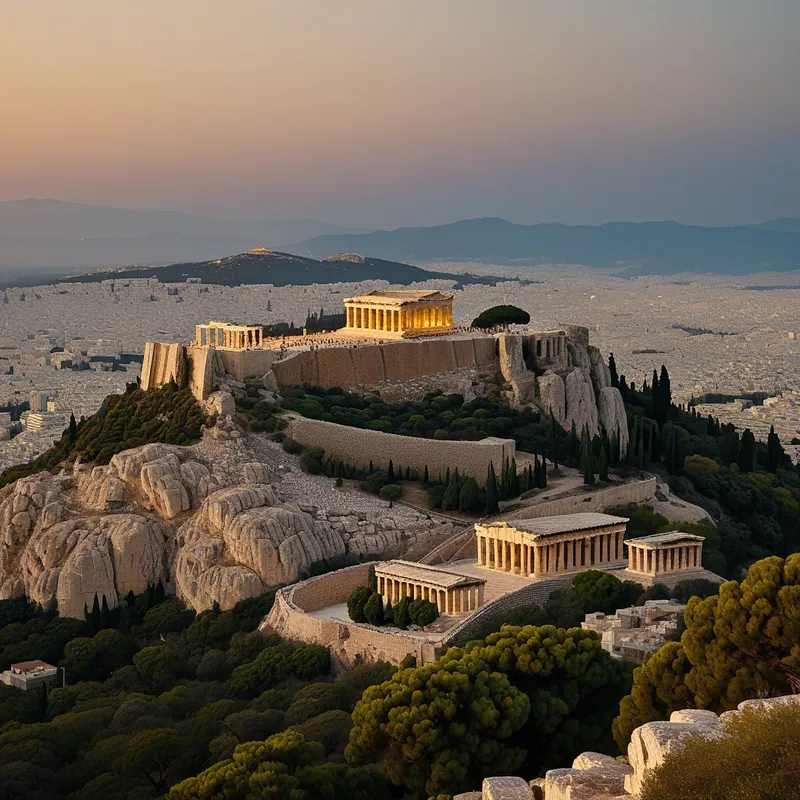
His sanity fraying, Orestes was led at last to Athens, to a bare, windswept hill. Here, the divine met the primal. The majestic Athena appeared, her aegis glinting in the sun. Before her writhed the ancient daughters of night, and between them stood the shattered youth.
“This is a matter too dark for any one god,” Athena declared, her voice clear as a trumpet call. “Let it be decided here, by the first court. Let the first jurors be the best of Athens. Let the stones of this hill bear witness.”
So the trial began on the Areopagus. Apollo spoke for the defense, arguing the supremacy of the father’s line and the justice of Olympian command. The Erinyes spoke for the prosecution, their lament a song of cosmic order overturned, of bonds sacred and profaned. The mortal jurors listened, their hearts heavy. The votes were cast, and they were equal—a perfect, terrifying tie.
All eyes turned to Athena. She stood, the weight of the future in her gaze. “I was born not of a mother, but from the mind of Zeus,” she said. “Thus, I shall cast my vote for the father. I acquit Orestes.”
A wail of despair rose from the Erinyes, a sound that promised the unraveling of the world. But Athena did not banish them. She turned to them, not as a conqueror, but as a founder. “Do not despair, venerable ones. Your wrath is not dismissed; it is transformed. No longer shall you haunt the shadows. Here, in this city, you shall have a sacred home deep within the earth. You shall be the Semnai Theai, the Revered Goddesses. Your fierce energy shall protect this city’s laws. From now on, let men be tried by reason and evidence, not by the endless cycle of the blood feud. Let justice be born from vengeance.”
The ancient goddesses were still. The hissing ceased. The offer was not of defeat, but of honor. They accepted. The first murder trial was over. The hill of Ares, once stained, was now the bedrock of civilization.
Cultural Origins & Context
This foundational myth is inextricably linked to the historical Areopagus, which was the aristocratic council and high court of ancient Athens. The story, most famously dramatized in Aeschylus’s Oresteia trilogy (specifically the final play, The Eumenides), served a profound societal function. It was not mere entertainment but a civic sacrament performed during the City Dionysia.
Through this myth, the Athenians articulated their evolution from a society governed by tribal vendetta and clan loyalty to one governed by polis-centered law and civic discourse. The myth provided a divine charter for the authority of their most venerable court, legitimizing its power by rooting it in a direct intervention by their patron goddess. It was a story told to citizens to explain and sanctify the very concept of impartial justice, portraying it as a hard-won gift from the gods that tamed the chaotic, primal forces of human passion.
Symbolic Architecture
At its core, the Areopagus myth is about the psychic transition from a state governed by unconscious, automatic reactions (the [blood](/symbols/blood “Symbol: Blood often symbolizes life force, vitality, and deep emotional connections, but it can also evoke themes of sacrifice, trauma, and mortality.”/) feud) to one governed by conscious [reflection](/symbols/reflection “Symbol: Reflection signifies self-examination, awareness, and the search for truth within oneself.”/) and collective [agreement](/symbols/agreement “Symbol: A harmonious arrangement in artistic collaboration, symbolizing unity, shared vision, and creative consensus.”/) (the trial). The Erinyes represent the autonomous, archaic conscience—the raw, instinctual sense of taboo violation that pursues the individual with relentless, self-destructive [guilt](/symbols/guilt “Symbol: A painful emotional state arising from a perceived violation of moral or social standards, often tied to actions or inactions.”/). They are the [psyche](/myths/psyche “Myth from Greek culture.”/)’s own punitive moral [fury](/symbols/fury “Symbol: An intense, overwhelming rage that consumes the dreamer, often representing suppressed anger or a primal emotional eruption.”/), unmediated by context or mercy.
The court is the birth of the observing ego, the space where the inner conflict is brought into the light and examined, rather than acted out in endless cycles of retribution.
Orestes is the suffering [human](/symbols/human “Symbol: The symbol of a human represents individuality, complexity of emotions, and social relationships.”/) [consciousness](/symbols/consciousness “Symbol: Consciousness represents the state of awareness and perception, encompassing thoughts, feelings, and experiences.”/), torn between conflicting divine commands (the super-ego of Apollo and the id-like demand of the Erinyes). Athena symbolizes the transcendent function—the higher wisdom that can hold the [tension](/symbols/tension “Symbol: A state of mental or emotional strain, often manifesting physically as tightness, pressure, or unease, signaling unresolved conflict or anticipation.”/) of opposites and synthesize a new, more complex order. Her tie-breaking vote does not destroy the old law but subsumes it into a greater [framework](/symbols/framework “Symbol: Represents the underlying structure of one’s identity, emotions, or life. It signifies the mental or emotional scaffolding that supports or confines the self.”/). The transformation of [the Furies](/myths/the-furies “Myth from Greek culture.”/) into the Semnai Theai is the ultimate [symbol](/symbols/symbol “Symbol: A symbol can represent an idea, concept, or belief, serving as a powerful tool for communication and understanding.”/): the destructive power of unreconciled guilt, when honored and given a dignified place, becomes the protective, stabilizing force of a healthy conscience and [social order](/symbols/social-order “Symbol: Dreams of social order reflect subconscious processing of hierarchy, belonging, and one’s place within collective structures.”/).

The Dreamer’s Resonance
When this myth stirs in the modern dreamer, it often manifests as a profound experience of being on trial. The dreamer may find themselves in a surreal courtroom, accused by shadowy, frightening figures of a terrible but vague crime—often a betrayal of family, a broken taboo, or a failure of duty. The accusers are faceless, collective, and terrifyingly certain. The dream ego, like Orestes, feels both guilty and justified, trapped and desperate for a verdict.
Somatically, this can feel like a crushing weight on the chest (the burden of guilt) or a frantic, trapped energy (the flight from pursuit). Psychologically, this dream pattern signals that an archaic, punitive inner voice—perhaps internalized from family or culture—is persecuting the conscious self for a choice, a change, or an act of differentiation (like leaving a family system, ending a relationship, or pursuing a path not sanctioned by the “tribe”). The dream is the psyche’s attempt to move this inner conflict from a state of silent, self-punishing persecution to a state of conscious adjudication.
Alchemical Translation
The alchemical process modeled here is the transmutation of leaden guilt into golden responsibility. [The prima materia](/myths/the-prima-materia “Myth from Alchemical culture.”/) is the lead: the heavy, toxic, and unconscious sense of blood-guilt—the feeling that one’s very existence or necessary actions are a crime against the ancestral order.
The [nigredo](/myths/nigredo “Myth from Alchemical culture.”/), or blackening, is Orestes’ flight and madness, pursued by the black-robed Furies. It is the stage of despair and confrontation with the shadow. The albedo, or whitening, begins with the trial itself—the bringing of the conflict into the clear, daylight space of the Areopagus. Here, opposing arguments (Apollo’s logic and the Furies’ passion) are given voice, representing the necessary confrontation of opposites within [the self](/myths/the-self “Myth from Jungian culture.”/).
The sacred hill is the vas, the vessel of individuation, where the soul’s warring elements are contained long enough for a new synthesis to emerge.
Athena’s intervention is the [rubedo](/myths/rubedo “Myth from Alchemical culture.”/), the reddening or culmination. Her vote represents the emergence of a new, personal authority from within the Self (symbolized by her birth from Zeus’s head). She does not side wholly with either party but creates a third, transcendent position. The final stage, the transformation of the Furies, is the true gold. It is the integration of the shadow. The raw, destructive energy of a persecuting complex is not eliminated; it is redeemed. It becomes a sacred, internal guardian of one’s own ethical boundaries and a contributor to the inner polity. For the modern individual, this translates to the moment when we stop running from a deep sense of guilt or “not-enoughness,” and instead, through conscious reflection and self-compassion, transform that inner critic into a source of discerning wisdom that protects our integrity rather than destroying our peace. We establish our own inner Areopagus, where our actions are judged not by archaic curses, but by the wise, reconciling voice of the Self.
Associated Symbols
Explore related symbols from the CaleaDream lexicon: