The Aos Sí Myth Meaning & Symbolism
The Aos Sí are the ancient, powerful fairy folk of Ireland, dwellers of the hollow hills, representing the untamed, numinous, and perilous otherness of the world.
The Tale of The Aos Sí
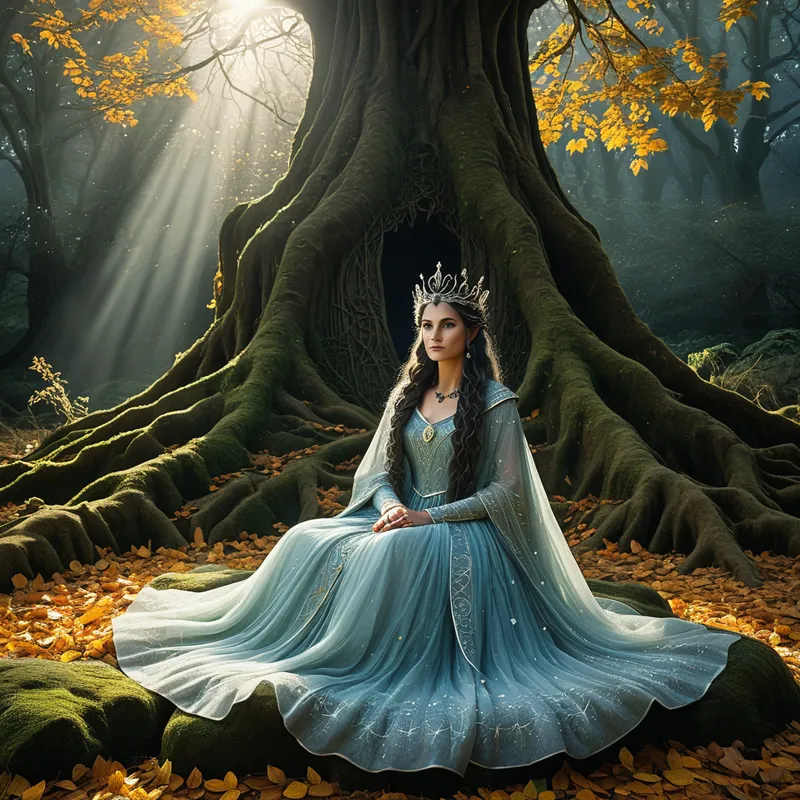
Listen. The world you walk upon is not the only one. Beneath the green cloak of the hills, behind the veil of the waterfall’s mist, in the deep quiet at the heart of the oldest oak, there is another country. Its people are the Aos Sí, the People of the Mounds. They are not small, winged things of children’s fancy. They are tall, fierce, and beautiful beyond bearing, their eyes holding the memory of a world before iron, before prayer, before the name of Christ was spoken on the wind.
They dwell in the sídhe, the hollow hills that rise like sleeping giants from the land. By day, these are but grassy knolls. But as the sun bleeds into the west and the liminal hour of dusk descends, a door may open. A light, golden and warm as forgotten honey, spills out. The air grows thick with the scent of apple blossom in eternal spring and the chill of deep earth. From within comes music—not a melody for mortal ears, but the very sound of longing itself, woven from harp strings and sighing voices.
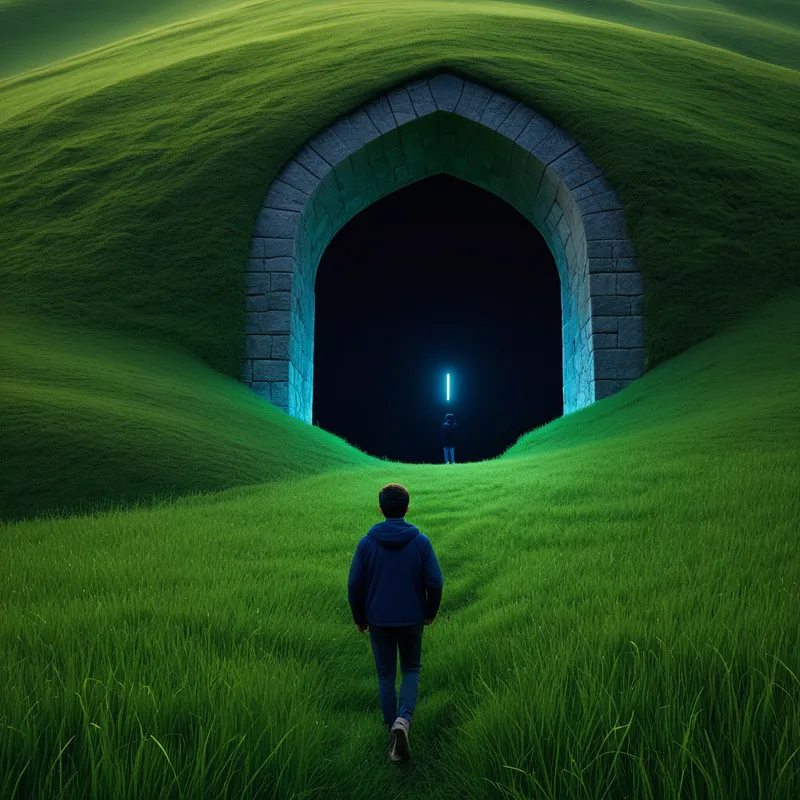
It was on such an evening that a young hunter, Fionn, strayed from the path. The mist from the bog curled around his ankles like cold fingers, leading him to a hill he had passed a hundred times. Tonight, a door of ancient, carved stone stood open. Drawn by the light and the music, he crossed the threshold.
Inside was a hall of impossible size. The ceiling was a firmament of captured starlight. Lords and ladies clad in silks the color of twilight and moss danced with a grace that hurt to watch. At the hall’s end sat a King and Queen, their faces serene and terrible as winter mountains. Time lost its meaning. He drank from a crystal cup offered by a maiden with hair like a waterfall of night, and he feasted on food that tasted of every joy he had ever known.
But he remembered his home. He remembered the hearth-smoke and his mother’s voice. As he turned to leave, the Queen spoke, her voice the rustle of autumn leaves. “You may go, son of the clay. But know this: a single night in our hall is a hundred years in your world. Tread softly upon my borders henceforth.”
He stumbled back into the night. The hill was just a hill. The village he knew was gone, replaced by strange stone walls. The faces that stared at him were the faces of strangers. The cup he had clutched, a simple wooden bowl in his hand, crumbled to dust. He was an echo in his own land, a man out of time, forever marked by the beauty and the peril of the Otherworld.
Cultural Origins & Context
The myth of the Aos Sí is not a single story but a pervasive cultural reality woven into the Gaelic worldview of Ireland, Scotland, and the Isle of Man. These narratives survived not in grand epics penned by monks, but in the oral tradition of the seanchaí—the storyteller—by the fireside. They functioned as both cosmology and cautionary tale.
Scholars see in the Aos Sí a profound folk memory of the pre-Celtic inhabitants of the land, the Tuatha Dé Danann, who, in the mythic cycle, were defeated and retreated into the hollow hills after the coming of the Milesians (the Gaelic ancestors). They became the “godly” but hidden people. This mythos served to explain ancient burial mounds and ringforts, imbuing the landscape with sacred agency. The societal function was multifaceted: it enforced social norms (do not trespass, respect the land), explained misfortune (fairy theft or “blight”), and mapped the invisible, spiritual geography of the world. They were the absolute “Other,” a mirror to human society, but one ruled by older, stricter, and often capricious laws.
Symbolic Architecture
Psychologically, the Aos Sí and their realm represent the unconscious itself—not the personal unconscious of repressed memories, but the collective, transpersonal unconscious, what the ancients might have called the Anima Mundi, the World Soul. The sídhe mound is the threshold symbol, the point where the conscious ego (the mortal world) encounters the vast, autonomous psyche.
The Otherworld is not a place, but a state of being—the interiority of the land and the soul, perceived as external.
The Aos Sí embody the archetypal forces of nature and psyche in their raw, unassimilated form. They are beautiful because the depths of the soul contain profound creativity and numinous power. They are perilous because to engage with these forces without respect or awareness is to risk dissolution—like Fionn, losing one’s place in time and consensus reality. Their strict etiquette symbolizes the necessary discipline and respect required when engaging with deep unconscious material. They represent the “shadow” of the land and the people, all that was repressed, defeated, or sanctified but never truly gone.

The Dreamer’s Resonance
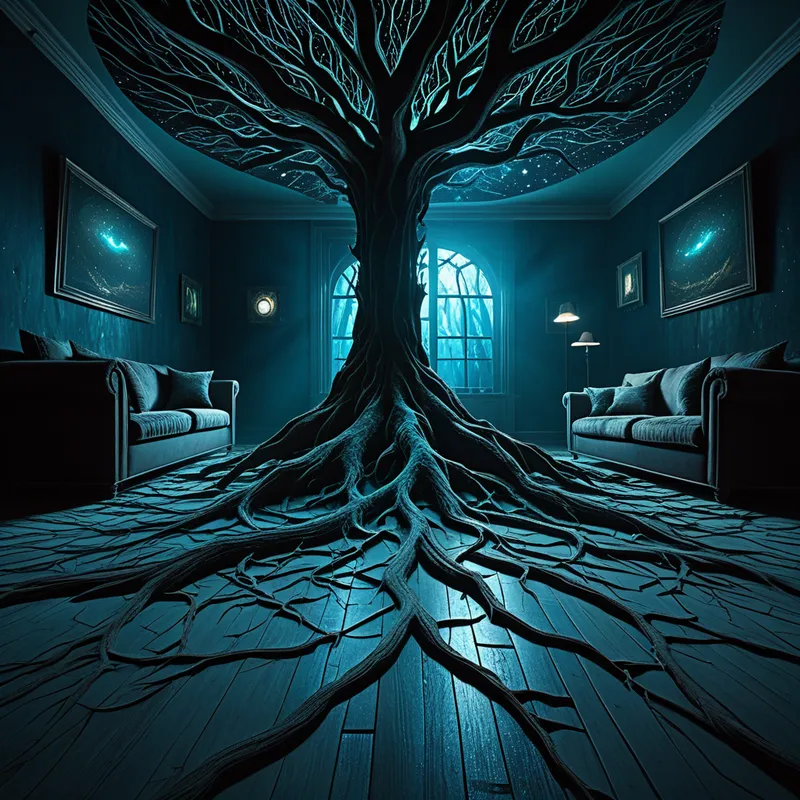
When this mythic pattern stirs in the modern dreamer, it often manifests as dreams of discovering hidden rooms in one’s house, finding secret passages, or encountering enigmatic, powerful figures in liminal spaces like airports, forests at dusk, or shorelines. The somatic feeling is one of awe mixed with dread, a chilling fascination.
Psychologically, this signals an encounter with contents of the psyche that are ancient, autonomous, and larger than the personal self. The dreamer may be undergoing a process where long-buried talents, ancestral patterns, or instinctual forces are demanding recognition. The “fairy music” that lures Fionn is the siren call of this deeper self, promising wholeness but at a potential cost to the current ego-structure. The dream is an invitation to acknowledge this otherness within, to “tread softly” and respectfully upon the borders of one’s own unknown depths, lest one be “taken” or psychologically overwhelmed by forces one does not understand.
Alchemical Translation
The journey of Fionn is a map for the alchemical process of psychic transmutation, or individuation. The first step is nigredo: the “straying from the path,” the conscious life feeling insufficient, leading to a depression or confusion (the misty bog). The opening of the sídhe is the coniunctio, the sacred marriage, where the ego consciously engages the unconscious.
To enter the mound is to consent to be changed by what you find there; to refuse is to live only on the surface of oneself.
Feasting in the hall represents the albedo, the illuminating insight and nourishing energy that comes from this engagement. The final, critical stage is the return. The old life is gone (“a hundred years passed”). This is the rubedo, the reddening. The ego does not return triumphant, but humbled and annealed by the encounter. It has integrated a piece of the Otherworld, carrying its mark (the crumbled cup). The transformed individual can now navigate both worlds—the practical and the numinous—becoming a liminal being themselves, a guardian of the threshold between spirit and matter, depth and surface. The myth teaches that true wholeness is not conquest, but a respectful and ongoing dialogue with the eternal Aos Sí who dwell within the hills of our own souls.
Associated Symbols
Explore related symbols from the CaleaDream lexicon: