The Ancestors of Kakadu Myth Meaning & Symbolism
A foundational Aboriginal Australian myth where ancestral beings shape the land, establish sacred law, and transform into the living landscape of Kakadu itself.
The Tale of The Ancestors of Kakadu
Listen. Before the world was as you see it, it was a formless, dreaming plain. Then, they came. Not from a distant star, but from within the Dreaming itself, rising from the earth and the sea and the void. They were the Alcheringa Ancestors, and they walked a soft, unmarked land.
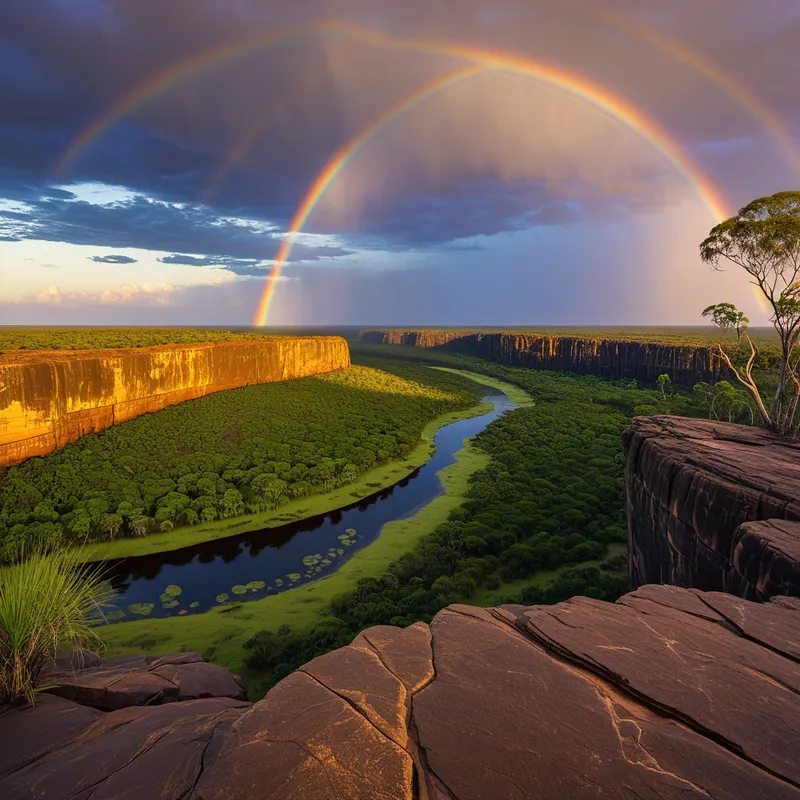
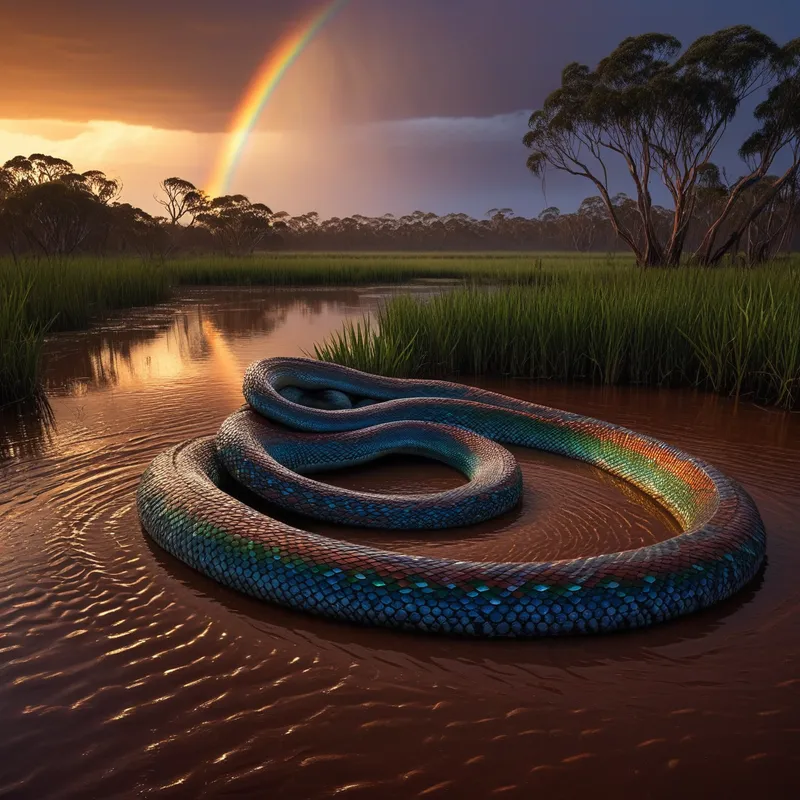
First came Garrangarr, the Rainbow Serpent, sliding from the saltwater in the north. Where its colossal body moved, the earth groaned and split. It carved deep gorges with its passage, its coils forming waterholes that pulsed with the first life. It sang the rivers into being—the East Alligator, the South Alligator—their courses the sacred script of its journey.
From the storm clouds in the east descended Namarrgon</ab title>, the Lightning Man. His body crackled with energy, and where he struck the earth with his stone axes, lightning fractured the sky and fire bloomed. He pounded the anvil of the escarpment, shaping the rugged stone country of Arnhem Land, embedding his power in the rock.
And from the west walked Warramurrungundji, the Fertility Mother. She carried digging sticks and yams. Where she planted her sticks, springs bubbled forth. Where she dropped the yams, lush woodlands and forests sprang up. She gave birth to the first children of the land, and to each she gave a tongue, a language, binding them to a specific place, a specific responsibility.
But creation was not a peaceful act. It was a drama of immense forces. Garrangarr, in its travels, sometimes swallowed beings whole, digesting them and returning them to the earth in new forms. Namarrgon’s fury could scorch the land. The Ancestors fought, loved, hunted, and celebrated. They left their impressions everywhere: in the shape of a rock that is a sleeping crocodile, in a cliff face that holds the profile of a ancestral hunter, in a billabong that is the eye of the Serpent.
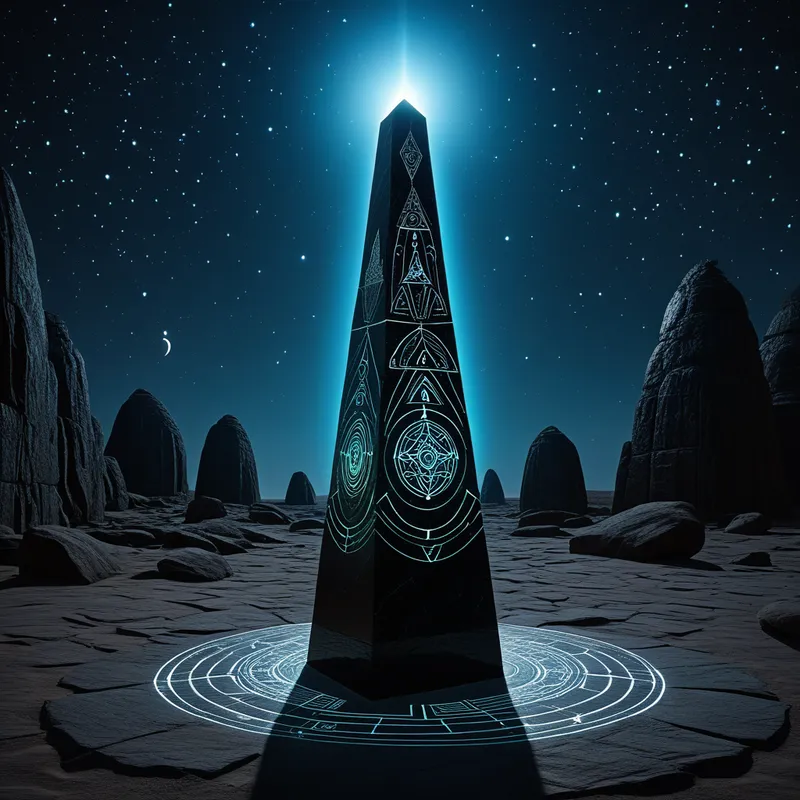
Their great work was the laying down of Djorrk. This was not merely rule, but the very pattern of existence—the seasons, the ceremonies, the kinship, which animals could be eaten and when, how to sing the land to keep it alive. Their final act was not a departure, but a profound transformation. Weary from their labors, they did not die. They went into the country. Garrangarr became the rivers and the deep permanent waterholes. Namarrgon became the lightning that splits the wet season sky and the rocks of the escarpment where his image is painted. Warramurrungundji became the fertile plains and the sacred sites of birth. The Ancestors of Kakadu became Kakadu itself. Their bodies are the landscape. Their law is its pulse. Their spirits watch from every stone and pool.
Cultural Origins & Context
This is not a single story, but a vast, interconnected tapestry of narratives belonging to the Bininj/Mungguy people, the Traditional Owners of the Kakadu region in the Northern Territory. The myth of the Ancestors is the foundation of The Dreaming. It was and is passed down not through written texts, but through an oral tradition of immense precision—via song cycles, ceremonial dance, intricate rock art (some dating back tens of thousands of years), and sacred objects.
Elders, as custodians of specific tracts of Country, hold the knowledge of the Ancestors’ journeys for that area. The societal function is multifaceted: it is a cosmological map, a legal constitution, an ecological manual, and a spiritual guide. It answers the questions of origin, dictates social order through kinship systems, and prescribes the rituals (like renewal ceremonies) necessary to maintain the balance of the world. To know the stories of the Ancestors is to know how to live.
Symbolic Architecture
At its [heart](/symbols/heart “Symbol: The heart symbolizes love, emotion, and the core of one’s existence, representing deep connections with others and self.”/), this myth presents a radical ontology: [identity](/symbols/identity “Symbol: Identity represents the sense of self, encompassing personal beliefs, cultural background, and social roles.”/) is not separate from place. The Ancestors do not create a world external to themselves; they become the world. This collapses the subject-object [dichotomy](/symbols/dichotomy “Symbol: A division into two contrasting parts, often representing opposing forces, choices, or perspectives within artistic or musical expression.”/) that defines much of Western thought.
The ultimate act of creation is not to make something, but to become everything. The self is sacrificed into the substance of the cosmos, achieving immortality not as a discrete soul, but as the enduring pattern of life itself.
Psychologically, the Ancestors represent the primal, formative forces of the psyche. Garrangarr is the deep, unconscious, [life](/symbols/life “Symbol: The symbol of ‘Life’ represents a journey of growth, interconnectedness, and existential meaning, encompassing both the joys and challenges that define human experience.”/)-giving, and sometimes terrifying power of instinct and transformation. Namarrgon is the dynamic, disruptive [energy](/symbols/energy “Symbol: Energy symbolizes vitality, motivation, and the drive that fuels actions and ambitions.”/) of [consciousness](/symbols/consciousness “Symbol: Consciousness represents the state of awareness and perception, encompassing thoughts, feelings, and experiences.”/) and will that forges form from [chaos](/symbols/chaos “Symbol: In Arts & Music, chaos represents raw creative potential, uncontrolled expression, and the breakdown of order to forge new artistic forms.”/). Warramurrungundji is the nurturing, structuring, and generative principle that gives [birth](/symbols/birth “Symbol: Birth symbolizes new beginnings, transformation, and the potential for growth and development.”/) to identity ([language](/symbols/language “Symbol: Language symbolizes communication, understanding, and the complexities of expressing thoughts and emotions.”/)) and sustains [community](/symbols/community “Symbol: Community in dreams symbolizes connection, support, and the need for belonging.”/). Their conflicts and collaborations mirror the internal negotiations required for a whole self.
The establishment of Djorrk symbolizes the necessary imposition of order—the psychic [structure](/symbols/structure “Symbol: Structure in dreams often symbolizes stability, organization, and the framework of one’s life, reflecting how one perceives their environment and personal life.”/)—on the raw materials of being. It is the internal moral compass, the habits, the complexes, and the personal laws that make coherent life possible.
The Dreamer’s Resonance
When this myth echoes in modern dreams, it often manifests not as a literal narrative, but as a profound somatic and spatial experience. One might dream of a landscape that feels intensely alive and personal—a mountain that is a familiar face, a river that flows with one’s own blood. This is the psyche grappling with the question of belonging and origin. The dreamer may be undergoing a process of deep grounding, seeking their own “country”—the internal or external place where they feel an unshakeable sense of identity and law.
Conversely, dreams of a scarred, polluted, or dying landscape in this context can reflect a profound sense of Kurrung—a sickness of disconnection. It signals that the dreamer’s internal Djorrk has been violated or ignored. The psychological process is one of reconciliation: hearing the song of the land within, recognizing the ancestral patterns (family dynamics, core wounds, innate gifts) that have shaped one’s personal topography, and beginning the work of ceremonial repair.
Alchemical Translation
The individuation process modeled here is not a heroic journey outward to slay dragons, but a sacred journey inward to recognize and honor the dragons—the ancestral forces—that already constitute the self. The modern individual’s “Kakadu” is their own psyche, shaped by the ancestral forces of biology, family, culture, and personal history.
The alchemical goal is not to escape one’s nature, but to fully inhabit it, to discover the sacred law encoded in one’s own being, and to perform the rituals that keep that inner country vibrant.
The first stage is the Emergence: allowing the raw, creative, and often chaotic ancestral energies (the Serpent, the Lightning) to surface from the unconscious. The second is the Shaping: using conscious will and nurturing care to give these forces form and direction, carving the rivers of one’s passions and the rock of one’s character. The third and crucial stage is the Transmutation: the conscious sacrifice of the ego’s claim to separateness.
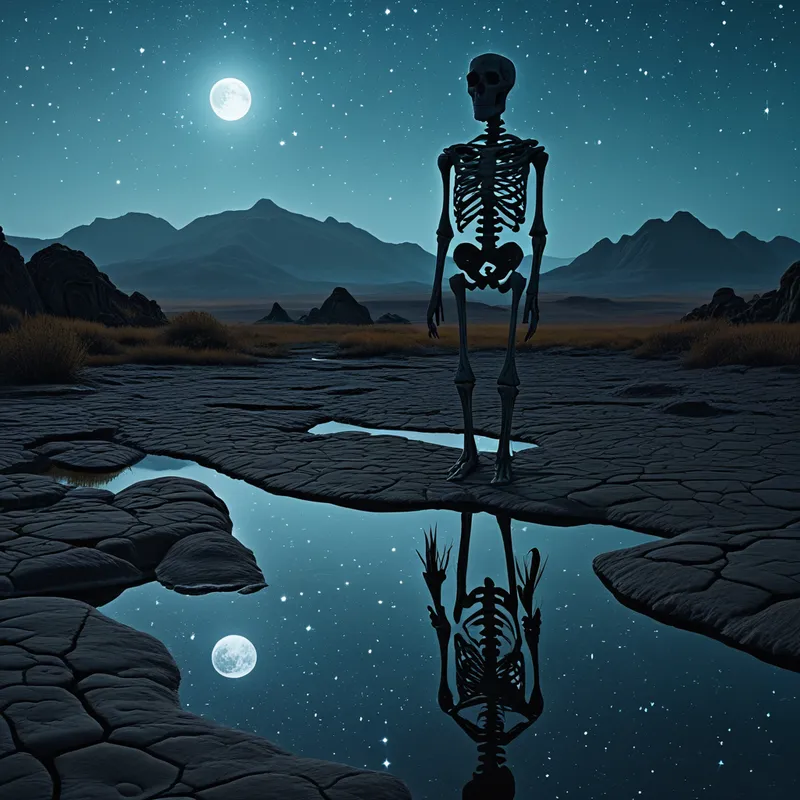
This is the pivotal moment. One does not simply manage these internal ancestors; one learns to become them. The rage becomes the lightning that clears dead wood; the grief becomes the waterhole that sustains life; the creative impulse becomes the fertile plain. The individual discovers that their deepest self is not a tiny ruler in a castle of skin, but is the very landscape of their experience. Their personal law (Djorrk) emerges not from external dogma, but from the authentic pattern of their own transformed being. They achieve a state of Marr—inner balance and right relationship—where the ancestors within are no longer ghosts of the past, but the living, breathing substance of the present self.
Associated Symbols
Explore related symbols from the CaleaDream lexicon:
- Ancestor — The primal, shaping force of identity and law; represents the internalized patterns of family, culture, and biology that form the bedrock of the self.
- Serpent — The transformative, life-giving, and potentially destructive power of the deep unconscious and instinctual energy, carving the waterways of the psyche.
- Water — The medium of the Dreaming and the source of all life; symbolizes the emotional and unconscious depths from which form emerges and to which it returns.
- Earth — The physical manifestation of the Ancestors; represents the grounded reality of the self, the body, and the tangible world shaped by internal forces.
- Stone — The enduring record of ancestral action and law; symbolizes the core complexes, memories, and unchangeable truths that structure the psyche.
- Law — The sacred pattern (Djorrk) established by the Ancestors; represents the internal moral and psychological structure necessary for a coherent life.
- Journey — The creative traversal of the Ancestors across the formless land; maps the process of psychic development and the shaping of personal destiny.
- Transformation — The ultimate act of the Ancestors becoming the land; symbolizes the alchemical goal of sacrificing ego-separateness to become one’s authentic, world-constituting nature.
- Dream — The state of The Dreaming from which the Ancestors emerged; represents the foundational, creative layer of the unconscious where all potential exists.
- Origin — The point of emergence from the Dreaming; signifies the often-unknowable source of one’s deepest drives, talents, and core psychological configuration.