The Ambrosia and Nectar of the Myth Meaning & Symbolism
The divine sustenance of the gods, conferring immortality and eternal youth, stolen, shared, or lost in the great cosmic drama between mortals and the eternal.
The Tale of The Ambrosia and Nectar of the
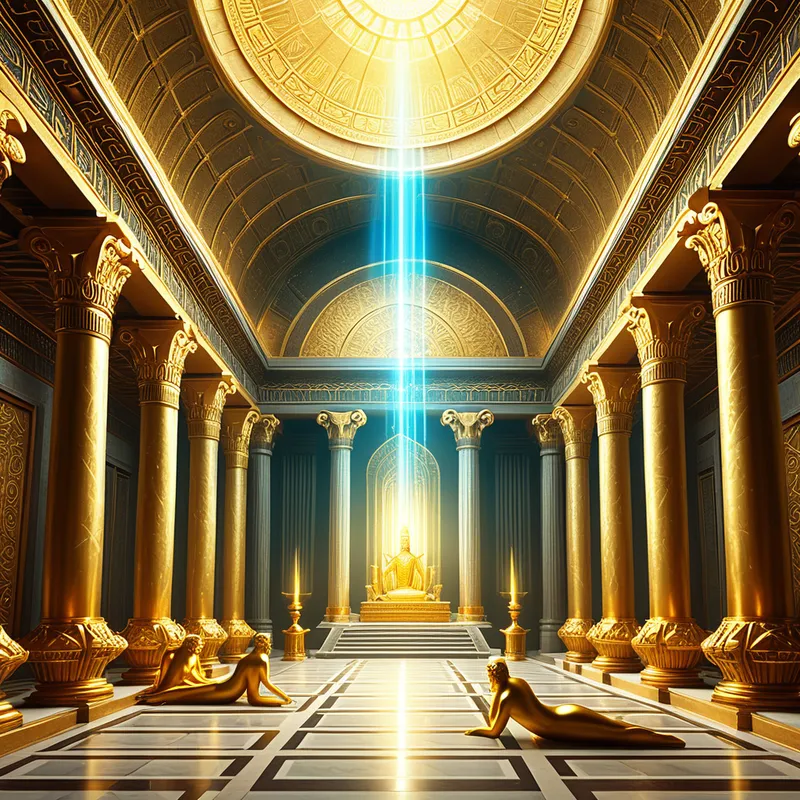
Listen, and let the veil between worlds grow thin. In the time before time, when the cosmos was young and the breath of creation still warm, the Olympians established their eternal reign. Their home was not of stone and timber, but of cloud and lightning, a palace suspended between the azure dome of the sky and the green breast of the earth. Here, they knew neither the gnawing ache of hunger nor the creeping chill of age. Their vitality was not inherited but imbibed.
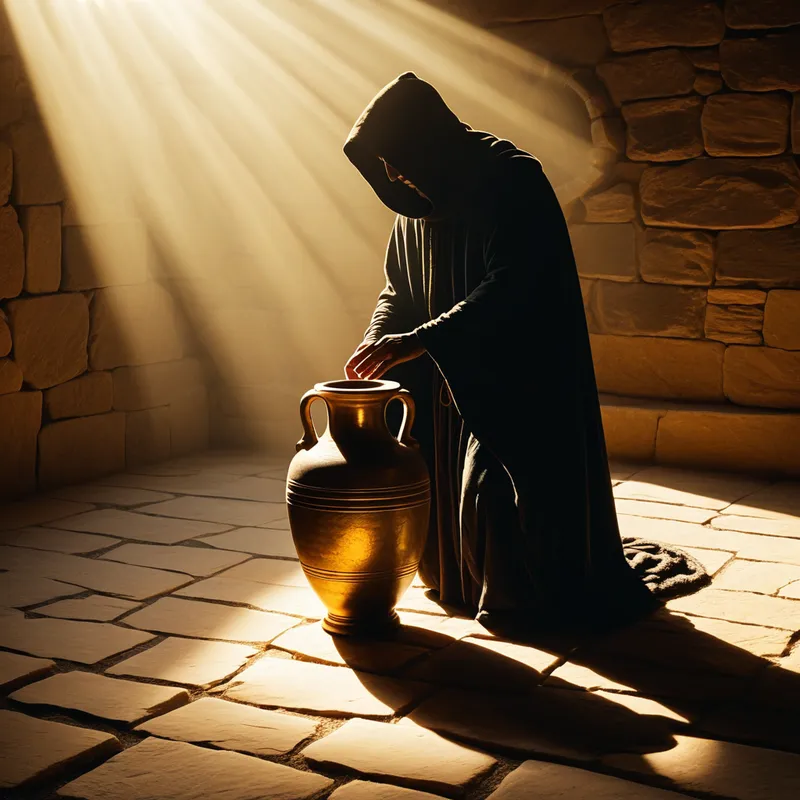
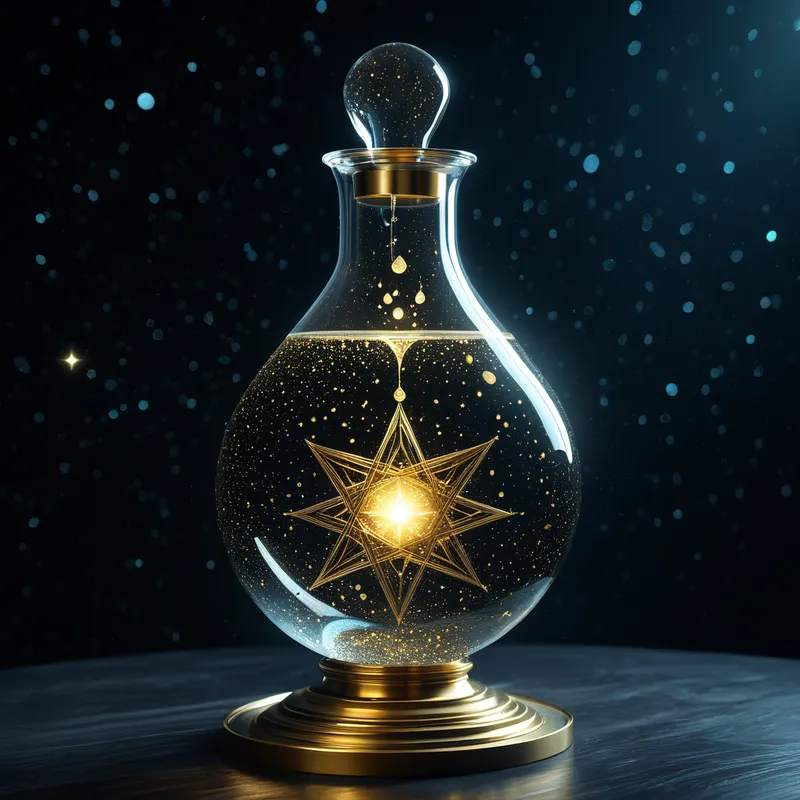
For their sustenance was not the coarse bread of men, nor the wine that brings forgetfulness. Their sustenance was essence itself. Each dawn, the graceful Hebe, or later, the magnificent Ganymede, would pour a divine libation from a flawless pitcher. This was the Nectar, a liquid more brilliant than the finest wine, tasting of mountain springs at dawn and the sweetness of a thousand eternal summers. It flowed, and with it flowed the unending vitality of the divine.
And with it came the Ambrosia. Brought by doves from the far edges of the world, across the river Oceanus, it was a substance both food and fragrance. To consume it was to ingest light itself; its aroma was the very scent of immortality, a perfume that could heal mortal wounds and preserve divine flesh forever in its perfect prime. It was said that where the gods walked, the scent of ambrosia lingered, a haunting reminder of a grace forever out of mortal reach.
Yet the boundary between the divine table and mortal dust was porous, fraught with longing. The cunning Prometheus dared to steal more than fire; whispers tell of him secreting a drop of nectar, a crumb of ambrosia, hoping to uplift his clay creations. For his transgression, an eagle feasted on his liver for eternity. The hero Heracles, born of a mortal woman, fought his way to Olympus not just with his club, but with his suffering, and was finally granted the divine fare, his mortal parts burned away by its glory, leaving only the immortal god. And the beautiful Tithonus was granted immortality by his lover Eos, but not eternal youth; without the sustaining ambrosia, he withered into a ceaseless, whispering cicada, a tragic testament to a gift half-given.
The great drama played out not in battles, but in consumption. To taste it was to be transformed; to be denied it was to know the defining truth of mortal fate—decay. The gods consumed, and in consuming, reaffirmed their eternal "I am." Mortals glimpsed, yearned, and were forever defined by the "I am not."
Cultural Origins & Context
The myth of ambrosia and nectar finds its most detailed articulation in the epic poetry of Homer and the subsequent works of Hesiod, serving as a fundamental pillar of Hellenic cosmology. It was not a single story told around a fire, but a pervasive, assumed reality woven into the fabric of every heroic tale and hymn. Its primary societal function was ontological: it established and enforced the ultimate, unbridgeable hierarchy of existence. Gods were not merely powerful beings; they were beings of a fundamentally different substance, sustained by a different source.
This myth was passed down by poets who were also theologians and historians—the bards. In singing of Achilles' rage or Odysseus' cunning, the mention of the gods "feasting on ambrosia" was a constant refrain, a narrative shorthand that reinforced cosmic order. It explained why gods could be wounded but not truly die, why they remained perpetually in their prime, and why their blood was not red but ichor. In a world where food was scarcity and aging inevitable, the idea of a perfect sustenance that granted eternal vigor was the ultimate symbol of absolute otherness and absolute power. It answered the human "why?" with a divine "because."
Symbolic Architecture
At its core, ambrosia and nectar symbolize the quintessence—the fifth element beyond earth, air, fire, and water. They are not mere magic food but the very substance of divine consciousness, the energy of pure, undifferentiated being.
Ambrosia and nectar represent the unmediated experience of essence, the nourishment that comes not from the outer world, but from the direct ingestion of one's own divine source.
Psychologically, they represent the Self in its perfected, integrated state. The gods, as archetypal forces, are complete. They do not seek; they are. Their consumption is a ritual of self-containment, a circular process where the archetype sustains itself on its own perfected nature. For a mortal—a human ego-consciousness—to seek ambrosia is to seek individuation: the integration of the unconscious wholeness (the divine) into conscious life. The nectar is the intoxicating, unifying libido or life-energy in its most refined form. The ambrosia is the solid, transformative structure—the lapis philosophorum or Philosopher's Stone—that alters the very constitution of the being who ingests it.
The tragic figures like Tithonus warn of the peril of seeking immortality (wholeness) without the corresponding transformation of the entire psyche. To want eternal life without eternal youth is to desire the endurance of the ego forever, a horrific fate of rigid, endless existence without renewal—the ultimate neurosis.
The Dreamer's Resonance
When this myth stirs in the modern unconscious, it rarely appears as a Greek god on a cloud. It manifests as a profound, often frustrating, search for the real nourishment. You may dream of finding a secret room in your house filled with radiant, perfect food that you are forbidden to eat. You might dream of a banquet where everyone else is partaking of a glorious feast, but your plate is empty, or the food turns to ash in your mouth.
These dreams point to a somatic and psychological process of starvation—not for calories, but for meaning, for authenticity, for the "food" that truly sustains the soul. The yearning for ambrosia is the psyche's hunger for its own depths. The feeling of being denied it often correlates with a life lived on the surface, fed by the "fast food" of consumerism, hollow accolades, or numbing routine. The body in the dream may feel weak, hollow, or parched, a direct somatic expression of a soul in drought. The dream is the psyche's way of saying, "You are consuming, but you are not being nourished. Seek the source."

Alchemical Translation
The myth models the entire alchemical opus of individuation. The mortal condition is the prima materia—the base, leaden state of identification with the ego and its sufferings. The divine mountain is the inner sanctum, the Self. The quest for ambrosia is the long, often tortuous, process of inner work.
The theft, gift, or earning of the divine sustenance symbolizes the moment of psychic transmutation, when the energy bound in complexes (the mortal wounds) is freed and assimilated as pure life force.
First, one must recognize the mortal fare for what it is—insufficient. This is the nigredo, the dark night of the soul, a feeling of profound existential hunger. The journey to the "mountain"—through therapy, creative expression, meditation, or deep reflection—is the albedo, the washing clean of projections and false identities. The encounter with the "gods" is the confrontation with autonomous archetypal forces within: the inner tyrant (Zeus), the wise counselor (Athena), the transformative trickster (Prometheus).
To "steal" the ambrosia, like Prometheus, is to consciously seize a piece of this inner divinity for the benefit of your humanity—perhaps a flash of creative insight, a moment of profound self-compassion, or an act of courage that springs from a deeper place than the ego. To be "granted" it, like Heracles, is to have the ego so thoroughly purified by suffering and effort that it can finally withstand the radiant, consuming fire of the Self without being annihilated. The final consumption is the rubedo: the ego's joyful, humble participation in the eternal flow of the Self's essence. You do not become a god; you become fully, mortally human, finally nourished by the deep, immortal spring within your own soul. The feast is always there. The myth asks if we dare to take our seat at the table.
Associated Symbols
Explore related symbols from the CaleaDream lexicon: