The Ages of Man Myth Meaning & Symbolism
Hesiod's tale of five races, from golden to iron, chronicling humanity's descent from divine harmony into a world of toil, strife, and forgetfulness.
The Tale of The Ages of Man
Listen. Before history was etched on stone, before cities cast their long shadows, the Muses breathed this truth into the ear of a weary shepherd on the slopes of Helicon. It is a story not of one hero, but of all humanity, a chronicle written in the substance of our souls.
In the beginning, under the reign of the Titan Kronos, the immortals fashioned the first race of mortals. They were the Golden Race. Their age was not marked by years, but by the perpetual, gentle breath of spring. The earth, a generous mother, offered her fruits unbidden. They lived without sorrow, without labor, without the creeping chill of old age. Their bodies, when their time came, dissolved into peaceful sleep, and their spirits became benevolent daimones, cloaked in mist, wandering the world as guardians of justice.
Then came the Silver Race, fashioned by the Olympians under the new king, Zeus</ab title>. A lesser, paler metal. For a century they remained foolish children at their mothers’ sides, and when they finally grew, their lives were brief and clouded by recklessness. They ignored the rites due to the gods, their pride a sharp stone in the hand. In his wrath, Zeus buried them. They became the blessed spirits of the underworld, honored but beneath the earth.
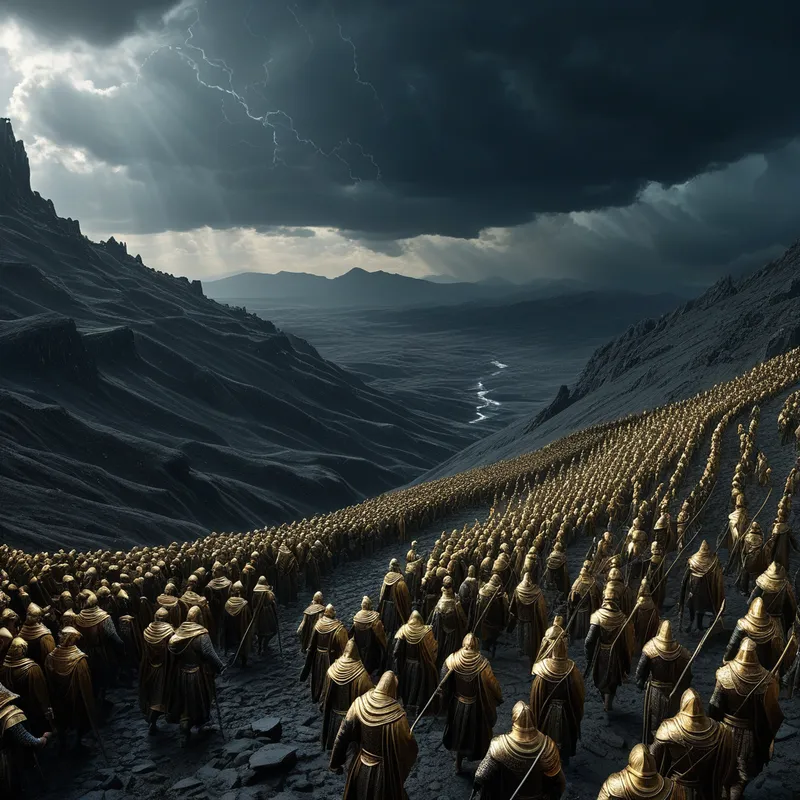
Zeus, the father, fashioned the third race: the Race of Bronze. Theirs was not the gleam of ore, but the harsh, pitiless sheen of the weapon. Their hearts were forged from hard rock, their bodies monstrous and strong. Their passion was for the grim work of Ares, for violence and war. They fed on no bread, only the flesh of conquest. They fell by each other’s hands, nameless and unmourned, and descended into the sunless house of Hades, leaving no trace on the air.
But then, a divergence—a brighter echo before the final fall. The demi-god race of Heroes, the fourth age. These were the men of the great epics, the ones who sailed to Troy and embarked on impossible quests. Their age was one of violence too, but violence with a gleam of glory, a search for honor and boundless renown. When death took them, Zeus granted them a separate peace, settling them at the ends of the earth in the Isles of the Blest, where three times a year the earth yields its honey-sweet fruit.
And now… we live in the Fifth Race. The Race of Iron. Our substance is hard yet brittle, prone to rust and fracture. Our days are a mixture of good and ill, a relentless toil from dawn until the gods hide the light. Father is pitted against son, guest against host, comrade against comrade. The sacred bonds of respect—for parents, for suppliants, for oaths—are fraying threads. Dike and Aidos, Shame, have fled the broad-pathed earth, their white robes vanishing into the company of the immortals, leaving mortals to their grim future. The prophecy whispers of a time when even these mixed blessings will vanish, and birth will be greeted only with weeping.
Cultural Origins & Context
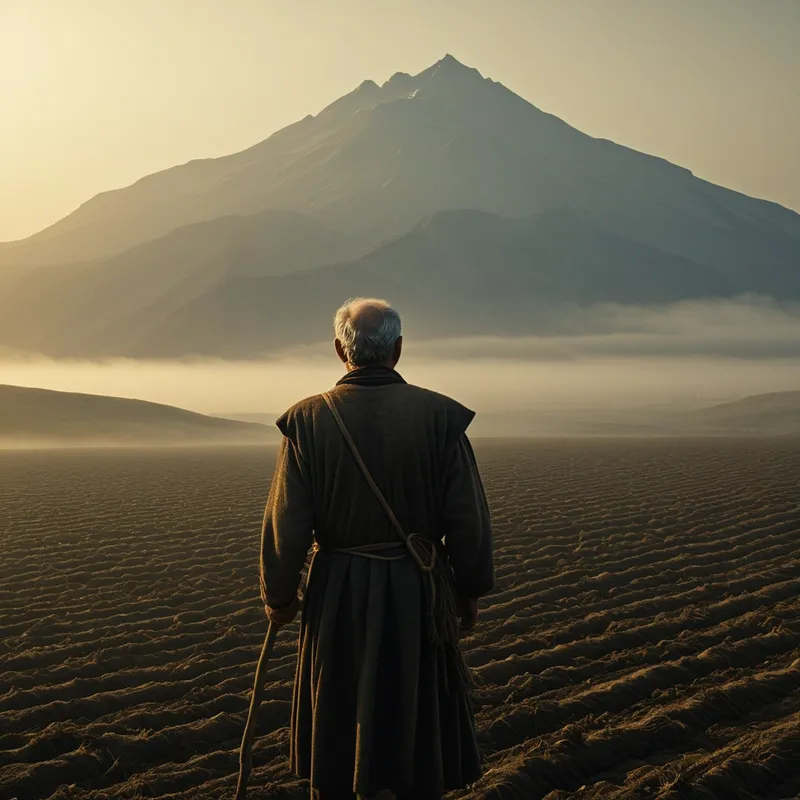
This profound and pessimistic cosmology comes to us from the poet Hesiod, in his didactic poem Works and Days. It is not a temple hymn, but a farmer’s almanac fused with divine revelation, told to his wayward brother Perses as both a warning and an explanation of their hardscrabble world. The myth served a critical societal function: it explained the origin of human suffering, the necessity of back-breaking labor, and the paramount importance of justice (dike) and piety in a world seemingly abandoned by ease.
Hesiod’s voice is that of the small landholder in Boeotia, for whom life was a constant struggle against scarcity. The myth provided a cosmic rationale for this struggle—it was not random misfortune, but the inherent condition of the Iron Age. By framing their present as the nadir of a long decline, it offered a grim comfort: our hardships are not our fault alone, but our fate. Yet, it also issued a stern call to uphold the last vestiges of order through hard work and reverence, the only bulwarks against complete chaos.
Symbolic Architecture
The Ages are not a literal history, but a profound map of consciousness in decline. Each metal symbolizes a dominant psychic orientation, a relationship between humanity, the divine, and the natural world.
The Golden Age represents a state of unconscious unity. The ego is not yet differentiated from the world; the psyche lives in a paradisiacal participation mystique with nature and the gods. Labor, morality, and even death as we know it are irrelevant.
The Golden Age is the psyche’s memory of undifferentiated wholeness, a pre-conscious Eden that forever haunts our sense of separation.
The Silver Age signifies a failed adolescence. Consciousness has emerged but is stunted, characterized by prolonged dependency and then impulsive, disrespectful action. It is the psyche that recognizes authority (the gods, the father) only to rebel against it without wisdom, resulting in its own suppression (burial).
The Bronze Age embodies the raw, unrefined power of the instinctual psyche—the shadow in its most martial and destructive form. It is pure aggression without a higher purpose, the will to power that ultimately consumes itself. The Heroic Age is a crucial paradox: it is also violent, but its violence is in service to a cultural ideal, a quest for meaning and honor. It represents the ego’s attempt to transcend mere brutality through glorious deeds, achieving a symbolic immortality.
Our Iron Age is the state of modern consciousness: complex, fragmented, and burdened by duality. We know both good and evil, joy and sorrow, but are plagued by alienation—from the gods, from nature, from each other, and from our own deeper selves. The flight of Dike and Aidos marks the internal crisis of values, where external morality and internal shame are no longer reliable guides.
The Dreamer’s Resonance
When this myth stirs in the modern dreamer, it often manifests as a profound sense of temporal dislocation or psychic metallurgy. One might dream of finding strange, layered strata in the earth—a layer of gold coins beneath black iron slag. Or of wearing armor that is impossibly heavy, made of a mismatched alloy that cracks under pressure.
Such dreams point to a somatic and psychological process of confronting one’s own “inner age.” Are you operating from the brittle, anxious striving of the Iron consciousness, toiling without connection to a deeper source? Is a “Bronze Age” rage or a “Heroic” but misguided ambition dominating your life? The dream may be highlighting an archaic layer of the psyche that needs to be acknowledged and integrated. The feeling of being in the “wrong age” is a call to examine which outdated, metallic mode of being you are identified with, and to begin the alchemical work of transmutation.
Alchemical Translation
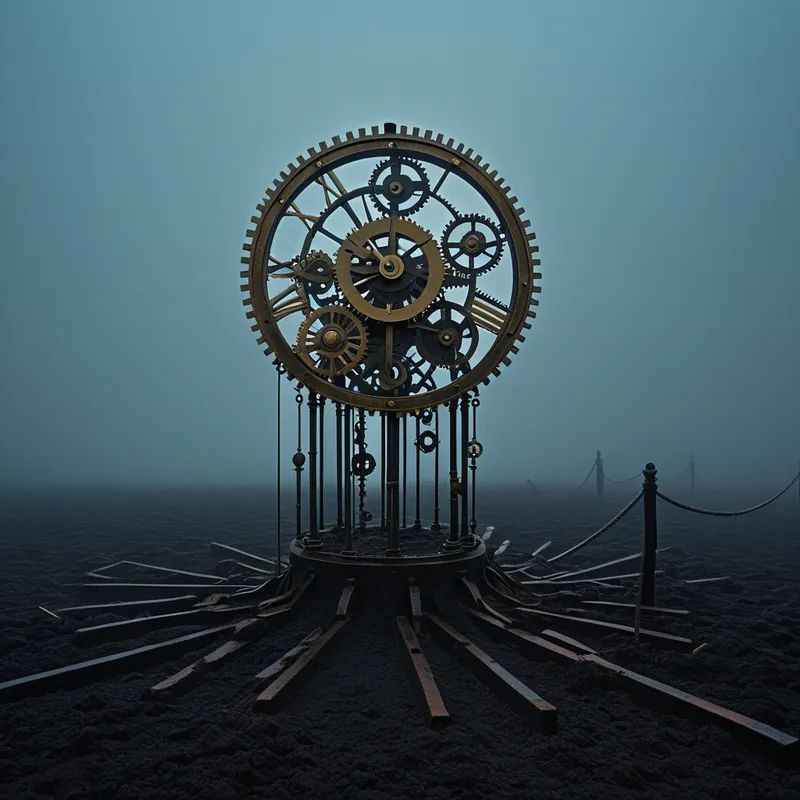
The myth’s sequence is not merely a record of decline, but an unconscious map for the opus of individuation—the arduous journey back toward a more integrated state. The alchemical process does not seek to return to the unconscious Gold, but to create the Lapis Philosophorum, the Philosopher’s Stone, which transcends all these base metals.
The work begins with recognizing the Nigredo of our Iron condition: the toil, the alienation, the inner conflict. This is the necessary suffering that initiates the quest. We must consciously work through the Bronze shadow (our raw aggression and fear) and the Heroic persona (our need for glorious, but often hollow, achievement).
Individuation is the conscious creation of a sixth age—not a return to Gold, but the forging of the Orichalcum of the soul, an incorruptible alloy born from the conscious integration of all that came before.
By integrating these elements—the innocent unity of Gold, the flawed growth of Silver, the brute strength of Bronze, and the aspirational spirit of the Heroes—into our fractured Iron awareness, we perform a psychic transmutation. We do not escape the Iron Age world, but we cease to be made solely of its brittle substance. We build an inner citadel of meaning, justice (dike), and reverence (aidos) that the external world cannot erode. In doing so, we fulfill the hidden promise of Hesiod’s lament: by consciously walking the path of decline in reverse, we recover the lost daimones within, becoming guardians of our own soul’s justice, even in an age of iron.
Associated Symbols
Explore related symbols from the CaleaDream lexicon: