
The Adamah (Hebrew Myth Meaning & Symbolism
The story of the Adamah, the living, breathing earth from which the first human is shaped, embodying the inseparable bond between consciousness and the material world.
The Tale of The Adamah
Before the naming of things, there was a breath held in the vast, unformed dark. Then, a sound—a whisper that was also a command—and light shattered the deep. Sky vaulted from [water](/myths/water “Myth from Chinese culture.”/), land heaved itself from the primal sea, and [the world](/myths/the-world “Myth from Tarot culture.”/) was born in a riot of green and growing. But the story truly begins not with light, nor with the creatures that filled the waters and the air, but with the ground itself. The Adamah.
It was not mere dirt. It was a living, receptive entity, a dark and fecund womb still warm from the first fires of creation. It lay open to [the sky](/myths/the-sky “Myth from Persian culture.”/), a silent, expectant canvas. [The wind](/myths/the-wind “Myth from Various culture.”/) swept over it, but it did not stir. The rains fell upon it, and it drank deeply, but it did not answer. It was complete in its potential, yet waiting.
Then came the shaping. Not from nothing, but from the very substance of the Adamah. Divine hands, unseen but felt in the pressure of intention, reached into the rich, dark loam. They gathered not rocks, but the essence of the ground—the humus of decayed stars and the promise of life yet to come. The soil was cool and heavy, clinging with the memory of water. It was kneaded, not as a potter kneads dead clay, but as one might coax a form from a sleeping giant.
Fingers traced the line of a spine from [the earth](/myths/the-earth “Myth from Hindu culture.”/)’s own bedrock. Palms hollowed a chest to hold a rhythm not yet known. From the wet clay of riverbanks came the softness of a brow; from the iron-rich dust of deserts, the strength of bone. The form was laid upon the Adamah from which it was taken, a mirror of the land itself—its valleys and rises, its stillness and its latent power.
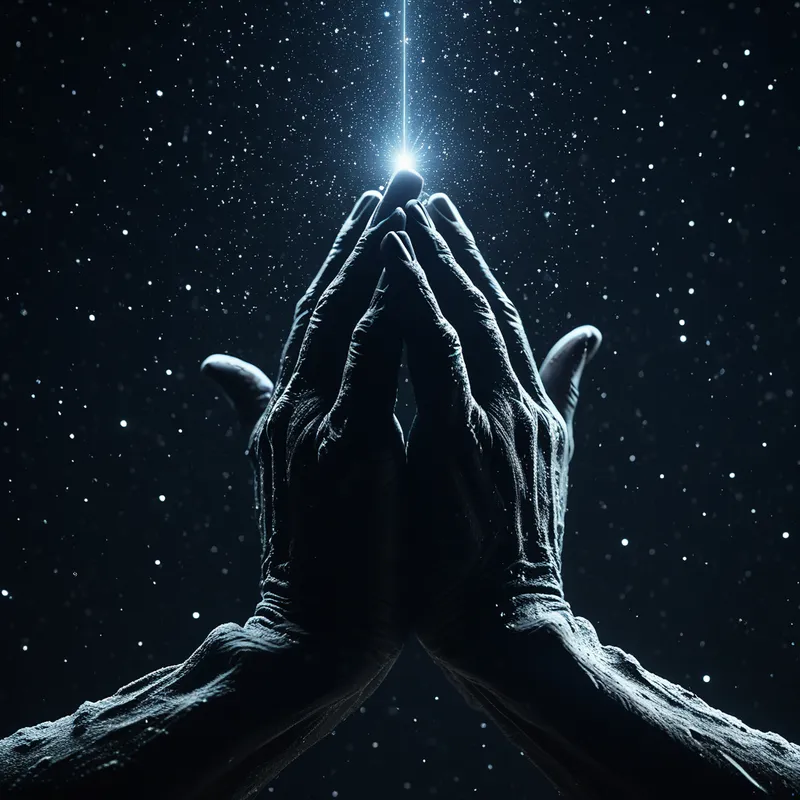
And then, the breath. It was not a wind from the east or west. It was the breath of life itself, nishmat chayim, drawn from the source of all sources and breathed into the nostrils of the earthen form. The soil shuddered. The chest rose. Eyes opened, not to see light, but to perceive it. The first human, Adam, drew its first breath, and in that instant, knew two homes: the dust from which it came, and the spirit with which it was filled. The Adamah had given its body; the divine had given its soul. They were, forever after, inseparable.
Cultural Origins & Context
This foundational narrative is drawn from the opening chapters of the Hebrew Bible, specifically the Book of Genesis. It is a priestly and poetic text, composed and refined during a period of exile and intense theological reflection, likely between the 6th and 5th centuries BCE. The story was not merely an etiological myth about human origins; it was a theological and philosophical cornerstone for a people defining their relationship with a singular, transcendent God and with the land they were promised.
It was passed down through sacred recitation, ritual, and scribal tradition, serving multiple societal functions. It established a profound monotheistic creation theology, distinguishing it from neighboring cosmogonies where humans were often afterthoughts or slaves of the gods. It provided a sacred charter for the human role as steward within creation, rooted in literal earthiness. Furthermore, it offered an identity: humanity (adam) is intrinsically linked to the soil (adamah), explaining both our physical mortality (“to dust you shall return”) and our unique, breathed-in dignity. The myth was a lens through which to understand labor, life, death, and our fundamental connection to the tangible world.
Symbolic Architecture
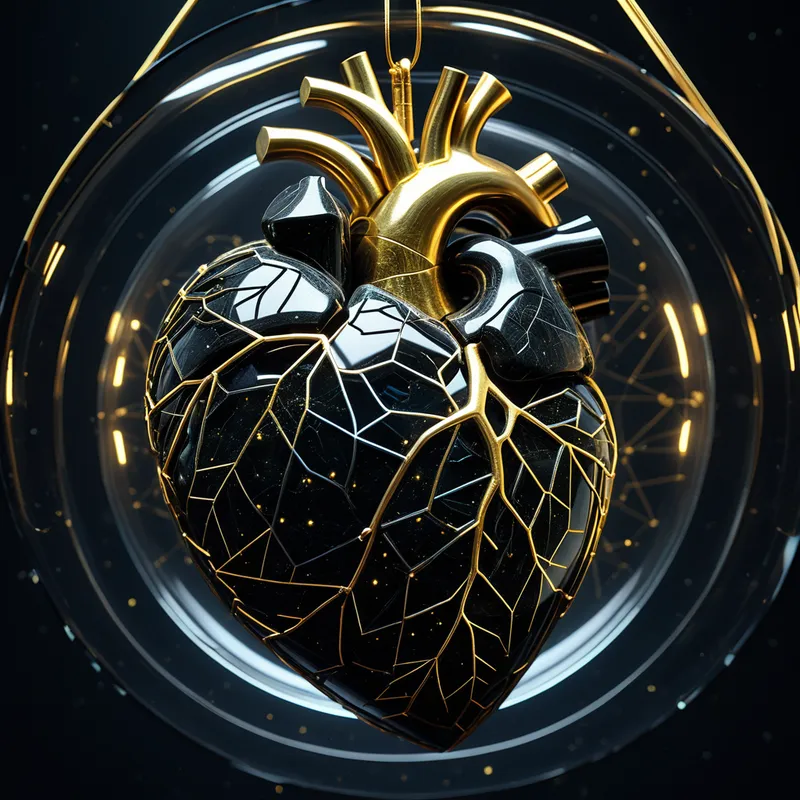
The myth’s power lies in its elegant, non-literal [symbolism](/symbols/symbolism “Symbol: The use of symbols to represent ideas or qualities, often conveying deeper meanings beyond literal interpretation. In dreams, it’s the language of the unconscious.”/). The Adamah represents the unconscious, [material](/symbols/material “Symbol: Material signifies the tangible aspects of life, often representing physical resources, desires, and the physical world’s influence on our existence.”/) [matrix](/symbols/matrix “Symbol: A dream symbol representing the fundamental structure of reality, consciousness, or the self. It often signifies feelings of being trapped, controlled, or questioning the nature of existence.”/) of existence—the “[prima materia](/myths/prima-materia “Myth from Alchemical culture.”/)” of the [soul](/symbols/soul “Symbol: The soul represents the essence of a person, encompassing their spirit, identity, and connection to the universe.”/). It is the undifferentiated ground of being, containing all potential but lacking conscious form.
The human is not placed upon the earth, but fashioned from its very substance. Our consciousness is not a visitor in a material world; it is the awakened quality of the world itself.
Adam symbolizes the emergent ego, the first spark of self-aware [consciousness](/symbols/consciousness “Symbol: Consciousness represents the state of awareness and perception, encompassing thoughts, feelings, and experiences.”/) that arises from and remains connected to this primal ground. The divine [breath](/symbols/breath “Symbol: Breath symbolizes life, vitality, and the connection between the physical and spiritual realms.”/) ([ruach](/myths/ruach “Myth from Hebrew culture.”/)) is the animating [spirit](/symbols/spirit “Symbol: Spirit symbolizes the essence of life, vitality, and the spiritual journey of the individual.”/), the transcendent function that instills [purpose](/symbols/purpose “Symbol: Purpose signifies direction, meaning, and intention in life, often reflecting personal ambitions and core values.”/), [awareness](/symbols/awareness “Symbol: Conscious perception of self, surroundings, or internal states. Often signifies awakening, insight, or heightened sensitivity.”/), and the [capacity](/symbols/capacity “Symbol: A measure of one’s potential, limits, or ability to contain, process, or achieve something, often reflecting self-assessment or external demands.”/) for [relationship](/symbols/relationship “Symbol: A representation of connections we have with others in our lives, often reflecting our emotional state.”/). Thus, the [human](/symbols/human “Symbol: The symbol of a human represents individuality, complexity of emotions, and social relationships.”/) [condition](/symbols/condition “Symbol: Condition reflects the state of being, often focusing on physical, emotional, or situational aspects of life.”/) is portrayed as a triune [mystery](/symbols/mystery “Symbol: An enigmatic, unresolved element that invites curiosity and exploration, often representing the unknown or hidden aspects of existence.”/): we are earthly [body](/symbols/body “Symbol: The body in dreams often symbolizes the dreamer’s self-identity, personal health, and the relationship they have with their physical existence.”/) (adamah), conscious self (adam), and inspired [spirit](/symbols/spirit “Symbol: Spirit symbolizes the essence of life, vitality, and the spiritual journey of the individual.”/) ([ruach](/myths/ruach “Myth from Hebrew culture.”/)). The core conflict is built into this [structure](/symbols/structure “Symbol: Structure in dreams often symbolizes stability, organization, and the framework of one’s life, reflecting how one perceives their environment and personal life.”/): the [tension](/symbols/tension “Symbol: A state of mental or emotional strain, often manifesting physically as tightness, pressure, or unease, signaling unresolved conflict or anticipation.”/) between our heavenly aspiration (the [breath](/symbols/breath “Symbol: Breath symbolizes life, vitality, and the connection between the physical and spiritual realms.”/)) and our earthly limitation (the [dust](/symbols/dust “Symbol: Dust often symbolizes neglect, forgotten memories, or the passage of time and life’s impermanence.”/)). We are hybrids, and our psychological [journey](/symbols/journey “Symbol: A journey in dreams typically signifies adventure, growth, or a significant life transition.”/) is one of reconciling these two natures.
The Dreamer’s Resonance
When this myth stirs in the modern unconscious, it often manifests in dreams of profound grounding or terrifying dissolution. To dream of rich, dark soil, of planting hands deep in the earth, or of building a home from clay, can signal a necessary somatic process of re-embodiment. It is the [psyche](/myths/psyche “Myth from Greek culture.”/)’s call to root a consciousness that has become too abstract, anxious, or disconnected—to return to the “grounding” Adamah.
Conversely, dreams of crumbling into dust, of being buried alive, or of the earth cracking beneath one’s feet speak to the fear of this same principle. They represent [the ego](/myths/the-ego “Myth from Jungian culture.”/)’s terror of being reabsorbed into the unconscious, of losing its hard-won individuality. These are not nightmares of external threat, but of inner truth: a confrontation with our mortal, material nature. The dream is initiating the dreamer into the knowledge that to be whole, one must acknowledge the soil from which one is formed, including its shadows of decay, limitation, and ultimate return.
Alchemical Translation
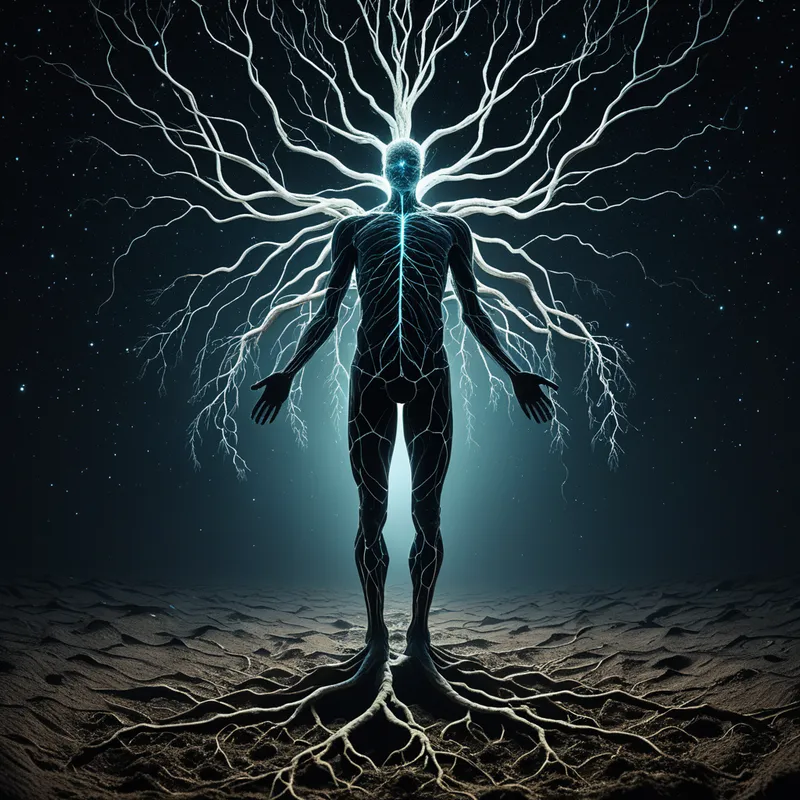
The psychic alchemy modeled here is the opus contra naturam: the work against (or through) nature. The initial state is the unconscious, fertile Adamah—our latent potentials, complexes, and inherited patterns. The divine breath is the catalyzing agent, the call to individuation that feels like an inspiration from beyond [the self](/myths/the-self “Myth from Jungian culture.”/).
Individuation is not an escape from the earth, but the conscious sculpting of a self from its raw material, animated by a spirit that honors its source.
The alchemical process is the lifelong shaping. We are tasked with taking the “clay” of our innate temperament, our childhood experiences, our cultural conditioning—the often messy, “earthy” stuff of our lives—and working it. We knead it through reflection, fire it in the kiln of suffering and joy, and strive to give it a form that can hold the sacred breath of our unique purpose. The [triumph](/myths/triumph “Myth from Roman culture.”/) is not becoming purely spiritual, but becoming a fully integrated being: a conscious vessel where spirit and matter, breath and dust, recognize each other as essential parts of a single, sacred entity. To forget the Adamah is to become ungrounded and inflated. To deny the breath is to become inert and lifeless. The goal is the living human, standing upright on the earth, breathing the sky, forever a bridge between the two.
Associated Symbols
Explore related symbols from the CaleaDream lexicon: