The Academy of Plato in Athens Myth Meaning & Symbolism
A sacred grove where philosophy is a divine rite, transforming seekers through dialectic to perceive the eternal forms behind the shadow-play of reality.
The Tale of The Academy of Plato in Athens
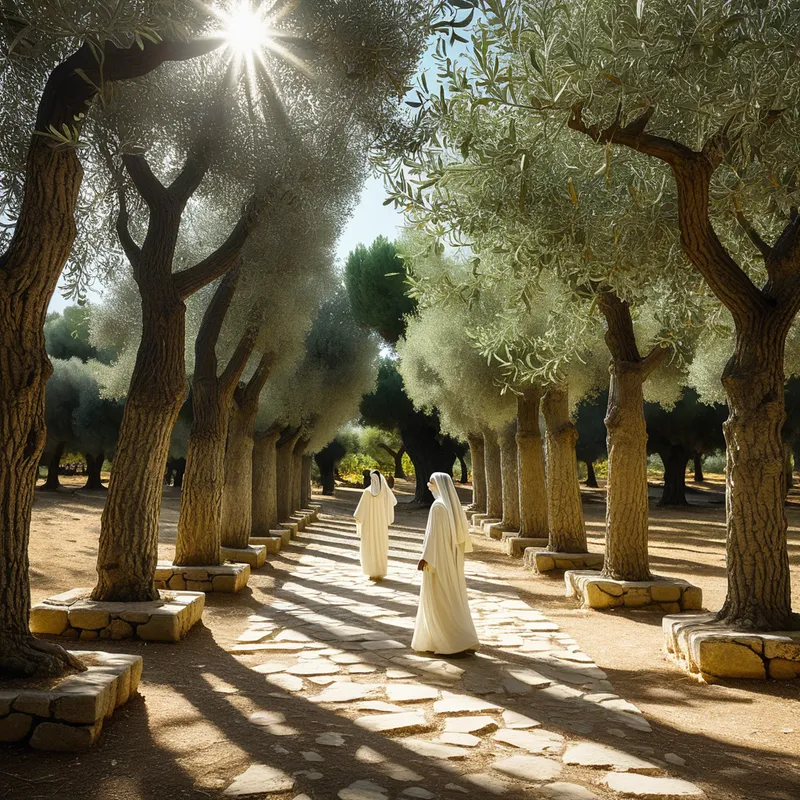
Let us walk beyond the clamor of the Athenian agora, past the potters’ wheels and the fishmongers’ cries. Follow the road northwest, past the city walls, until the dust of commerce settles and the air grows cool and fragrant. Here, in a grove sacred to the hero Akademos, the cicadas sing a different song. Their chorus is not for the marketplace, but for the murmuring leaves of ancient olive trees, silver-green and wise.
This is no mere school of stone. It is a temenos, a precinct set apart. The sunlight filters through the canopy, dappling the worn path where sandals tread softly. You hear it first—not a lecture, but a conversation. A melody of voices, rising and falling in a dance more intricate than any chorus. At the center, often, is a man not tall in stature, but immense in presence. His brow is furrowed not with worry, but with the profound labor of thought. This is Plato. He does not pronounce truths from a high seat; he walks, he gestures, he questions.
“What is Justice?” his voice asks, calm as the grove’s shade. “Is it the advantage of the stronger? Or is it a harmony, a music of the soul that we have forgotten how to hear?” A young man, his face eager, offers an answer. Plato’s eyes, deep and patient, catch the flaw not with scorn, but with another question, a gentle turning of the key. The discussion spirals—from the governance of cities to the governance of one’s own passions, from the nature of love to the nature of reality itself.
The students are not passive listeners. They are wrestlers in a gymnasium of the mind. They grapple with definitions, chase slippery meanings, and are pinned, laughing and frustrated, by the relentless logic of their guide. The conflict is not with monsters or armies, but with shadows—the shadows of unexamined opinion, of inherited prejudice, of the convincing illusions cast by the senses. The rising action is the painful, exhilarating ascent from the dark cave of mere belief toward the blinding sun of true knowledge.
The resolution is never a final answer scribbled on a tablet. It is a transformation of vision. It is the moment a seeker, weary from the climb, suddenly sees. Not a new fact, but the Form itself—the eternal, perfect essence of Beauty, or Courage, or the Good, shining behind the fragile, flickering copies of the world. It is a homecoming to a truth they always, somehow, knew. The session ends as the long shadows merge into twilight. The voices fall silent, but the dialogue continues inwardly, in the soul of each who walked the sacred path that day. The grove holds their silence, a vessel for the echo of the divine.
Cultural Origins & Context
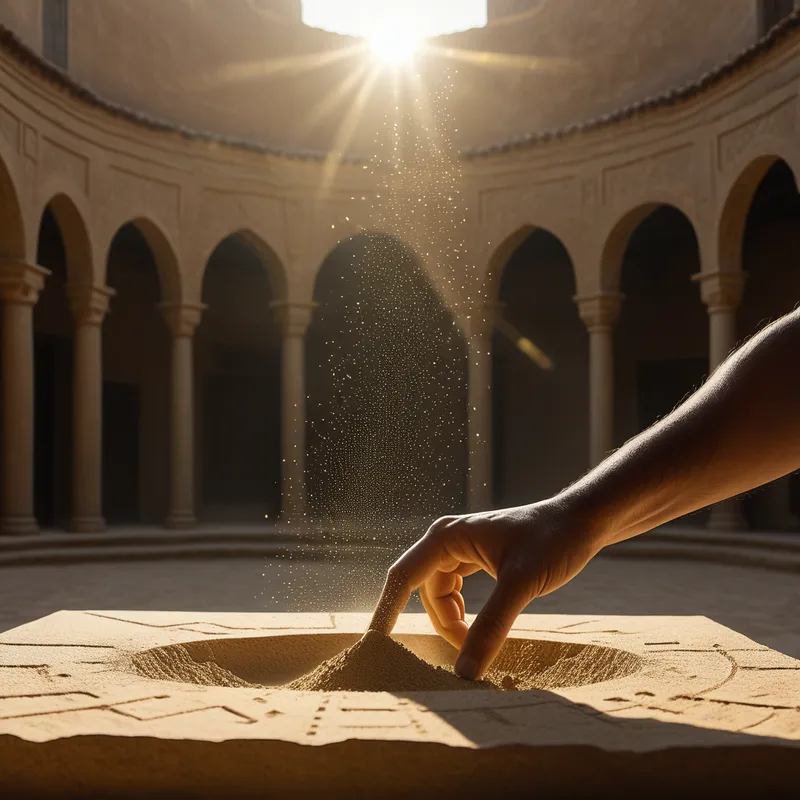
The mythos of the Academy springs from a specific historical moment—the 4th century BCE in Athens—but it quickly transcended it to become a universal cultural ideal. Founded by Plato around 387 BCE on land that was indeed a grove dedicated to Akademos, it existed as a physical institution for nearly nine centuries. However, its primary transmission was not through administrative records, but through the literary and philosophical corpus it produced, primarily Plato’s Dialogues.
These dialogues are the vessel of the myth. They are not dry treatises but dramatic, often poetic, re-enactments of the philosophical life. Socrates, Plato’s teacher and the central figure in most dialogues, becomes the mythic hero of the quest for wisdom. The Academy’s societal function was radical. In a culture where knowledge was often tied to aristocratic lineage or rhetorical prowess for political gain, the Academy proposed a new aristocracy: an aristocracy of the examined soul. It was a sanctuary for a particular kind of eros—not physical love, but the soul’s yearning for the true, the good, and the beautiful. It was passed down not by priests, but by seekers, from Aristotle to Plotinus, through the Islamic Golden Age scholars, to the Renaissance humanists, becoming a global symbol for the dedicated pursuit of transcendent understanding.
Symbolic Architecture
At its core, the Academy is not a symbol of mere education, but of anamnesis—the soul’s recollection of knowledge it possessed before birth. The grove itself symbolizes the temenos, the protected psychic space necessary for this deep, introspective work, shielded from the “noise” of conventional life.
The Academy is the psyche’s own sacred grove, where the dialogue between the ego and the Self can begin.
The central ritual is the Dialectic. This is the symbolic architecture of transformation. It represents the disciplined, loving conflict within the psyche. One voice (the seeker’s current opinion) is met by another (the questioning, guiding inner principle, the Daimon or the inner Socrates). Through this conflict, both are refined. The goal is to move from doxa (unexamined opinion/shadow) to episteme (true knowledge/light). The famous Allegory of the Cave, born in this context, is the master symbol: the journey from chained perception of illusions, through the painful ascent into the light, to the eventual duty to return and guide others.

The Dreamer's Resonance
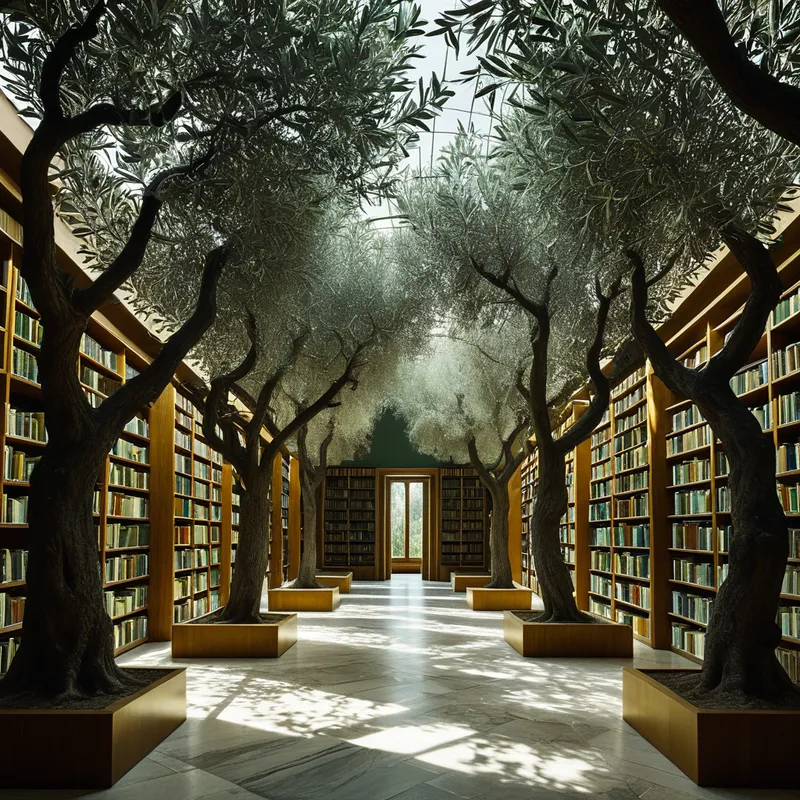
When this myth activates in the modern dreamscape, it rarely appears as a historical tableau. Instead, one dreams of finding a hidden, verdant space within a bustling city—a quiet library, a secluded garden, a forgotten room in one’s own house. The somatic feeling is one of profound relief and simultaneous tension: relief at finding sanctuary, tension at the work to be done.
The dreamer is often not listening to a lecture, but engaged in a passionate, sometimes frustrating, conversation with a mysterious but familiar figure—a guide, a teacher, a shadowy companion who asks impossible questions. This figure embodies the inner Senex or wise old man/woman. The psychological process is the stirring of the transcendent function. The dream ego is being confronted with its own rigid viewpoints, its “cave-bound” certainties. The dream is an invitation to engage in inner dialectic, to let one’s cherished assumptions be challenged by a deeper, wiser part of the psyche that knows the path to greater wholeness.
Alchemical Translation
The alchemical process mirrored here is the opus magnum of individuation, with dialectic as its prime tool. The base material is the prima materia of unconscious, inherited, and unquestioned content (the shadows in the cave). The separatio is the painful act of distinguishing what is truly one’s own from what is merely collective opinion.
The fire of dialogue is the solve et coagula of the soul: it dissolves rigid identification and coagulates new, more conscious understanding.
The guided questioning—the Socratic method—acts as the alchemical vas, the sealed vessel where this transformative confrontation can safely occur without the psyche flying apart. The rising toward the Forms is the sublimatio, the spiritualization of perception. Finally, the return to the cave is the crucial stage of rubedo, the reddening, where the integrated, enlightened consciousness must return to engage with the mundane world, now able to see it as both shadow and reflection of the eternal. The triumph is not in escaping the world, but in seeing it anew, transformed by a dialogue with the timeless. The individual becomes, in a small way, a living academy—a grove where the eternal and the temporal are in perpetual, creative conversation.
Associated Symbols
Explore related symbols from the CaleaDream lexicon: