Temperance Myth Meaning & Symbolism
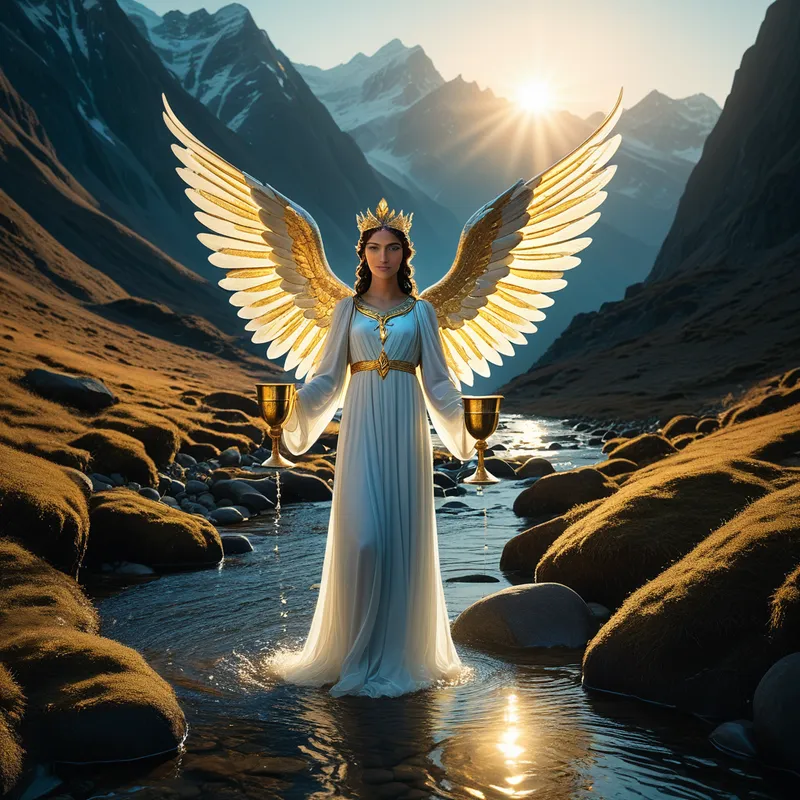
An angelic figure stands between worlds, blending fire and water, spirit and matter, in a sacred ritual of alchemical union and profound inner balance.
The Tale of Temperance
Hear now a tale not of conquest, but of confluence. A story whispered not in the clamor of battle, but in the silent space between one breath and the next.
In the high, thin air where earth brushes the cheek of heaven, there is a place of meeting. A mountain stream, born of glacial tears and secret springs, cuts a silver path through stone. Here, at the precise moment when night surrenders to dawn—not in defeat, but in a sacred pact—a figure appears.
It is the Angel of the In-Between. You cannot say if it is he or she, for its form holds the potential of both. Its wings are not the white of doves, but the iridescent sheen of a dragonfly’s wing, catching the first light and fracturing it into a thousand unnamed colors. It stands with one foot firmly upon the rocky bank, feeling the solid, patient truth of the mountain. The other rests in the flowing stream, sensing the cold, relentless journey of the water to some distant, forgotten sea.
In its hands, it holds two chalices. One is of beaten gold, warm to the touch, humming with the memory of sun and forge-fire. The other is of polished silver, cool and deep, holding the echo of moonlight on still pools. The angel does not drink from them. It does not offer them up. Instead, it begins to pour.
With infinite, unhurried care, it pours the contents of the golden cup into the silver one. And then, without spilling a single drop, it pours from the silver back into the gold. Back and forth, in a continuous, graceful arc. It is not a mixing. It is a conversation. The fiery essence and the watery essence flow into one another, not to become a muddy compromise, but to exchange their deepest natures. Where the streams meet in the air, a subtle rainbow shimmers, visible only to those who have learned to see with the heart’s eye.
The angel does not look at its work. Its gaze is on the path ahead—a faint, luminous trail that winds up the mountain to a crown of light glowing softly on the highest peak. It does not hurry. Its entire being is the pouring. Its purpose is the arc. The conflict here is not against a monster, but against entropy—the natural state of things to fly apart, to remain separate, to let fire burn out alone and water pool in stagnant isolation. The rising action is the sustaining of the flow, the maintenance of that impossible, graceful exchange against the gravity of the world that would see the cups set down. The resolution is not an end, but a perpetual state of becoming. The angel stands, it pours, and in that act, the world is remade, not with a shout, but with a whisper of seamless transfer.
Cultural Origins & Context
The figure of Temperance, as card XIV in the Major Arcana, emerged from the rich symbolic crucible of Renaissance Europe. It is a direct descendant of the classical virtue of Temperantia, one of the four Cardinal Virtues, which signified moderation and self-restraint. However, in the hands of the early Tarot designers—likely a blend of artists, scholars, and initiates familiar with Hermetic, alchemical, and Neoplatonic thought—this simple ethical concept was transfigured.
It moved from the realm of moral philosophy into the realm of operative mystery. The card was not merely an illustration of a virtue but a pictorial diagram of a cosmic and psychic principle. It was passed down not through public sermons, but through the visual language of the card decks themselves, often hand-painted for noble families or intellectual circles where such esoteric ideas were discussed. Its societal function was dual: for the common viewer, a reminder of modest behavior; for the initiated, a map of the alchemical coniunctio oppositorum, the sacred marriage of opposites necessary for the creation of the Philosopher's Stone—both a literal substance and a metaphor for the perfected, integrated self.
Symbolic Architecture
The myth of Temperance is an instruction manual for the soul, written in the language of symbol. Every element is a deliberate cipher.
The Angel represents a higher, reconciling function of the psyche. It is not "you" as you know yourself, but the Self—the organizing, transcendent center that orchestrates the union of conflicting parts of the personality. Its androgyny signifies its wholeness, its freedom from one-sided identification with either masculine or feminine energies.
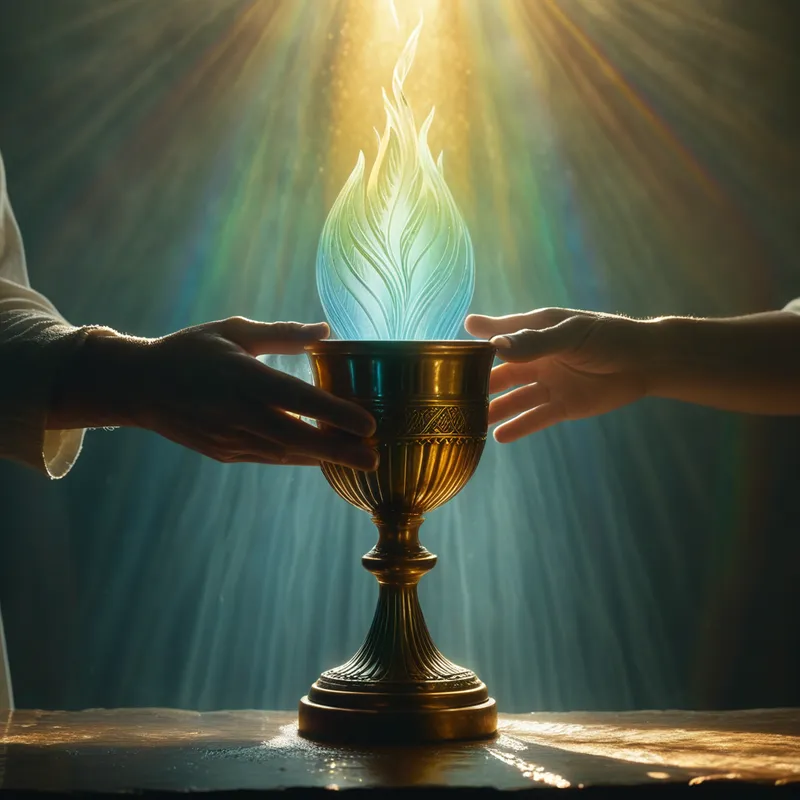
The Two Chalices are the vessels of opposition. Gold is Sulphur—the fiery, active, conscious, and passionate principle. Silver is Mercury—the fluid, receptive, unconscious, and intuitive principle. They are not empty; they are full of their own potent, and potentially destructive, natures.
The Pouring is the myth’s heart. This is not a static balance like a scale, but a dynamic, living process. It represents the conscious, ongoing work of transferring energy between opposites: bringing the light of consciousness (fire) to the dark waters of the unconscious, and allowing the wisdom of the unconscious (water) to cool and temper the rigid flames of dogma and willfulness.
The goal is not to empty one cup into the other, but to initiate a conversation where both are changed by the exchange, yet remain distinct.
The Land and Water under the angel’s feet ground the operation in reality. This work happens not in abstract fantasy, but in the lived experience—the solid ground of daily life and the flowing, emotional currents of relationship and instinct. The Path to the Crown indicates that this labor of integration is the very path to wholeness. The crown is not seized; it is approached through the sustained practice of the pour.
The Dreamer's Resonance
When the pattern of Temperance stirs in the modern dreamscape, it signals a profound somatic and psychological process of reconciliation. The dreamer may not see an angel, but they will feel its operation.
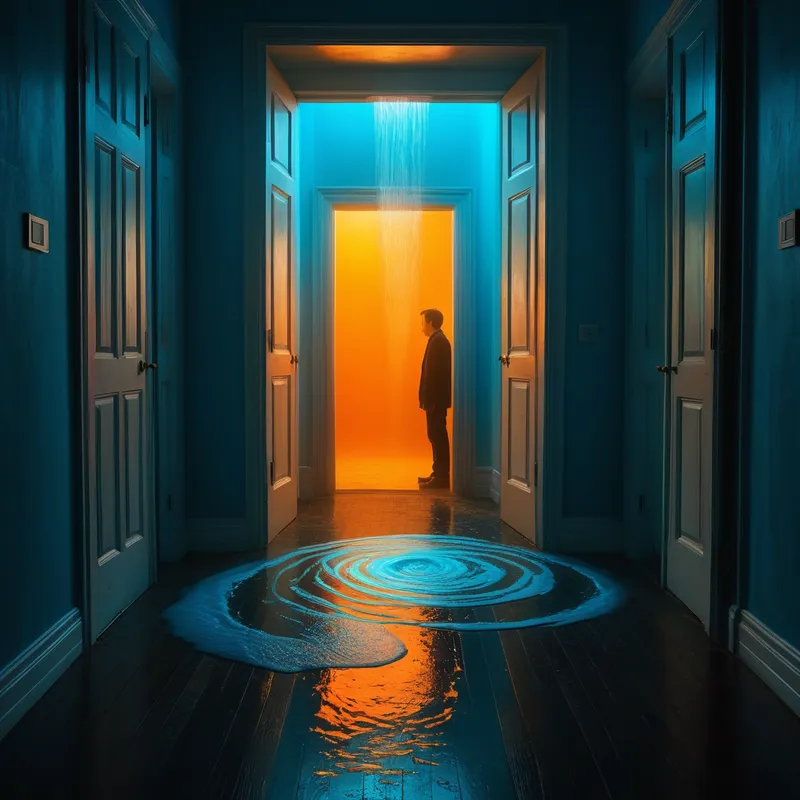
Somatically, one might dream of being in a place of literal mediation—a narrow bridge, a doorway, a hallway between two rooms with starkly different climates. There is often a palpable sense of tension in the body, a feeling of being pulled in two directions. The dream task is often to hold the tension, to not flee into one room or the other. This is the body’s wisdom enacting the Temperance myth.
Psychologically, these dreams arise during periods of intense inner conflict: between career and family (action and receptivity), between logic and feeling (fire and water), between a cherished identity and a new, emerging one. The dream ego is often tasked with combining two incongruous objects, translating between two languages, or calming two arguing figures. The process is one of holding the opposites in consciousness without premature resolution. The anxiety of the dream is the friction of the opposites; the resolution, if it comes, is the dream-image of a third thing emerging—a child of the two arguing figures, a new, hybrid object, or simply a sense of calm in the mediating space. This is the rainbow in the poured stream.
Alchemical Translation
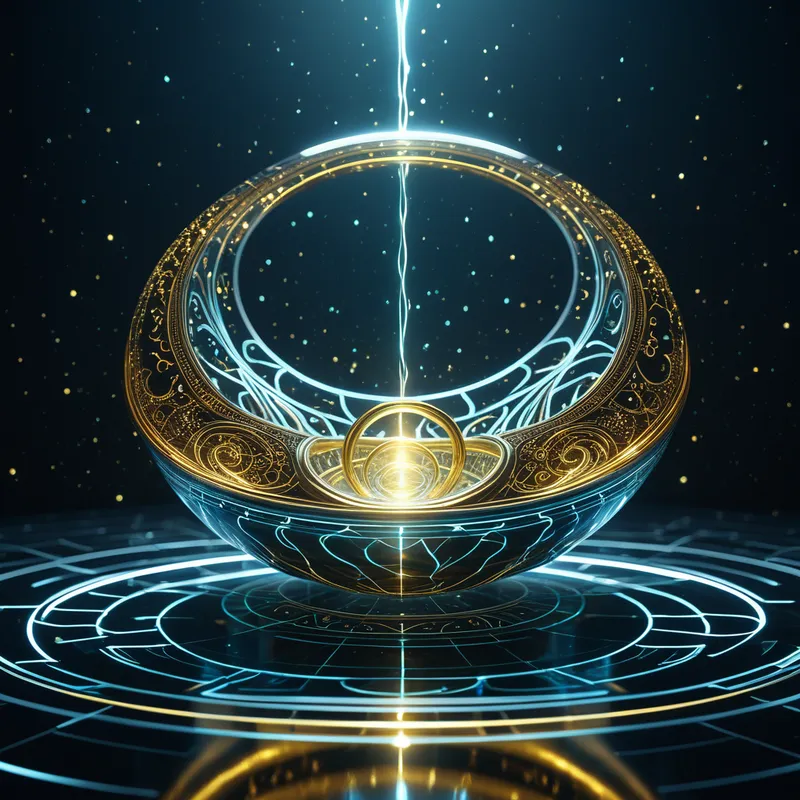
For the modern individual navigating the chaos of a fragmented world and a fragmented self, the myth of Temperance is the core model of psychic transmutation, the engine of individuation.
The "base metal" of our raw psyche is our one-sidedness. We are identified with our fiery ambitions and deny our need for rest (spilling the gold). Or we are flooded by emotions and fear applying the clarifying flame of analysis (letting the silver overflow). The alchemical operation is to consciously become the angelic principle in our own lives.
This means first recognizing the chalices: naming the opposing forces within. "This is my need for autonomy (fire), and this is my need for connection (water)." Then, we must initiate the pour: the active, patient work of inner dialogue. We take a conscious thought (fire) and pour it into the vessel of feeling (water), asking "How do I feel about this plan?" We take a deep emotion (water) and pour it into the vessel of analysis (fire), asking "What is this emotion trying to tell me?"
The Philosopher's Stone that is created is not a magical object, but a transformed attitude—the capacity to stand in the crucible of life's contradictions and, through sustained inner work, transmute conflict into creative tension, and tension into a new, more resilient and nuanced consciousness.
The path to the crown is walked step by step, pour by pour. It is the slow, sacred art of blending our inner extremes until we can stand, one foot in the practical world, one in the realm of soul, and become the conscious artisans of our own becoming. The myth teaches that wholeness is not a state of arrival, but a quality of the journey—a perpetual, graceful, and intentional act of sacred exchange.
Associated Symbols
Explore related symbols from the CaleaDream lexicon: