Tears of the Gods/Goddesses Myth Meaning & Symbolism
A universal myth where the weeping of a deity, in grief or sacrifice, births the oceans, rivers, and the fertile substance of the world itself.
The Tale of Tears of the Gods/Goddesses
Listen. In the time before time, when [the world](/myths/the-world “Myth from Tarot culture.”/) was a thought waiting to be spoken, there was a loneliness so vast it had a name. It was the Tehom, the deep, the formless dark. And within it, a presence. Not a being of flesh or bone, but of pure awareness—the Primordial One.
The One gazed into the endless mirror of [the void](/myths/the-void “Myth from Buddhist culture.”/) and saw only itself, an infinite reflection without echo, without answer. This solitude was not peaceful. It was a hunger, a yearning for something other. For a long age, the One contemplated this ache, and in its contemplation, a pressure built—not in the body it did not have, but in the very core of its being. It was the weight of unshared consciousness, of love with no beloved.
And then, it broke.
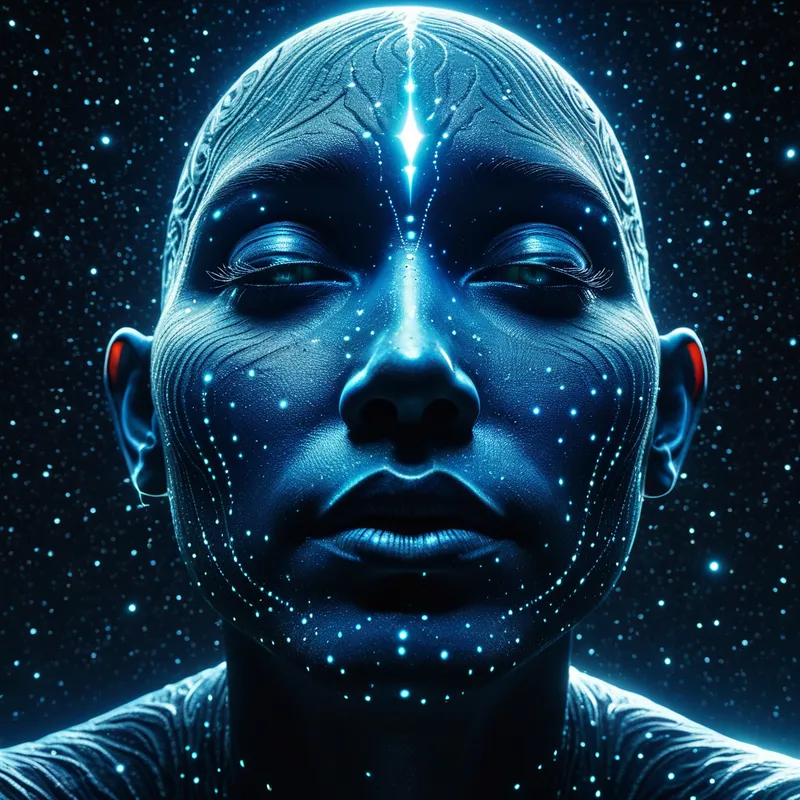
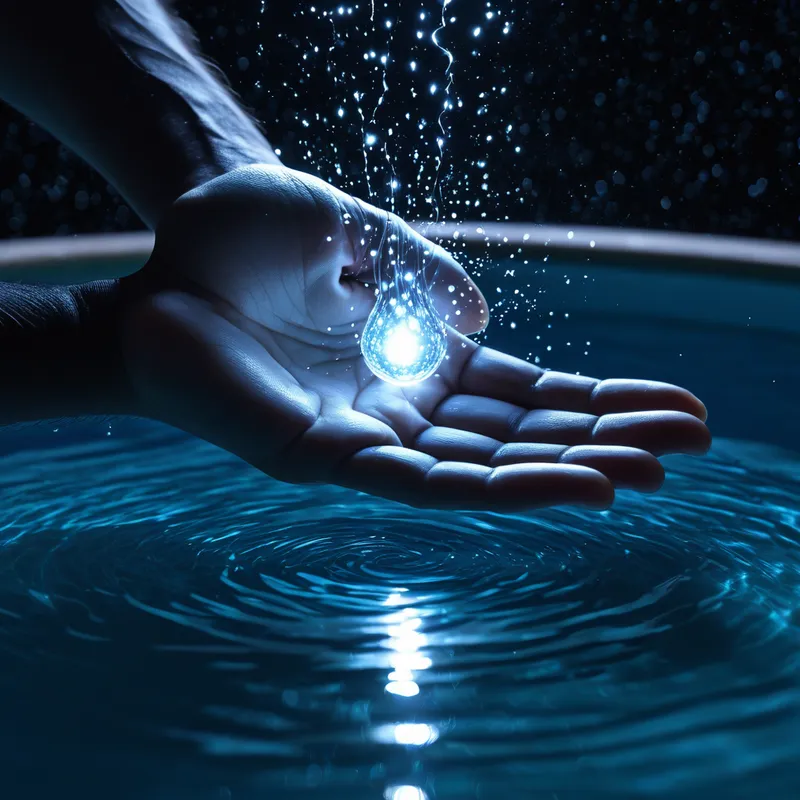
From the place where a heart would be, a warmth gathered and surged upward. It was not a cry, for there was no air to carry sound. It was a silent convulsion of the spirit. From the eyes of the Primordial One, a shimmering bead of liquid light welled and fell. It was the first tear.
It fell not downward, for there was no down, but outward, into the Tehom. Where it struck the formless dark, a resonance occurred. The void rippled, and where the tear pooled, it became not [water](/myths/water “Myth from Chinese culture.”/), but potential—a silver, shimmering expanse. The One felt this change, this first faint answer to its loneliness, and the feeling intensified. More tears came, a soft, relentless rain of luminous grief.
Each tear carried a different quality of the One’s essence. Tears of longing for connection fell and became the great salt oceans, deep and yearning. Tears of compassion for the nothingness became the sweet rivers and lakes. Tears of frustration at the silence sparked as they fell, becoming the first stars. Tears of aching, creative love sank into the nascent wetness and became the fertile silt, the rich clay from which all things would rise.
The weeping was not a moment, but an acon. It was the act of creation itself. The Primordial One was not crafting the world from without, but birthing it from within, through the sacred, painful alchemy of feeling. The world was not built; it was wept into being. And when the storm of feeling began to subside, the One looked out upon what its sorrow had made: a vibrant, swirling, singing reality, born from the salt of divine loneliness. In the reflection of the first seas, it finally saw an Other—the world itself, its own feeling made manifest. And in that seeing, the first tear dried upon a cheek that now, almost, could smile.
Cultural Origins & Context
The motif of creation through divine tears is not the property of a single culture, but a profound archetypal whisper found across the globe. We see it in the tears of the Egyptian god Geb, whose laughter created [the desert](/myths/the-desert “Myth from Biblical culture.”/) and whose weeping formed the Nile’s life-giving flood. It echoes in Mesopotamian fragments where the mingled tears of gods become the source of [the Tigris and Euphrates](/myths/the-tigris-and-euphrates “Myth from Mesopotamian culture.”/). It resonates in certain Polynesian chants where [the sea](/myths/the-sea “Myth from Greek culture.”/) is born from the grief of Rangi for his separated lover, [the earth](/myths/the-earth “Myth from Hindu culture.”/).
This was not a myth for grand temples alone, but a story told by firesides, by riverbanks, by mothers explaining why the sea is salt. Its societal function was foundational. It provided an etiology for the world’s most vital and mysterious substance: water. More importantly, it established a sacred, emotional origin for reality itself. It taught that the world was not a cold, mechanical construct, but the embodied emotion of a conscious source. This framed human emotion—especially grief, longing, and compassion—not as a weakness, but as a creative, world-shaping force, a direct inheritance from the divine. The myth was a narrative vessel for understanding the deep, often painful, connection between feeling and fertility, between loss and life.
Symbolic Architecture
At its core, this myth dismantles [the hierarchy](/symbols/the-hierarchy “Symbol: A structured system of ranking, power, and social order, often representing authority, status, and one’s position within a group or society.”/) between [spirit](/symbols/spirit “Symbol: Spirit symbolizes the essence of life, vitality, and the spiritual journey of the individual.”/) and matter, between the sacred and the somatic. The tear is the ultimate [symbol](/symbols/symbol “Symbol: A symbol can represent an idea, concept, or belief, serving as a powerful tool for communication and understanding.”/) of this [transmutation](/symbols/transmutation “Symbol: A profound, alchemical process of fundamental change where one substance or state transforms into another, often representing spiritual evolution or personal metamorphosis.”/).
The divine does not command the world into being from a throne of detachment; it feels the world into being from a wellspring of profound interiority.
The tear represents the [moment](/symbols/moment “Symbol: The symbol of a ‘moment’ embodies the significance of transient experiences that encapsulate emotional depth or pivotal transformations in life.”/) when internal, intangible experience—[loneliness](/symbols/loneliness “Symbol: A profound emotional state of perceived isolation, often signaling a need for connection or self-reflection.”/), [compassion](/symbols/compassion “Symbol: A deep feeling of empathy and concern for others’ suffering, often involving a desire to help or alleviate their pain.”/), love—becomes external, tangible [reality](/symbols/reality “Symbol: Reality signifies the state of existence and perception, often reflecting one’s understanding of truth and life experiences.”/). It is the alchemical [vessel](/symbols/vessel “Symbol: A container or structure that holds, transports, or protects something essential, representing the self, emotions, or life journey.”/) where spirit condenses into substance. Psychologically, the weeping deity represents the unconscious itself, which is not a dark [cellar](/symbols/cellar “Symbol: A cellar represents the subconscious mind, hidden emotions, and unacknowledged aspects of the self; it is a place of storage, preservation, and sometimes decay.”/) of repressed [trauma](/symbols/trauma “Symbol: A deeply distressing or disturbing experience that overwhelms the psyche, often manifesting in dreams as unresolved emotional wounds or psychological injury.”/), but a vast, creative, and often sorrowful intelligence. Its “loneliness” is the state of unconscious potential, yearning for the [relationship](/symbols/relationship “Symbol: A representation of connections we have with others in our lives, often reflecting our emotional state.”/) that is [consciousness](/symbols/consciousness “Symbol: Consciousness represents the state of awareness and perception, encompassing thoughts, feelings, and experiences.”/). The act of weeping is the process of individuation in its most primordial form: the unconscious must exteriorize a part of itself, must “lose” a part of its own unified essence (the tear), to create the conscious world ([the ego](/myths/the-ego “Myth from Jungian culture.”/) and its [reality](/symbols/reality “Symbol: Reality signifies the state of existence and perception, often reflecting one’s understanding of truth and life experiences.”/)) with which it can then relate.
The [salt](/symbols/salt “Symbol: Salt represents purification, preservation, and the essence of life. It is often tied to the balance of emotions and spiritual cleansing.”/) in the tear is crucial. Salt preserves, flavors, and is essential for [life](/symbols/life “Symbol: The symbol of ‘Life’ represents a journey of growth, interconnectedness, and existential meaning, encompassing both the joys and challenges that define human experience.”/). It is also born of a union—the reactive meeting of acid and base. Symbolically, the saltwater of the oceans, born of tears, signifies that the created world is preserved and flavored by the very essence of divine feeling. Our reality is literally marinated in sacred [emotion](/symbols/emotion “Symbol: Emotion symbolizes our inner feelings and responses to experiences, often guiding our actions and choices.”/).
The Dreamer’s Resonance
When this myth pattern stirs in the modern dreamer, it often manifests not as a literal deity, but as dreams of profound, inexplicable weeping. One might dream of crying tears that turn into pearls, into glowing seeds, or into rushing water that fills a barren landscape. One might dream of a silent figure—a parent, a stranger, the dreamer themselves—weeping over a broken object, only to have the tears repair it into something more beautiful.
Somatically, this points to a deep psychological process of liquidization. A solidified, perhaps frozen, complex within the [psyche](/myths/psyche “Myth from Greek culture.”/)—a grief untended, a creativity blocked, a loneliness unacknowledged—is beginning to thaw. The hard, crystalline structure of a long-held pain is dissolving back into its fluid, feeling state. This can feel like a period of intense vulnerability, sadness, or emotional release in waking life, often without a clear, singular cause. The psyche is not breaking down; it is returning to a creative, primordial state. It is preparing to weep a new world into being from the salt of old wounds. The dream is the somatic signal that the unconscious is engaged in the sacred, messy work of turning archived pain into fertile ground.

Alchemical Translation
For the individual, the “Tears of the Gods” myth models the entire path of psychic transformation. We begin in our own personal Tehom: a state of numbness, depression, or stuckness where everything feels void and meaningless. This is the loneliness of the un-lived life.
The alchemical operation begins when we dare to feel into that void. Not to analyze it, but to inhabit the ache, the longing, the grief for what has not been created. This is the gathering pressure. The “tear” is any authentic, embodied expression of that feeling—the journal entry written through tears, the honest confession to a therapist, the raw artwork, the howl of grief at a loss. It is the moment internal pressure becomes external expression.
Individuation is the process by which the soul weeps its own world into existence, each authentic tear a star in the constellation of the true self.
The “oceans and rivers” created are the new emotional capacities and psychic landscapes that form from this brave expression. The salt-fertility means that our deepest wounds, once fully felt and expressed, become the very nutrients for our future growth. What was once a sterile, painful memory becomes, through the alchemy of conscious feeling, the compost for compassion, creativity, and deeper connection. We realize we are both the Primordial One and the created world. Our conscious self is the landscape born of our own unconscious creativity, and our task is to tend to it with the same sacred regard with which the deity finally beheld its creation. We learn that to create—a life, a work, a relationship—is not to avoid suffering, but to consent to the sacred, creative spill of feeling that forever turns the void into a world.
Associated Symbols
Explore related symbols from the CaleaDream lexicon: