Tatzelwurm Myth Meaning & Symbolism
A cat-faced serpent-dragon of the Alps embodies the primal terror of the high, lonely places, challenging the solitary wanderer to face the unknown within.
The Tale of Tatzelwurm
Listen, and let your breath grow still. For I will tell you of [the thing](/myths/the-thing “Myth from Norse culture.”/) that waits where the air grows thin and the stone grows teeth. This is not a tale for [the hearth](/myths/the-hearth “Myth from Norse culture.”/)-fire, but for the cold, silent spaces between the stars and the peaks.
High above the green valleys, where the edelweiss clings with white-knuckled fists and [the wind](/myths/the-wind “Myth from Various culture.”/) sings a song that has forgotten all words, [the world](/myths/the-world “Myth from Tarot culture.”/) is made of silence and sudden stone. Here, the shepherds tread lightly, their songs swallowed by the vastness. Here, the woodcutters mark their trees and hurry down before the shadows lengthen into claws. For this is the realm of the Tatzelwurm.
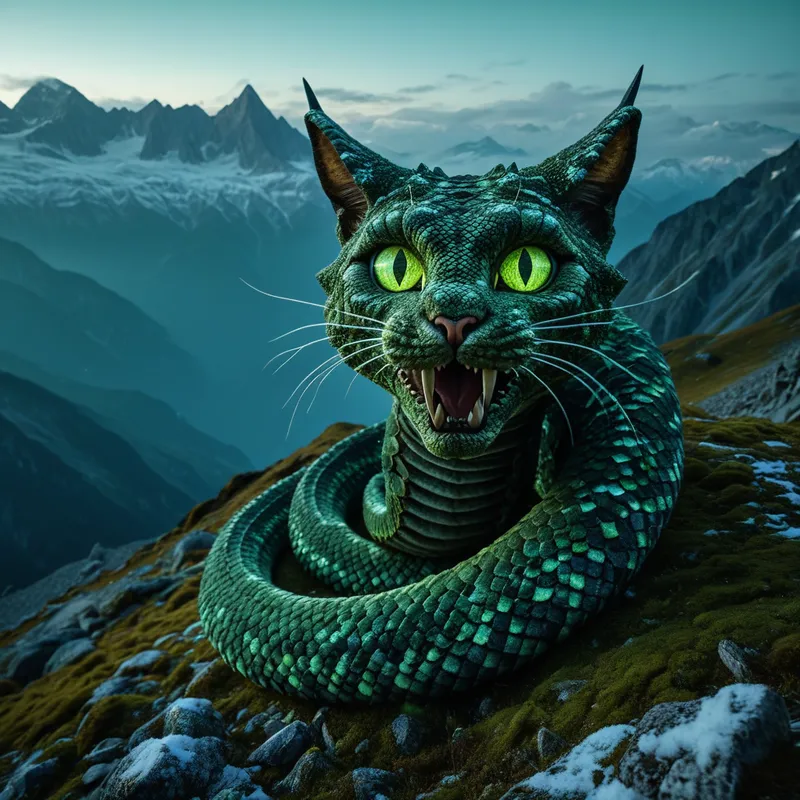
They say its body is a thick, powerful serpent, armoured in scales the colour of lichen and wet slate. But its head… its head is that of a great, feral cat, with eyes that are not of fire, but of the deepest, coldest crevice-ice, holding a light that understands nothing of sun or warmth. Some say it has but two powerful, clawed forelegs; others whisper of smaller, vestigial limbs. All agree on the breath—a hiss that is the sound of the mountain itself exhaling a poison, a miasma of pure dread.
It does not hunt in the valleys. It does not seek gold or maidens. Its domain is the lonely pass, the forgotten scree slope, [the mist](/myths/the-mist “Myth from Celtic culture.”/)-shrouded ledge where a man stands utterly alone with his own heartbeat. The encounter is never sought, only suffered.
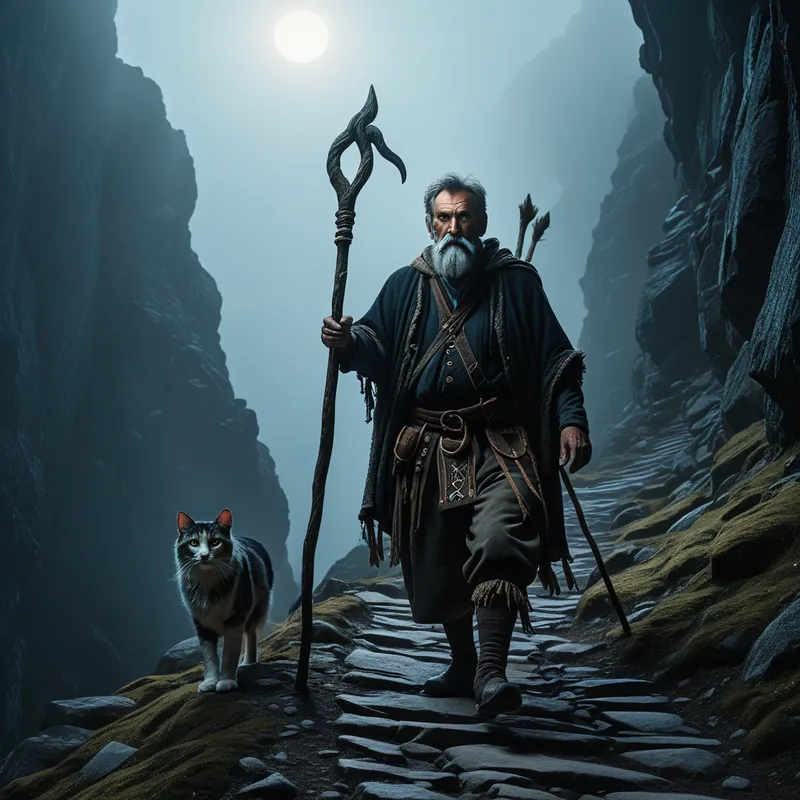
Picture him: a herdsman, perhaps, chasing a stray goat. Or a hunter, tracking a chamois further than wisdom allows. The light is failing, painting the snowfields in bruised purples. A scuttle of gravel, not from above, but from within the mountain. A shadow detaches itself from a cleft that seemed too narrow to hold a shadow. The air grows thick, cold, and carries the scent of ozone and damp earth.
There is no roaring battle. No epic clash. There is only the freeze—the absolute, marrow-deep paralysis as those feline, non-human eyes meet his. In that gaze is the entire indifference of the ancient stone, the patient hunger of the deep earth. The man’s world shrinks to the space between himself and the creature. His courage, his prayers, his thoughts of home—all are stripped away, leaving only the raw, animal core: See me. Do not see me. Let me live.
Then, it is gone. A ripple through the stones, a fading hiss on the wind. Or, in darker tellings, it is not gone, and the mountain keeps its secret forever. The survivor stumbles down, his story stumbling out in fragments, his eyes forever holding a little of that high, cold dark. The Tatzelwurm has been faced. The pact with the lonely place is sealed.
Cultural Origins & Context
The Tatzelwurm, also known as the Stollenwurm or Bartwurm, is a creature of oral tradition, born from the very geology and psychology of the Alpine world. Its stories are not found in illuminated manuscripts but in the wary conversations between farmers in a Gasthaus, in the warnings muttered by grandparents to children who wander too far.
This myth flourished in the 18th and 19th centuries, a period when Alpine exploration was increasing, yet the mountains remained profoundly dangerous and mysterious. The Tatzelwurm served a critical societal function: it was a narrative embodiment of very real perils. Its habitat—rockfalls, crevasses, sudden storms, and lethal altitude—was given a face and a form. By personifying the danger, it made the unknowable, knowable; the unmanageable, something one could, in theory, avoid or survive.
The tellers were the people of the land: herdsmen, hunters, miners, and innkeepers. Their reports, often framed as sober encounters, blurred the line between folklore and what we might now call cryptozoology. The myth was a tool for enforcing caution, for mapping psychological boundaries onto the physical landscape. “Do not go to the Blauer Stein at dusk,” was not just a superstition; it was a community-sanctioned safety protocol, wrapped in a story that resonated in the gut as much as the mind.
Symbolic Architecture
Psychologically, the Tatzelwurm is a masterful [symbol](/symbols/symbol “Symbol: A symbol can represent an idea, concept, or belief, serving as a powerful tool for communication and understanding.”/) of the [shadow](/symbols/shadow “Symbol: The ‘shadow’ embodies the unconscious, repressed aspects of the self and often represents fears or hidden emotions.”/) encountered in its most primal, territorial form. It is not a [shadow](/symbols/shadow “Symbol: The ‘shadow’ embodies the unconscious, repressed aspects of the self and often represents fears or hidden emotions.”/) of personal failing, but of existential [reality](/symbols/reality “Symbol: Reality signifies the state of existence and perception, often reflecting one’s understanding of truth and life experiences.”/). It represents the part of [nature](/symbols/nature “Symbol: Nature symbolizes growth, connectivity, and the primal forces of existence.”/)—and by extension, the nature within us—that is utterly indifferent to [human](/symbols/human “Symbol: The symbol of a human represents individuality, complexity of emotions, and social relationships.”/) [consciousness](/symbols/consciousness “Symbol: Consciousness represents the state of awareness and perception, encompassing thoughts, feelings, and experiences.”/), ambition, and self-[image](/symbols/image “Symbol: An image represents perception, memories, and the visual narratives we create in our minds.”/).
Its hybrid form is key. The cat—a [creature](/symbols/creature “Symbol: Creatures in dreams often symbolize instincts, primal urges, and the unknown aspects of the psyche.”/) of stealth, predation, and eerie silence—merges with the [serpent](/symbols/serpent “Symbol: A powerful symbol of transformation, wisdom, and primal energy, often representing hidden knowledge, healing, or temptation.”/) or [worm](/symbols/worm “Symbol: Worms in dreams can symbolize decay, transformation, and the underlying issues that inform our lives.”/)—a creature of the chthonic [underworld](/symbols/underworld “Symbol: A symbolic journey into the unconscious, representing exploration of hidden aspects of self, transformation, or confronting repressed material.”/), of the blind, instinctual drive. This [fusion](/symbols/fusion “Symbol: The merging of separate elements into a unified whole, often representing integration of self, relationships, or conflicting aspects of identity.”/) creates an entity of pure instinctual [awareness](/symbols/awareness “Symbol: Conscious perception of self, surroundings, or internal states. Often signifies awakening, insight, or heightened sensitivity.”/), a consciousness that operates without a human moral [framework](/symbols/framework “Symbol: Represents the underlying structure of one’s identity, emotions, or life. It signifies the mental or emotional scaffolding that supports or confines the self.”/). It is the embodiment of the “wild” that exists outside the pasture, the [village](/symbols/village “Symbol: Symbolizes community, connection, and a reflection of one’s roots or origins.”/), and the domesticated self.
The Tatzelwurm does not represent evil, but the amoral. It is the psychological equivalent of the avalanche: it does not hate you; it simply is, and your presence in its path is irrelevant to its nature.
The encounter itself symbolizes the shocking [moment](/symbols/moment “Symbol: The symbol of a ‘moment’ embodies the significance of transient experiences that encapsulate emotional depth or pivotal transformations in life.”/) of ego [dissolution](/symbols/dissolution “Symbol: The process of breaking down, dispersing, or losing form, often representing transformation, release, or the end of a state of being.”/). The [hero](/symbols/hero “Symbol: A hero embodies strength, courage, and the ability to overcome significant challenges.”/) (often an [everyman](/symbols/everyman “Symbol: A universal archetype representing the ordinary person, common humanity, and shared experiences across societies.”/)) is stripped of his social [identity](/symbols/identity “Symbol: Identity represents the sense of self, encompassing personal beliefs, cultural background, and social roles.”/)—the [shepherd](/symbols/shepherd “Symbol: A shepherd symbolizes guidance, protection, and the nurturing aspects of leadership, often reflecting the dreamer’s desire for direction or support.”/), [the hunter](/myths/the-hunter “Myth from African culture.”/)—and reduced to his bare essence. The [mountain](/symbols/mountain “Symbol: Mountains often symbolize challenges, aspirations, and the journey toward self-discovery and enlightenment.”/) pass becomes a liminal [space](/symbols/space “Symbol: Dreaming of ‘Space’ often symbolizes the vastness of potential, personal freedom, or feelings of isolation and exploration in one’s life.”/), a [limen](/myths/limen “Myth from Roman culture.”/), where one meets the [guardian](/symbols/guardian “Symbol: A protector figure representing safety, authority, and guidance, often embodying parental, societal, or spiritual oversight.”/) that blocks [passage](/symbols/passage “Symbol: A passage symbolizes transition, movement from one phase of life to another, or a journey towards personal growth.”/) until the price of awareness is paid. That price is the terrifying recognition of one’s own insignificance and [vulnerability](/symbols/vulnerability “Symbol: A state of emotional or physical exposure, often involving risk of harm, that reveals authentic self beneath protective layers.”/), alongside the raw, animal will to survive.

The Dreamer’s Resonance
When the Tatzelwurm slithers into modern dreams, it heralds a confrontation with a foundational, instinctual fear that has been compartmentalized or ignored. This is not about a fear of cats or snakes, but of the quality they represent: silent, patient, amoral force.
Dreaming of being pursued or frozen before the Tatzelwurm often correlates with a waking-life situation where one feels stalked by an impersonal, overwhelming pressure—a corporate takeover, a health diagnosis, a geopolitical anxiety, or a deep, formless dread about the future. The dream landscape—often a stark, lonely, mountainous, or labyrinthine space—mirrors the dreamer’s feeling of isolation in facing this “cold” problem.
Somatically, the dream may be accompanied by sensations of paralysis (sleep paralysis echoes this myth powerfully), choking, or a sudden drop in temperature. Psychologically, the process is one of confrontation without assimilation. The dream ego is not meant to befriend or slay the Tatzelwurm; it is meant to witness it, to stand in its terrifying presence and survive the gaze. This is the first, crucial step in shadow-work: seeing the [thing](/myths/thing “Myth from Norse culture.”/) you have been running from, in all its alien otherness, without immediately trying to explain it away or make it palatable.
Alchemical Translation
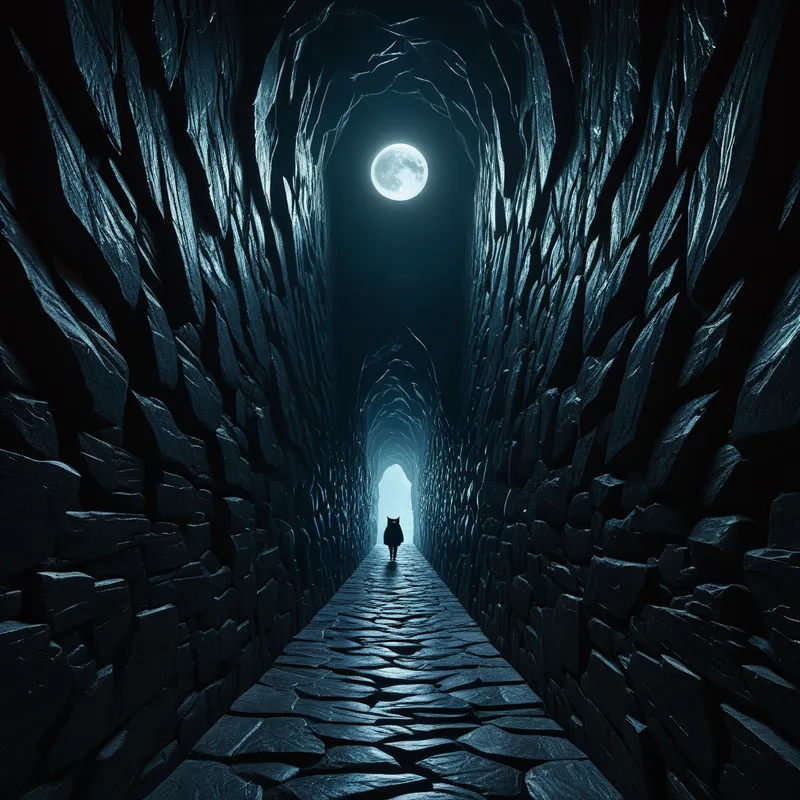
In the alchemical journey of individuation, the Tatzelwurm represents the [prima materia](/myths/prima-materia “Myth from Alchemical culture.”/) of the [psyche](/myths/psyche “Myth from Greek culture.”/) in its most raw, natural, and terrifying state—the massa confusa found not in a flask, but in the high, lonely places of the soul. The encounter is the operation of [separatio](/myths/separatio “Myth from Alchemical culture.”/) and mortificatio. [The ego](/myths/the-ego “Myth from Jungian culture.”/)‘s comfortable identity (the shepherd) is separated from its innate, instinctual ground (the mountain) and subjected to a psychic death-by-freezing.
The [triumph](/myths/triumph “Myth from Roman culture.”/) of the myth is not victory, but passage. The survivor who descends is not the same as the one who ascended. He has undergone a transmutation. The pure, paralyzing fear (saturnine lead) has been experienced and endured. In alchemical terms, the “poisonous breath” of the creature, if survived, becomes a paradoxical medicina. It kills naive innocence but gives birth to a hardened, more realistic awareness.
The alchemy of the Tatzelwurm is the transformation of raw, existential terror into grounded respect. One does not conquer the inner mountain; one learns its weather, respects its paths, and carries its sobering silence within.
For the modern individual, this models the process of facing what psychologist James Hollis calls the “swamplands of the soul”—those depressive, anxious, or barren periods where meaning evaporates and we confront the impersonal mechanics of existence and our own mortality. We are called not to futilely fight this state, nor to sentimentally “love” it, but to do the hardest thing: to stay present to its cold, cat-eyed gaze. Out of that endured confrontation comes a quieter, more resilient consciousness—one that has met [the dragon](/myths/the-dragon “Myth from Chinese culture.”/) of the heights and now knows the true weight of the valley’s warmth, and the true cost of the mountain’s view.
Associated Symbols
Explore related symbols from the CaleaDream lexicon: