Taos Pueblo Myth Meaning & Symbolism
The story of a people guided by spirit to their sacred center, where the mountain, the river, and the community become one living prayer.
The Tale of Taos Pueblo
Listen. Beneath the skin of [the world](/myths/the-world “Myth from Tarot culture.”/), there is a remembering. It begins not in light, but in the deep, moist dark of the [Sipapu](/myths/sipapu “Myth from Hopi culture.”/). The people lived there, in the belly of [the earth](/myths/the-earth “Myth from Hindu culture.”/)-mother, and though they were safe, they were not whole. A longing stirred—a whisper carried on the roots of [the world](/myths/the-world “Myth from Tarot culture.”/)-tree. It was the voice of Kawestima, the mountain who is a being, calling them upward.
Guided by the spirits of their ancestors and the wisdom of the medicine chiefs, they began the great journey. They climbed through layers of world, through caverns of echoing stone and rivers that flowed with stars. It was a time of testing. Some turned back, their hearts still tethered to the dark. Others grew weary and became the stones that now litter the high desert, silent sentinels of a path not taken.
But the core of the people pressed on, their will a single drumbeat synced to the heart of Kawestima. They emerged at last into the searing light of the Fourth World, blinking at the immensity of [the sky](/myths/the-sky “Myth from Persian culture.”/). Yet, they were not home. The land was vast, unforgiving. They wandered, a fragmented people seeking their center.
Then, the sign. From the high peaks, a bolt of pure blue lightning struck the earth. Where it touched, [water](/myths/water “Myth from Chinese culture.”/) sprang forth, not as a mere stream, but as a pool of such profound, impossible blue it seemed a piece of the sky had fallen. This was Blue Lake. And from this lake, twin rivers were born—the Rio Pueblo de Taos and its sister. The spirit of the mountain spoke: “Between my feet, where the waters part, you will build. Your walls will be of my flesh, your strength of my bones. You will be my people, and I will be your protector.”
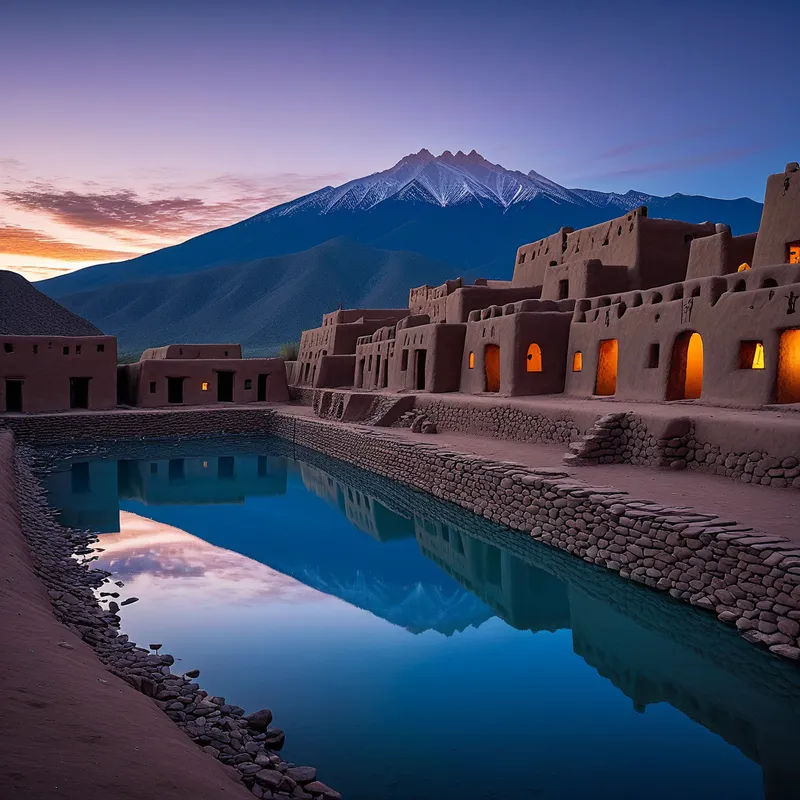
And so, with their own hands, mixing earth and water and straw—the very substance of the world—they built. Not a fortress, but a prayer. Two great houses, Hlauuma and Hlaukwima, rose like living beings from the plain. Each brick was a promise; each ladder, a connection between the worlds of earth and sky. They built their kiva in the plaza, a symbolic sipapu leading back to the heart of all beginnings. There, in [the shadow](/myths/the-shadow “Myth from Jungian culture.”/) of the mountain, cradled by the parting rivers, the wandering ceased. The people had found the place where the world was in balance. They were home.
Cultural Origins & Context
The story of Taos Pueblo’s founding is not a myth of the distant, forgotten past; it is the living breath of the community. It belongs to the Red Willow People, a part of the broader Pueblo world whose cultural roots in the Colorado Plateau stretch back millennia. This narrative is [the cornerstone](/myths/the-cornerstone “Myth from Biblical culture.”/) of Pueblo traditional knowledge.
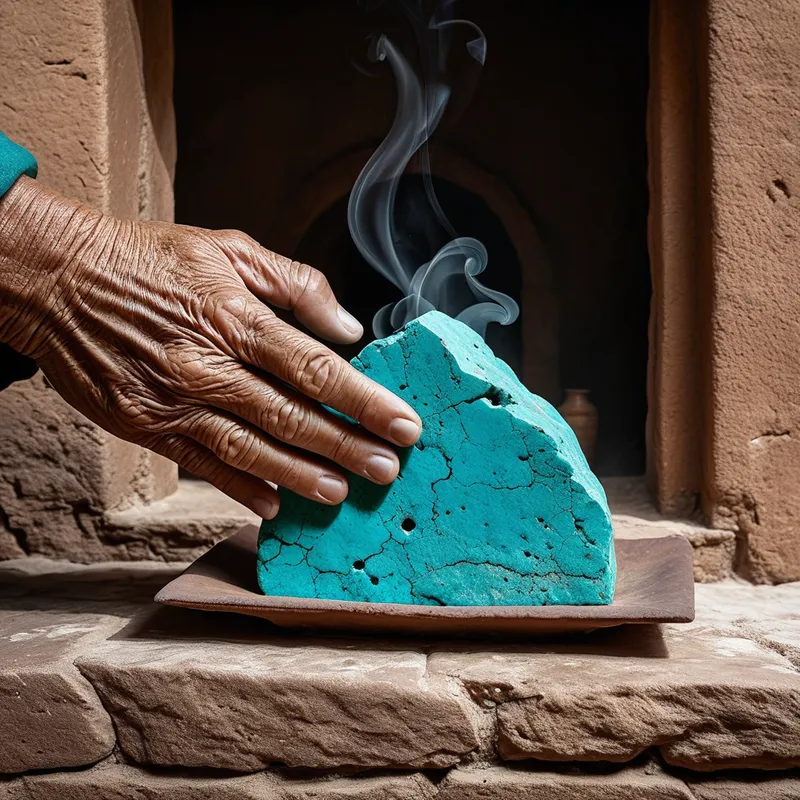
It was and is passed down not in books, but through oral tradition—in the winter stories told by elders, in the prayers of the medicine chiefs, and in the very rituals that mark the turning of the seasons. Its societal function is paramount: it is a charter of identity, a deed of spiritual ownership, and a manual for living. The myth encodes the sacred covenant between the people, their specific place (the land, the mountain, the lake), and the spiritual forces that sustain all life. It answers the fundamental questions: Who are we? Where do we belong? And what is our responsibility to this place that sustains us?
Symbolic Architecture
At its core, this is a myth of centering. The long [emergence](/symbols/emergence “Symbol: A process of coming into being, rising from obscurity, or breaking through a barrier, often representing birth, transformation, or revelation.”/) and wandering symbolize the universal [human](/symbols/human “Symbol: The symbol of a human represents individuality, complexity of emotions, and social relationships.”/) [condition](/symbols/condition “Symbol: Condition reflects the state of being, often focusing on physical, emotional, or situational aspects of life.”/) of [fragmentation](/symbols/fragmentation “Symbol: The experience of breaking apart, losing cohesion, or being separated into pieces. Often represents disintegration of self, relationships, or reality.”/), alienation, and the search for meaning. The people in the [story](/symbols/story “Symbol: The symbol of ‘Story’ represents the narrative woven through our lives, embodying experiences, lessons, and emotions that shape our identities.”/) are not yet a cohesive “people”; they are a collection of individuals and [families](/symbols/families “Symbol: Dreams featuring families represent connections, relationships, and emotional dynamics among loved ones.”/), disparate and vulnerable.
The journey to the center is not a conquest of space, but a remembering of relationship. One does not find home by arriving at a location, but by entering into a sacred dialogue with a place.
The Kawestima represents the archetypal [Axis](/symbols/axis “Symbol: A central line or principle around which things revolve, representing stability, orientation, and the fundamental structure of reality or consciousness.”/) Mundi—the immovable, eternal center around which [life](/symbols/life “Symbol: The symbol of ‘Life’ represents a journey of growth, interconnectedness, and existential meaning, encompassing both the joys and challenges that define human experience.”/) organizes itself. It is the symbolic [Father](/symbols/father “Symbol: The father figure in dreams often symbolizes authority, protection, guidance, and the quest for approval or validation.”/), [the principle](/symbols/the-principle “Symbol: A fundamental truth, law, or doctrine that serves as a foundation for a system of belief, behavior, or reasoning, often representing moral or ethical standards.”/) of stable, defining [structure](/symbols/structure “Symbol: Structure in dreams often symbolizes stability, organization, and the framework of one’s life, reflecting how one perceives their environment and personal life.”/). The Blue [Lake](/symbols/lake “Symbol: A lake often symbolizes a place of reflection, emotional depth, and the subconscious mind, representing both tranquility and potential turmoil.”/) and the rivers represent the flowing, [life](/symbols/life “Symbol: The symbol of ‘Life’ represents a journey of growth, interconnectedness, and existential meaning, encompassing both the joys and challenges that define human experience.”/)-giving, feminine principle—the [Mother](/symbols/mother “Symbol: The symbol of ‘Mother’ represents nurturing, protection, and the foundational aspect of one’s emotional being, often associated with comfort and unconditional love.”/) from whom all sustenance emerges. Taos Pueblo, built precisely at the confluence of these forces, symbolizes the integrated Self. The twin houses (Hlauuma and Hlaukwima) embody the necessary duality within wholeness—perhaps conscious and unconscious, secular and sacred, individual and [community](/symbols/community “Symbol: Community in dreams symbolizes connection, support, and the need for belonging.”/)—united in a single, living [structure](/symbols/structure “Symbol: Structure in dreams often symbolizes stability, organization, and the framework of one’s life, reflecting how one perceives their environment and personal life.”/).
The Dreamer’s Resonance
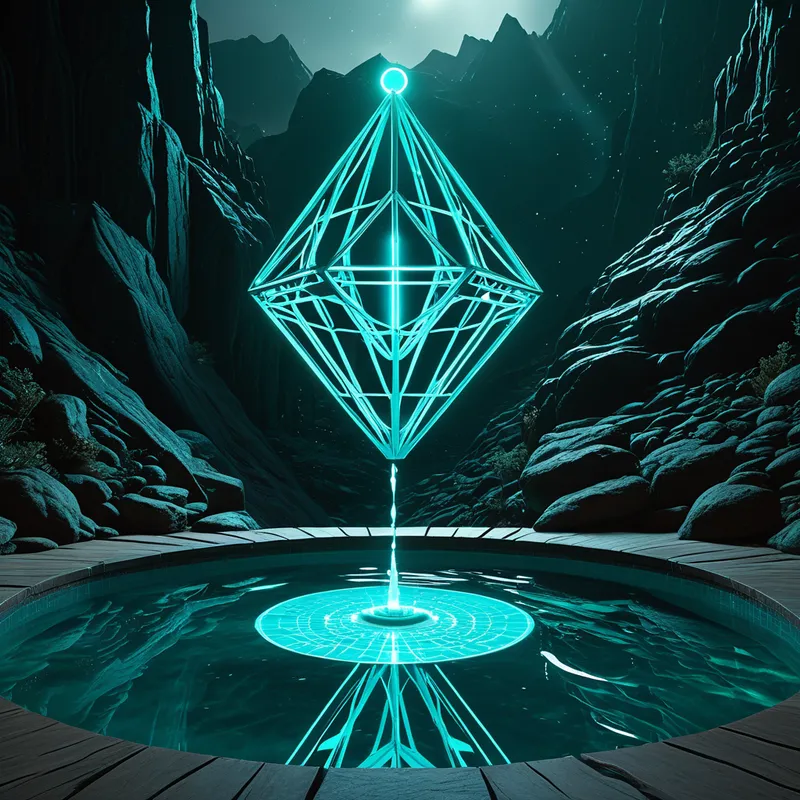
When this myth stirs in the modern [psyche](/myths/psyche “Myth from Greek culture.”/), it often manifests in dreams of searching and arrival. You may dream of wandering through a vast, featureless landscape, feeling a deep, somatic anxiety of being unmoored. You may encounter a towering, benevolent mountain or a pool of startlingly blue water—images that evoke not just beauty, but a profound sense of recognition.
These dreams signal a psychological process of orientation. The dream-ego is undergoing what the Pueblo myth narrates: the move from a state of psychic dispersal (living in the “[underworld](/myths/underworld “Myth from Greek culture.”/)” of unconscious habits, societal pressures, or inner conflict) toward integration. The longing for the mountain or the lake in the dream is the soul’s intelligence seeking its own unique “sacred center”—the internal coordinates where your personal gifts, values, and deepest responsibilities align. It is the psyche mapping itself, seeking the place where you, too, can stop wandering and begin building from a foundation of authentic belonging.
Alchemical Translation
The alchemical journey of individuation mirrors the Pueblo emergence myth precisely. We all begin in the [nigredo](/myths/nigredo “Myth from Alchemical culture.”/), the blackening, the “underworld” of undifferentiated existence—identified with family complexes, cultural norms, and the shadow. The call to climb, to emerge, is the often-painful awakening of consciousness, the first stirring of the desire for a life that is truly one’s own.
The wandering in the “Fourth World” represents the albedo, the whitening, the stage of trials, analysis, and often lonely exploration of different identities, philosophies, and paths. It is a necessary fragmentation, where parts of [the self](/myths/the-self “Myth from Jungian culture.”/) are tested and may be left behind (the “stones” of the myth). The lightning-strike revelation of Blue Lake is the citrinitas, the yellowing, the dawning of a transcendent function—a new, unifying insight that comes not from [the ego](/myths/the-ego “Myth from Jungian culture.”/), but from the Self.
The final act is not discovery, but creation. The Self is not found fully formed; it is built, brick by conscious brick, from the raw materials of one’s own experience, in the place ordained by one’s deepest truth.
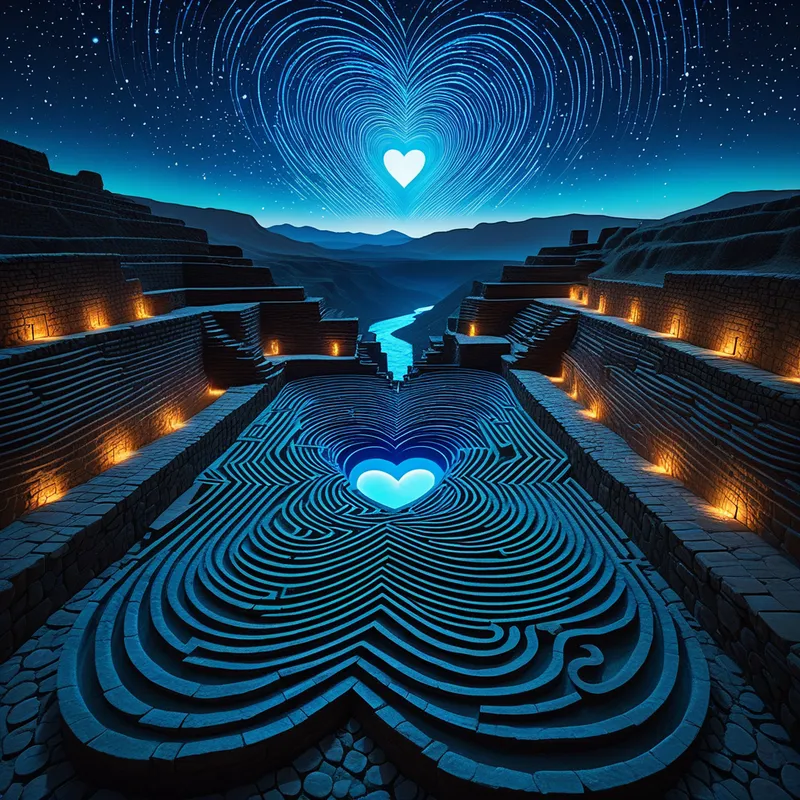
The building of the pueblo with earth and water is the [rubedo](/myths/rubedo “Myth from Alchemical culture.”/), the reddening, the culmination. It is the conscious, committed work of constructing a life-structure—habits, relationships, a vocation—that is in sacred covenant with this discovered center. The finished pueblo, enduring through time, symbolizes the achieved individuation: a Self that is both a sanctuary and a beacon, rooted in its own sacred geography, in eternal dialogue between the mountain of spirit and the flowing waters of life.
Associated Symbols
Explore related symbols from the CaleaDream lexicon: