Tabula Smaragdina Myth Meaning & Symbolism
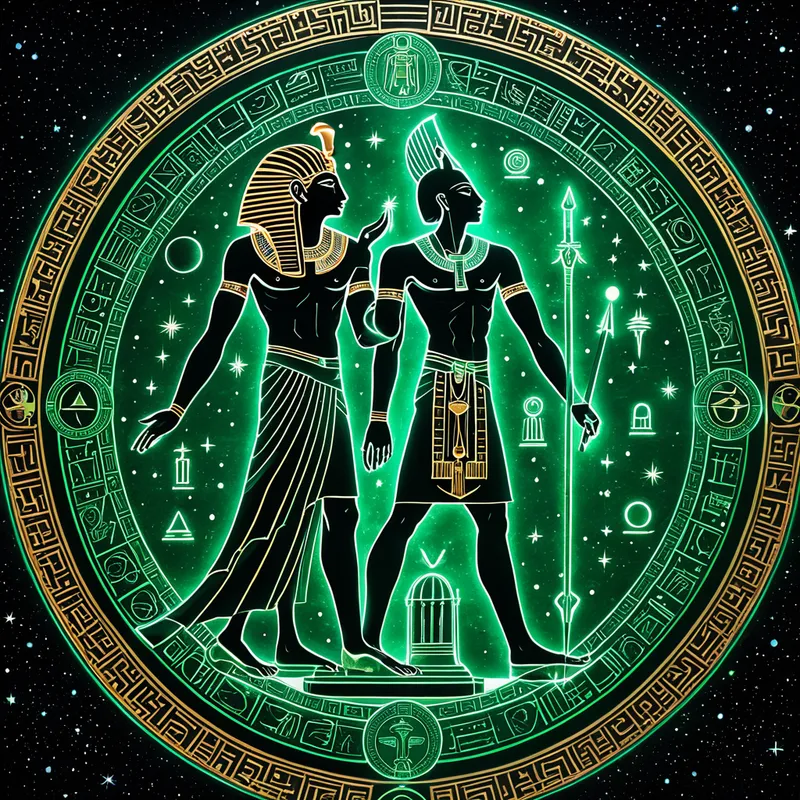
The myth of the Emerald Tablet, a divine text inscribed by Hermes Trismegistus, containing the secret formula for the transmutation of all matter and spirit.
The Tale of Tabula Smaragdina
Hear now the tale, not carved in stone, but in the heart of the cosmos itself. In the time before time, when the stars were still young in their courses, there walked—or perhaps he did not walk, but simply was—a being of threefold greatness. He was known as [Hermes Trismegistus](/myths/hermes-trismegistus “Myth from Greek culture.”/), the whisperer between worlds, the scribe of the gods, and the keeper of the keys that unlock the mysteries of above and below.
The air in his sanctuary was thick with the scent of myrrh and the silence of profound thought. It was not a room of this earth, but a chamber at the axis of reality, where the light of the sun, [the moon](/myths/the-moon “Myth from Tarot culture.”/), and the distant, cold fire of the fixed stars converged. Here, [Hermes](/myths/hermes “Myth from Global/Universal culture.”/) labored. His conflict was not with a dragon or a titan, but with the very nature of existence—the chaotic, splendid separation of spirit from matter, of the celestial from the terrestrial. He sought the thread that wove them back into a single, shimmering fabric.
One night, as the planet [Venus](/myths/venus “Myth from Alchemical culture.”/) hung like a perfect jewel in the twilight, a resonance shook the foundation of his being. It was a call from the very heart of creation. He descended, not down stairs, but through layers of meaning, into the damp, silent womb of [the earth](/myths/the-earth “Myth from Hindu culture.”/). In a cavern lit by no torch, where the walls hummed with a deep, mineral song, he found it. A vein of living stone, pulsing with a cool, green fire. It was not mere emerald; it was the crystallized sap of [the World Soul](/myths/the-world-soul “Myth from Various culture.”/).
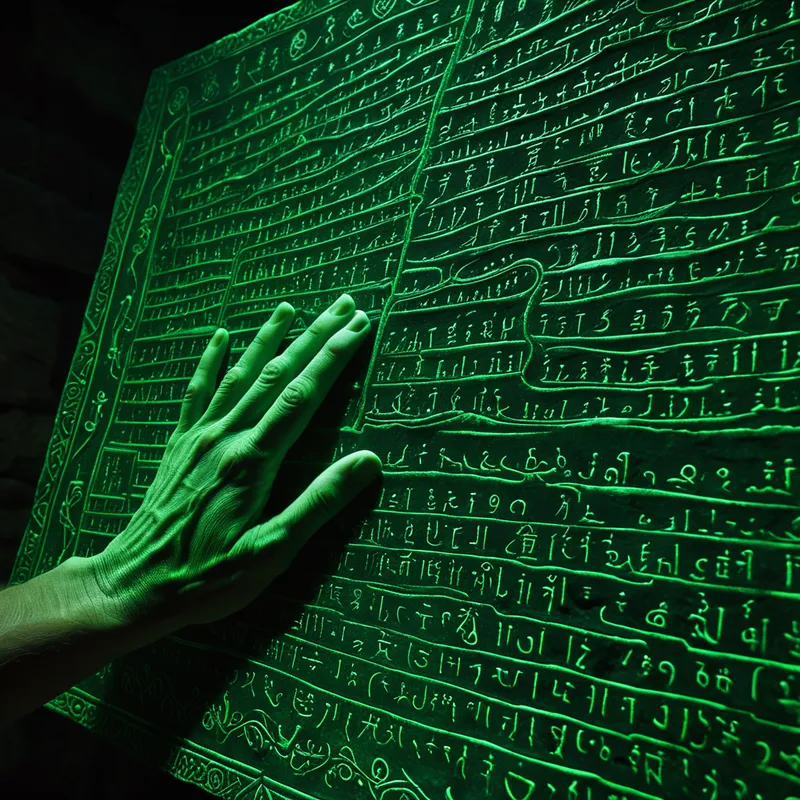
With a finger that drew its power from the same source, Hermes began to inscribe. Each glyph he carved did not cut the stone but awakened it, causing the green light to well up and fill the characters like liquid emerald. The words flowed from him—not as a language of man, but as the fundamental syntax of reality. He wrote of the sun and the moon, of [the wind](/myths/the-wind “Myth from Various culture.”/) carrying the seed, of the earth as its nurse. The conflict of separation found its resolution in thirteen succinct sentences. As the final symbol was sealed, the tablet sang—a single, pure note that vibrated through the strata of [the world](/myths/the-world “Myth from Tarot culture.”/), from the deepest hell to the highest heaven. The secret was no longer hidden in chaos; it was now manifest, waiting in its cryptic perfection for the one who could understand with more than the mind, but with the soul’s own sight.
Cultural Origins & Context
The myth of the Tabula Smaragdina first emerges into historical view wrapped in the mists of Alexandrian syncretism, around the early centuries of the Common Era. It is [the cornerstone](/myths/the-cornerstone “Myth from Biblical culture.”/) of the Hermetic corpus, a body of wisdom that sought to fuse Egyptian theological depth with Greek philosophical rigor. The story was not “published” but transmitted—a secret whispered from master to initiate in the back rooms of temples or the secluded gardens of philosophers.
Its societal function was dual. Exoterically, it was a foundational text for the proto-scientific art of alchemy, providing a mystical framework for the transformation of physical substances. Esoterically, and more importantly, it served as a spiritual roadmap. It promised that the divine order of the cosmos was not alien to humanity but was, in fact, mirrored within the human microcosm. The myth legitimized [the alchemist](/myths/the-alchemist “Myth from Various culture.”/)‘s work as a sacred, participatory act in the ongoing creation of the universe, granting a profound sense of purpose and connection in a world often experienced as fragmented and fallen.
Symbolic Architecture
The myth is a dense [constellation](/symbols/constellation “Symbol: Represents guidance, destiny, and the navigation through life, symbolizing the connections between experiences and paths.”/) of symbols. Hermes Trismegistus himself represents the unified [consciousness](/symbols/consciousness “Symbol: Consciousness represents the state of awareness and perception, encompassing thoughts, feelings, and experiences.”/), [the Self](/myths/the-self “Myth from Jungian culture.”/) that can mediate between opposites (divine/[human](/symbols/human “Symbol: The symbol of a human represents individuality, complexity of emotions, and social relationships.”/), [spirit](/symbols/spirit “Symbol: Spirit symbolizes the essence of life, vitality, and the spiritual journey of the individual.”/)/matter, known/unknown). The descent into [the cave](/myths/the-cave “Myth from Platonic culture.”/) is the [journey](/symbols/journey “Symbol: A journey in dreams typically signifies adventure, growth, or a significant life transition.”/) into the unconscious, the [prima materia](/myths/prima-materia “Myth from Alchemical culture.”/) or chaotic base of the [psyche](/myths/psyche “Myth from Greek culture.”/). [The Emerald](/myths/the-emerald “Myth from Medieval European culture.”/) [Tablet](/symbols/tablet “Symbol: A tablet symbolizes personal connectivity, information access, and the blending of work and play in the digital age.”/) is the archetypal [symbol](/symbols/symbol “Symbol: A symbol can represent an idea, concept, or belief, serving as a powerful tool for communication and understanding.”/) of the discovered Self, the eternal, immutable [pattern](/symbols/pattern “Symbol: A ‘Pattern’ in dreams often signifies the underlying structure of experiences and thoughts, representing both order and the repetitiveness of life’s situations.”/) of wholeness that exists within the core of our being.
“That which is Below corresponds to that which is Above, and that which is Above corresponds to that which is Below, to accomplish the miracles of the One Thing.”
This most famous axiom is not an instruction for magic, but a psychological law. The “Above” is the [realm](/symbols/realm “Symbol: The symbol of ‘Realm’ often signifies the boundaries of one’s consciousness, experiences, or emotional states, suggesting aspects of reality that are either explored or ignored.”/) of conscious ideals, spirit, and archetypes. The “Below” is the unconscious, the [body](/symbols/body “Symbol: The body in dreams often symbolizes the dreamer’s self-identity, personal health, and the relationship they have with their physical existence.”/), the instincts, and the [shadow](/symbols/shadow “Symbol: The ‘shadow’ embodies the unconscious, repressed aspects of the self and often represents fears or hidden emotions.”/). The “One [Thing](/myths/thing “Myth from Norse culture.”/)” is the integrated psyche, the Self. The myth teaches that healing and transformation occur only when these separated realms are brought into conscious correspondence.
The Dreamer’s Resonance
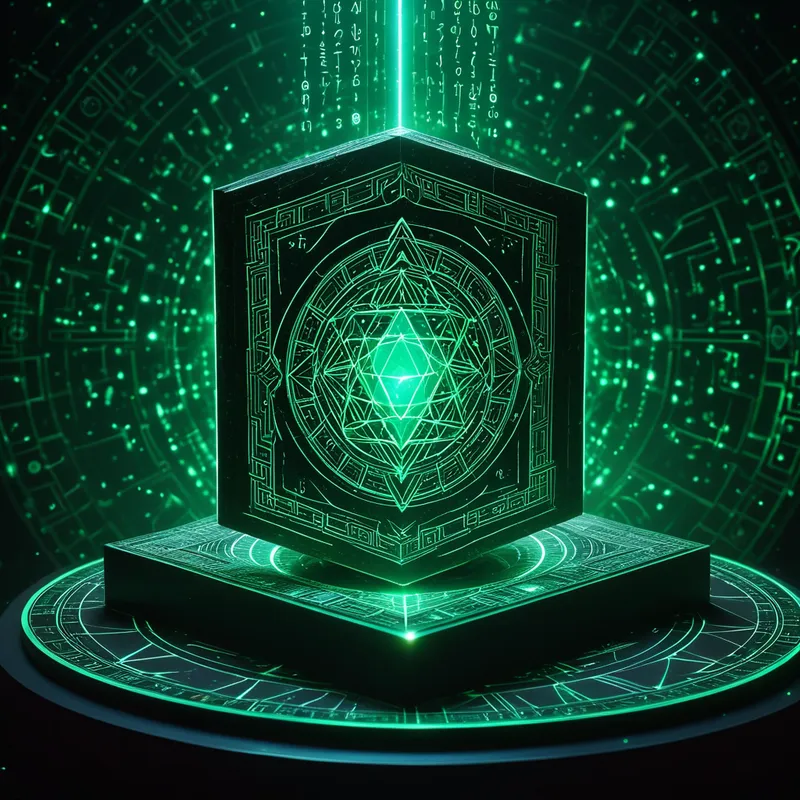
When this myth stirs in the modern dreamer, it often manifests not as a literal green tablet, but as a profound sense of discovering an inner, foundational truth. One might dream of finding a lost, iridescent crystal in the basement of a childhood home, of deciphering a glowing manual in an unknown yet perfectly understood language, or of meeting a serene, androgynous guide who presents a simple, geometric object of immense significance.
Somatically, this can accompany a process of consolidation after a period of intense inner turmoil or “psychic dissolution.” The dream marks the moment when the fragmented pieces of one’s identity—often shattered by crisis, loss, or deep introspection—begin to coalesce around a new, more authentic center. The feeling upon waking is not of excitement, but of deep, quiet certainty—a somatic anchor. The psyche is announcing that it has, at some fundamental level, “cracked the code” of its own nature and found the immutable law that governs its personal transformation.
Alchemical Translation
The myth of [the Tabula Smaragdina](/myths/the-tabula-smaragdina “Myth from Hermetic culture.”/) models the pinnacle of the individuation process. The alchemist’s laboratory is the psyche. The initial “descent” corresponds to the [nigredo](/myths/nigredo “Myth from Alchemical culture.”/)—a confrontation with [the shadow](/myths/the-shadow “Myth from Jungian culture.”/), depression, and the chaos of unprocessed material. The inscription is the albedo, where insight dawns, and patterns become clear.
The final, enduring tablet of emerald symbolizes the [rubedo](/myths/rubedo “Myth from Alchemical culture.”/)—the creation of [the philosopher’s stone](/myths/the-philosophers-stone “Myth from Alchemical culture.”/). This is not a transient peak experience, but the establishment of a permanent, resilient center of gravity within the personality.
“It ascends from the earth to the heaven and again it descends to the earth, and receives the power of the superiors and of the inferiors.”
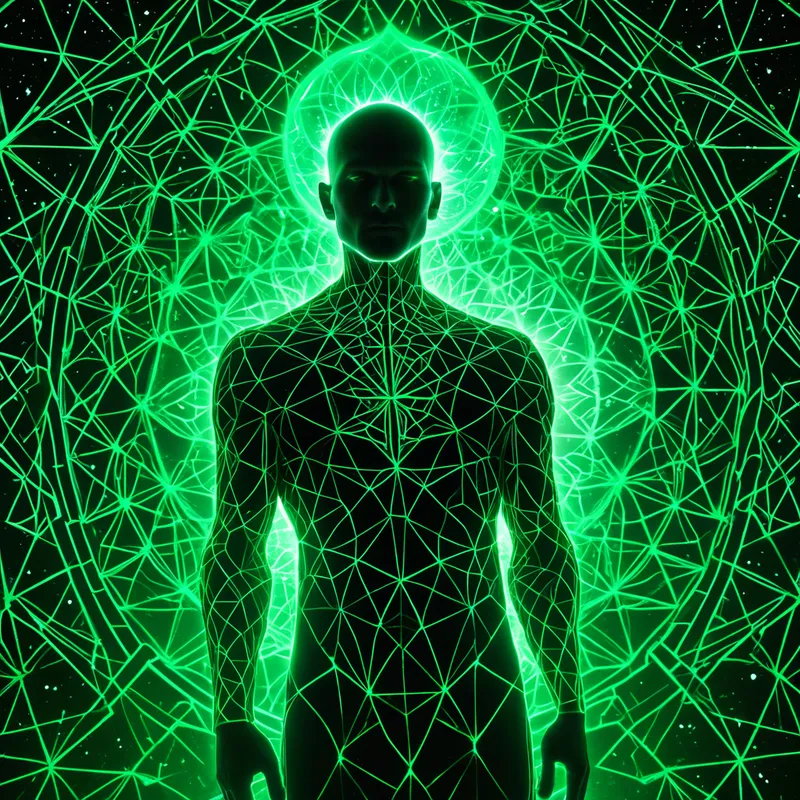
Psychologically, this describes the integrated individual. Conscious understanding (“ascends”) must be grounded in lived, embodied reality (“descends”). One receives the power of the “superiors”—the guiding power of archetypal ideals and values—and the “inferiors”—the vital, instinctual energy of the body and the unconscious. The modern individual’s [triumph](/myths/triumph “Myth from Roman culture.”/), mirrored in the myth, is to become the living tablet: a being in whom the cosmic law of correspondence is not just known, but incarnated, allowing them to act with an authenticity that transforms both their inner and outer worlds.
Associated Symbols
Explore related symbols from the CaleaDream lexicon: