
Storytelling Gourds Myth Meaning & Symbolism
A myth where a humble creature steals the sacred gourds containing all stories from the Sky People, gifting humanity the power of narrative and memory.
The Tale of Storytelling Gourds
In the time before time, when [the world](/myths/the-world “Myth from Tarot culture.”/) was young and quiet, humanity walked [the earth](/myths/the-earth “Myth from Hindu culture.”/) in silence. They had fire, they had shelter, they had the rhythm of the seasons, but their nights were long and hollow. They had no past to remember, no future to imagine, no way to bind their hearts together across the firelight. All the stories—the tales of how [the world](/myths/the-world “Myth from Tarot culture.”/) was woven, the adventures of the first animals, the secrets of the stars—were kept locked away. They were held by the Sky People, who hoarded them like precious jewels in a heavenly vault.
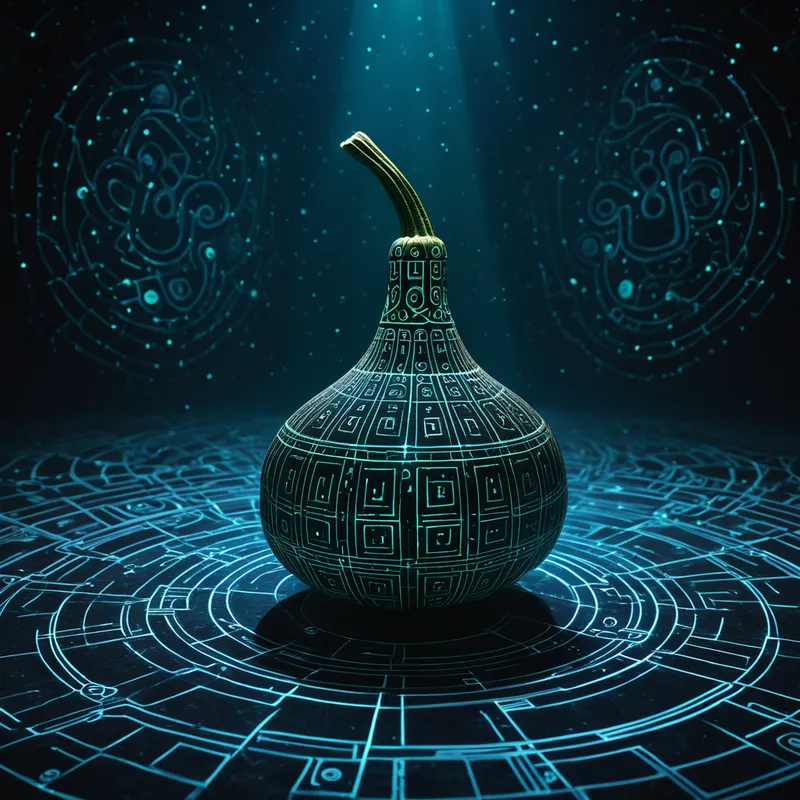
The stories were not written on bark or stone. They were kept alive, breathing and shimmering, inside a cluster of sacred gourds. These were no ordinary vessels; they were living things, their surfaces etched with the light of constellations, their interiors humming with the voices of ancestors and the cries of eagles. [The Sky](/myths/the-sky “Myth from Persian culture.”/) People would sometimes take them out, and the air would fill with the sound of creation, a symphony too beautiful for mortal ears. But they always took them back, leaving the people below in a profound and aching silence.
This silence was a weight on the chest of the world. It was a hunger that no food could satisfy. Among the people, a small, keen-eyed creature felt this hunger most acutely. It was [Spider](/myths/spider “Myth from Native American culture.”/), or perhaps in another telling, Mouse. This one was not the largest or strongest, but it listened. It heard the people’s sighs in the evening. It saw how their children’s eyes held no spark of wonder. And it looked up, past the canopy, past the clouds, to where the faint, glorious echoes of story-song drifted down on rare nights.
A resolve, small but unbreakable, took root. The creature knew the path was impossible—a climb to the sky, a theft from the gods. But the silence was a greater impossibility. So, it began. It spun a thread of intention, of pure need, and started to climb. The journey was a trial of spirit. The air grew thin, the clouds cold and wet. Doubts whispered like wind. But the memory of the people’s hollow eyes was a fire in its heart.
Finally, it breached the realm of the Sky People. There, in a lodge of woven light, the gourds hung, pulsing gently. The Sky People were elsewhere, their distant laughter like thunder. The creature moved with the silence of a shadow, its small paws careful and sure. One by one, it took the gourds. They were heavy, not with weight, but with meaning. As it gathered the last one, a voice like cracking ice echoed through the lodge—it had been discovered.
There was no fight, for the creature was no warrior. There was only the desperate, plummeting flight back to earth. It clutched the gourds to its chest, tumbling through clouds, the cries of the Sky People sharp in its ears. It fell not as a conqueror, but as a seed, landing softly in the very center of the human village with a sound like a heartbeat.
The people gathered, awestruck. The creature, bruised and breathless, placed the gourds before them. Then, with the last of its strength, it tapped the largest gourd. The seal broke.
Out poured not [water](/myths/water “Myth from Chinese culture.”/), but sound. Out poured not seeds, but images. The story of the First Sunrise flooded the clearing in color and warmth. The tale of how Coyote stole fire painted the air with dancing flames. Legends of love, loss, foolishness, and bravery wove through the crowd, entering their ears, their minds, their very bones. The silence shattered, replaced by a roaring, joyful river of narrative. The people wept and laughed, for they remembered. They remembered who they were. They remembered they were connected.
The creature watched, its task complete, and faded into the forest edge, becoming itself a part of the new, endless story.
Cultural Origins & Context
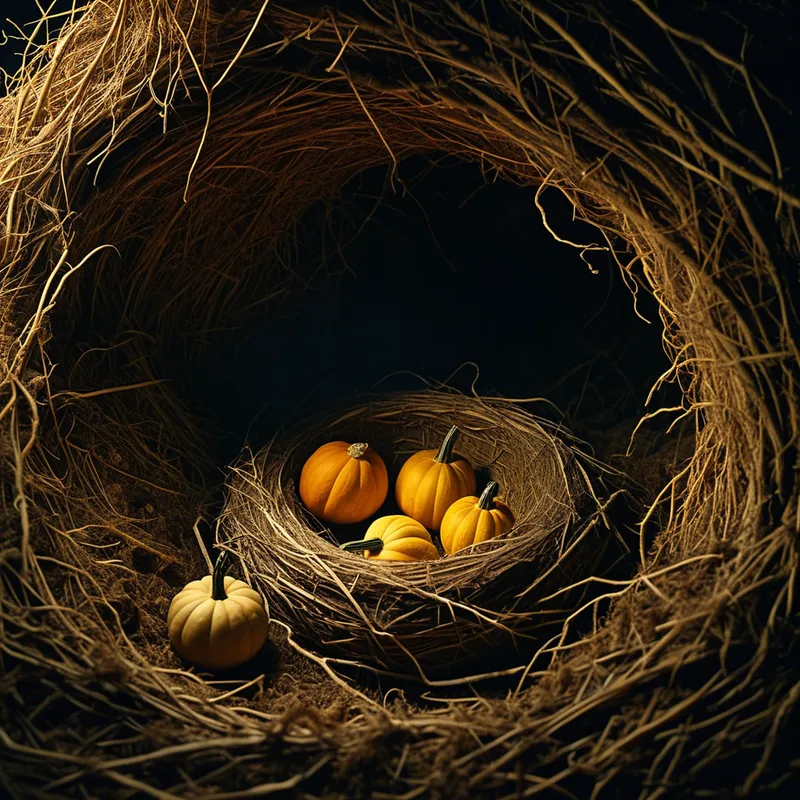
The motif of a culture hero stealing elements of civilization from powerful, often withholding beings is a profound archetype found across many Indigenous Nations of the Americas, from the Southwest to the [Great Plains](/myths/great-plains “Myth from Native American culture.”/) and the Eastern Woodlands. While the specific image of “Storytelling Gourds” is most closely associated with traditions of the Pueblo peoples and some Plains tribes, the core narrative—the securing of narrative itself as a sacred technology for the people—is a near-universal theme.
These stories were not mere entertainment; they were the living library, the constitutional document, and the spiritual manual of the people. Told by elders and storykeepers during long winter nights or around communal fires, the myth served a vital societal function. It explained the origin of the people’s most powerful tool: shared meaning. It taught that story is a sacred trust, hard-won and communal property. It also often carried an ethical warning about the responsibility that comes with such a gift—stories must be cared for and used to bind, not to divide.
Symbolic Architecture
At its [heart](/symbols/heart “Symbol: The heart symbolizes love, emotion, and the core of one’s existence, representing deep connections with others and self.”/), this myth is about the conscious acquisition of [soul](/symbols/soul “Symbol: The soul represents the essence of a person, encompassing their spirit, identity, and connection to the universe.”/). The silent, pre-narrative [human](/symbols/human “Symbol: The symbol of a human represents individuality, complexity of emotions, and social relationships.”/) [condition](/symbols/condition “Symbol: Condition reflects the state of being, often focusing on physical, emotional, or situational aspects of life.”/) represents a state of unconsciousness. We have [life](/symbols/life “Symbol: The symbol of ‘Life’ represents a journey of growth, interconnectedness, and existential meaning, encompassing both the joys and challenges that define human experience.”/), but no context for it. We have experience, but no means to process, share, or transcend it.
The gourd is the perfect symbol for this: a natural, hollow vessel, it represents the human mind and heart—waiting to be filled. But not with water or grain. With logos. With meaning.
The Sky People symbolize a higher order of [consciousness](/symbols/consciousness “Symbol: Consciousness represents the state of awareness and perception, encompassing thoughts, feelings, and experiences.”/), or the [collective unconscious](/symbols/collective-unconscious “Symbol: The Collective Unconscious refers to the part of the unconscious mind shared among beings of the same species, embodying universal experiences and archetypes.”/) itself, where archetypal patterns and primordial [stories](/symbols/stories “Symbol: Stories symbolize the narratives of our lives, reflecting personal experiences and collective culture.”/) reside eternally. They are not evil, but they are complacent, content to keep the patterns to themselves. The hoarding of stories represents a natural state of psychological potential that is not yet integrated into lived, human experience.
The small animal [hero](/symbols/hero “Symbol: A hero embodies strength, courage, and the ability to overcome significant challenges.”/)—[Spider](/symbols/spider “Symbol: Represents creativity, feminine energy, and the weaving of destiny, as well as potential feelings of entrapment or anxiety.”/) or [Mouse](/symbols/mouse “Symbol: Mice often symbolize small anxieties or fears that may feel disproportionate to the situation at hand. They can also represent cleverness and adaptability.”/)—is the quintessential culture [hero](/symbols/hero “Symbol: A hero embodies strength, courage, and the ability to overcome significant challenges.”/) and rebel [archetype](/symbols/archetype “Symbol: A universal, primordial pattern or prototype in the collective unconscious that shapes human experience, behavior, and creative expression.”/). It is the instinct of consciousness itself, the nagging, persistent, clever part of the [psyche](/myths/psyche “Myth from Greek culture.”/) that feels the [poverty](/symbols/poverty “Symbol: A state of lacking material resources or essential needs, often symbolizing feelings of inadequacy, vulnerability, or spiritual emptiness in dreams.”/) of unconscious existence and dares to reach for more. Its size signifies that the courage to seek meaning is not a matter of brute [strength](/symbols/strength “Symbol: ‘Strength’ symbolizes resilience, courage, and the ability to overcome challenges.”/), but of sensitivity, cunning, and unwavering intent. The [ascent](/symbols/ascent “Symbol: Symbolizes upward movement, progress, spiritual elevation, or striving toward higher goals, often representing personal growth or transcendence.”/) is the arduous inner [journey](/symbols/journey “Symbol: A journey in dreams typically signifies adventure, growth, or a significant life transition.”/) toward [awareness](/symbols/awareness “Symbol: Conscious perception of self, surroundings, or internal states. Often signifies awakening, insight, or heightened sensitivity.”/), and [the fall](/myths/the-fall “Myth from Biblical culture.”/) is the necessary, often traumatic, [integration](/symbols/integration “Symbol: The process of unifying disparate parts of the self or experience into a cohesive whole, often representing psychological wholeness or resolution of internal conflict.”/) of that [awareness](/symbols/awareness “Symbol: Conscious perception of self, surroundings, or internal states. Often signifies awakening, insight, or heightened sensitivity.”/) into the fabric of [the self](/myths/the-self “Myth from Jungian culture.”/) and the [community](/symbols/community “Symbol: Community in dreams symbolizes connection, support, and the need for belonging.”/).
The Dreamer’s Resonance
When this myth stirs in the modern dreamer, it often signals a profound psychological process: the urgent need to reclaim one’s own narrative from internal or external “Sky People.”
Dreaming of searching for or finding a sealed vessel (a gourd, a box, a jar) that contains light, sound, or moving images suggests a deep, somatic intuition that a vital part of one’s story is locked away. This could be repressed memory, unexpressed creativity, or a personal truth silenced by family or societal expectations (the hoarding gods). The dreamer may feel the “silence” as depression, anxiety, or a sense of inauthenticity.
Dreaming of being the small creature on a desperate, vertical climb reflects the active, often lonely, work of therapy, journaling, or artistic expression—the struggle to reach a place of understanding within oneself. The fear of pursuit is the resistance of the psyche, the old patterns that do not wish to be disrupted. To finally open the gourd in a dream and be flooded with emotion or revelation is a moment of profound psychic release, where buried history becomes integrated memory, and the individual gains access to their own full, complex story.

Alchemical Translation
The myth of the Storytelling Gourds is a perfect map for the alchemical process of individuation. It models the transmutation of raw, unconscious content (the archetypal stories in the sky) into the gold of conscious, lived identity (the shared stories of the people).
The starting materia prima is the “silent village”—[the ego](/myths/the-ego “Myth from Jungian culture.”/) living a one-dimensional, unexamined life. The [nigredo](/myths/nigredo “Myth from Alchemical culture.”/), or blackening, is the painful awareness of this emptiness, the “hunger” for meaning. The small creature’s resolve is the first stirring of the Self.
The theft is the critical act of separatio and stealing of the fire—the daring act of differentiating oneself from the collective unconscious or from familial/cultural mandates. It is saying, “My story is my own to discover and tell.”
The perilous journey and fall represent the mortificatio—the death of the old, silent self as it is overwhelmed by the influx of new, often disruptive, self-knowledge. This is a necessary dissolution. Finally, the opening of the gourds in the community is the coniunctio—[the sacred marriage](/myths/the-sacred-marriage “Myth from Various culture.”/). Here, the newly acquired personal myth is not kept selfishly, but offered back to the community of one’s internal parts (and potentially to the outer world). The personal insight becomes a connective force, weaving the individual into a larger, more meaningful tapestry.
The myth teaches that our wholeness depends not just on having a story, but on sharing it, thereby transforming personal memory into collective meaning, and completing the sacred circuit of consciousness.
Associated Symbols
Explore related symbols from the CaleaDream lexicon: