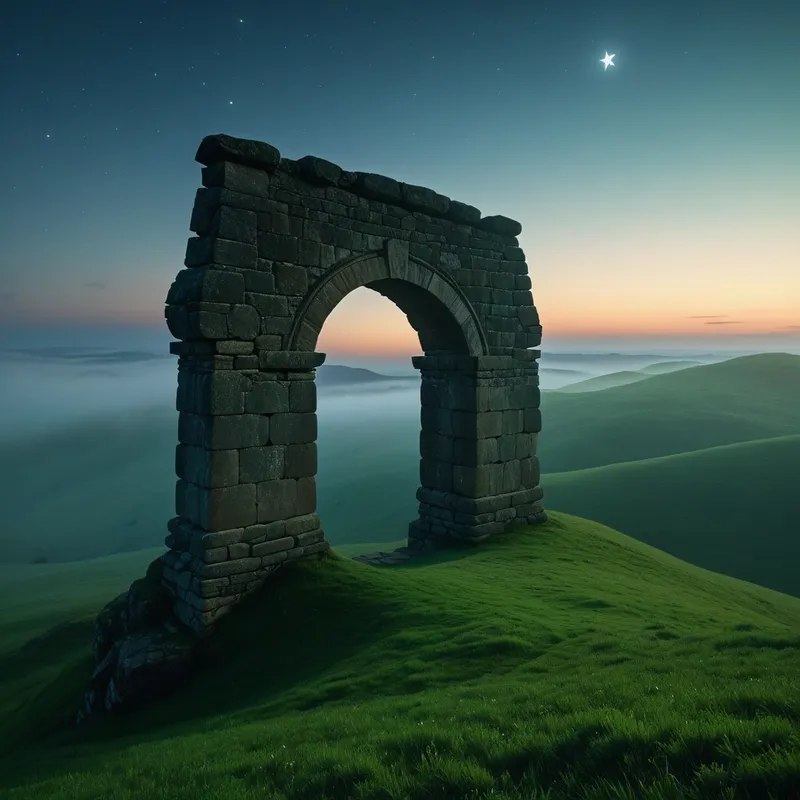
Stone Arches Myth Meaning & Symbolism
A tale of a god's sacrifice to build the first arch, forging a bridge between the mortal world and the Otherworld, creating a threshold of power.
The Tale of Stone Arches
Listen, and let the mist of the ages gather. Before the first fortress of man, before the first ring of stones was raised to the sky, the worlds were divided. The Middle Realm was a place of solid earth and fleeting life, while the Otherworld shimmered just beyond sight, a land of eternal feasts and unaging beauty, accessible only through hidden mounds and secret lakes. Between them lay a veil, thin as a sigh but strong as destiny, and the people of the clay knew only longing.
In that time, there was a god of the Tuatha Dé Danann named Cúanand. He was not a god of war or thunder, but of foundation and form. He understood the weight of stone and the song of the river’s course. He watched the people struggle, their spirits tethered to the heavy earth, their poets singing of a beauty they could never touch. A great sorrow settled in his chest, a weight heavier than any mountain. He saw that the separation was a wound in the cosmos itself.
Driven by this sorrow, Cúanand went to the oldest place, a high moor where the wind carried whispers from both sides of the veil. He called upon the bones of the earth, and the great stones answered, rising from the turf. But they were stubborn, proud. They would stand as pillars, or lie as lintels, but they would not bend. They knew only the straight line, the crushing downward force. To bridge the worlds required a new principle—a yielding strength, a curve that defied their very nature.
For seven days and seven nights, Cúanand labored, his divine strength straining against the immutable will of granite and basalt. The stones mocked him with their immobility. In despair, he cried out, not in rage, but in a profound offering of his own essence. “What will not bend, must be supported. What cannot be forced, must be surrendered to.”
And in that moment of ultimate concession, he saw the truth. The arch required a sacrifice, a central piece that bore the terrible, convergent weight of all others, so that the whole might stand empty and open. There was no stone for this task. So, Cúanand, the Enduring One, placed his own heart—the core of his power, his immortal vitality—into the space between the rising stones. He shaped it with his will into the final, locking wedge.
A silent flash, brighter than lightning but without sound, illuminated the moor. Where his heart had been, a keystone of radiant, warm stone now sat, holding the mighty curve in perfect, tense balance. The arch stood. Through its opening, the air shimmered. The scent of the Land of the Ever Young drifted through—apple blossom and honey. The lament of the people turned to a gasp of awe. Cúanand, diminished but serene, had not built a door, but a threshold. A place of neither here nor there, where choices are made, and worlds meet.
Cultural Origins & Context
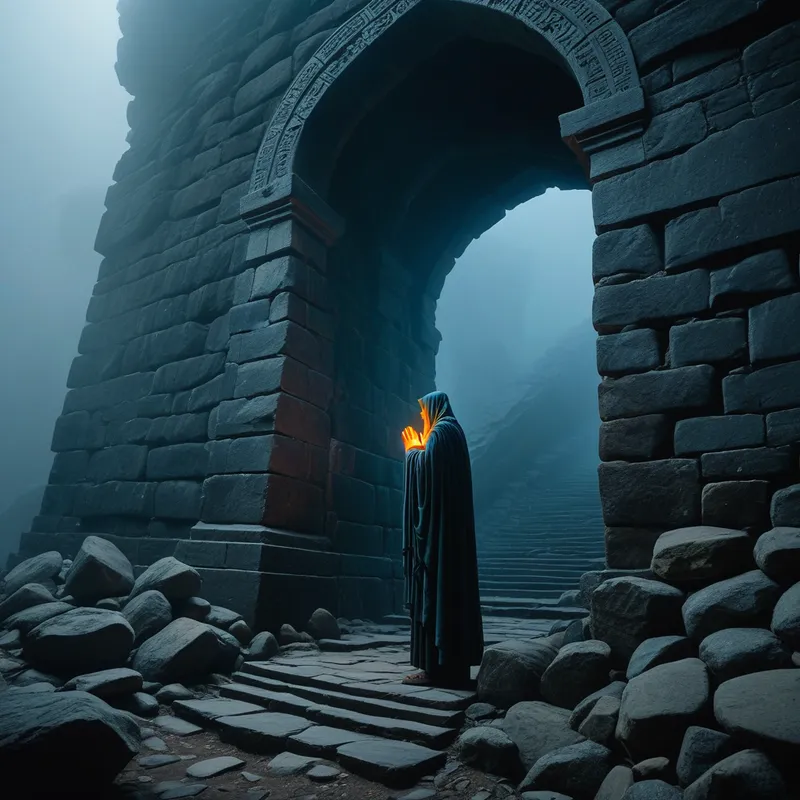
The myth of the Stone Arches, as a specific narrative, is not recorded in a single surviving text like the Lebor Gabála Érenn or the Ulster Cycle. It is, rather, a mythic pattern inferred from the profound Celtic relationship with liminality and sacred stone. The Celts did not merely use landscape; they conversed with it. Natural arches, sea stacks, and especially the massive trilithons of sites like Stonehenge (which they inherited and reinterpreted) were seen not as human constructions, but as fírinn—truths made manifest in stone, often wrought by ancestral or otherworldly hands.
This story would have lived in the oral tradition, likely told by fili or druí during ceremonies at such sacred sites. Its function was multifaceted: to explain the numinous power felt at these arches, to encode the spiritual principle of sacred sacrifice (a core tenet seen in myths like the sacrificial kingship of Nuada), and to map the cosmological architecture. It taught that connection between realms is not free; it is purchased with a piece of one’s own sovereignty, and maintained by perfect, dynamic balance.
Symbolic Architecture
The Stone Arch is the ultimate symbol of the liminal. It is not the destination, but the transformative passage itself.
The arch is a wound in the wall of reality, stitched closed with a suture of sacrifice. It teaches that true strength is not in the solid wall, but in the sacred, held-open space.
Cúanand represents the archetypal genius loci who moves from a state of detached observation to one of compassionate, embodied action. His sorrow is the awakening of the divine to the human condition. The stubborn stones symbolize the raw, unrefined forces of nature and the psyche—unyielding, linear, and trapped in their own logic. The revolutionary act is not to break them, but to persuade them into a new relationship through a third, reconciling element.
The keystone, forged from the god’s own heart, is the central symbol. It is the self offered up. In psychological terms, it is the conscious ego that voluntarily takes on the immense pressure of opposing forces—conscious and unconscious, personal and collective, mortal and eternal—so that a channel between them can exist. Without this central, sacrificial piece, the structure collapses into two separate, useless pillars. With it, the impossible span is achieved.
The Dreamer’s Resonance
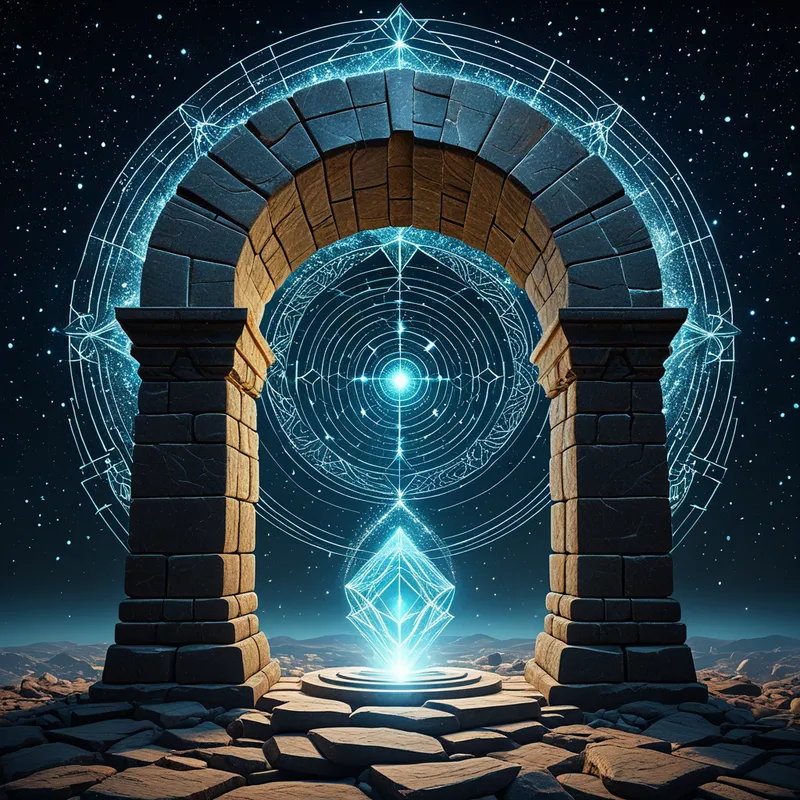
When the Stone Arch appears in a modern dream, it signals a profound moment of psychic threshold-crossing. The dreamer is not dreaming of a bridge, which implies a simple crossing over. They are dreaming of an archway, which implies a choice to enter a new state of being, with the potential to return transformed.
Somatically, one might feel a palpable tension in the chest or solar plexus—the body registering the pressure of the “keystone” moment. Psychologically, this dream emerges during life transitions: career changes, spiritual awakenings, the integration of a major shadow aspect, or the recovery from a crisis that has fundamentally reshaped identity. The arch stands at the border between the known, solid “self” and the mysterious, alluring, or frightening possibilities of the “other” within.
Hesitation at the threshold is common. The dream asks: What part of your old heart, your old certainties, are you willing to sacrifice and transmute into the central, stabilizing force for a new psychic structure? The empty space within the arch is the invitation into the individuation process, where one must pass through one’s own center to become whole.
Alchemical Translation
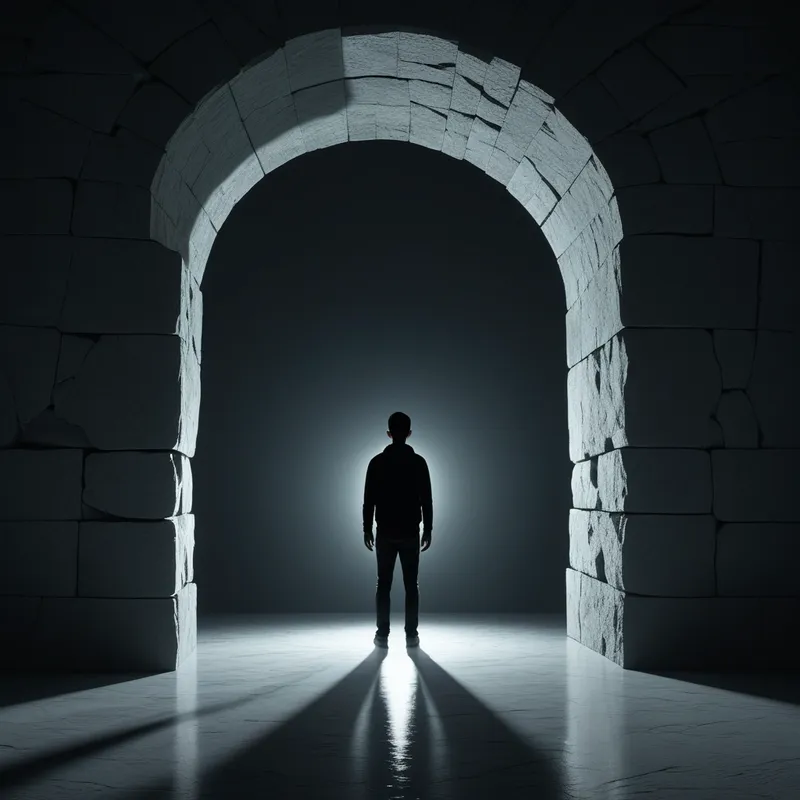
The myth of the Stone Arches is a perfect allegory for the alchemical opus, the work of turning leaden consciousness into golden wholeness. The process follows the classic stages: Nigredo, Albedo, Citrinitas, Rubedo.
The Nigredo, or blackening, is Cúanand’s initial sorrow and despair—the confrontation with the impossible problem, the insoluble conflict between the rigid “stones” of our psyche. The Albedo, or whitening, is the moment of insight and surrender: “What cannot be forced, must be surrendered to.” This is the washing clean of the old, forceful will.
The alchemical fire is not in the blaze of effort, but in the slow, radiant heat of the heart-stone holding the tension of opposites. The true gold is the open passageway itself, not the walls that frame it.
The Citrinitas, or yellowing, is the shaping of the heart into the keystone—the conscious, willed act of self-sacrifice, where a part of the ego’s dominion is given up to serve a greater structure. Finally, the Rubedo, or reddening, is the completed arch, thrumming with life and connection, the god’s sacrifice having transmuted into a permanent, stable conduit for spirit.
For the modern individual, this translates to the hard, sacred work of building a resilient psyche. We are called to identify the rigid, opposing “stones” in our lives—perhaps duty versus desire, tradition versus innovation, or logic versus intuition. We cannot destroy one in favor of the other. Instead, we must find or forge the “keystone”—a third, transcendent value or understanding, often born of a painful concession or heartfelt sacrifice—that allows these opposites to not only coexist but to create a stable, open space for our spirit to pass through. We do not become the wall. We become the sacred, enduring arch.
Associated Symbols
Explore related symbols from the CaleaDream lexicon: