
Sisyphus Myth Meaning & Symbolism
A cunning king defies the gods and is condemned to eternally push a boulder uphill, only to watch it roll down again.
The Tale of Sisyphus
Hear now the tale of the cleverest of mortals, a tale spun on the loom of fate with threads of cunning and pride. In the land of Corinth, where two seas whisper, there ruled a king named Sisyphus. His mind was a [labyrinth](/myths/labyrinth “Myth from Various culture.”/), his wit a sharpened blade. He saw the ways of men and gods and thought he could outmaneuver both.
He lived in an age when [Hades](/myths/hades “Myth from Greek culture.”/) still walked the dusty roads in shadow, and Death was not an abstraction but a presence. Sisyphus, in his supreme cleverness, witnessed a great crime: the abduction of a nymph by [the river](/myths/the-river “Myth from Buddhist culture.”/) god Asopus. He did not act out of virtue, but for a price. He traded the secret to Asopus for a clear, eternal spring to grace his citadel. In doing so, he betrayed Zeus himself.
The thunderer’s wrath was a slow, cold [thing](/myths/thing “Myth from Norse culture.”/). He sent his brother, Hades, to chain the impudent king and drag him to the sunless realm of the dead. Hades arrived, the chill of the grave preceding him, his adamantine shackles ready. But Sisyphus smiled. He feigned curiosity, asking Hades to demonstrate how the magnificent chains worked. The lord of [the underworld](/myths/the-underworld “Myth from Greek culture.”/), perhaps flattered or merely unaccustomed to such mortal boldness, complied. In that moment, Sisyphus snapped the shackles on Hades himself, trapping the god of death in his own palace.
A great silence fell upon [the world](/myths/the-world “Myth from Tarot culture.”/). No one died. Wars raged without end, the wounded writhed in unending agony, and the natural order crumbled. The gods were confounded. Finally, the great Ares, furious at the disruption of his bloody art, stormed the dungeons of Corinth, freed Hades, and seized Sisyphus.
Yet, even as he was dragged toward the [River Styx](/myths/river-styx “Myth from Greek culture.”/), the king’s mind whirred. He whispered to his wife, Merope, a final, cunning command: “Do not perform the funeral rites for me. Leave my body unhonored.”
In the [underworld](/myths/underworld “Myth from Greek culture.”/), standing before the throne of Hades and his queen [Persephone](/myths/persephone “Myth from Greek culture.”/), Sisyphus wore a mask of outrage. “My wife dishonors me!” he cried. “She leaves my body to rot, denying me the coins for Charon. This is an insult to the sacred laws of death itself. Grant me but three days to return to the world of light and chastise her, and I will return.”
The rulers of the dead, bound by their own strict codes, acquiesced. Sisyphus walked back into the sunlight, breathed the air of Corinth, and laughed. He had cheated death twice. He feasted, he ruled, he lived. He did not return.
His third defiance was his last. When the furious gods finally retrieved him, their punishment was not one of fire or ice, but of essence. They took his defining trait—his cunning, his relentless striving—and turned it inward upon itself for all eternity.
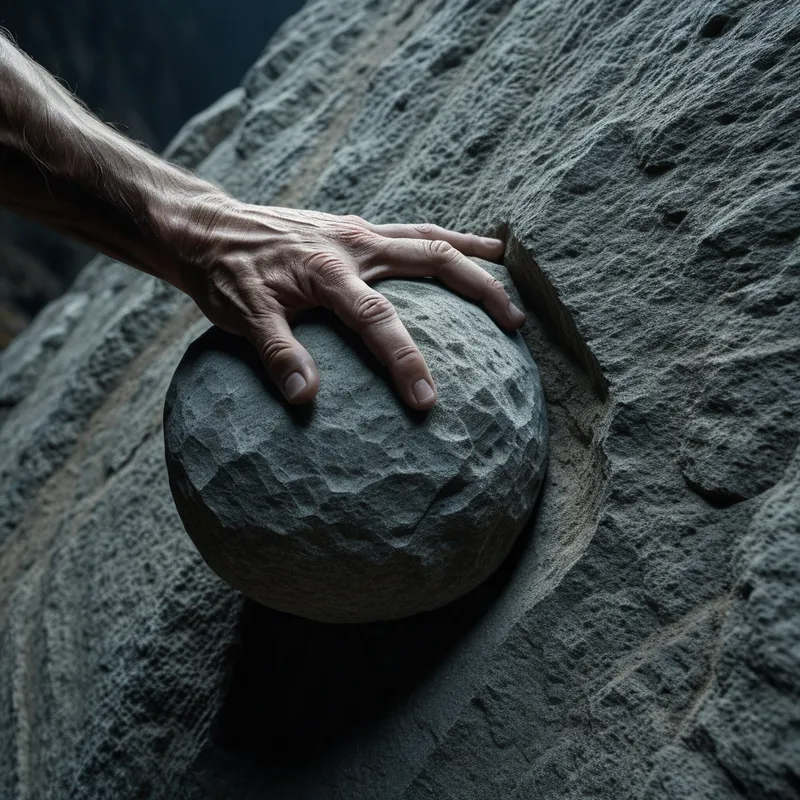
In a barren valley of [Tartarus](/myths/tartarus “Myth from Greek culture.”/), they set a massive, uncut boulder at the base of a steep, smooth hill. His task was simple: push the stone to [the summit](/myths/the-summit “Myth from Taoist culture.”/). Sisyphus set his shoulder to the rock, his muscles straining, his breath coming in gasps. For hours, for days, he labored, inching the immense weight upward. Sweat carved rivers in the dust on his skin. Just as the crest drew near, as his fingertips felt the promise of the peak, the stone’s balance would shift. A tremor would run through it. And with a slow, grinding finality, it would roll away from him, crashing back down to the plain below, leaving him in a cloud of settling dust.
There was no reprieve. No alternative. The [Moirai](/myths/moirai “Myth from Greek culture.”/) had woven this as his final thread. He would descend the slope, place his hands once more on the sun-warmed stone, and begin again. Forever.
Cultural Origins & Context
[The myth of Sisyphus](/myths/the-myth-of-sisyphus “Myth from Modern culture.”/) is a foundational story from the rich oral tradition of ancient Greece, most famously preserved in the epic poetry of [Homer](/myths/homer “Myth from Greek culture.”/)’s Iliad and later elaborated by poets like Pindar and the tragedians. It belongs to a class of myths concerning “trickster” figures who challenge divine order, such as [Prometheus](/myths/prometheus “Myth from Greek culture.”/) or [Odysseus](/myths/odysseus “Myth from Greek culture.”/). Unlike heroes celebrated for physical strength, Sisyphus was renowned for [metis](/myths/metis “Myth from Greek culture.”/)—cunning intelligence. This was a double-edged sword in Greek culture: admired as a survival tool but deeply suspect as a challenge to hubris (excessive pride) and the cosmic hierarchy.
The story functioned as a powerful etiological and cautionary tale. It explained the seemingly pointless, repetitive labors inherent in human existence—the farmer’s field that must be replanted, [the sea](/myths/the-sea “Myth from Greek culture.”/) that erodes the shore, the endless cycles of political strife. It served as a divine justification for the necessity of death and the immutable laws of nature (physis) and the gods. To hear Sisyphus’s tale was to be reminded of the limits of mortal cleverness and the ultimate authority of Ananke (Necessity). It was a story told not to inspire hope of cheating the system, but to instill a profound respect for the boundaries that contain human life.
Symbolic Architecture
The myth presents a perfect, terrifying [symbol](/symbols/symbol “Symbol: A symbol can represent an idea, concept, or belief, serving as a powerful tool for communication and understanding.”/) of the [human](/symbols/human “Symbol: The symbol of a human represents individuality, complexity of emotions, and social relationships.”/) [condition](/symbols/condition “Symbol: Condition reflects the state of being, often focusing on physical, emotional, or situational aspects of life.”/) when stripped of transcendent meaning. Sisyphus is the archetypal modern individual before the concept of the “absurd” was named: intelligence and [consciousness](/symbols/consciousness “Symbol: Consciousness represents the state of awareness and perception, encompassing thoughts, feelings, and experiences.”/) trapped in a cycle of futile [effort](/symbols/effort “Symbol: Effort signifies the physical, mental, and emotional energy invested toward achieving goals and personal growth.”/).
The boulder represents the burden of existence itself—our tasks, our responsibilities, our past mistakes, our ambitions. It is [material](/symbols/material “Symbol: Material signifies the tangible aspects of life, often representing physical resources, desires, and the physical world’s influence on our existence.”/), heavy, and indifferent. The [hill](/symbols/hill “Symbol: A hill represents challenges, progress, or obstacles in life’s journey, often symbolizing effort and perspective.”/) is the slope of time and striving, the endless [pursuit](/symbols/pursuit “Symbol: A chase or being chased in dreams often reflects unresolved anxieties, unfulfilled desires, or internal conflicts demanding attention.”/) of goals that, upon attainment, often reveal their [emptiness](/symbols/emptiness “Symbol: Emptiness signifies a profound sense of void or lack in one’s life, often related to existential fears, loss, or spiritual quest.”/). The eternal repetition is the core of the symbol: [life](/symbols/life “Symbol: The symbol of ‘Life’ represents a journey of growth, interconnectedness, and existential meaning, encompassing both the joys and challenges that define human experience.”/) as a [series](/symbols/series “Symbol: A series in dreams can represent continuity, progression in life events, or the need for routine.”/) of cycles (daily routines, societal expectations, unresolved psychological patterns) where any progress feels nullified.
Sisyphus embodies the moment we recognize our labors as fundamentally meaningless in a cosmic sense, yet are compelled to continue them.
Psychologically, he represents [the ego](/myths/the-ego “Myth from Jungian culture.”/)’s futile struggle against the unconscious or against [fate](/symbols/fate “Symbol: Fate represents the belief in predetermined outcomes, suggesting that some aspects of life are beyond human control.”/). His cunning is the intellect’s attempt to solve a [problem](/symbols/problem “Symbol: Dreams featuring a ‘problem’ often symbolize internal conflicts or challenging situations that require resolution and self-reflection.”/) that is not intellectual, but existential. His [punishment](/symbols/punishment “Symbol: A dream symbol representing consequences for actions, often tied to guilt, societal rules, or internal moral conflicts.”/) is to become conscious of the [pattern](/symbols/pattern “Symbol: A ‘Pattern’ in dreams often signifies the underlying structure of experiences and thoughts, representing both order and the repetitiveness of life’s situations.”/) itself—to know, each time he pushes, that it will end in failure. This is the torture: not the labor, but the foreknowledge.

The Dreamer’s Resonance
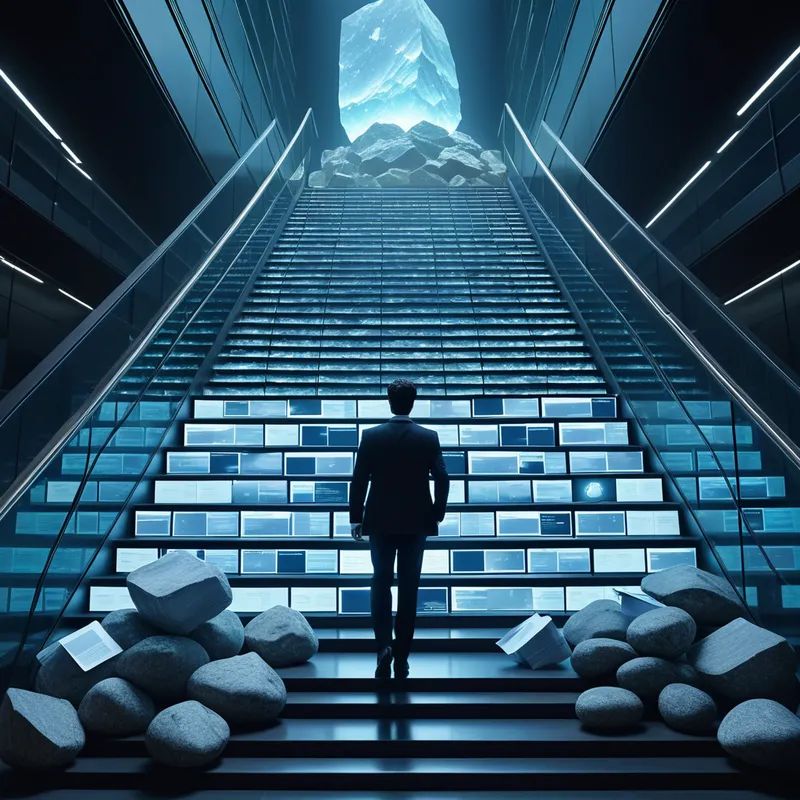
When the pattern of Sisyphus emerges in modern dreams, it rarely appears as a classical Greek figure. Instead, the dreamer finds themselves in a Sisyphean scenario. They might be pushing a car that will not start up an infinite hill, stacking papers in an office that instantly become disordered, or running on a treadmill toward a receding goal.
Somatically, these dreams are often accompanied by feelings of profound exhaustion, frustration, and trapped breath. The body in the dream labors without release. Psychologically, this signals a confrontation with a “stuck” complex—a core pattern of behavior or belief that the dreamer feels compelled to repeat despite its lack of fulfillment or its actively destructive results. This could relate to career, relationships, addiction, or a repetitive inner critic.
The dream is the [psyche](/myths/psyche “Myth from Greek culture.”/)’s stark, unadorned presentation of the pattern. It asks: Do you see what you are doing? The emotional tone—whether of grim determination, rage, or despair—indicates the dreamer’s current relationship to their own “boulder.” It is a call to stop identifying with the futile action and to begin observing the entire structure of the hill, the stone, and the pusher.
Alchemical Translation
The alchemical process is one of transmutation: turning leaden, burdensome experience into golden consciousness. The myth of Sisyphus models the initial, crucial stage of this work: the [nigredo](/myths/nigredo “Myth from Alchemical culture.”/), or blackening. This is the stage of despair, of confronting the sheer weight and repetition of one’s suffering or neurosis. One must fully experience the “roll-back,” the failure, the dust in the mouth, without spiritual bypassing.
The transmutation does not lie in finding a way to lodge the boulder at the top. That is the ego’s old cunning, and it is what created the punishment. The alchemy occurs in the descent.
The moment Sisyphus turns and walks back down the hill, empty-handed, is the moment of potential transformation. In that space between labors, he is free.
This is the psychological pivot. It is the conscious pause where one can stop identifying with the “pusher” and instead become the witness to the entire cycle. The boulder is no longer an external punishment but an aspect of [the self](/myths/the-self “Myth from Jungian culture.”/)—one’s own weight, one’s own history, one’s own chosen burden. To push it with awareness, knowing it will roll back, is no longer a punishment but a chosen, conscious engagement with one’s fate. This is what the philosopher Albert Camus pointed to when he imagined Sisyphus happy. The [triumph](/myths/triumph “Myth from Roman culture.”/) is not over the stone, but over the meaninglessness. One must imagine him free in the moment his consciousness detaches from the fruitless goal and embraces the act itself, the feel of the stone, the strain of muscle, the clarity of the mountain air.
The individuation journey requires each person to find their own boulder—the core, repetitive challenge of their life—and to stop trying to escape it. By consciously taking up the burden, by consenting to the labor without illusion of final victory, the weight itself becomes the grist for the mill of the soul. The endless push becomes a form of meditation, a ritual of being. The hill is not climbed to be conquered, but to be fully walked, again and again, until the walker and the path are understood to be one.
Associated Symbols
Explore related symbols from the CaleaDream lexicon:
- Golf
- Stall
- Slope
- Rocky
- Heck
- Rough
- Difficult
- Roll
- Effort
- Activity
- Recurrent
- Attempt
- Obstacle
- Struggle
- Activities
- Daily
- Incline
- Anyway
- Pitch
- Loop
- Dizzying Brain
- Rolling Ball
- Sliding Down
- Time Loop
- Perpetual Motion
- Unseen Barrier
- Pedal-powered Vehicle
- Traffic Jam
- Eclipsed Railing
- Orbital Path
- Worn-Out Shoes with Ants
- Barnacle
- Rock Climbing Gear
- Endless Race Track
- Rock Climbing Wall
- Level Up
- Sandcastle
- Game Show Stage
- Worn-out Sandpaper
- Weathered Wheelbarrow
- Worn-Out Stapler
- Shattered Glass Mountain
- Craggy Cliff
- Eroded Stone
- Weight of Existence
- Hickory Nut
- Mountain Shadow
- River Stone
- Pounder Stone
- River Pebble
- Landscape of Boulders
- Daruma Doll
- Slippery Surface
- Gritty Texture
- Tech Burnout
- App Overload
- Trauma Loop
- Digital Isolation
- Gamification
- Notification Loop
- Maxwell’s Demon
- Gödel’s Incompleteness
- Social Mobility
- Erosion
- Grind
- Roguelike
- Newgameplus
- Momentum
- Debt
- Fixation
- Abrasion
- Relapse
- Chronic
- Orbital
- Increment
- Decrement
- Modulus
- Overload
- Frustration
- Quicksand
- Talus
- Rumination
- Recurring
- Looping