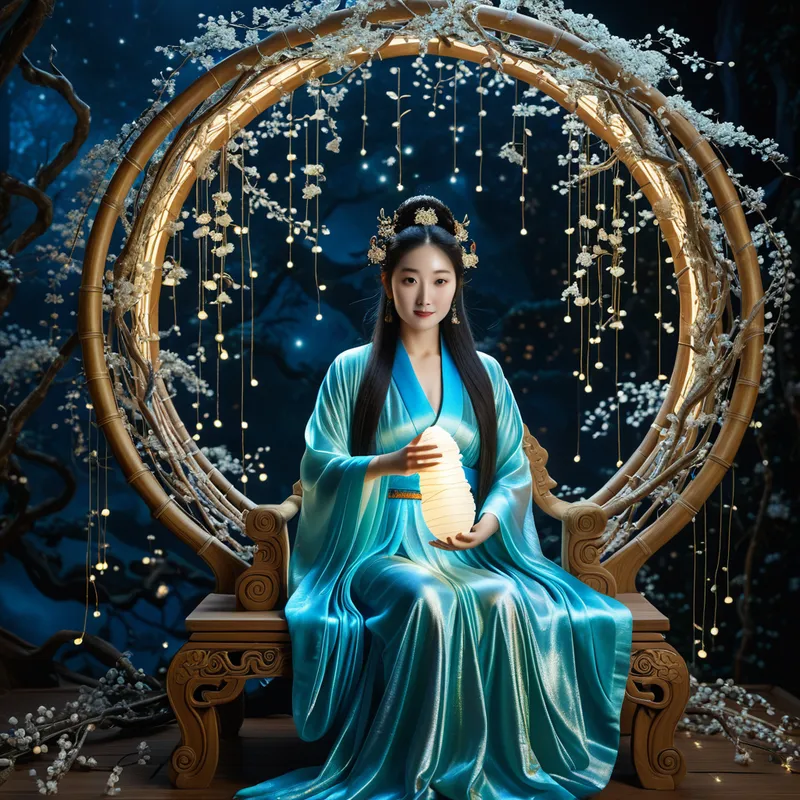
Silkworm Goddess Myth Meaning & Symbolism
A celestial maiden descends, sacrifices her freedom, and transforms into a silkworm, gifting humanity the sacred art of silk and a model of alchemical change.
The Tale of Silkworm Goddess
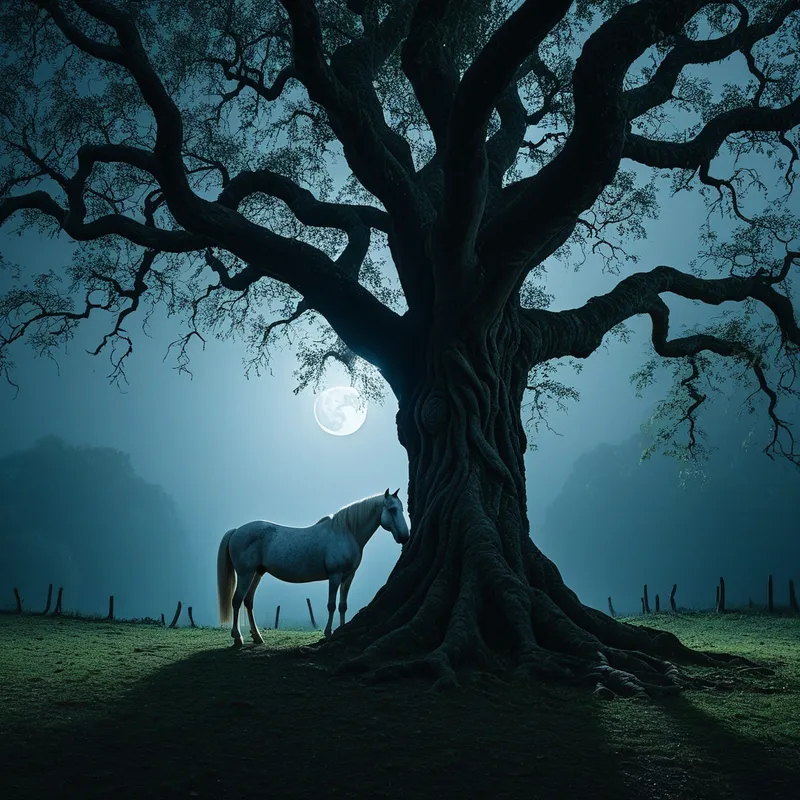
In the time when heaven and earth were closer, when the scent of the mulberry tree was the breath of the gods, there lived a man. He was a good man, but his heart was heavy with a solitary grief, for he had no companion, and his beloved horse was his only kin. This horse was no ordinary beast; its coat was white as winter’s first snow, its eyes held the depth of ancient pools, and it understood the language of the man’s sighs.
One day, the man was called away on a journey. Before leaving, he stroked the horse’s noble head and spoke a wish born of loneliness into the quiet air. “O great steed,” he whispered, half in jest, half in desperate hope, “if only you could bring a wife back for me from your travels.”
He departed. The horse waited. And then, as the sun began its descent, the horse did a terrible and wonderful thing. It broke its tether. It did not gallop toward pasture or stream, but toward the distant, hazy mountains where the earth meets the sky. It ran for three days and three nights, its hooves barely touching the ground, until it arrived at a place where the air shimmered and the very light seemed woven from threads of divinity.
There, by a celestial pool, it found her: a Xiannü, a heavenly maiden. Without a word, it knelt before her, its intelligent eyes pleading. She understood. A thread of fate had been pulled taut. With a touch that was both compassion and destiny, she gathered her robes of cloud and mist and mounted the magical steed.
They returned to the man’s home. He was astonished, overjoyed, and humbled by the celestial beauty who now stood in his humble dwelling. They were married. For a time, a sacred peace settled upon the home, a golden silence woven from happiness.
But the man noticed a change in his horse. It would not eat. It would not drink. It stood apart, watching the celestial bride with a gaze of profound sorrow and longing. A dark seed of suspicion took root in the man’s heart. Was the beast jealous? Did it covet his wife? Blinded by a sudden, irrational fury, the man took his bow and slew the faithful creature who had gifted him his greatest joy.
The act was done in an instant. The horror dawned in the next.
The heavenly maiden emerged from the house. She saw the fallen steed, its white coat stained. A sound escaped her, not a scream, but a sigh that held the weight of broken vows and spilled destiny. She walked to the body. From her sleeve, she produced a blade of pure light. She did not weep. Instead, she began to cut.
She cut the hide from the horse’s body. She held the skin aloft. Then, she turned to her mortal husband, her eyes now holding the distance of the stars from which she came. “You asked for a gift,” she said, her voice echoing strangely. “You received it. But you did not understand the cost, nor the loyalty that bridged heaven and earth for you. My work here is finished.”
Before the man could utter a word of remorse, she draped the horse’s hide over her own shoulders. And then, she began to change.
Her celestial form shimmered, dissolved, and condensed. She shrank, folding in upon herself, becoming something entirely new. Where the heavenly maiden stood, now there clung to the branches of the nearby mulberry tree a small, white, diligent creature: a silkworm. From its mouth, it began to spin. Not just thread, but a story—a story of love, betrayal, sacrifice, and ultimate transformation. It spun the very first cocoon, a tomb and a womb, a prison and a palace, from which would emerge not a butterfly, but the knowledge of silk itself, which she left as her final, silent gift to a grieving humanity.
Cultural Origins & Context
The myth of the Silkworm Goddess, most commonly associated with the figure of Leizu or Ma Tou Niang, is woven into the very fabric of ancient Chinese civilization. Its origins are prehistoric, emerging from the foundational Neolithic practices of sericulture that defined Chinese economic and cultural life for millennia. This was not merely a “story” but a sacred narrative that sanctified a crucial technology.
It was passed down orally for generations before being recorded in texts like the Shan Hai Jing (Classic of Mountains and Seas) and later refined in the Soushen Ji. The myth served multiple societal functions: it provided a divine origin for the secret, complex art of silk production, elevating a cottage industry to a celestial mandate. It was told by elders, weavers, and ritualists, often during ceremonies to honor the silkworms and ensure a good harvest. The tale encoded vital information (the silkworm’s connection to the mulberry tree) within a memorable, emotionally charged narrative of sacrifice and metamorphosis, making it a cornerstone of cultural identity and a testament to the sacred interplay between the human, animal, and divine realms.
Symbolic Architecture
At its core, this myth is a profound map of transformation through necessary sacrifice. The celestial maiden represents the anima, the soul-image descending from the unconscious (heaven) into conscious life. The white horse symbolizes the instinctual, loyal, and bridging function of the psyche—the prima materia that makes connection possible. It is the noble, animal spirit that can traverse the boundary between worlds.
The man’s fatal error is the ego’s tragic misunderstanding. He interprets the horse’s complex, soulful longing (the integrated psyche mourning its own dissolution) as a base, jealous threat. In destroying the messenger, he severs the very connection that brought him wholeness.
The gift of the soul always demands the death of the form that carried it.
The goddess’s subsequent transformation is the alchemical key. She does not return to heaven in anger. She incorporates the sacrifice. By wrapping herself in the horse’s hide (assimilating the instinctual, betrayed energy), she descends even deeper, into the archetype of the Magna Mater as the creatrix of culture. The silkworm is the ultimate symbol of this psychic process: a creature that consumes the leaves of the world (experience), spins a cocoon from its own essence (introversion, self-containment), and through a period of dissolution (the chrysalis), produces a thread of miraculous strength and beauty—the fabric of a new consciousness. The cocoon is the temenos, the sacred space where the old self dies so the new knowledge can be born.
The Dreamer’s Resonance
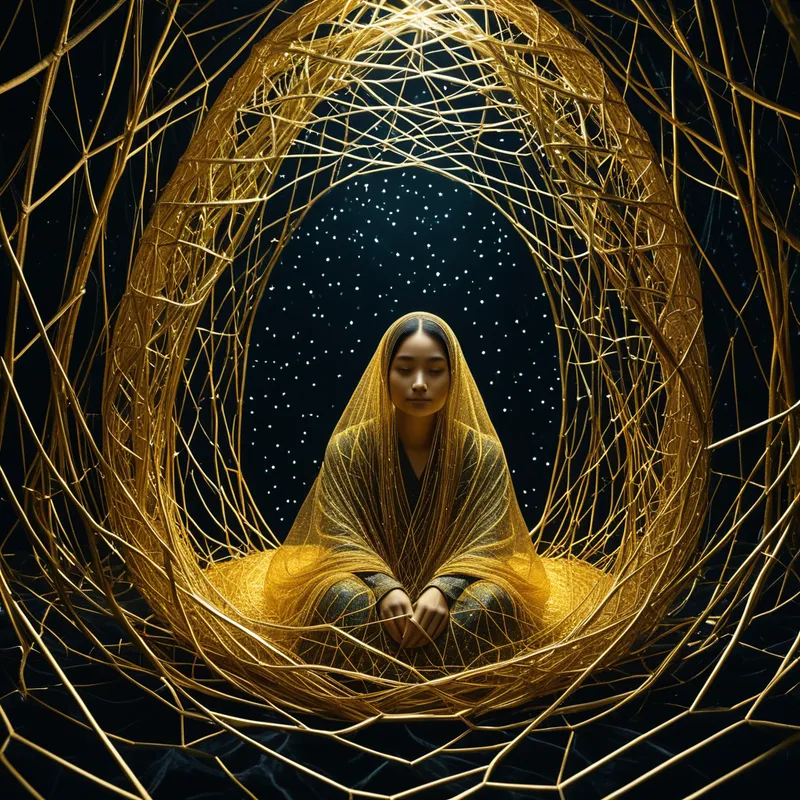
When this myth stirs in the modern dreamer, it often signals a profound somatic and psychological process of engulfment for creation. One might dream of being wrapped tightly in bandages or threads, feeling constricted yet strangely safe. There may be images of loyal animals dying or being betrayed, provoking deep grief. The mulberry tree—lush, nourishing, and deeply rooted—might appear as a central, comforting yet demanding presence.
Somatically, this can feel like a pulling inward, a retreat from the outer world. It is the psyche’s imperative to create a cocoon. The dreamer may feel a need to isolate, to be silent, to consume nourishing ideas or experiences (the mulberry leaves) and digest them fully. The conflict arises from the ego, like the man in the myth, which may panic at this withdrawal, misinterpreting it as depression, stagnation, or a betrayal of external responsibilities. The dream is orchestrating a necessary dissolution. The grief felt for the “horse” is the grief for the old identity, the old ways of connecting, that must die to serve a deeper, more authentic creation.
Alchemical Translation
For the individual on the path of individuation, the Silkworm Goddess myth models the stage of nigredo followed by a sublime albedo.
The first step is the Descent of the Anima: A moment of inspiration, love, or soulful connection (the celestial bride arrives). It promises wholeness. Then comes the Betrayal of the Instinct: The conscious mind, threatened by the depth and demands of this new energy, attempts to control or negate the very instinct (the horse) that made the connection possible. This is a necessary crisis, the “killing” of a naive attitude.
The alchemical work begins with the Assumption of the Hide: Instead of rejecting the resulting guilt, grief, and darkness (the dead horse), one must consciously “wear it.” This is the shadow work—integrating the guilt of betrayal, the pain of loss, the acknowledgment of one’s own capacity for violence against the soul.
One does not transcend the wound; one spins the cocoon from its very substance.
Finally, the Creative Dissolution: The individual voluntarily enters the cocoon state. This is a disciplined, focused introversion. One consumes knowledge and experience not for outward show, but to fuel an inner transformation. From this period of seeming inactivity and containment, one begins to “spin the thread”—the unique, creative product of the integrated self. This thread is not the glorified ego, but something of practical, beautiful use to the world: art, insight, compassion, a new way of being. The myth teaches that true creation is never without sacrifice, and the most sacred gifts often emerge from the compassionate assimilation of our deepest betrayals and losses. We become the silkworm, and in doing so, we weave the fabric of a more conscious life.
Associated Symbols
Explore related symbols from the CaleaDream lexicon: