Silkworm Myth Meaning & Symbolism
A celestial goddess descends, marries a mortal, and sacrifices her divine form to become the silkworm, gifting humanity the secret of silk.
The Tale of Silkworm
Listen, and hear the story spun not from mere thread, but from the very fabric of heaven’s compassion. In the time when gods walked closer to the earth, there lived a great lord, a man of substance but hollow heart, whose wife had long passed into the mist. He had a young daughter, and for her, he felt a love so fierce it became a lonely ache. One day, he spoke to the empty air of his stable, a jest born of desperation: “If only my steed could bring me a wife, I would let my daughter marry him.”
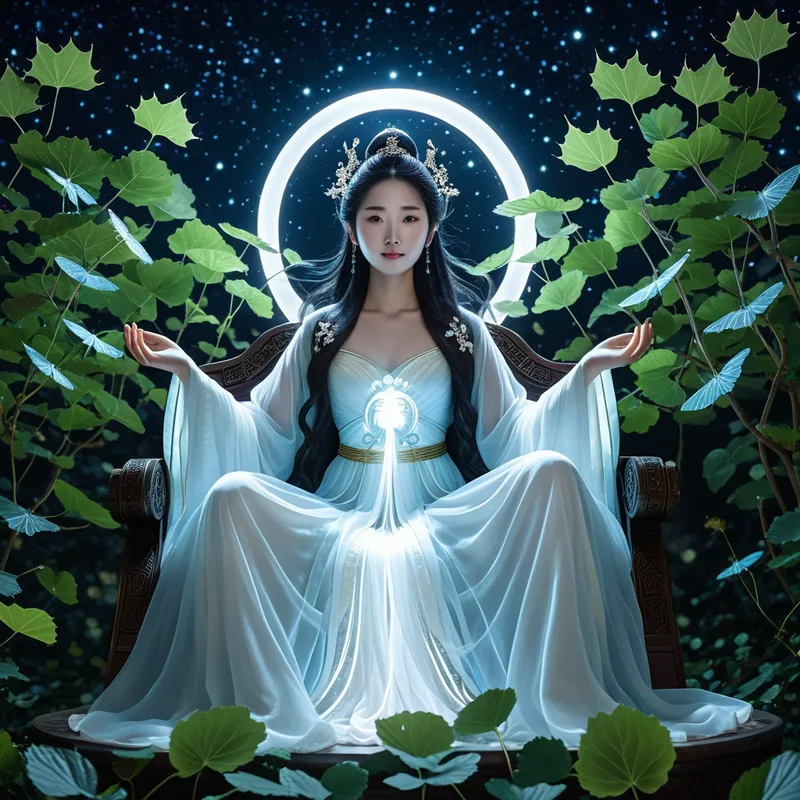
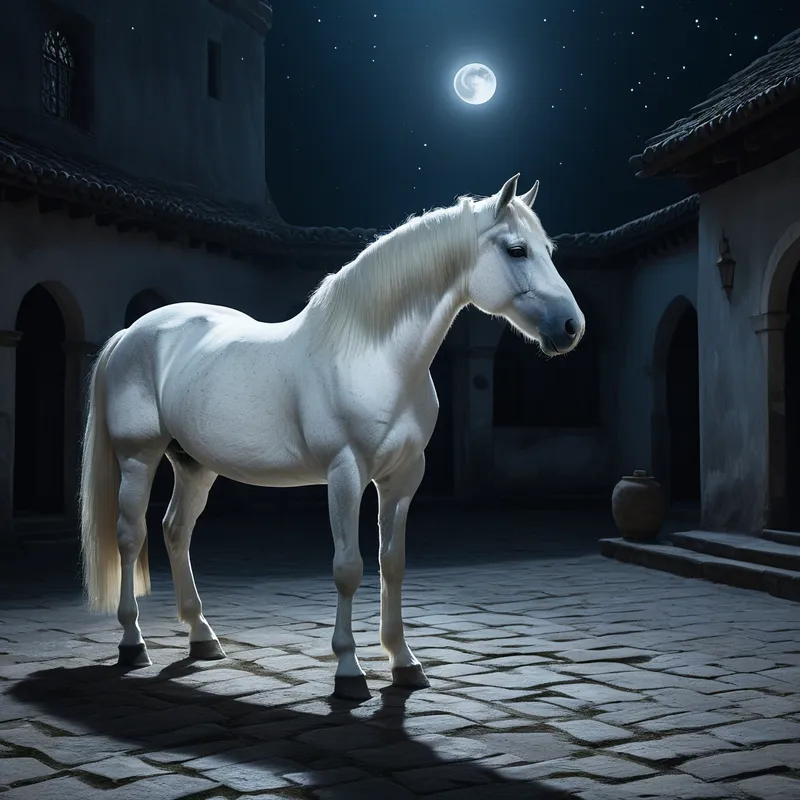
He did not know the heavens were listening. The words were a seed cast upon the waters of fate. That very night, a wind not of this world swept through the courtyard. In the morning, the lord’s prized white stallion was gone. For days, there was no sign. Then, on the third dusk, the horse returned, but he was not alone. Slung across his back was a woman of such unearthly beauty she seemed woven from moonlight and cloud. Her robes were of no earthly silk, and her eyes held the patience of the stars.
This was no mortal woman. She was a Xiannü, a daughter of the sky, who had heard the lord’s oath and taken its strange form as her vessel to the human world. True to his word, though his soul trembled with foreboding, the lord married the celestial maiden. For a time, a fragile peace settled upon the house. The goddess bore the lord a son, and the strange horse watched from the paddock with eyes that understood too much.
But the lord’s heart curdled. Shame festered within him—shame at his strange oath, shame at his horse-bridegroom, shame at the uncanny creature in his stable that was the silent witness to his bargain. This shame hardened into a dark resolve. He could not bear the living reminder. With bow and arrow, he went to the stable and slew the faithful horse, stripping its hide and laying the skin to dry in the courtyard sun.
The goddess saw this act of betrayal. A profound sorrow, deeper than any mortal grief, filled her. She walked into the courtyard where her steed’s hide lay stretched upon the earth. As her daughter followed, curious and afraid, the goddess knelt. She placed a hand upon the sun-warmed hide and began to speak—words of loss, of promise, of a love that would not be bound by form. As she spoke, the horsehide stirred. It rippled, then lifted, as if caught by a silent wind. It wrapped around the goddess and her daughter, a final, tender embrace.
Then, a great light. Where the goddess and the girl had stood, there now rested two creatures of purest white: plump, gentle silkworms. From the mulberry tree above, leaves began to fall, offering themselves as sustenance. And from the mouths of the silkworms, there began to flow a thread, fine and strong and luminous—a thread spun from celestial grief, mortal betrayal, and a love so vast it willingly entered the confines of a worm to clothe the world in beauty. The secret of silk was born, not from a discovery, but from a divine descent.
Cultural Origins & Context
This myth, known most commonly as the story of the Mātóu Niáng or the Cánshén Xiānnǚ, is woven into the very heart of ancient Chinese agrarian and imperial culture. Its origins are folkloric, passed down through oral tradition long before being recorded in texts like the Soushen Ji (“In Search of the Supernatural”). It functioned as an etiological myth, explaining the sacred origin of sericulture—the raising of silkworms—a practice so crucial it was considered a cornerstone of civilization and a guarded secret of the state for centuries.
The myth was told by mothers to daughters in the inner chambers, by farmers tending mulberry groves, and by court officials overseeing the imperial silk workshops. It served a profound societal function: it sacralized the labor of silk production, transforming the humble, repetitive act of tending worms into a ritual recapitulation of a divine sacrifice. The silkworm was not merely an insect; it was a goddess in exile, and caring for it was an act of pious remembrance. This narrative provided a spiritual framework for an entire industry, embedding a sense of reverence and cosmic purpose into the backbone of the economy and culture.
Symbolic Architecture
The myth’s power lies in its stark, alchemical symbolism. It is a map of a profound psychic process.
The Cánshén Xiānnǚ represents the unmanifest potential, the divine nous or spirit that exists in a state of pure being. Her descent is the incarnation of spirit into matter, of idea into form. The white horse is the instinctual, loyal, and powerful vehicle that brings spirit into the world of action and relationship. It is the psychosomatic bridge.
The lord’s betrayal and the killing of the horse symbolize the crisis of incarnation—the moment when the embodied spirit faces the cruelty, ignorance, and shame of the mortal world. The sacred pact is broken by the fragile human ego.
The true transformation begins not in comfort, but in the courtyard of betrayal, upon the hide of the slain instinct.
The goddess’s subsequent act is the core of the mystery. She does not destroy in retaliation; she submits. She enters the hide—the symbol of her own slain connection to the instinctual world—and allows it to transform her. This is the ultimate surrender of a higher form to a lower one for a creative purpose. The silkworm is the image of the divine compressed into a humble, vulnerable, and productive vessel. The cocoon it spins is the tangible result of this inner alchemy—a self-created tomb that is also a womb, a place of dissolution and re-formation. The silk thread is the sublimated essence of the ordeal: beauty, utility, and connection spun from the raw material of sacrifice.
The Dreamer’s Resonance
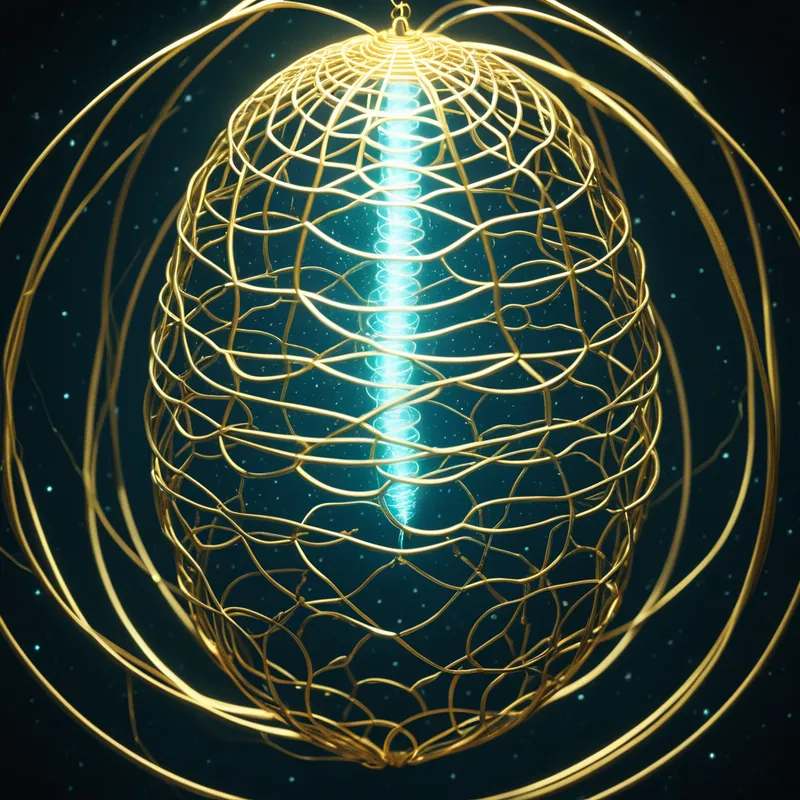
When this myth stirs in the modern unconscious, it often surfaces in dreams of profound containment and creative gestation. To dream of being wrapped, cocooned, or bound—not with menace, but with a strange, pressing necessity—may signal the psyche’s engagement with the Silkworm archetype.
The somatic sensation is one of pressure, of being compressed by life’s circumstances or one’s own choices into a smaller, denser, more focused form. It can feel like isolation, depression, or a period of enforced introversion. Psychologically, this is the “silkworm phase.” The dreamer is in the mulberry leaves of their experience, consuming and internalizing. The ego may feel it is losing its previous shape, its divine or idealized self-image (the goddess), and being reduced to something humble and worm-like. This is not a regression, but a necessary condensation. The dream is the psyche’s way of affirming that this tight, dark space is not a prison, but a sacred vessel where the raw material of life is being metabolized into something new. The urge to spin, to create, to produce a thread—even if one cannot yet see where it leads—is the instinctual impulse pushing through.
Alchemical Translation
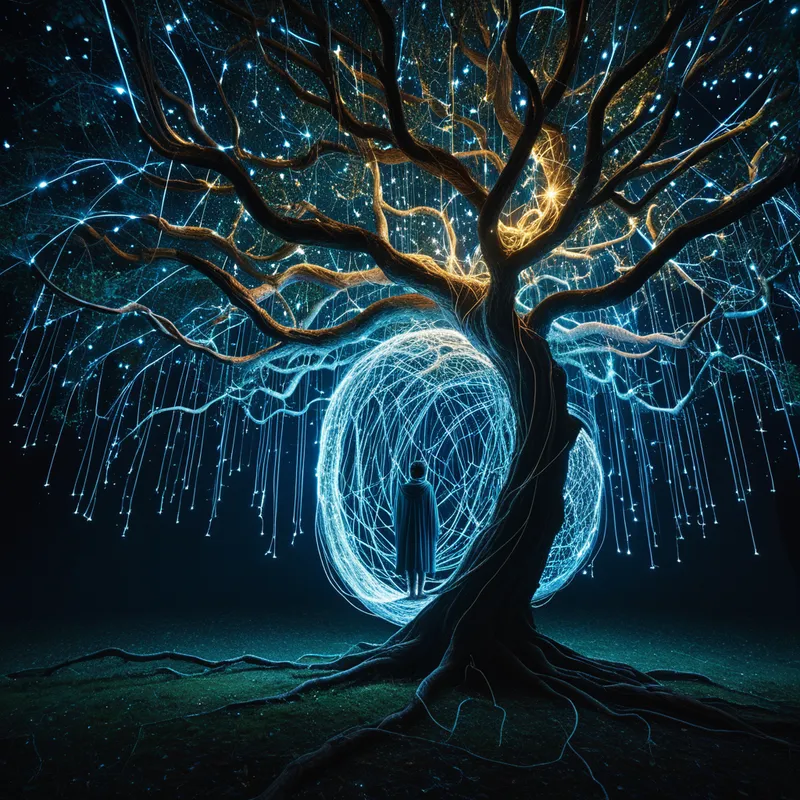
For the individual on the path of individuation, the Silkworm myth models the stage of mortificatio and sublimatio—the dying of an old form and the lifting up of its essence.
We all house an inner “celestial” potential—a talent, a deep love, a spiritual calling. To bring it into the world (the descent), we must employ our instincts and energies (the horse). Inevitably, the world—or our own inner “lord” of practicality, shame, or doubt—betrays this sacred partnership. We slay our own instinctual joy, our animal vitality, in the name of conformity or fear.
The alchemical work begins when, instead of railing against the betrayal, we consent to be wrapped in its consequences. We enter our own “horsehide.”
This is the act of conscious suffering. We allow the condition of our limitation—the illness, the failure, the loss, the humble day-job—to become the very vessel of our transformation. We cease trying to be the goddess on the throne and become the worm on the leaf. In that humble state, we do the only thing we can: we spin. We take the digested experiences, the consumed joys and sorrows, and from our own substance, we produce a thread. Day by day, we build a cocoon around ourselves from ourselves.
The triumph is not in escaping the cocoon as a butterfly (a later, separate symbol). The alchemical triumph of this myth is the creation of the cocoon itself—the tangible, beautiful, and useful product of a psyche that has turned its confinement into artistry. The silk is the integrated Self, a strong, shining thread of consciousness spun from the sacrifice of the ego’s grander pretensions. It is the gift we leave behind: the work, the art, the healed relationship, the wisdom—the strong, soft thread that connects us to others, spun from the very substance of our surrendered solitude.
Associated Symbols
Explore related symbols from the CaleaDream lexicon: