
Silenus' Ass Myth Meaning & Symbolism
A drunken Silenus, captured by King Midas, reveals a terrible truth: the best fate for humanity is never to have been born.
The Tale of Silenus’ Ass
Listen, and let the scent of pine resin and spilled wine carry you to a time when the world was younger, and the gods walked just beyond the edge of sight. In the wild, untamed heart of Phrygia, where the mountains whispered secrets to the vines, there lived a king. Not just any king, but Midas, whose fingers had already known the cursed blessing of gold. His palace glittered, but his soul thirsted for a different treasure: wisdom.
And wisdom, he knew, wore a strange guise. It was found in the train of the riotous god Dionysus, in the form of a shambling, wine-sodden old satyr named Silenus. This Silenus, foster-father to the god, was a paradox made flesh: a beast from the waist down, with the tail and ears of a donkey, yet in his drunken stupors, he uttered prophecies that could unmake kingdoms. He was the keeper of the god’s deepest mysteries, a living oracle pickled in wine.
One day, in a thicket heavy with the perfume of wild grapes, Silenus stumbled. The world spun, a blur of green and gold, and he fell into a deep, vinous sleep, separated from the ecstatic throng of maenads and satyrs. It was there, in his vulnerable slumber, that the king’s men found him. They did not see a divine companion; they saw a prize. With coarse ropes, they bound the old satyr and led him—stumbling, complaining, his donkey-legs unsteady—back to the court of Midas.
For ten days and ten nights, Midas played the gracious host. He laid out a feast worthy of Olympus: roasted meats, honeyed figs, and rivers of the darkest, sweetest wine. Silenus drank deeply, his eyes growing cloudy, then piercingly clear. The court watched, a mixture of fascination and disgust, as this bestial creature held court. Finally, on the eleventh day, with the air thick with the smell of feast and folly, Midas approached. He knelt, a king before a captive, and posed his question, the question that had gnawed at him since the gold had left his touch: “What is the greatest good for humankind? What should we all seek above all else?”
A heavy silence fell. Silenus fixed the king with a gaze that seemed to see through the marble halls and into the void itself. He laughed, a sound like stones grinding, and then he spoke. His voice was not that of a drunkard, but of the earth itself, cracked and weary.
“Oh, miserable, ephemeral race! Children of chance and toil! Why do you force me to speak of what is better left unknown? The very best thing for you,” he declared, his words dropping like cold lead, “is utterly unattainable: not to be born, not to be, to be nothing. But the second best—and this is within your reach—is to die soon.”
The words hung in the air, a truth so absolute it froze the very flames on the torches. The laughter died. The music ceased. King Midas stared, his quest for wisdom ending not in light, but in the profoundest, most desolate shadow. He had captured the ass, but the ass had delivered a burden no man was meant to bear.
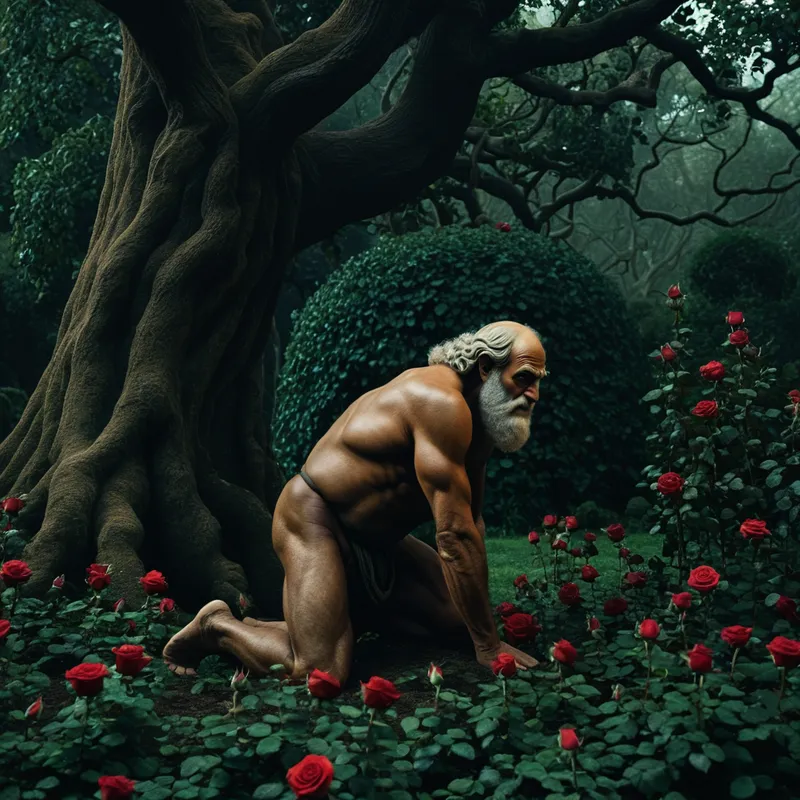
Cultural Origins & Context
This haunting fragment of wisdom is not a tale from Homer, but a philosophical echo preserved by later writers, most notably the tragedian Sophocles in his lost play The Midas, and later, the biographer Plutarch. It represents a stark, pessimistic undercurrent in Greek thought, a strand that ran parallel to the heroic epics and civic ideals. This was not a myth for the public festival, but a symposium piece, a topic for discussion over wine in the andron (men’s quarters), where philosophy and intoxication danced a delicate duet.
The figure of Silenus himself is key. As a satyr, he exists on the boundary—between human and animal, civilization and wilderness, sobriety and divine madness. He is the companion of Dionysus, the god who embodies the chaotic, irrational, and ecstatic forces that civilization seeks to repress. Silenus, therefore, is the guardian of the knowledge found only in that repressed space. His wisdom is not logical or comforting; it is chthonic, emerging from the drunken dissolution of the ego. The myth served as a cultural container for a terrifying existential truth, one that could only be voiced by a creature who was not fully human, in a state that was not fully sane.
Symbolic Architecture
The myth is a perfect symbolic engine, where every component carries a profound psychological charge.
First, The Captor and the Captive. Midas, the king, represents the conscious ego—the part of us that seeks control, order, and prized knowledge (gold, wisdom). Silenus is the shadow and the archetype of the Senex (wise old man), but in his degraded, animalistic form. The ego believes it can capture and interrogate the unconscious to extract its secrets on its own terms.
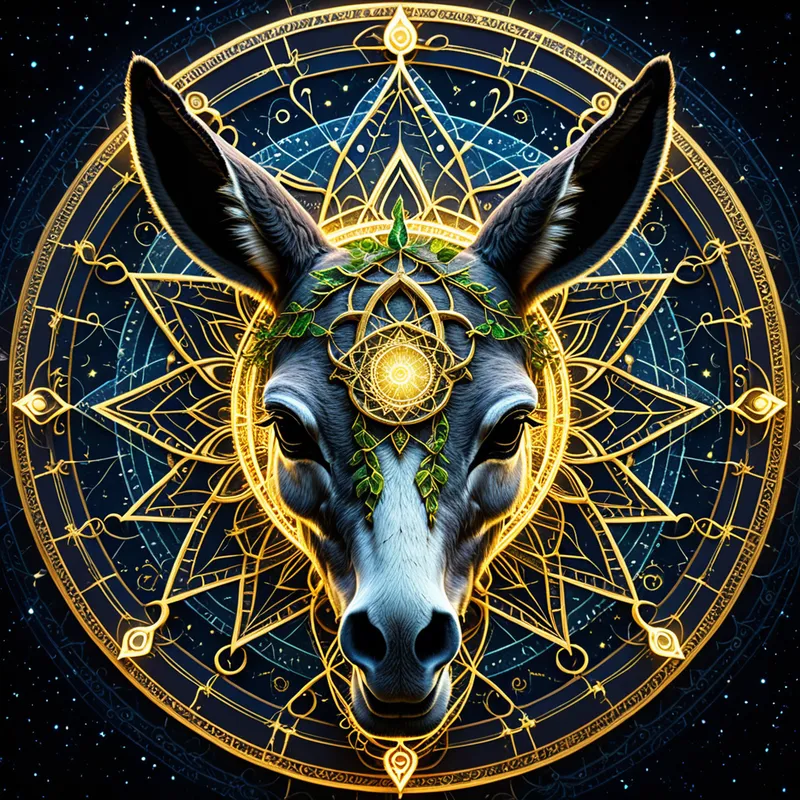
Second, The Ass. This is the central, devastating symbol. The donkey is the beast of burden, patient, humble, and associated with the mundane world. Silenus is literally the ass—the carrier. But what does he carry? Not physical goods, but the unbearable weight of existential truth. His “ass-ness” signifies that ultimate wisdom is not glorious or angelic; it is base, stubborn, and connected to the earth and mortality.
The most profound truth is not carried on the wings of an eagle, but on the back of a donkey. It is a humble, plodding, burdensome knowledge.
Finally, The Revelation. The answer Silenus gives is the ultimate deconstruction of the ego’s project. The ego seeks the “greatest good” to affirm life and its endeavors. The unconscious, when forced to speak its deepest truth, reveals that from its timeless perspective, non-existence is preferable. This is not a nihilistic prescription, but a symbolic statement: the greatest good is the dissolution of the individual ego-consciousness that experiences desire and suffering. The “second best,” to die soon, points toward the return to the unconscious, undifferentiated state—a psychic death that precedes rebirth.
The Dreamer’s Resonance
When this myth stirs in the modern psyche, it rarely appears as a literal satyr. Instead, one might dream of being forced to care for a repulsive, yet oddly dignified, animal—a mangy donkey, a stubborn mule—that one is secretly afraid of. The dreamer feels a profound responsibility and disgust toward this creature. Alternatively, one might dream of receiving a gift or a message that feels like a curse, a piece of knowledge that, once known, makes the world seem grayer, emptier, or utterly futile.
These dreams signal a profound psychological process: the ego is being confronted with a piece of shadow wisdom it is not ready to integrate. The “burden” is the dawning awareness of life’s inherent tragedy, one’s own mortality, or the meaninglessness of certain lifelong pursuits. The somatic feeling is often one of heavy dread, a sinking in the stomach, as if one has swallowed a stone of truth. This is not depression, but the honest, painful weight of the unconscious presenting a reality the conscious mind has spent a lifetime avoiding.
Alchemical Translation
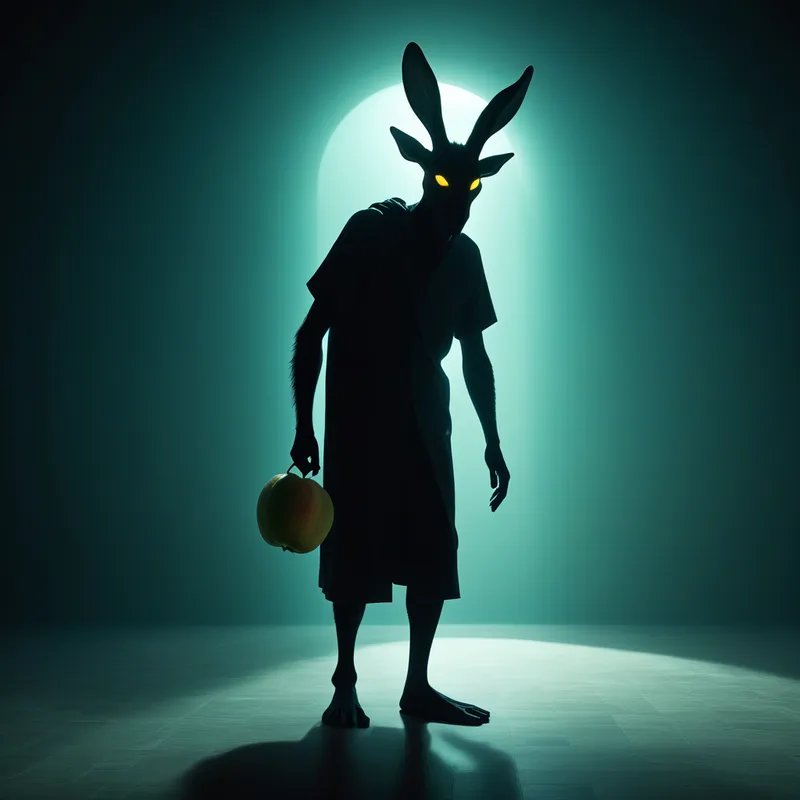
The journey of Midas with Silenus is a map for the opus, the alchemical work of individuation. It models the stage of nigredo.
First, The Capture (Coagulatio). The conscious mind (Midas) actively seeks out the unconscious (Silenus), attempting to solidify and pin down its mystery. This is necessary; the work cannot begin unless the ego acknowledges and engages the shadow.
Second, The Feast (Solutio). The ego tries to assimilate the shadow through its own methods—logic, hospitality, bribery (the wine). It seeks to dissolve the mystery into palatable terms. But the shadow, when engaged authentically, consumes the ego’s defenses. The “drunkenness” here is the dissolution of the ego’s certainty.
Third, The Revelation (Mortificatio). This is the black sun of the opus. The shadow speaks its truth, and it kills the ego’s previous worldview. The cherished notion that life is fundamentally about achieving a “greatest good” is incinerated. This is a psychic death, a necessary despair.
The gold Midas sought was not a philosophical answer, but the lead of reality transformed in the fire of despair. Only when the ego’s quest is annihilated can true transformation begin.
Finally, The Return (Separatio). The myth, in most versions, ends with Midas returning Silenus to Dionysus. Psychologically, this signifies that after confronting this terrible truth, one cannot “own” it. It must be returned to the larger, divine context of the Self (Dionysus). The ego, humbled and stripped of its naive optimism, is now ready to live not in pursuit of a “greatest good,” but with a conscious awareness of the abyss. This is the beginning of authenticity. The ass has delivered its burden, and the individual can now choose how to carry that knowledge forward, not as a curse, but as the foundational stone of a more genuine, because more tragic, existence.
Associated Symbols
Explore related symbols from the CaleaDream lexicon: