Sif's Hair Myth Meaning & Symbolism
The god Loki shears Sif's magical hair, a violation demanding impossible reparation that sparks the creation of divine treasures from the forge of dwarves.
The Tale of Sif’s Hair
Hear now of the shearing, the theft that shook the golden halls of Asgard. It began not with a roar, but with a whisper of shears in the deep of night.
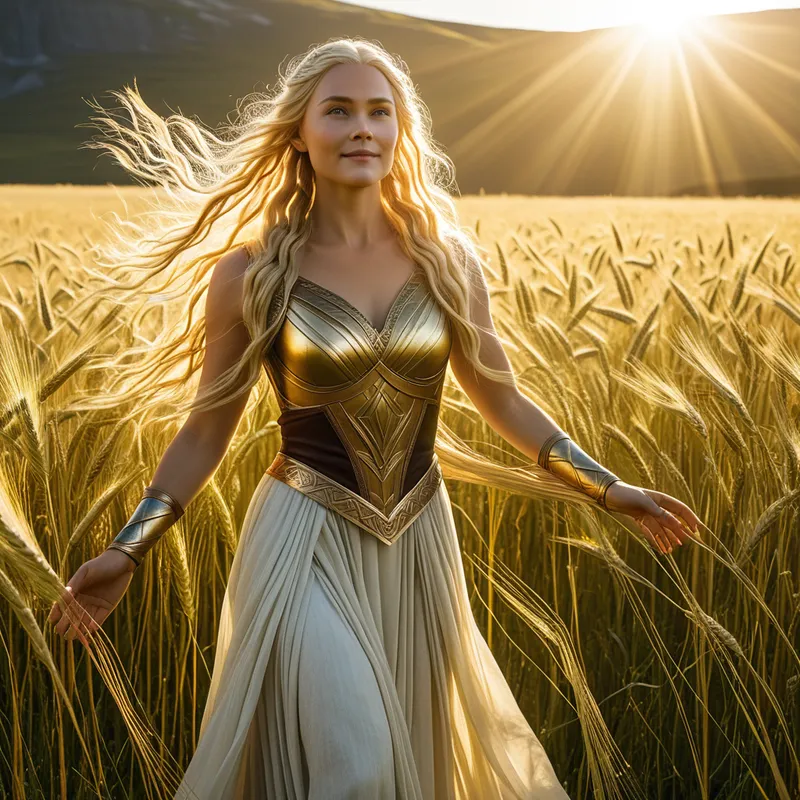
Sif, wife of mighty Thor, was known for her hair. It was not merely golden, like summer wheat; it was the wheat, the very promise of the harvest. When she walked through the fields of Asgard, her tresses flowed like a river of light, and the land itself seemed to bow in fruitful reverence. It was her glory, a sacred aspect of her being as a goddess of fertility and [the earth](/myths/the-earth “Myth from Hindu culture.”/)’s bounty.
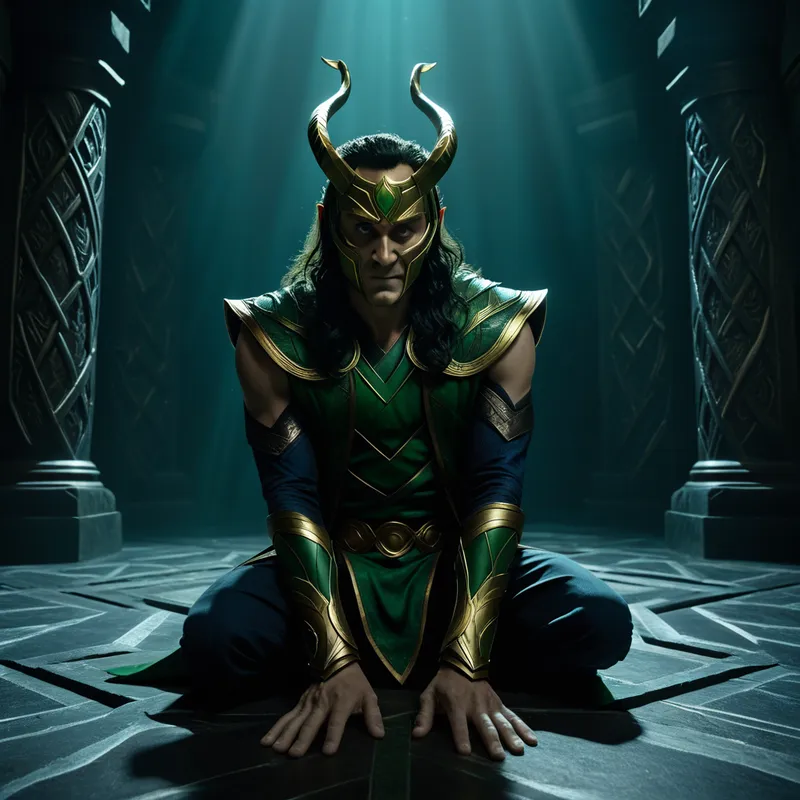
Into this radiance crept Loki, the [shape-shifter](/myths/shape-shifter “Myth from Native American culture.”/), the fire of chaos given form. Was it malice, or merely the irresistible itch of mischief? None can say for certain. But in the silent hour, when even the gods dreamt, he found Sif asleep. The scent of sun-warmed grain and rich soil filled the chamber. With a blade that caught no light, he did the unthinkable. Not a trim, but a harvest. He sheared her sacred hair to the root, leaving only pale, shocking stubble where a field of gold had been.
The dawn brought a cry that chilled the heart of Asgard. Thor’s rage was a storm given flesh. He seized Loki, his hands like forge-vices, and the promise of annihilation was in his eyes. “Restore what you have stolen,” Thor thundered, “or I will break every bone in your body and feed your essence to [the void](/myths/the-void “Myth from Buddhist culture.”/).”
Loki, trembling not just from fear but from the profound understanding of his violation, saw no path. No magic of his could regrow what was not merely hair, but a divine symbol. His cunning, which had caused the wound, was his only salve. He swore an oath to descend into the dark places of [the world](/myths/the-world “Myth from Tarot culture.”/), to the realms of the legendary dvergr, [the dwarves](/myths/the-dwarves “Myth from Norse culture.”/). He would procure a replacement not of equal, but of surpassing worth.
His journey took him deep into the stone veins of the earth, to the forges of the sons of Ivaldi. There, in fire and shadow, he bargained and lied with silver tongue. And from their anvils, born of necessity and sublime skill, came wonders. They spun gold so fine it was alive, and from it they wrought a new head of hair for Sif. But this hair, once placed upon her scalp, would grow as if it were her own—a living, breathing gold.
Yet Loki’s restless cunning was not spent. Seeing the dwarves’ power, he goaded another clan, the brothers Brokkr and Eitri, into a wager: could they craft treasures greater still? From that rivalry, born of trickery and pride, flowed more divine wealth: [Mjölnir](/myths/mjlnir “Myth from Norse culture.”/), the unerring hammer; [Gullinbursti](/myths/gullinbursti “Myth from Norse culture.”/), a boar of light; and Draupnir, [the self](/myths/the-self “Myth from Jungian culture.”/)-replicating ring.
Loki returned to Asgard, a penitent thief turned bearer of impossible gifts. Before the assembled gods, he presented Sif with her new hair. As it was settled upon her, a collective breath was held. Then, it took root. It shone, it moved, it was her, but more—a testament not just to what was lost, but to what could be forged from the depths of reparation. The violation was healed, not erased, and from its scar grew wonders that would arm the gods for ages to come.
Cultural Origins & Context
This myth survives primarily in the Prose Edda, penned by the scholar Snorri Sturluson in the 13th century. Snorri was a Christian writing about a fading pagan tradition, acting as both preserver and interpreter. The tale of Sif’s hair is presented as a precursor story, explaining the origins of the gods’ most famous artifacts. It was likely part of a vibrant oral tradition, a skaldic poem or story told in halls to explain not just how Thor got his hammer, but why such powerful items came to be.
Its societal function was multifaceted. On one level, it is an etiological myth, explaining the provenance of sacred objects. On another, it reinforces social codes: the grave consequence of violating another’s honor (especially that of a powerful family, through Thor) and the absolute necessity of making reparation, of restoring frith (peace and social order). Loki’s actions disrupt the cosmic and social order; his desperate quest to repair it, albeit through further deception, is what restores balance, albeit a new, more fortified one. It also underscores the Norse reverence for craftsmanship and the magical potential of the earth’s resources, embodied by the dwarves.
Symbolic Architecture
At its core, this is a myth about sacred integrity violated and the [alchemical process](/symbols/alchemical-process “Symbol: A symbolic transformation of base materials into spiritual gold, representing inner purification, integration, and the journey toward wholeness.”/) of restoration that creates something new and potent from the wound.
Sif’s [hair](/symbols/hair “Symbol: Hair often symbolizes identity, power, and self-expression, reflecting how we perceive ourselves and how we wish to be perceived by others.”/) is no mere vanity. It is a [symbol](/symbols/symbol “Symbol: A symbol can represent an idea, concept, or belief, serving as a powerful tool for communication and understanding.”/) of her divine function—[fertility](/symbols/fertility “Symbol: Symbolizes creation, growth, and abundance, often representing new beginnings, potential, and life force.”/), [abundance](/symbols/abundance “Symbol: A state of plentifulness or overflowing resources, often representing fulfillment, prosperity, or spiritual richness beyond material needs.”/), and the untamed, organic growth of [nature](/symbols/nature “Symbol: Nature symbolizes growth, connectivity, and the primal forces of existence.”/). Its shearing is a symbolic rape of the [earth](/symbols/earth “Symbol: The symbol of Earth often represents grounding, stability, and the physical realm, embodying a connection to nature and the innate support it provides.”/), a forced harvest that leaves the land barren. It represents the theft of one’s essence, [identity](/symbols/identity “Symbol: Identity represents the sense of self, encompassing personal beliefs, cultural background, and social roles.”/), or creative power. Loki is the agent of [chaos](/symbols/chaos “Symbol: In Arts & Music, chaos represents raw creative potential, uncontrolled expression, and the breakdown of order to forge new artistic forms.”/), the [shadow](/symbols/shadow “Symbol: The ‘shadow’ embodies the unconscious, repressed aspects of the self and often represents fears or hidden emotions.”/) of the [psyche](/myths/psyche “Myth from Greek culture.”/) that, through envy, thoughtlessness, or self-sabotage, attacks our own most fertile and beautiful aspects.
The deepest violation often becomes the crucible for the most profound creation. The wound demands an answer the old self cannot provide.
The descent to the dwarves is a [journey](/symbols/journey “Symbol: A journey in dreams typically signifies adventure, growth, or a significant life transition.”/) into the unconscious, into the chthonic (earthly) [depths](/symbols/depths “Symbol: Represents the subconscious, hidden emotions, or foundational aspects of the self, often linked to primal fears or profound truths.”/) where raw materials and primal forces reside. The dwarves themselves symbolize the focused, disciplined, transformative power of the unconscious—the innate psychic [capacity](/symbols/capacity “Symbol: A measure of one’s potential, limits, or ability to contain, process, or achieve something, often reflecting self-assessment or external demands.”/) to take base matter (the raw ore of experience, even traumatic experience) and refine it into conscious value. The new hair is not a replica; it is an evolution. It is gold that is alive, integrating the mineral [wealth](/symbols/wealth “Symbol: Wealth in dreams often represents abundance, security, or inner resources, but can also symbolize burdens, anxieties, or moral/spiritual values.”/) of the earth with the organic principle of growth. It represents a reclaimed identity that is more conscious, more resilient, and more valuable for having been lost and remade.
Furthermore, the myth presents creation as a byproduct of conflict and necessity. The divine treasures—the hair, the hammer, the ring—are born from a chain [reaction](/symbols/reaction “Symbol: A reaction in a dream signifies the subconscious emotional responses to situations we face, often revealing our coping mechanisms and fears.”/) of violation, [threat](/symbols/threat “Symbol: A threat in dreams often reflects feelings of vulnerability, anxiety, or fear regarding one’s safety or well-being. It can indicate unresolved conflicts or the presence of external pressures.”/), and competitive cunning. Psychologically, this suggests that our greatest inner resources and strengths are often forged in [response](/symbols/response “Symbol: Response in dreams symbolizes how one reacts to situations, often reflecting the subconscious mind’s processing of events.”/) to [crisis](/symbols/crisis “Symbol: A crisis symbolizes turmoil, urgent challenges, and the need for immediate resolution or change.”/), not in times of untroubled [peace](/symbols/peace “Symbol: Peace represents a state of tranquility and harmony, both internally and externally, often reflecting a desire for resolution and serenity in one’s life.”/).
The Dreamer’s Resonance
When this myth patterns a modern dream, it speaks to an experience of profound personal violation or loss of self. The dreamer may not dream of hair, but of a prized possession broken, a garden ravaged, a talent suddenly absent, or a familiar room stripped bare. The somatic feeling is one of shocking exposure, vulnerability, and a cold emptiness where there was once richness and life.
This is the psyche registering an attack on its integrity. It could relate to a betrayal, a harsh criticism that dismantles one’s self-confidence, a creative block, or the feeling that a core part of one’s identity has been taken or rendered inert. The “Loki” figure in the dream may be an external person, but often it is an aspect of the dreamer’s own shadow—self-sabotaging behaviors, intrusive thoughts, or a deep-seated envy directed inward.
The crucial phase in the dream-process is what follows the shearing. Is there only despair? Or is there a furious, Thor-like energy demanding restitution? The dream may then move into labyrinthine spaces (symbolizing the unconscious), encounters with skilled but taciturn figures (inner resources), or the slow, miraculous appearance of something new growing from the wound. This signals the beginning of the psyche’s innate healing and transformative process, moving from victimhood to active, if desperate, re-creation.
Alchemical Translation
The myth of Sif’s Hair is a perfect map for the Jungian process of individuation—becoming whole by integrating the unconscious. The starting point, Sif in her wholeness, represents a state of unconscious perfection. It is beautiful but static, unaware of its own potential for transformation.
Loki’s shearing is the necessary, painful [nigredo](/myths/nigredo “Myth from Alchemical culture.”/)—the blackening, the descent, the crisis that shatters the old, naive consciousness. It is [the shadow](/myths/the-shadow “Myth from Jungian culture.”/)’ eruption, forcing a confrontation with loss, limitation, and one’s own capacity for destruction. Without this “shearing,” there is no impetus for growth, no need to journey inward.
Individuation does not begin in the light, but in the recognition of the shadow’s cut. The ego must be humbled, its prized attributes lost, for the Self to be forged.
Thor’s rage and Loki’s oath represent [the ego](/myths/the-ego “Myth from Jungian culture.”/)’s forceful reaction and the subsequent commitment, however reluctant, to engage with the depths. This is the beginning of the albedo—the whitening, the purification through trial. The descent to the dwarves is the active engagement with the unconscious, mining the raw archetypal material (the gold, the iron) of the psyche.
The forging of the new hair and treasures is the citrinitas and [rubedo](/myths/rubedo “Myth from Alchemical culture.”/)—the yellowing and reddening, the synthesis and integration. The new hair is the symbol of the restored, but now conscious, function. It is not the original, innocent fertility; it is a cultivated fertility, one that knows its own value because it was once lost. It is an aspect of the personality reclaimed and elevated to a conscious principle.
Finally, the presentation to the gods symbolizes the integration of this transformed content back into the conscious personality ([the pantheon](/myths/the-pantheon “Myth from Greek culture.”/) of the psyche). The individual is not simply repaired but armed with new, hard-won treasures: the hammer of focused will (Mjölnir), the vehicle of luminous instinct (Gullinbursti), and the ring of self-generating value (Draupnir). The crisis of violation becomes the catalyst for becoming a more complete, resilient, and creatively potent Self.
Associated Symbols
Explore related symbols from the CaleaDream lexicon: