Sif Myth Meaning & Symbolism
A myth of theft, reparation, and alchemical transformation, where the goddess Sif's golden hair is stolen and replaced with living gold by the trickster Loki.
The Tale of Sif
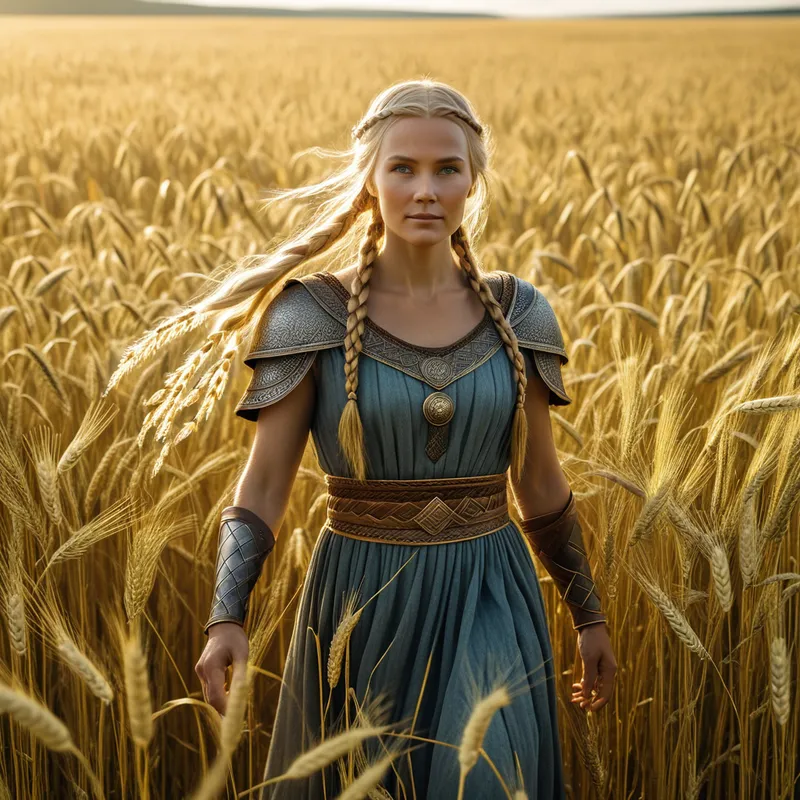
Listen, and hear a tale not of thunder, but of gold that grows from the earth. In the high halls of Asgard, where the rafters ring with the boasts of warriors, there lived a goddess whose quiet power was the foundation of their glory. Her name was Sif, and her hair was her crown. Not the yellow of straw, but the deep, ripe gold of the harvest moon on a field of barley, a flowing river of light that held the promise of the earth itself. She was the wife of Thor, whose might shook the mountains, yet in her stillness was a different kind of strength.
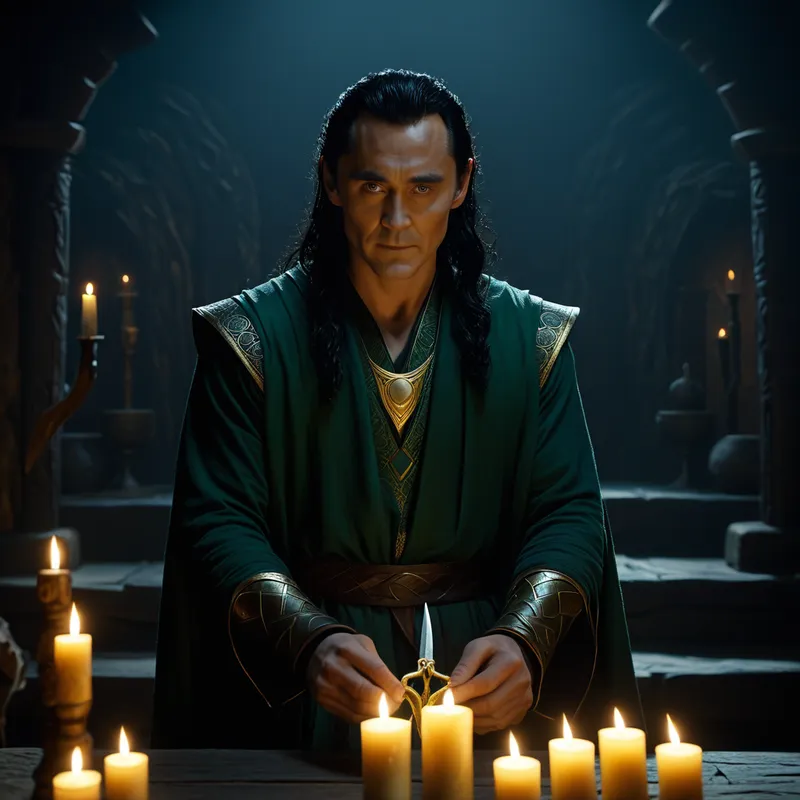
The peace of the golden hall was shattered not by a giant's roar, but by a silent, creeping malice. Loki, the shape-shifter, the fire of chaos that burns in every hearth and heart, let his envy coil like a serpent. He saw Sif's hair as a treasure to be plundered, a glory that mocked his own cunning. One night, while all of Asgard slept under a cloak of stars, he slipped into her bower. The shears did not gleam; they were dark and cold. And there, in that sacred quiet, he committed not a murder, but a desecration. He sheared the glorious gold from Sif's head, leaving behind only a shameful stubble, a field after a cruel frost.
When dawn broke, and Sif awoke to feel the terrible lightness, a wail of grief echoed through the realms. Thor's rage was a storm given form. He seized Loki, his hands like iron bands, and the promise of utter annihilation was in his eyes. The very stones of Asgard trembled. Loki, faced with the unmaking of his bones, shrieked his promise: reparation. Not just hair, but hair of living gold, hair that would grow from her scalp as if it were her own.
The trickster fled, not to the forests or mountains, but down into the very bones of the world, to the forges of the dvergr. There, in caverns lit by molten rivers, he bargained and threatened. And from their anvils, born of earth, fire, and unparalleled skill, came wonders: a ship that could fold into a pocket, a spear that never missed its mark, a boar with golden bristles that shone like the sun. And finally, for Sif, a masterpiece: a wig of the finest golden threads, but these were no mere metal. They were alive. When Loki laid them upon Sif's shorn head, they knit to her skin, they breathed. They became her hair once more, but now it was a torrent of spun sunlight, more radiant than before, each strand singing a silent song of the deep earth and star-fire. The theft was answered. The field was not merely restored; it was transmuted.
Cultural Origins & Context
The fragments of Sif's story reach us through the later medieval compilations, primarily the Prose Edda of Snorri Sturluson. These texts are Christian-era recordings of a much older, oral tradition—echoes of stories told in longhouses, by firelight, in a world intimately tied to seasonal cycles. Sif (whose name is etymologically linked to kinship, "in-law") was not a goddess of dramatic exploits, but of foundational sustenance. Her domain was the family, the hearth, and the fertile earth, specifically grain.
In a society where a failed harvest meant starvation and societal collapse, the myth of Sif's hair functioned as a profound cultural metaphor. The theft represented the ever-present threat of blight, frost, or ruin that could "shear" the community's vitality. Loki, as the embodiment of unpredictable chaos (both creative and destructive), is the agent of this threat. The resolution—replacement by the dvergr—models the Norse worldview: catastrophe is inevitable, but it can be met with cunning, forced negotiation with the hidden powers of the world (the dvergr in the earth), and ultimately, a transformation that leads to a more resilient state. The myth was a story of anxiety and reassurance, teaching that even from profound loss, a more wondrous abundance could be forged.
Symbolic Architecture
Sif’s golden hair is the central symbol, a perfect image of visible vitality. It is the flourishing crop, the wealth and honor of the family, the radiant health of the soul made manifest. Its theft is not merely a prank; it is a violation of integrity, a sudden, shocking experience of diminishment that leaves the psyche feeling exposed, shamed, and barren.
To lose one's "golden hair" is to have one's sense of self, one's creative fertility, or one's connection to life suddenly and maliciously cut away.
Loki here represents the autonomous complex of the psyche—the trickster shadow that, often fueled by envy or a twisted sense of lack, sabotages our own growth. He is the part of us that, consciously or not, devalues our own fertility and cuts us down. The dvergr, the master smiths of the earth, symbolize the deep, unconscious creative forces. They do not work in the bright light of consciousness but in the subterranean depths of the psyche. They represent the innate, archetypal capacity for craftsmanship and transformation that exists below the surface of ego.
The resolution is profoundly alchemical. The replacement hair is not a restoration, but a transmutation. The organic gold (grain) is stolen, and in its place comes forged gold (metal), which then becomes living gold. This is the symbolic journey from a natural state, through a state of violation and reduction (the nigredo), to a conscious, crafted, and ultimately more resilient and radiant state of being—the goal of individuation.
The Dreamer's Resonance
When this mythic pattern stirs in the modern dreamer, it often manifests as dreams of sudden, shocking loss of a symbol of personal power or identity. One may dream of their teeth falling out, their head being shaved against their will, a cherished heirloom being stolen, or a lush garden being vandalized. The somatic experience upon waking is often one of deep vulnerability, a feeling of being "cut down to size" or exposed.
Psychologically, this dream-state signifies an encounter with the "Loki" within—a self-sabotaging impulse or an internalized critic that has attacked one's sense of value, creativity, or connection. The dream is not merely reporting a trauma; it is initiating a process. The feeling of barrenness is the necessary fertile void. It is the psyche's signal that the old, natural growth (the original hair) has been compromised, and a deeper, more conscious process of re-creation must begin. The dreamer is in the liminal space between the theft and the forging, a painful but potent place where the demand for reparation—not just return, but transformation—is born.
Alchemical Translation
The myth of Sif provides a precise map for psychic transmutation. First comes the Theft (Calcinatio): the burning away of a prized identity or capability by the fiery trickster shadow. This is a brutal but necessary reduction, forcing the individual out of a state of unconscious flourishing.
Next is the Confrontation (Mortificatio): Thor's rage. This is the ego's rightful, forceful reaction to the violation. It is the necessary anger that says, "This will not stand." It provides the energy and pressure to drive the process downward, into the depths.
Then, the Descent (Solutio): Loki's journey to the dvergr. This is the reluctant engagement with the unconscious. The ego, or the conscious attitude (Loki as the problem-causer), must be forced to dive into the unknown, subterranean realms of the psyche to seek a solution it cannot fabricate on its own.
The new gold is not found, but forged in the dark. The renewed self is not recovered, but built from the raw materials of the depths.
Finally, the Return (Coagulatio): The presentation of the living gold. This is the integration of the unconscious creation into conscious life. The new hair is not a mask or a prosthesis; it is living, symbolizing a new, more resilient aspect of the personality that has been consciously integrated. It is a fertility that has passed through the fire of violation and the forge of the deep self. For the modern individual, the myth teaches that our most profound wounds, orchestrated by our own inner trickster, are often the prelude to our most authentic creations. We are not just healed; we are remade, our natural gifts alchemized into conscious, unshakeable power.
Associated Symbols
Explore related symbols from the CaleaDream lexicon: