
Sidhe Myth Meaning & Symbolism
The story of the Sidhe, the luminous people of the mounds, who retreated from our world, leaving a veil between reality and the eternal, enchanted realm.
The Tale of Sidhe
Listen. The world was not always as you see it now, hard-edged and separate. Once, the light was different. It pooled in the hollows and clung to the hawthorn trees long after sunset. In that time, the people of the Sidhe walked openly upon the land. They were the Tuatha Dé Danann, the children of the goddess Danu, and their presence made the very soil hum with a song of sovereignty.
They were builders of wonders, healers of profound wounds, and keepers of laws older than stone. Their halls were not of wood and thatch, but of the hills themselves—the great sídhe mounds that rise like sleeping giants from the green earth. In their courts under the hill, time flowed like honey, and feasts lasted for years measured in the blooming of a single flower.
But a shadow grew in the east. A new people came, the Sons of Míl, with their iron and their clamor, their need to cut and claim and divide. A great battle was fought on the plain of Tailtiu. The magic of the Danann was fierce, summoning storms and shrouding lands in mist, but the relentless tide of mortal history could not be turned back forever.
Yet this was not a tale of utter defeat. In a moment of profound alchemy, the great druids and poets of the Danann gathered. They did not surrender; they transformed. Using their deepest arts, they folded their radiant reality in upon itself. They withdrew, not in flight, but in a deliberate retreat into the soul of the land itself. They passed into the Otherworld, taking their luminous cities, their untamed beauty, and their ancient wisdom with them.
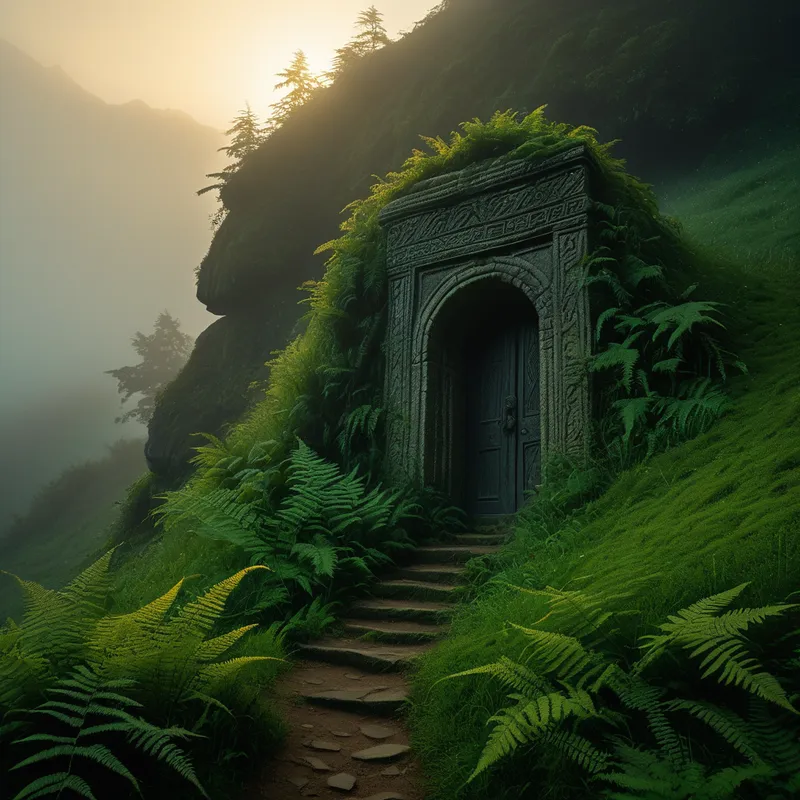
The door to their world did not slam shut, but became as thin as a hawthorn leaf, as mutable as twilight. The great mounds became silent, grassy barrows—but only to the unseeing eye. To those with the second sight, or in the betwixt-and-between hours of dawn and dusk, the door might swing open. The sound of their unearthly music might drift down from the hillside, a melody that could make a mortal forget a lifetime in an instant. They became the Fair Folk, the Good Neighbors, the Gentry—names spoken with a mix of awe and caution, for their world was now parallel to ours, eternally close yet separated by the thinnest, most magical of veils.
Cultural Origins & Context
This is not a single myth with one author, but a foundational layer of the Celtic cosmological imagination, woven from Irish and Scottish Gaelic lore. It was never written down by its original believers; it was carried in the oral tradition by fili and druids, and later by seanchaí around hearth fires for centuries. Its function was multifaceted: it explained the ancient, pre-Celtic monuments that dotted the landscape (the sídhe mounds are often Neolithic passage tombs). It established a sacred geography, turning the landscape into a living text of divine presence. Most importantly, it mediated the relationship between the community and the numinous. The Sidhe were not distant gods on a mountain; they were the potent, sometimes capricious neighbors in the very hill behind the farm, requiring respect, offerings, and a careful understanding of boundaries. This myth encoded rules for living in an ensouled world.
Symbolic Architecture
The myth of the Sidhe is a master symbol of the psyche’s own structure. The retreat of the luminous people behind the veil represents a primal, cultural memory of the soul’s interiorization.
The Otherworld is not a place we go to, but a dimension of being we remember. The Sidhe are the latent, archetypal potentials of the psyche that withdrew from conscious identification to preserve themselves from the tyranny of the literal mind—the “iron” of rationality and historical necessity.
The sídhe mound is the symbol of the personal and collective unconscious—a seemingly ordinary hill of daily life that contains vast, timeless palaces within. The betwixt-and-between times when contact is possible represent moments of psychological liminality: in dreams, in creative flow, in profound grief or love, when the rigid ego-boundaries soften. The Sidhe themselves are the archetypal contents—the anima and shadow, the inner king and queen, the magician and trickster—that possess both dazzling beauty and terrifying power. Their gifts are transformative, but their price is often the “forgetting” of one’s old, mundane self.

The Dreamer’s Resonance
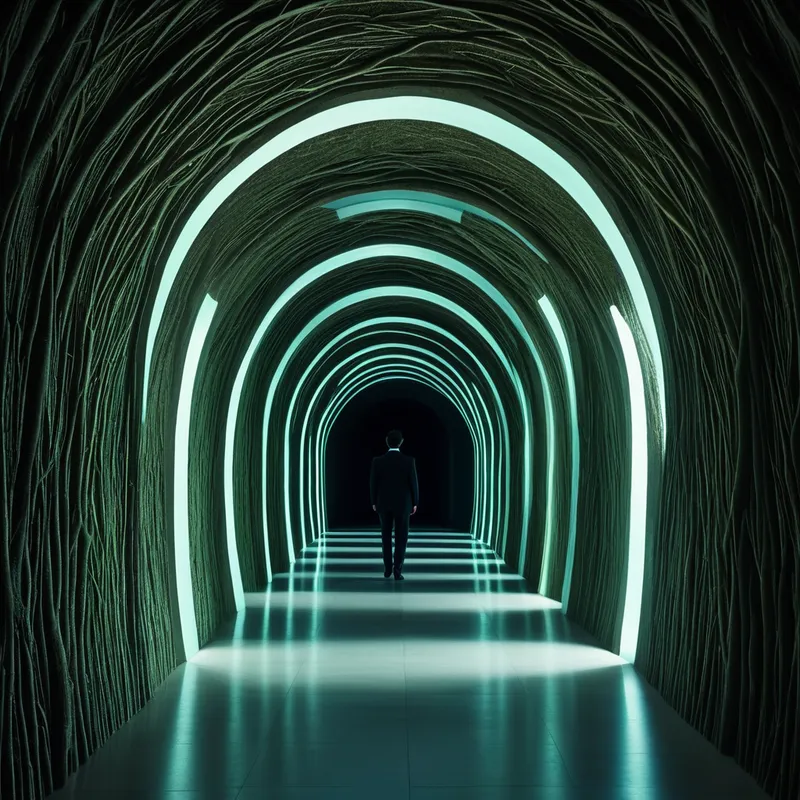
When this myth stirs in the modern dreamer, it signals an encounter with the autonomous, numinous psyche. Dreaming of a hidden door in a hillside, a strangely inviting light from a familiar basement, or hearing enchanting music from an unseen source points to the unconscious announcing its presence. The somatic experience is often one of simultaneous awe and dread—a chilling thrill, the hair standing on end. This is the body registering the mysterium tremendum et fascinans.
Psychologically, this is the process of the ego confronting its own depths. The dream-Sidhe might appear as mesmerizing yet alien figures, or as a radiant, lost part of the dreamer’s own self. They may offer a gift (a jewel, a cup, a word) or issue an invitation. The critical struggle in the dream is often whether to cross the threshold or to flee. To accept is to risk dissolution of the current ego-structure; to refuse is to risk spiritual aridity, a life lived only on the barren surface of the mound. The dream is the personal liminal space where the veil is tested.
Alchemical Translation
The journey of the myth models the individuation process—the psychic transmutation of reclaiming wholeness. The conscious ego (the Sons of Míl) has built its kingdom of order and control, but at the cost of exiling the soul’s native magic and depth. The first alchemical stage, nigredo, is the recognition of this loss—a feeling of haunting, of something magnificent just out of sight. It is the melancholy of the modern condition.
Individuation begins with the courage to become a traveler at twilight, to sit by the haunted mound and listen for the forgotten music.
The next stage, the conjunctio, is the careful, respectful approach to the threshold. This is active imagination, deep therapy, or sustained creative practice—the disciplined means by which we knock on the grassy door. We do not storm the mound; we petition. We leave offerings of attention and respect. The encounter with the Sidhe (the archetype) is always transformative and demands a price: the surrender of a cherished illusion, a comfortable identity. One might return from such an encounter with the gift of a poem (the imbas), a healed wound, or a terrible, beautiful truth—but never unchanged.
Finally, the myth teaches that full “reintegration” is not about bringing the Sidhe back to live in our mundane world. It is about learning to perceive the world as they see it: enchanted, simultaneous, and alive. It is to live with the knowledge that the veil is porous, that the Otherworld shines through the cracks of this one. The alchemical gold is this double-vision—the ability to inhabit the practical world while remaining in constant, respectful dialogue with the luminous people within the hill of the self. We become the guardians of the threshold, the poets who can hear both the wind in the grass and the eternal feast beneath it.
Associated Symbols
Explore related symbols from the CaleaDream lexicon: