Shu'ayb and the People of Midian Myth Meaning & Symbolism
A prophet warns a wealthy, corrupt people to restore balance and justice. They reject him, and their society is consumed by its own moral collapse.
The Tale of Shu’ayb and the People of Midian
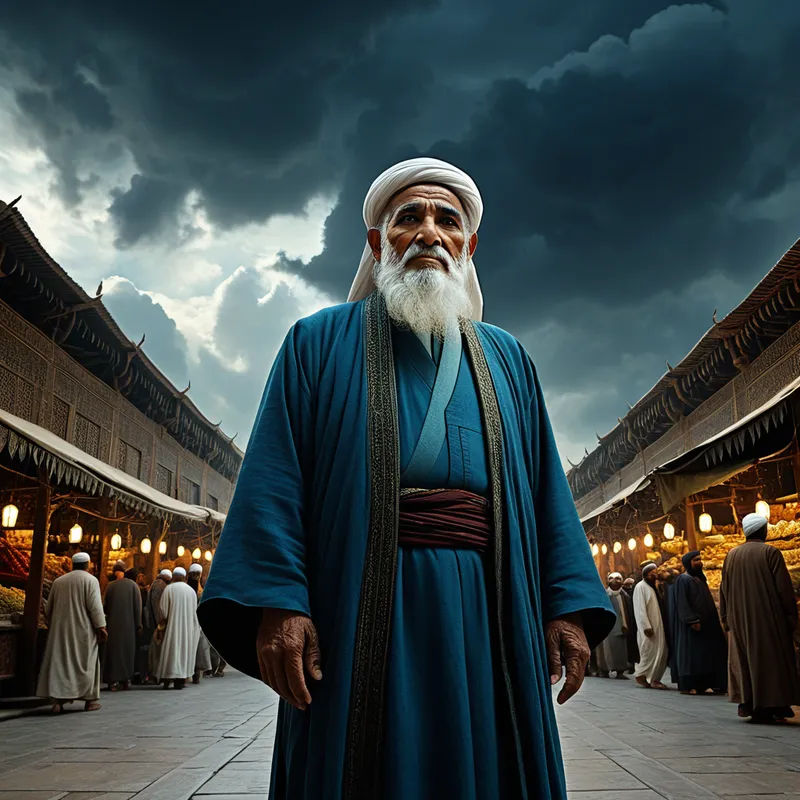
Listen, and hear the tale whispered on the wind that scours the stony valleys. In the land of Midian, a people grew fat on the crossroads of trade. Their city was a jewel of commerce, a cacophony of haggling and the clink of coin. Their wealth was not born of the honest sweat of the brow, but of the cunning hand and the deceitful measure. In the marketplace, they would short the measure and the weight, selling less for more, their scales tipped by greed. They waylaid travelers, and their hearts, once perhaps open to the vast desert sky, had shriveled into hard, calculating stones, concerned only with profit and power.
To them was sent a man named Shu’ayb. He was not a king with an army, nor a merchant with a caravan. He was a voice, clear as a mountain spring, cutting through the din of the market. “O my people,” he cried, his words carrying the weight of the ages. “Worship Allah; you have no deity other than Him. And do not diminish the measure and the scale. Indeed, I see you in prosperity, but I fear for you the punishment of an all-encompassing Day.”
He walked among them, a solitary figure of conscience. “Give full measure and do not be of those who cause loss. And weigh with an even balance. Do not deprive people of their due and do not commit abuse on the earth, spreading corruption.” His message was one of radical integrity: your commerce must reflect a cosmic balance; your dealings with one another are a covenant with the divine order itself.
But the people of Midian only laughed. Their ears were stoppered with the cotton of their own avarice. “O Shu’ayb,” they mocked, “does your prayer command you that we should leave what our fathers worshiped or that we should not do with our wealth what we please? Indeed, you are a forbearing and sensible man!” They saw his call to justice as an attack on their freedom, his piety as a foolish weakness. They threatened him and those few who listened with expulsion, a casting out into the very desert they had sought to dominate.
Shu’ayb’s heart was heavy, but his resolve was of iron. “My people,” he said, a final, solemn warning in his tone, “have you considered: if I am upon clear evidence from my Lord and He has provided me with a good provision from Him? I do not intend to differ from you in that which I forbid you; I only intend reform as much as I am able. My success is only through Allah; upon Him I have relied, and to Him I return.”
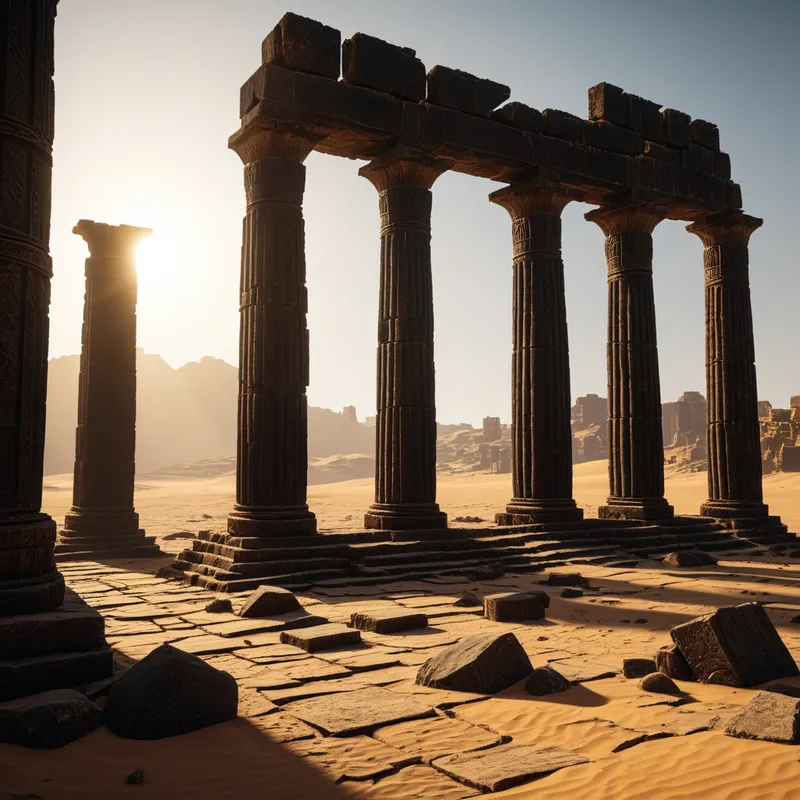
The rejection was absolute. The air in Midian grew thick, not with the dust of trade, but with a palpable dread. Then, the reckoning came. It was not a foreign army, but a convulsion from within the order they had violated. A terrible cry seized them—a shockwave of sound that was the embodiment of their own moral collapse. Then, a trembling of the earth, a shudder that toppled their proud stalls and fine houses. Finally, from the sky, a rain not of life-giving water, but of scorching punishment. When the silence returned, Midian was no more. Only ruins remained, a stark lesson etched in stone and sand under a pitiless sun. And Shu’ayb and those who heeded the warning? They were gone, spared, having stepped out of the story of corruption and into the story of grace.
Cultural Origins & Context
The narrative of Shu’ayb is firmly situated within the Quranic prophetic cycle, primarily in chapters 7, 11, and 26. He is counted among the many messengers sent to specific communities before the final revelation to Muhammad. While Midian is referenced in older Abrahamic traditions, the Quranic telling sharpens its focus into a precise archetypal drama. This story was not merely history; it was moral cosmology, recited and pondered in the early Muslim community. It functioned as a foundational parable for the nascent Islamic social order, which placed justice (‘adl), honest trade, and communal welfare at its heart. The storytellers were the reciters of the Quran and the preachers in the mosques, using the fate of Midian as a powerful rhetorical mirror held up to their own society, warning against the spiritual decay that follows the corruption of the marketplace and the severing of social trust.
Symbolic Architecture
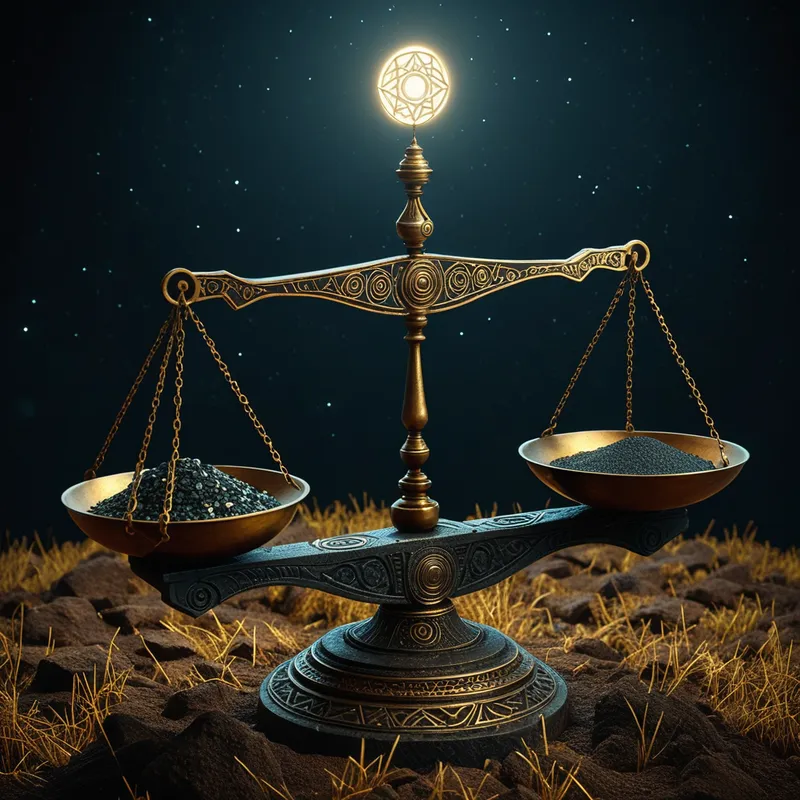
At its core, this is a myth about the violation and restoration of al-Mīzān—the divine balance. The marketplace scale is not just a tool; it is the central [symbol](/symbols/symbol “Symbol: A symbol can represent an idea, concept, or belief, serving as a powerful tool for communication and understanding.”/) of the [cosmos](/symbols/cosmos “Symbol: The entire universe as an ordered, harmonious system, often representing the totality of existence, spiritual connection, and the unknown.”/) in [microcosm](/symbols/microcosm “Symbol: A small, self-contained system that mirrors or represents a larger, more complex whole, often reflecting the universe within an individual.”/). To cheat the scale is to declare war on [reality](/symbols/reality “Symbol: Reality signifies the state of existence and perception, often reflecting one’s understanding of truth and life experiences.”/) itself, to assert that selfish desire outweighs universal [truth](/symbols/truth “Symbol: Truth represents authenticity, honesty, and the quest for knowledge beyond mere appearances.”/).
The punishment is not an arbitrary wrath, but the psychic truth made physical: a society that builds itself on the imbalance of deceit will inevitably be destroyed by the returning force of equilibrium.
Shu’ayb embodies the Nafs al-Muṭma’innah—the [soul](/symbols/soul “Symbol: The soul represents the essence of a person, encompassing their spirit, identity, and connection to the universe.”/) at [peace](/symbols/peace “Symbol: Peace represents a state of tranquility and harmony, both internally and externally, often reflecting a desire for resolution and serenity in one’s life.”/) that speaks for the objective moral order. He is not bringing a new law, but reminding them of [the law](/symbols/the-law “Symbol: Represents external rules, societal order, moral boundaries, and the tension between personal freedom and collective structure.”/) written into the very fabric of fair exchange and mutual respect. The people of Midian represent the collective [Shadow](/symbols/shadow “Symbol: The ‘shadow’ embodies the unconscious, repressed aspects of the self and often represents fears or hidden emotions.”/) of a civilization: their polished prosperity is a mask for the inner rot of greed and exploitation. Their destruction is the ultimate [shadow](/symbols/shadow “Symbol: The ‘shadow’ embodies the unconscious, repressed aspects of the self and often represents fears or hidden emotions.”/) [integration](/symbols/integration “Symbol: The process of unifying disparate parts of the self or experience into a cohesive whole, often representing psychological wholeness or resolution of internal conflict.”/)—the repressed consequences of their actions returning with annihilating force.
The Dreamer’s Resonance
When this myth stirs in the modern dreamer, it often manifests as dreams of profound ethical anxiety. You may dream of being a powerless witness in a corrupt system, your voice unheard like Shu’ayb’s. You might handle money that turns to dust, or operate a machine or scale that is irrevocably broken, symbolizing a deep sense that your “measure” in the world—your work, your relationships, your self-worth—is fundamentally dishonest or out of alignment.
Somatically, this can feel like a tightening in the chest, a weight of unspeakable guilt for collective sins, or a nausea at the “bad deal” your life has become. Psychologically, it is the process of the conscience confronting the ego’s compromises. The dream is asking: Where in your life are you “shorting the measure”? Where are you accepting or participating in systems of exploitation—of others, of the earth, or of your own soul? The gathering storm in the dream is the pressure of this unaddressed moral debt approaching consciousness.
Alchemical Translation
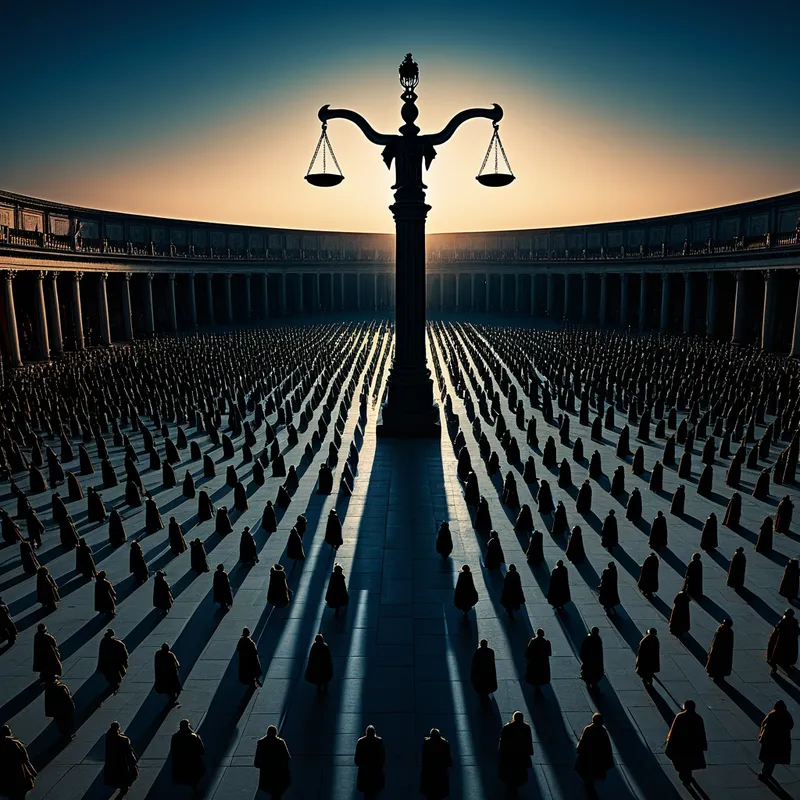
The alchemical process modeled here is the putrefactio and separatio leading to a potential solutio—not for the doomed people, but for the one who heeds the warning. The first stage is the recognition of corruption (recognitio). Shu’ayb’s call is the awakening of the inner moral faculty, the sudden, clear vision of the rot within a seemingly successful life structure.
The individual must become the prophet to their own inner Midian, confronting the comfortable lies and exploitative patterns that have built their personal “prosperity.”
The second stage is the inevitable crisis (mortificatio). The rejection of the call leads to the psychic earthquake—the collapse of a worldview, a career, a relationship built on false foundations. This is not a punishment from an external god, but the self-annihilation of an unsustainable psyche. The final stage is the salvatio—the salvation of the “remnant.” This is the conscious, often painful, separation from those old patterns. It is the decision to “leave the city,” to walk into the desert of uncertainty guided only by the inner voice of truth (Shu’ayb), trusting that a new, authentic order can be built from the rubble of the old, deceitful one. The transmutation is from leaden greed to golden integrity, from a life measured in dishonest weight to one balanced on the scale of the heart.
Associated Symbols
Explore related symbols from the CaleaDream lexicon:
- Scales — The central symbol of divine justice and cosmic balance, directly violated by the people of Midian, representing the foundational moral order that, when corrupted, leads to collapse.
- Marketplace — The arena of social exchange and commerce, which in the myth becomes the stage for moral decay and the confrontation between prophetic truth and collective greed.
- Earthquake — The cataclysmic punishment, symbolizing the foundational shock and total systemic collapse that occurs when a society’s ethical underpinnings are utterly destroyed.
- Thunder — The terrifying sound that seizes the people, representing the overwhelming, undeniable voice of divine judgment or conscience breaking through denial.
- Stone — Evokes the hardened hearts of the people and the barren ruins left behind, symbolizing spiritual petrification and the enduring, stark lesson of their fate.
- Warning — The core action of Shu’ayb, symbolizing the prophetic function of conscience that arises to alert the psyche to impending disaster due to moral failure.
- Shadow — The collective greed, deceit, and corruption of the people of Midian, representing the rejected and destructive aspects of a community or individual that must be integrated or faced.
- Prophet — Shu’ayb as the embodiment of the inner voice of truth, conscience, and the call to return to a state of ethical alignment and worship of the transcendent.
- Desert — The environment of Midian and the place of exile or salvation, representing both spiritual barrenness and the blank slate of potential that follows a great cleansing or judgment.
- Rain — Transformed from a symbol of mercy into one of scorching punishment, representing a life-giving force perverted into an agent of retribution when the covenant with nature and justice is broken.
- Gold — The object of Midian’s corrupt pursuit, symbolizing wealth divorced from ethics, which becomes spiritually toxic and leads not to prosperity but to annihilation.
- Justice — The overarching theme and divine attribute sought by Shu’ayb, representing the immutable law of consequence and the necessary restoration of balance that the myth dramatizes.