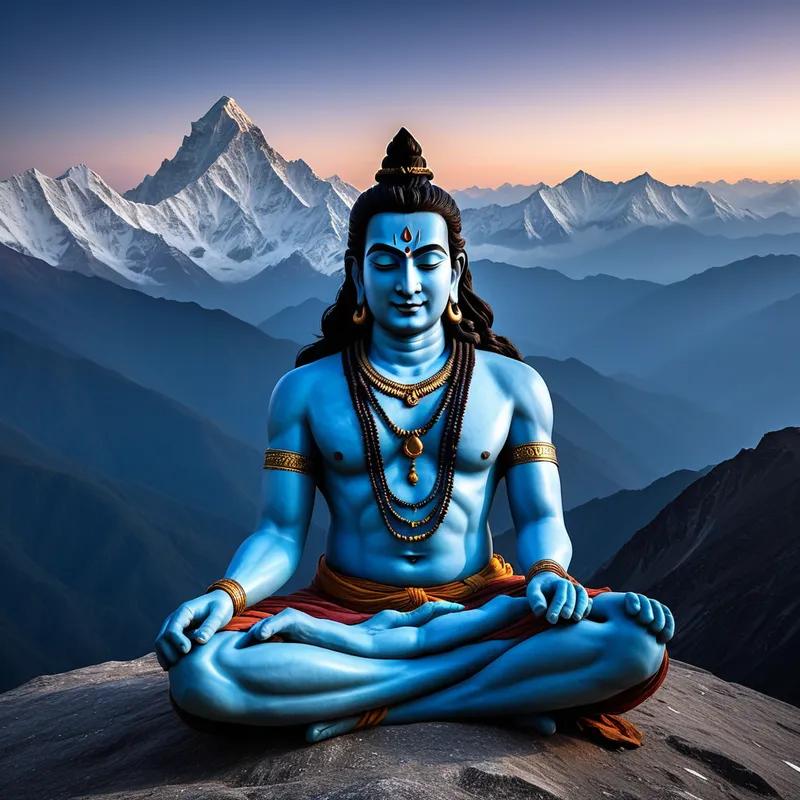
Shiva's Third Eye Myth Meaning & Symbolism
The myth of the god Shiva opening his third eye to incinerate desire and ignorance, revealing the ultimate power of focused consciousness.
The Tale of Shiva’s Third Eye
In the timeless, snow-clad silence of Mount Kailasa, a stillness deeper than the void held sway. Here sat Shiva, the great ascetic, immersed in samadhi. His body was smeared with sacred ash, his matted locks coiled like serpents of eternity. Around his neck hung a garland of skulls, whispering of cycles beyond counting. He was the still axis of the turning world, his meditation the loom upon which the fabric of reality was woven and unwoven. To disturb him was to unravel creation itself.
Yet, in the celestial realms, a crisis brewed. A demon named Taraka terrorized the three worlds, his strength derived from a terrible boon: he could only be slain by a son of Shiva. But Shiva, lost in eternal contemplation, had no consort, no desire for progeny. The air grew thick with the despair of gods and the mocking laughter of demons.
The divine assembly turned to Kama, the embodiment of yearning itself. “You must awaken desire in Shiva’s heart,” they pleaded. “Direct your flower-tipped arrows at the great Yogi. Make him see Parvati, who has undertaken fierce austerities to win him as her husband.” Kama trembled, for he knew the peril. To shoot at Shiva was to aim at consciousness itself. But for the sake of the worlds, he consented.
Spring arrived unseasonably on Kailasa. Jasmine and ashoka blossoms erupted from frozen stone. Bees hummed a seductive drone. Parvati approached, radiant as a newly risen moon, to offer prayers. Kama, hidden among the blossoms, drew his bow of sugarcane. He fitted an arrow tipped with the essence of longing—a fragrance that could stir memory in stone. He took aim at the heart of the unmoving god.
The arrow flew.
In that infinitesimal moment before it struck, the universe held its breath. The arrow of desire pierced the profound silence. Shiva’s meditation, the deep pool of cosmic awareness, was rippled by a single, foreign sensation.
His physical eyes did not open.
Instead, from the center of his forehead, a fissure of light appeared. It was not an eye of flesh, but a vortex of pure, undifferentiated perception. The Third Eye opened. There was no pupil, only an annihilating radiance, a beam of concentrated consciousness that was neither light nor fire but the very principle of reduction. It fell upon Kama.
The god of desire had no time for a cry. His beautiful form—the very concept of form born from attraction—dissolved. He was unmade, reduced to pure abstraction, becoming Ananga, “the bodiless one.” The false spring withered instantly. The seductive perfumes turned to the scent of ozone and ash. The stillness returned, deeper now, charged with the aftermath of an absolute negation.
Shiva, his point made, closed the fiery eye. The crisis of the demon would be solved in another way, for he had seen Parvati’s true devotion. But the lesson was etched into the cosmos: before the One can truly love, the many must be seen through.
Cultural Origins & Context
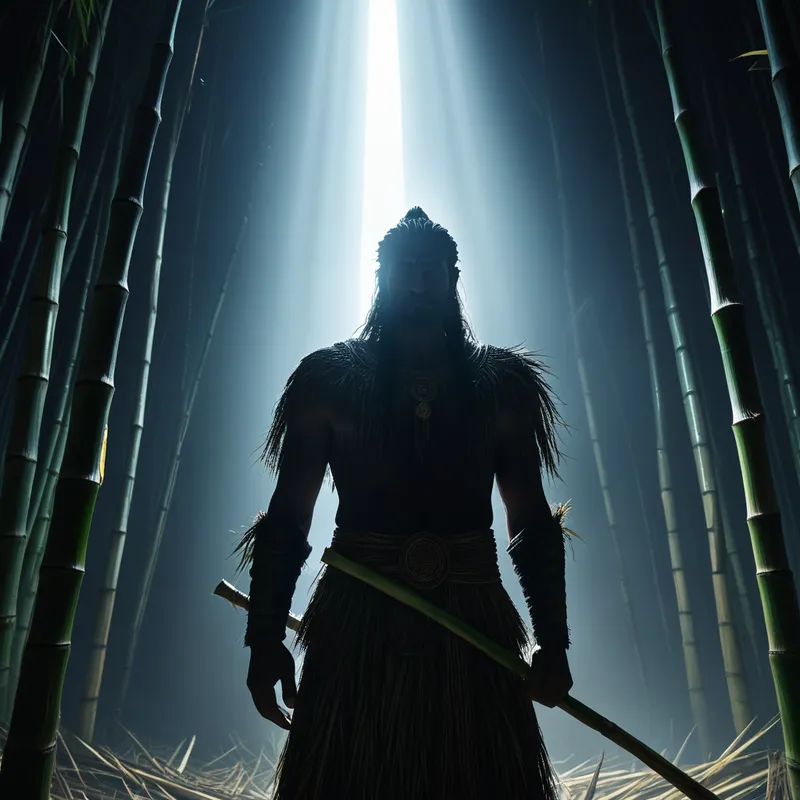
The myth of Shiva’s Third Eye is woven into the vast tapestry of Puranic literature, particularly the Shiva Purana and the Kumarasambhava of Kalidasa. It was not merely a story for entertainment but a foundational narrative performed by bards and explained by sages (rishis) to illustrate a core doctrinal and psychological truth.
In a culture that deeply valued both the householder’s life (Kama) and the ascetic’s renunciation (Moksha), this myth served as a dramatic boundary marker. It established Shiva as Mahadeva, the supreme ascetic whose consciousness operates on a plane beyond conventional attachments. The story functioned as a societal reminder of the hierarchy of values: while desire (kama) is a valid pursuit, it must never obstruct the path to ultimate truth (satya). The myth was a teaching tool, using the dramatic incineration of the love god to viscerally impress upon listeners the power of focused, disciplined awareness over distracted, sensory longing.
Symbolic Architecture
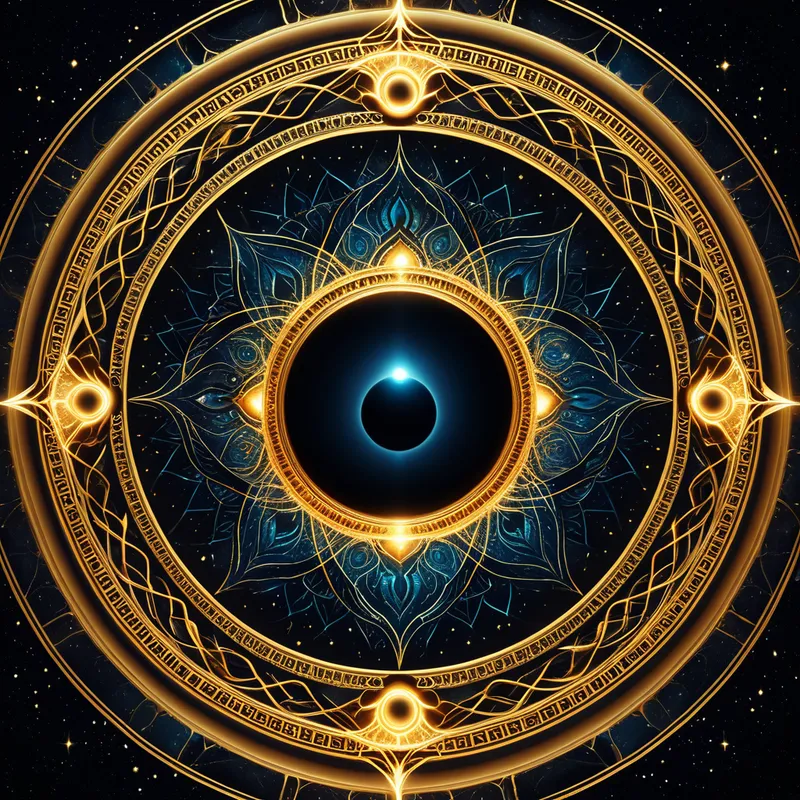
The Third Eye is not an organ of sight, but of knowing. It represents a mode of perception that transcends the dualistic data of the two physical eyes—which see difference (self/other, beautiful/ugly, desirable/repulsive)—and perceives unity. It is the eye of the witness, the seat of Atman.
The two eyes see the world of form; the Third Eye sees the formlessness from which all form arises and into which it returns.
Kama, with his flower-arrows, symbolizes the entire spectrum of psychic entanglements: not just romantic love, but all attachment, projection, and craving that binds consciousness to the ephemeral. He is the personification of Maya in its most alluring aspect. Shiva’s response is not one of anger, but of instantaneous, impersonal clarification. The fiery gaze is the laser of discernment (viveka). It does not hate desire; it sees through it, revealing its insubstantial nature. The reduction of Kama to “Ananga” is crucial—it signifies not the destruction of love, but its purification from clinging. Desire, when stripped of its egoic ownership, becomes a universal force, a bodiless energy.
The ash that smears Shiva’s body is the residue of this perpetual process. It is the dust of all burned illusions, a reminder that to see with the Third Eye is to incinerate identification with the transient.
The Dreamer’s Resonance
When this myth appears in modern dreams, it rarely manifests as a literal scene of a blue-skinned god. Instead, the dreamer may experience a profound, somatic sense of an “opening” in the forehead—a pressure, a pulse, or a beam of light emanating from within. They might dream of a glaring, judgmental eye in the sky, or of a laser cutting through a tangled, confusing situation.
Psychologically, this signals a critical moment of dis-identification. The dream ego is undergoing a process where a long-held complex—a pattern of addictive desire, a cherished illusion, a compulsive attachment—is being brought to the surface of awareness to be dissolved. The “fire” is the often-painful heat of conscious acknowledgment. The dream is not about destruction, but about deconstruction. The dreamer is not Shiva, but their own consciousness is performing the Shiva-function: applying the searing light of truth to a psychic structure that has outlived its purpose. The somatic sensation in the forehead points to the activation of the Ajna chakra, the psycho-energetic center associated with intuition, command, and seeing beyond the veil.
Alchemical Translation
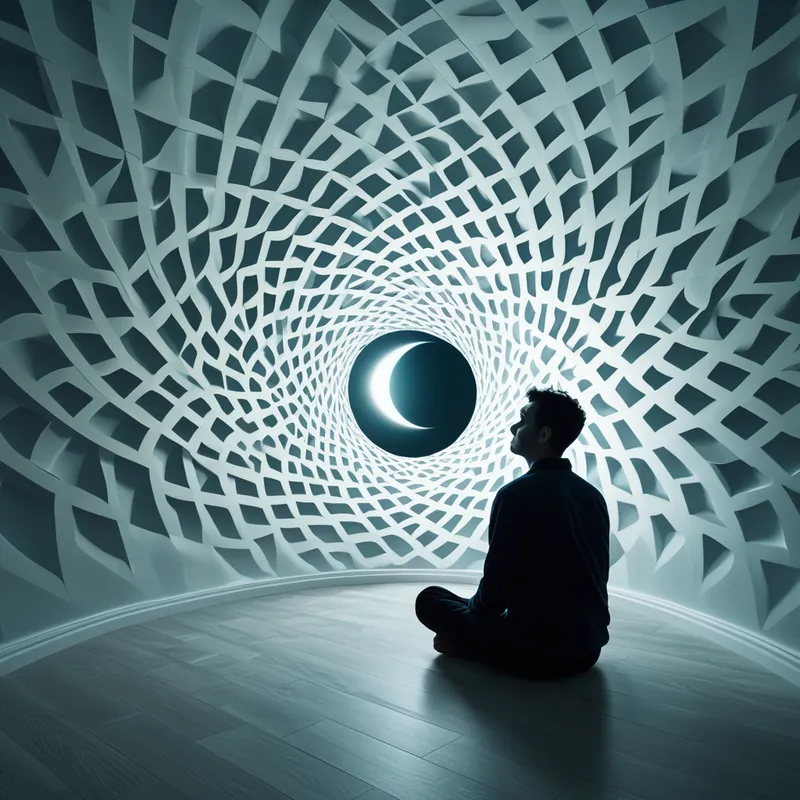
The myth models the pinnacle of the individuation process: the conscious engagement with the Self archetype, which demands the sacrifice of the personal to the transpersonal. Our inner “Kama” is the sum of all our conditioned loves and hates, the psychic software that automatically attracts us to and repels us from people, situations, and self-images.
Individuation requires that we become the ascetic on our own inner mountain, capable of opening the eye of consciousness to burn away the attachments that masquerade as our identity.
The “alchemical fire” of the Third Eye is the sustained, disciplined act of self-observation without judgment or justification. It is the practice of watching a desire arise—for validation, for a substance, for a person—and, instead of acting on it or repressing it, simply seeing it with total clarity. In that seeing, its compulsive power is incinerated. The energy bound up in that complex is liberated. The “bodiless” state of Ananga is the result: a capacity for love, creativity, and engagement that is no longer needy or possessive, but free, conscious, and compassionate. We transmute personal craving into impersonal appreciation. The myth instructs us that before we can truly create or relate from a place of wholeness (the eventual union of Shiva and Parvati), we must first develop the capacity for the devastating, liberating gaze that separates consciousness from its contents. We must learn to open the eye that burns, so that we may see, finally, by its light.
Associated Symbols
Explore related symbols from the CaleaDream lexicon: