Shiva Bindu Myth Meaning & Symbolism
The tale of the divine point where Shiva's infinite consciousness contracts into a single seed, birthing and dissolving all universes in a cycle of cosmic breath.
The Tale of Shiva Bindu
Before the beginning, there was only Brahman—the boundless, silent ocean of pure consciousness. And within that ocean, a rhythm began, a single, profound thought. It was the thought of the One who is beyond thought: Shiva, the eternal witness, the great Yogi.
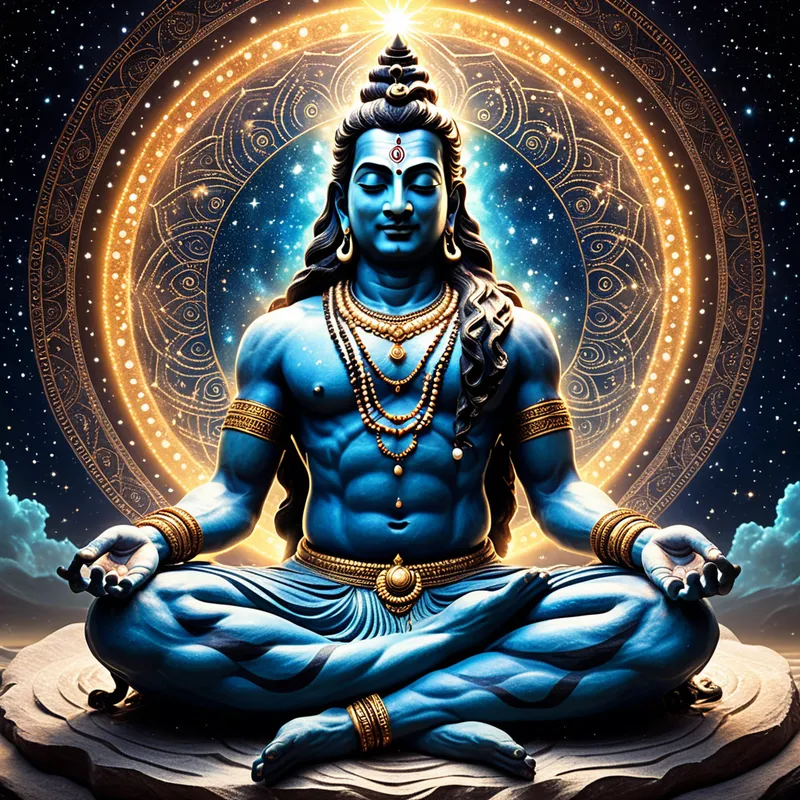
In the fathomless dark, Shiva sat in perfect, unmoving samadhi. His form was not a form, but a presence—a mountain of stillness in the void. His eyes were closed, seeing only the infinite within. But then, a tremor. A desire. Not a worldly desire, but the primal, creative urge, the spanda. It was the first vibration, the first sound—Aum—echoing in the chambers of his own being.
From the absolute expanse of his consciousness, Shiva began to contract. Imagine the entire sky condensing into a dewdrop. All his limitless awareness, his infinite potential, focused. It drew inwards, from the periphery of eternity to a single, unimaginable point. This was the Bindu.
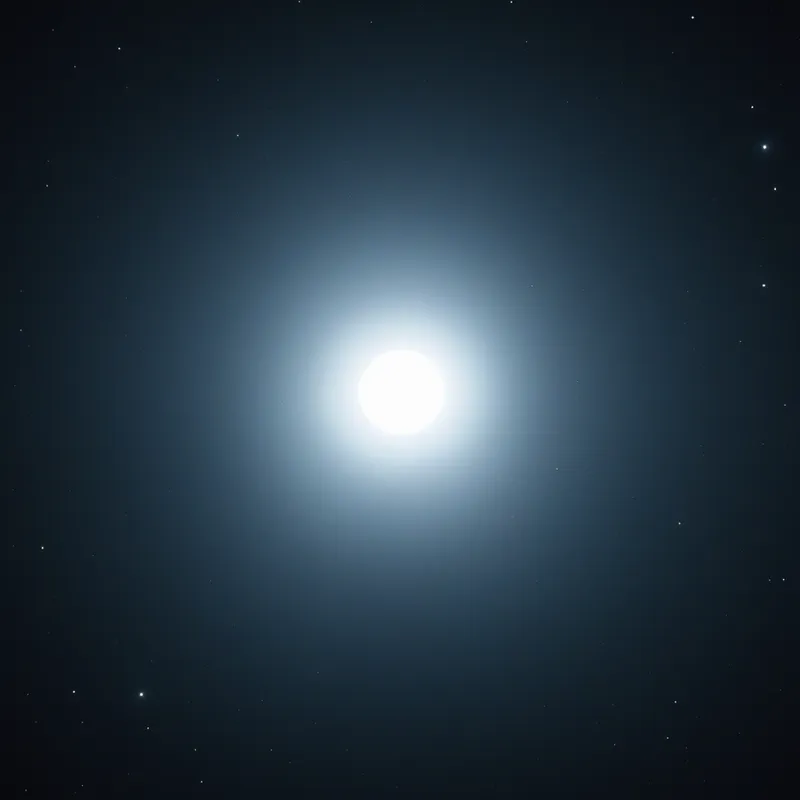
It appeared at the center of his forehead, the Ajna Chakra. A point of light so intense it had no color, only pure, white radiance. It was smaller than the smallest atom, yet heavier than all the worlds to come. Within it, everything was contained in a state of perfect, pregnant latency. All forms, all names, all stories, all sorrows and joys—compressed into a seed of divine intent.
The Bindu pulsed. With each silent throb, it emitted waves of power, Shakti, the dynamic force of creation. The void was no longer empty; it was charged with possibility. The Bindu was the axis, the still center around which the dance of manifestation would whirl. It was the moment before the Big Bang, the breath held before the first word of a poem.
And then, from that point, the universe unfolded. Not as an explosion, but as an emanation—a graceful, inevitable unfolding like a lotus blooming from the mud. Galaxies spiraled out, stars ignited, oceans formed, and life stirred. The One became the Many. Yet, Shiva remained, the unmoved observer, the Bindu at his brow now the silent source from which the cosmic drama poured forth. And when the cycle of the ages turns, when the great dissolution, the Pralaya, arrives, all will contract once more. Every galaxy, every mountain, every whispered prayer will be drawn back into that brilliant, silent point. The out-breath ends, and the in-breath begins. All returns to the Bindu, to the seed within the meditating god, awaiting the next rhythm of the divine breath.
Cultural Origins & Context
The concept of the Bindu is not a single, codified myth from one epic, but a profound metaphysical idea woven through the tapestry of Vedic and Puranic thought, and later elaborated in the esoteric traditions of Advaita Vedanta and Tantra. It is the language of seers and yogis, those who turned their gaze inward to map the cosmos of the mind.
Its primary carriers were the Rishis, who perceived these truths in deep states of meditation. They passed them down through oral tradition, in hymns, philosophical dialogues like the Upanishads, and intricate ritual manuals. In Tantra, the Bindu became a central object of visualization and worship, often depicted in the sacred geometric designs of yantras as the central dot from which the entire geometry emanates. Its societal function was dual: it was a cosmological model explaining the origin of the universe, and simultaneously, an interior map for the spiritual aspirant. It taught that the macrocosm and the microcosm are reflections; the same Bindu that birthed the stars resides within the human heart-mind.
Symbolic Architecture
The Shiva Bindu is the ultimate symbol of paradox. It is the interface between the unmanifest and the manifest, the absolute and the relative, silence and sound.
It is the moment where infinity chooses to know itself through finitude, where unity dreams of diversity.
Psychologically, the Bindu represents the core of the individuated Self—not the ego, but the Self archetype. It is the point of pure potential and undifferentiated consciousness within us, prior to all our thoughts, identities, and conflicts. Shiva’s act of contraction symbolizes the necessary focusing of our scattered awareness. Our minds are like the boundless Brahman—chaotic, filled with infinite possibilities and distractions. To create anything (a work of art, a relationship, a coherent life), we must, like Shiva, gather that diffuse energy and concentrate it into a single point of intention and attention.
The Bindu is also the seed of all karma and latent impressions (samskaras). Everything we experience leaves a trace, condensing into this psychic nucleus. Thus, the process of spiritual awakening is often described as a return to the Bindu—a journey inward to dissolve these condensed formations and realize the pure consciousness at their source.

The Dreamer’s Resonance
When this mythic pattern stirs in the modern unconscious, it often manifests in dreams of profound concentration or terrifying/ecstatic points of light. One might dream of staring at a single, radiant star in a black sky that seems to hold all meaning, or of a tiny, dense object—a jewel, a seed, a black hole—that exerts an irresistible gravitational pull on the dreamer’s surroundings.
Somatically, this can correlate with intense pressure or tingling at the forehead (the location of the Ajna Chakra), or a feeling of the entire body contracting into a core. Psychologically, this signals a critical phase of psychic consolidation. The dreamer is likely in a life transition where scattered identities, projects, or traumas are being drawn inward for processing. It is the psyche’s preparation for a rebirth. The conflict felt in the dream—the awe mixed with fear of the point’ intensity—mirrors the ego’s resistance to being reabsorbed into a deeper, more potent state of being. The dream is an invitation to stop projecting outward and to find the still, creative center within the storm of one’s own life.

Alchemical Translation
The alchemical journey modeled by the Shiva Bindu myth is the quintessential process of individuation: moving from unconscious unity (Brahman), through the chaos of differentiated existence (the manifested world), to a conscious, integrated wholeness (realization of the Self as both Bindu and Brahman).
The first stage is Contraction (Negredo). This is the often-painful gathering of oneself. It is quitting the distractions, facing the shadow, and withdrawing psychic energy from fruitless external pursuits. Like Shiva focusing infinity into a point, we must confront the density of our own unresolved history—our personal “karmic seed.”
The crucible of transformation is not found in expansion, but in the courageous, focused pressure of contraction.
The second stage is Incubation (Albedo). This is holding the tension of the concentrated point. In the myth, the Bindu pulses in potential. In our lives, this is the pregnant pause after a decision, the deep meditation where nothing seems to happen, the creative block before the breakthrough. It is a state of dynamic stillness, where the old is dissolved and the new is not yet formed.
The final stage is Emanation (Rubedo). From the integrated, conscious center, life is not lived from a place of reaction and fragmentation, but from a place of authentic, creative expression. Actions, relationships, and creations flow outwards like galaxies from the Bindu, but the individual remains centered, the unmoved witness within. The triumph is not in becoming a vast, scattered empire, but in realizing you are the sovereign, silent source from which all authentic expression originates. You learn to breathe out a world of your conscious making, and breathe it back in for renewal, master of your own cosmic rhythm.
Associated Symbols
Explore related symbols from the CaleaDream lexicon: