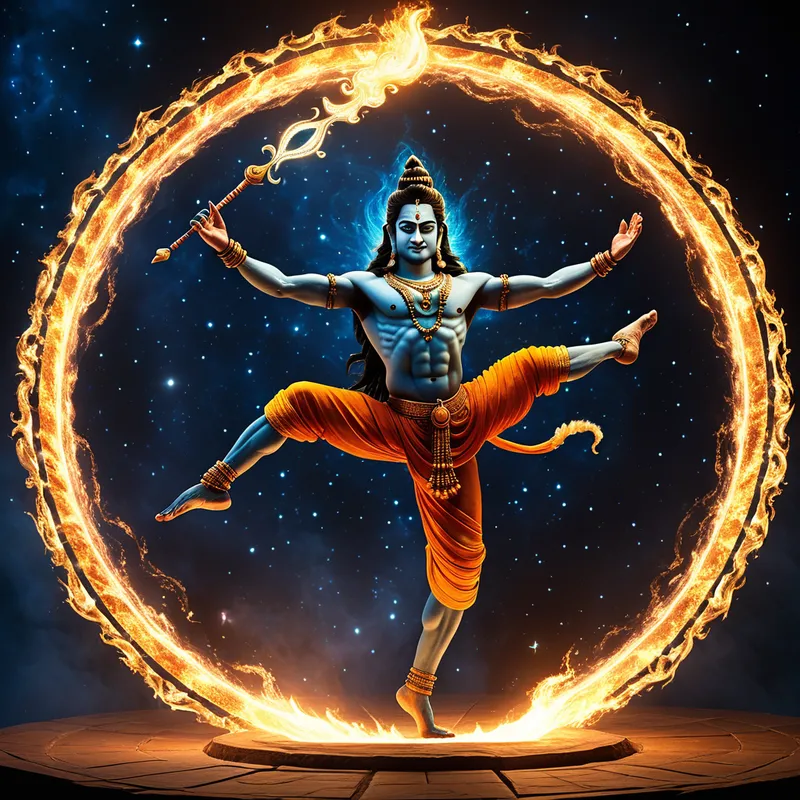
Shiva as Nataraja Myth Meaning & Symbolism
The story of Shiva's cosmic dance, which contains and transcends the universe's endless cycles of creation, preservation, and dissolution.
The Tale of Shiva as Nataraja
Listen. In the deep, primordial forests of Taragam, the air was thick with the scent of burnt offerings and ambition. Here, ten thousand sages gathered, their bodies gaunt from austerity, their minds sharpened to a single, terrible point: to wrest control of the cosmos through the sheer force of their ritual fire. They believed their tapas, their scorching penance, had made them masters of reality itself. From the heart of their sacrificial pit, they conjured a mighty tiger, its stripes like bars of shadow, and sent it roaring to tear apart the intruder who dared stroll calmly into their grove.
The intruder was a wandering mendicant, ash-smeared and serene, with a crescent moon tucked in his matted locks and a third eye asleep upon his brow. This was Shiva. With a mere touch, he flayed the tiger, donning its skin as a simple loincloth. The sages hissed in fury. Their fire churned again, and from its heart slithered a monstrous serpent, venom dripping from its fangs. The mendicant caught it as one might catch a falling vine and coiled it, cool and docile, around his neck as an ornament.
Now, madness gripped the assembly. Their ultimate weapon was summoned: Apasmara Purusha, the demon of ignorance, a being of dense, stupefying inertia. He stomped forth, and where he stepped, the very memory of light seemed to fade. The sages cheered, believing this crushing dullness would smother the stranger’s luminous presence.
Then, the mendicant smiled. And he began to dance.
It started as a tremor in the earth, a hum in the marrow of the world. His right foot rose, his left pressed down upon the squirming back of Apasmara, pinning ignorance but not destroying it—for without a baseline of matter, of forgetfulness, there can be no play of consciousness. His hair, usually piled high, flew wide in a fan of matted locks, catching the Ganges river as it descended from the heavens. In one right hand, a small drum, the damaru, began to beat a rhythm that was the first heartbeat of every atom. In an upper left hand, a tongue of cleansing fire, Agni, flickered. His other hands formed gestures of fearlessness and blessing.
He was no longer just Shiva. He was Nataraja, the Lord of Dance. He danced within a great arch of flames—the prabhamandala—that was the entire cosmos in flux. His dance was not an attack, but a revelation. It was the simultaneous act of creation, preservation, and destruction, a cycle so swift it appeared as perfect, terrible stillness. The sages’ conjured beasts were but notes in this symphony; their arrogant fire, a single spark in his ring of cosmic conflagration. Their minds, hardened by dogma, shattered. Their hearts, filled with pride, emptied. They fell prostrate, not in defeat, but in awe-stricken understanding. The dance was everything. It was the answer to every question they had never thought to ask.

Cultural Origins & Context
The myth of Nataraja finds its most profound expression in the Tamil Bhakti traditions of South India, particularly around Chidambaram, which is revered as the sacred hall of consciousness where this dance eternally unfolds. While the core elements of Shiva as a divine dancer appear in earlier Sanskrit texts like the Upanishads, it was the sculptors of the Chola dynasty (9th-13th centuries CE) who gave the myth its immortal, bronze form. Passed down through temple lore, devotional hymns, and the silent teachings of iconography, the story served a crucial societal function: it was a metaphysical counterpoint to rigid ritualism. It reminded priest and peasant alike that the universe is not a static hierarchy to be controlled, but a dynamic, rhythmic process of which they were an intrinsic part. The dance was both a cosmic principle and a call to ecstatic, personal surrender.
Symbolic Architecture
The icon of Nataraja is a complete cosmological and psychological map. Every element is a dialectic, holding opposites in a dynamic, graceful tension.
The dance is the visible shape of the universe’s heartbeat—a rhythm that simultaneously writes the score, plays the music, and listens to the song.
The damaru in his upper right hand beats out the primordial sound, AUM, from which all forms and names (nama-rupa) emerge. Its counterpart, the flame in his upper left hand, is the principle of dissolution, burning away forms so that new ones may arise. Together, they represent the unstoppable pulse of time: Shrishti (creation) and Pralaya (dissolution). His lower right hand makes the <abbr title=“A gesture meaning “fear not"">abhaya mudra, a gesture of protection and peace, symbolizing preservation (Sthiti). His lower left hand points to his raised foot, the path to liberation (Moksha). This foot, lifted from the earth, signifies transcendence, while the foot planted firmly on the dwarf Apasmara signifies groundedness in the world of illusion (Maya), which must be mastered, not fled. The circle of fire is the boundary of phenomenal reality, the wheel of samsara, within which the dance of life and death plays out. The serene, detached face of Shiva at the center shows the consciousness that witnesses this entire drama without being perturbed by it.
The Dreamer’s Resonance
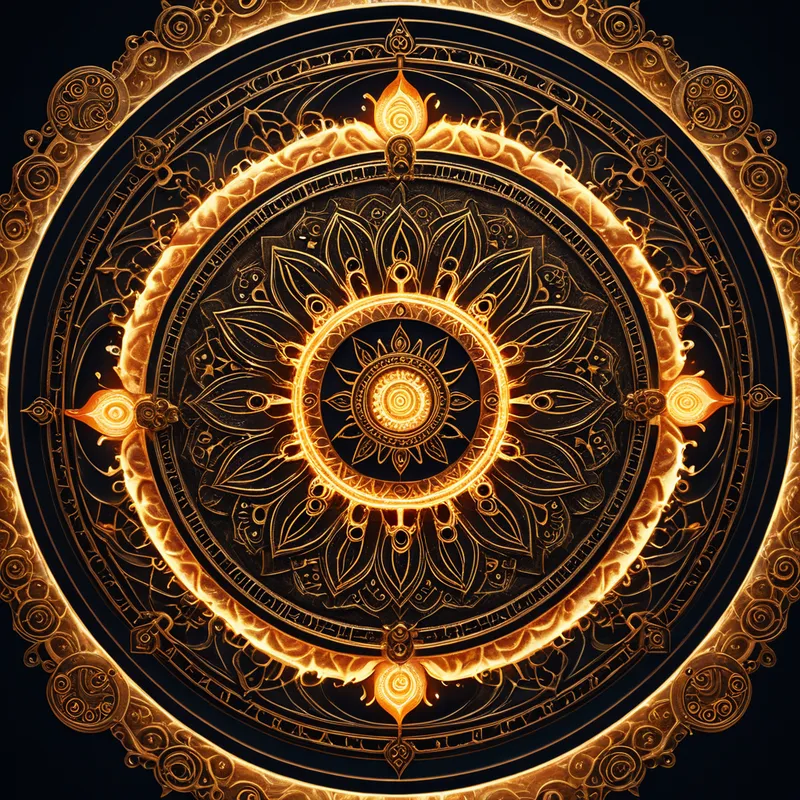
When this myth stirs in the modern unconscious, it often manifests in dreams of profound, sometimes chaotic, motion. One may dream of being in the center of a whirlwind, of their body moving in complex, involuntary patterns, or of being surrounded by a ring of light or fire while trying to maintain balance. Somatic sensations of vibration, rhythmic pulsing, or the feeling of being “danced” by a force greater than oneself are common.
Psychologically, this signals a process where the dreamer’s old structures of identity—their personal “sages” of rigid belief, ambition, or control—are being challenged by a more fundamental, archetypal rhythm. The ego feels besieged by forces it conjured itself (the tiger of anger, the serpent of primal fear, the dwarf of willful ignorance). The emergence of the Dancer archetype indicates that a synthesis is attempting to occur at a psychic level far deeper than the conscious mind can engineer. It is the Self organizing the personality, demanding that the dreamer stop trying to control the chaos and instead learn its sacred steps.
Alchemical Translation
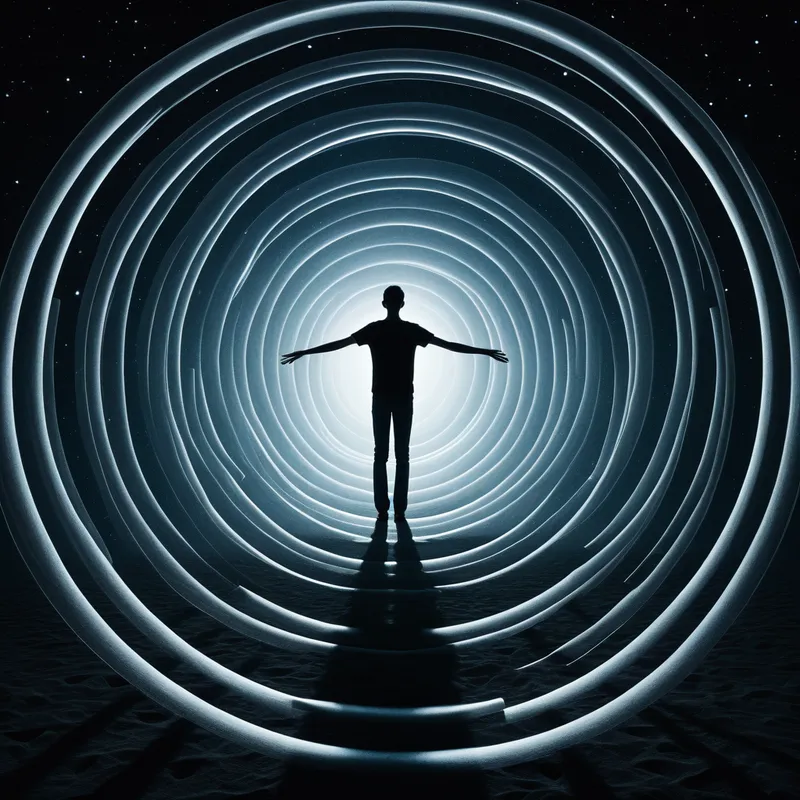
The individuation process modeled by Nataraja is not one of linear progression, but of learning to hold the central point within the eternal cycle. The “sages” within us—our conditioned thoughts, our spiritual ambitions, our desire for absolute control—must be humbled, not by defeat, but by a revelation of a greater pattern.
Individuation is the moment you realize you are not the dancer, but the dance itself—and in that realization, you become both.
The alchemical translation involves several stages. First, confrontation: the ego’s projections (the beasts, the demon) must be faced and integrated (worn as an ornament, pinned underfoot). Second, surrender to the rhythm: one must allow the personal will to be orchestrated by the deeper rhythm of the Self, symbolized by the beating damaru. This often feels like a loss of control but is actually an alignment with a more authentic order. Third, simultaneous engagement and detachment: one learns to participate fully in the world (the foot on Apasmara) while maintaining a connection to the transcendent (the lifted foot). The ring of fire is no longer a prison, but the necessary boundary that gives form to the sacred play.
The ultimate goal is to achieve the poise of Nataraja’s face: a serene awareness that witnesses creation and destruction, pleasure and pain, success and failure, as equally necessary movements in the magnificent, terrible, and beautiful dance of becoming. One becomes grounded in the world yet free from its compulsive hold, a conscious participant in the cosmic rhythm.
Associated Symbols
Explore related symbols from the CaleaDream lexicon: