Shevirat ha Kelim Myth Meaning & Symbolism
A primordial myth of divine light, flawed vessels, and cosmic shattering that births the necessity for sacred gathering and repair of the world.
The Tale of Shevirat ha Kelim
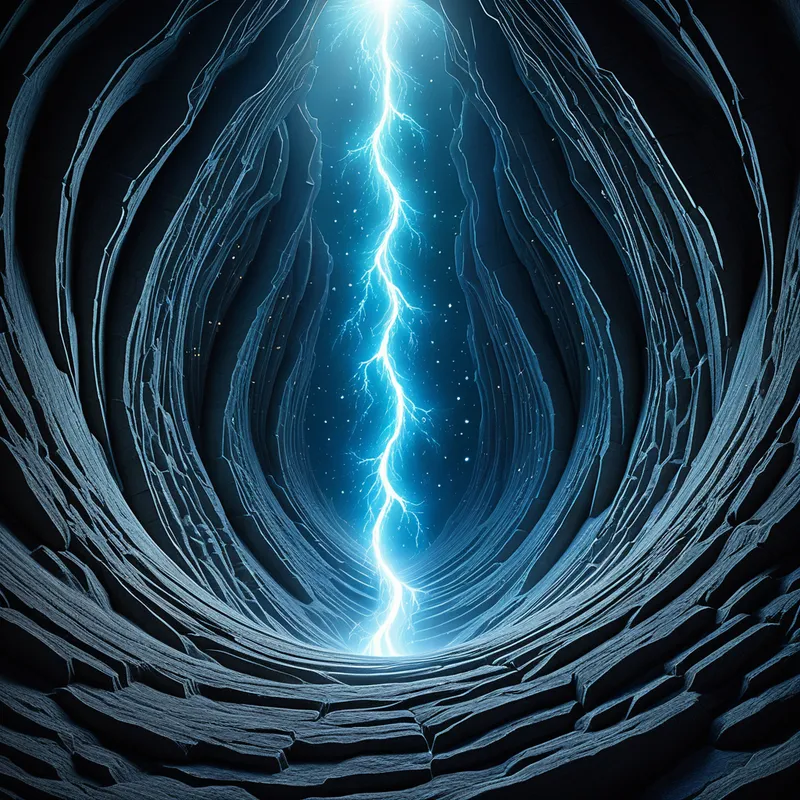
Before time was counted, before space was measured, there was only the Infinite, the Ein Sof. It was All, and All was It, a boundless sea of potential without distinction, without vessel. And from this profound stillness, a desire arose—a desire to be known, to be revealed. So the Infinite contracted, drawing in its own light to make a space, a womb of absence called the Tzimtzum.
Into this hollow, this sacred void, the Infinite sent forth a single ray of its essence—the Light of the Or Ein Sof. But a light so pure, so absolute, cannot simply be; it must be received. And so, from this ray, ten vessels were formed. They were not of clay or gold, but of divine thought itself, crystalline and majestic: the Sefirot. They were arrayed in a great tree of being, from the crown of thought to the kingdom of manifestation, each a perfect chalice meant to hold a measured portion of the primordial light.
The light began to descend. It flowed into the highest vessel, Keter, and it held, brimming with radiance. It poured into the second, Chokhmah, and the third, Binah. But these vessels of the upper world were strong, born of pure mercy. The light cascaded further down the tree, into the vessels of the lower world—those of judgment and form. And here, a tragedy of divine proportion unfolded.
The light was too fierce, too potent. The lower vessels, rigid in their structure, could not contain the infinite flow. They had not yet learned the softness of reception. A tension filled the cosmos, a silent scream of straining crystal. And then—it happened.
With a soundless cataclysm that echoes still in the foundation of every stone, the vessels shattered. Not one or two, but six of them, from Chesed down to Yesod, fractured and exploded. Shards of divine vessel, sharp and dark, were flung across the emptiness. And the holy light? It too was scattered. Most of it recoiled back to its source, but countless sparks—holy fragments of the original radiance—fell with the shards. They became trapped within them, buried in the darkness of broken form.
Where there was to be a world of perfect harmony, there was now a cosmos of fragments. The sparks of divinity wept, imprisoned in shells of their own intended home. The shards, once vessels for holiness, became the <abbr title=“The “shells” or husks of impurity that conceal the divine sparks”>Kelipot, the shells of a broken world. And in that moment of cosmic rupture, the work of all ages was set: not the work of pristine creation, but the sacred, aching labor of gathering.
Cultural Origins & Context
The myth of Shevirat ha Kelim is not a folktale but a foundational metaphysical drama within the esoteric heart of Judaism: Kabbalah. It emerged most prominently in the 16th century in the Galilean town of Safed, articulated with profound systematic force by the mystic Isaac Luria (the Ari). His teachings, recorded by his disciples, form Lurianic Kabbalah.
This was not a story for public squares but for intimate circles of learned seekers, passed down orally and through dense, symbolic texts. It arose in a context of profound historical trauma—the expulsion of Jews from Spain in 1492. The myth provided a cosmic framework for understanding exile, suffering, and fragmentation. It answered the agonizing question of “Why is the world so broken?” with a narrative that placed humanity not as victims of a flawed creation, but as active, essential participants in its repair (Tikkun Olam). Its societal function was therapeutic and empowering, transforming collective grief into a sacred mission.
Symbolic Architecture
The myth is a masterful map of a primordial psychological [event](/symbols/event “Symbol: An event within dreams often signifies significant life changes, transitions, or emotional milestones.”/). The Ein Sof represents the unconscious [pleroma](/symbols/pleroma “Symbol: In Gnostic cosmology, the Pleroma is the divine fullness or totality of spiritual powers, representing the realm of perfection beyond the material world.”/), the undifferentiated totality of the psyche. The Tzimtzum is the necessary act of [consciousness](/symbols/consciousness “Symbol: Consciousness represents the state of awareness and perception, encompassing thoughts, feelings, and experiences.”/)—withdrawing, creating a [space](/symbols/space “Symbol: Dreaming of ‘Space’ often symbolizes the vastness of potential, personal freedom, or feelings of isolation and exploration in one’s life.”/) where the ego can form and experience itself. The light is the libido, the psychic [energy](/symbols/energy “Symbol: Energy symbolizes vitality, motivation, and the drive that fuels actions and ambitions.”/) and potential seeking [expression](/symbols/expression “Symbol: Expression represents the act of conveying thoughts, emotions, and individuality, emphasizing personal communication and creativity.”/).
The vessels are the structures of the personality—our beliefs, complexes, and ego-identities—formed to contain and channel this energy.
The shattering signifies the inevitable failure of our initial, rigid structures to hold the full force of the Self. It is the traumatic [breakdown](/symbols/breakdown “Symbol: A sudden failure or collapse of a system, structure, or mental state, often signaling a need for fundamental change or repair.”/) of [childhood](/symbols/childhood “Symbol: Dreaming of childhood often symbolizes nostalgia, innocence, and unresolved issues from one’s formative years.”/) paradigms, the collapse of ideologies, the midlife [crisis](/symbols/crisis “Symbol: A crisis symbolizes turmoil, urgent challenges, and the need for immediate resolution or change.”/), the psychic fracture that occurs when [life](/symbols/life “Symbol: The symbol of ‘Life’ represents a journey of growth, interconnectedness, and existential meaning, encompassing both the joys and challenges that define human experience.”/) demands more of us than our current “[vessel](/symbols/vessel “Symbol: A container or structure that holds, transports, or protects something essential, representing the self, emotions, or life journey.”/)” can bear. The trapped sparks are the fragments of our wholeness, our innate potential and divinity, now lost to us, buried in the “shells” of our neuroses, wounds, and [shadow](/symbols/shadow “Symbol: The ‘shadow’ embodies the unconscious, repressed aspects of the self and often represents fears or hidden emotions.”/) [material](/symbols/material “Symbol: Material signifies the tangible aspects of life, often representing physical resources, desires, and the physical world’s influence on our existence.”/).
The broken world, <abbr title=“The “shells” or husks of impurity that conceal the divine sparks”>Olam ha-Tohu (World of Chaos), is the psyche in a state of dissociation, where parts of the self are alienated and hidden.
The Dreamer’s Resonance
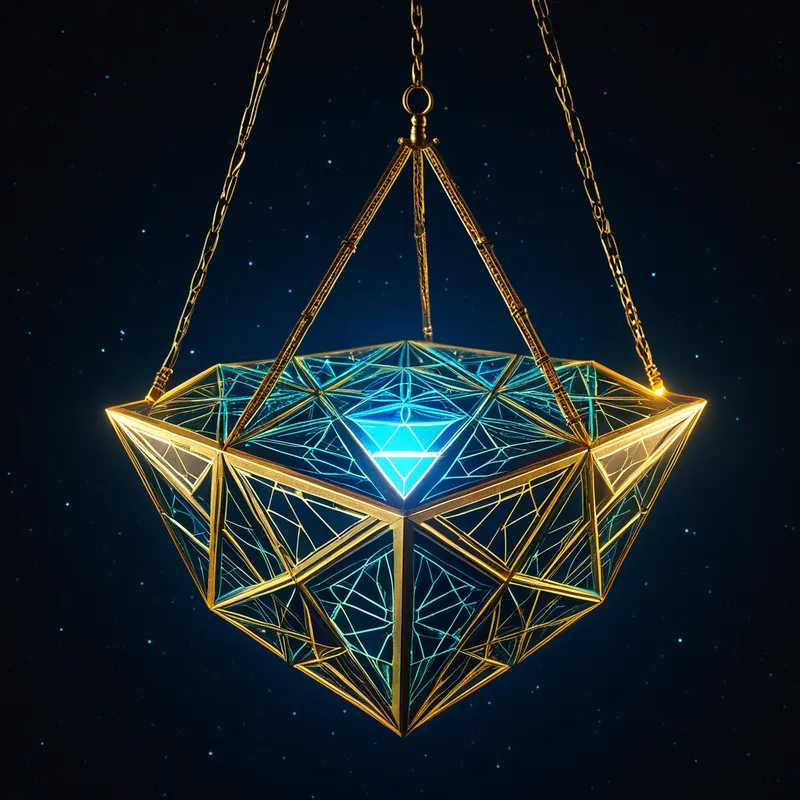
When this myth stirs in the modern unconscious, it manifests in dreams of profound fragmentation and urgent gathering. One may dream of a beautiful, precious object—a crystal, a vase, a mirror—shattering irreparably. The dreamer might be desperately trying to pick up the pieces, but they slip through their fingers, or are scattered across a vast landscape. Another common motif is the dream of a house with hidden, ruined rooms, or of a self that is literally coming apart at the seams.
Somatically, this can feel like a period of disintegration—anxiety, a sense of being “scattered,” physical clumsiness, or a feeling of structural weakness. Psychologically, it is the process preceding a breakthrough. The old container of identity is breaking under the pressure of new consciousness. The dream is not a prophecy of doom, but an accurate reflection of the psyche’s necessary demolition phase. The anguish in the dream is the anguish of the sparks, calling to be remembered and retrieved.
Alchemical Translation
The Lurianic myth provides a complete model for the alchemical process of individuation. It begins with Contraction (Tzimtzum): the conscious withdrawal from identification with the persona or collective norms, creating the vas or vessel of the therapeutic or introspective space.
The Shattering (Shevirah) is the nigredo, the dark night of the soul. It is the painful but necessary deconstruction of the old personality. This is not a failure, but the catalyst. The ego-vessel must break for the greater Self to be known.
The work that follows is the albedo and citrinitas: the careful sorting through the fragments. This is shadow work—identifying the <abbr title=“The “shells” or husks of impurity that conceal the divine sparks”>Kelipot (our projections, defenses, traumas) and discerning the holy spark hidden within each.
Finally, Gathering and Repair (Tikkun) is the rubedo, the culmination. It is the conscious, lifelong practice of integrating these reclaimed parts. We do not return to the original, naive vessel. We create a new vessel—the integrated personality—from the gathered shards and sparks, a vessel that is stronger for having been broken and consciously remade. The repaired world, Olam ha-Tikkun, is the psyche that has made conscious its own fragmentation and undertaken the sacred duty of its own wholeness.
Associated Symbols
Explore related symbols from the CaleaDream lexicon:
- Vessel — The structure of the self or a belief system, designed to contain divine light or psychic energy, whose fragility is central to the myth.
- Light — The primordial divine essence or pure psychic energy that is too potent for initial structures, leading to both illumination and shattering.
- Shattering — The catastrophic yet necessary event of breakdown, where rigid forms fracture to release or scatter their contents, initiating the work of repair.
- Spark — The fragmented piece of wholeness or divinity trapped within the broken shards of experience, representing lost potential awaiting redemption.
- Gathering — The conscious, active process of collecting the scattered fragments of self and experience, the essential labor that follows rupture.
- Repair — The sacred act of mending the world and the self not by erasing the break, but by integrating the fragments into a new, more resilient whole.
- Shadow — The Kelipot or shells that conceal the sparks; the disowned, dark, or fragmented aspects of the psyche that must be confronted for retrieval.
- Chaos — The state of the world (Tohu) after the shattering, a necessary fertile void where old orders are dissolved and new patterns must be formed.
- Container — The ultimate goal: a reformed, more flexible vessel of self capable of holding complexity, born from the wisdom of its own prior breaking.
- Fragmentation — The fundamental state of existence post-shattering, depicting a psyche and a world where wholeness is a memory and a task, not a given.
- Seed — The trapped spark of light within the shell, containing the entire potential for future growth and the blueprint for the repaired world.
- Circle — The symbol of the original, seamless divine unity, whose rupture creates the linear journey of exile and the spiral path of return and repair.