Shamanic Rituals Myth Meaning & Symbolism
A shaman's spirit is torn apart and remade by ancestral powers to journey between worlds, retrieving lost souls and mending the fractured order of reality.
The Tale of Shamanic Rituals
Listen. The world is not one, but three. Above, the vault of stars where the great spirits dwell. Below, the dark, fertile underworld of ancestors and shaping powers. And here, in the fragile middle, we walk, bound by flesh and breath. But the middle world is sick. A soul has fled, stolen by a trickster wind. A child burns with a fever no herb can cool. The community holds its breath, its harmony cracked like thin ice. The call goes out into the deepening twilight. It is time.
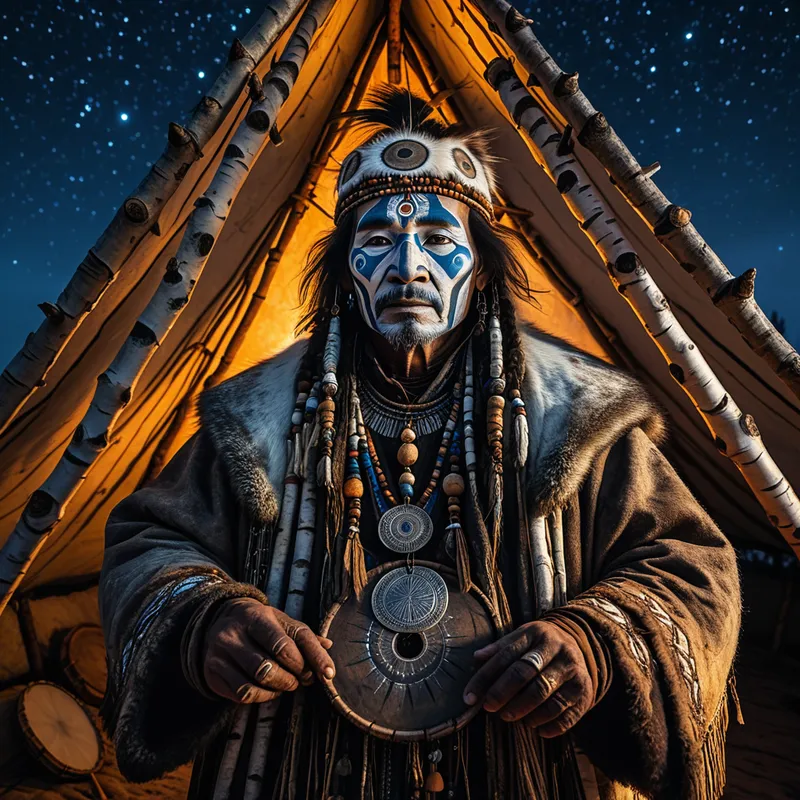
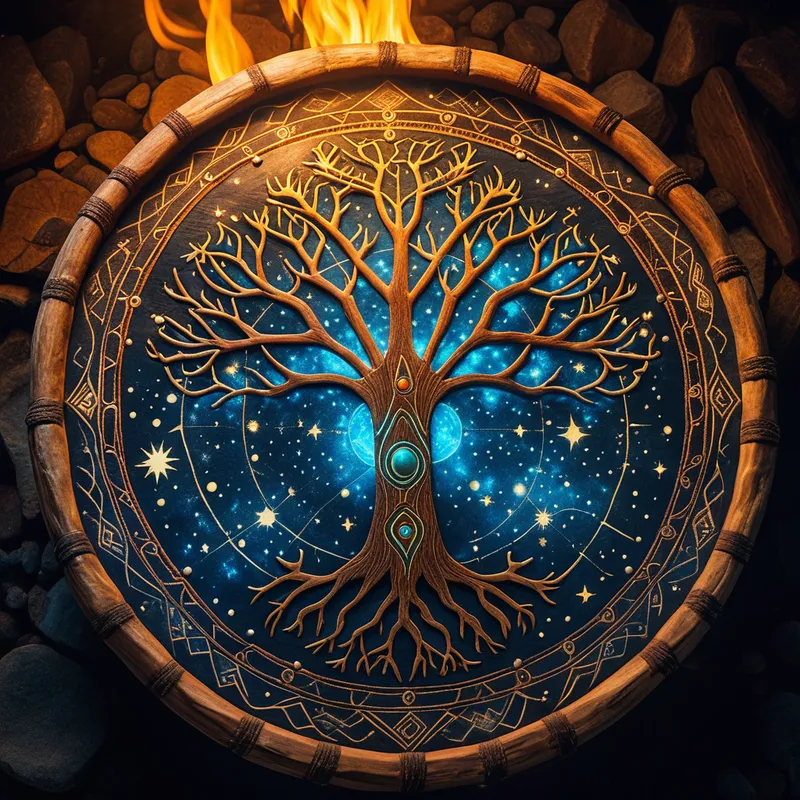
In the chum, the air grows thick with the scent of smoldering juniper and damp earth. The shaman sits, a figure heavy with the weight of iron and responsibility. His regalia is a universe in miniature: iron birds for flight, serpent pendants to navigate the roots of the world, mirrors to reflect and trap malignant glances. He takes up the drum. Its skin is taught, painted with the paths of sun and moon, the great World Tree at its heart.
The first beat is a heartbeat, slow and deep, echoing in the chests of all present. The second is a hoofbeat on frozen tundra. The third is the sound of a door opening in the air itself. The shaman begins to sing, a voice that is both his and not his—a guttural chant pulled from the throat of the earth, a whistling melody stolen from the mountain wind. His eyes lose focus, seeing not the fire, but the path.
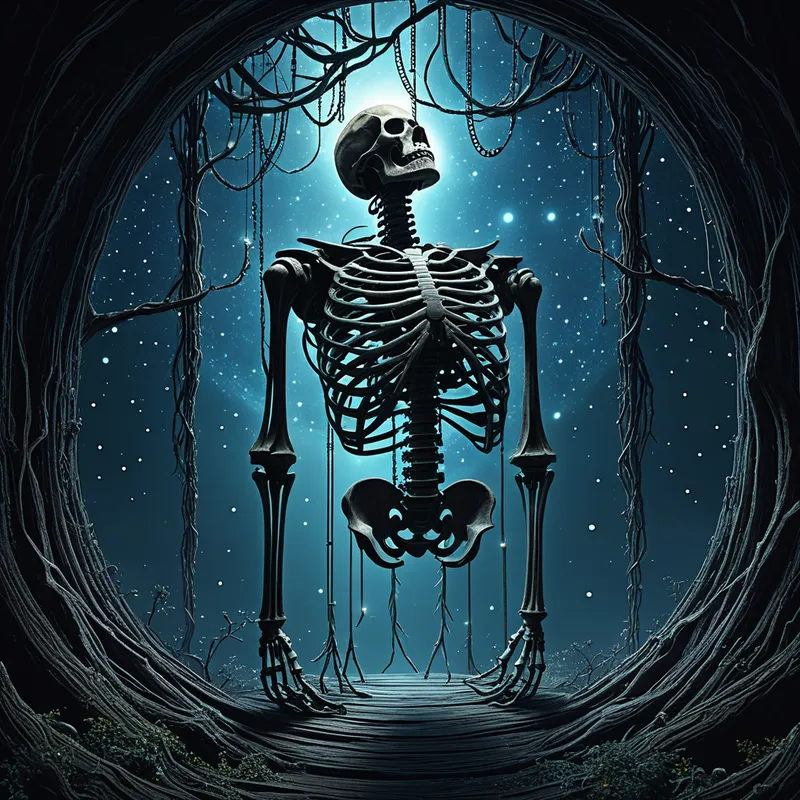
Then comes the terror. His body convulses. To the onlookers, he is in agony. But he is elsewhere. In the spirit world, the helping powers, the spirit-helpers, have come. They are not gentle. A great bear seizes him, tearing limb from limb. An eagle plucks out his eyes. His bones are scattered across a spectral plain. This is not murder, but unmaking. The old man, bound by ordinary sight and flesh, must die.
From the chaos of his scattered parts, a new body is assembled. His bones are fused with quartz and iron. His new eyes see the heat of a soul and the cold of a curse. He is remade, a being of both worlds. Mounted on the drum's rhythm like a rider on a steed, he ascends. He climbs the branches of the World Tree, past the moon, to plead with the celestial powers for clemency. Or he descends, sliding down the roots into the murky underworld, bargaining with the ancestor lords for the return of the stolen soul.
The journey is perilous. He must pass monstrous guardians, cross bridges of a single hair, answer riddles posed by river spirits. His spirit-helpers fight for him, in the form of elk, wolf, or raven. Finally, he finds it: the lost soul, a flickering ember trapped in a jar of ice, or clutched in the claws of a jealous spirit. There is a struggle, a trade, a song of such profound homesickness that the spirit relents.
The drumbeat changes, becoming urgent, a calling home. The shaman's spirit races back along the silver thread that still connects him to his gasping body in the chum. With a final, gasping shudder, he returns. He is exhausted, drenched in sweat, often wounded in his physical form mirroring the spirit battle. But in his hand—metaphorical but utterly real—he holds the recovered essence. He breathes it back into the patient, or pours it like light into the community's midst. The crack in the world is sealed. Balance is restored. The shaman collapses, empty, a vessel drained. The people are whole again. For now.
Cultural Origins & Context
This is not a single myth, but the living, breathing narrative framework of Siberian shamanism, a practice spanning countless ethnic groups—from the Evenki and Nenets to the Buryat and Yakut. It was never a story told merely for entertainment; it was the underlying script of a vital societal function. The shaman was the community's psychologist, doctor, and mediator with the unpredictable forces of nature.
The knowledge was passed not through holy books, but through brutal, involuntary initiation—often a prolonged, life-threatening "shamanic illness" where the future shaman experienced the myth of dismemberment and rebirth in their own body and psyche. Elders and existing shamans would then guide the initiate in interpreting these visions and mastering the ritual techniques. The performance of the ritual was the telling of the myth. Every drumbeat, every chant, every convulsion was a lived re-enactment of the cosmic journey, making the myth present and effective in real time to heal, divine, or guide.
Symbolic Architecture
At its core, the shamanic ritual myth is a master symbol of radical transformation through dissolution. The shaman is the archetypal wounded healer.
The ego must be dismantled so that the Self, connected to the vastness of the unconscious and the ancestral past, can be assembled in its place.
The drum is the vehicle and the map. Its steady beat represents the heart of the world, the constant rhythm beneath chaos, and the focused will that guides the journey. The spirit-helpers symbolize the autonomous, instinctual forces of the psyche—the bear's raw strength, the eagle's far-seeing perspective, the wolf's loyal cunning—which must be integrated, not conquered. The World Tree is the spine of the cosmos and the psyche itself, the connecting pathway between conscious reality (Middle World), the lofty ideals and spiritual aspirations (Upper World), and the repressed memories, instincts, and ancestral patterns (Lower World).
The Dreamer's Resonance
When a modern dreamer encounters this pattern, they are often in a profound state of psychic reorganization. Dreams of violent dismemberment or the body being taken apart and reassembled by unknown forces point to an ego-structure that is no longer sustainable. It is being broken down by the unconscious so a more authentic self can emerge.
Dreams of finding a hidden, neglected, or trapped child or animal in a basement, cave, or cage mirror the shaman's quest for the lost soul. This represents a vital part of the dreamer's own vitality, creativity, or instinct that has been split off, often due to trauma or societal pressure. The somatic experience is crucial: waking with a gasp, a feeling of having "returned from a long journey," or specific aches in the body where the "spirit battle" took place. These are signs of active, deep-level healing work occurring in the liminal space of sleep.
Alchemical Translation
The shamanic ritual is a perfect allegory for Carl Jung's process of individuation—the journey toward psychic wholeness. The modern individual is the community-in-one, and the "sickness" is a state of neurosis, depression, or meaninglessness—a soul-loss.
The first, and most terrifying, step is the nigredo: the darkening, the dismemberment of the conscious personality. Our cherished identities, defenses, and self-narratives must be torn apart by the "spirit-helpers" of our own unconscious.
The journey to the Upper World is the struggle to connect with transpersonal meaning, logos, and spiritual insight. The descent to the Lower World is the essential, often avoided, confrontation with the personal and collective shadow, the repressed trauma, and the ancestral wounds that shape us. Retrieving the "lost soul" is the act of reclaiming a disowned complex—perhaps one's capacity for joy, anger, or vulnerability—and reintegrating it into the personality.
The final return is not a return to the old self. The shaman is forever changed, carrying the knowledge of both worlds. So too, the individual who undergoes this psychic alchemy. They return to daily life not cured of their humanity, but empowered by it, able to hold the tension between spirit and matter, conscious and unconscious, and in doing so, bring a note of healing and balance to their own world. The drumbeat becomes the steady, resilient pulse of a life lived in authentic connection with all its layers.
Associated Symbols
Explore related symbols from the CaleaDream lexicon: