
Scapegoat Myth Meaning & Symbolism
An ancient ritual where communal sin is transferred to a goat, which is then exiled, carrying the burden into the wilderness.
The Tale of the Scapegoat
The air on the Day of Atonement, Yom Kippur, was not like other air. It was thick, not with dust, but with the weight of a year’s unspoken transgressions—the sharp word, the hidden envy, the broken trust. It hung over Jerusalem like a silent prayer. The people, clad in simple garments, their faces pale with fasting, gathered not in celebration, but in a profound, collective hush. All eyes were on the High Priest, a figure shimmering in sacred white linen, moving with the grave slowness of one who treads between worlds.
Before him stood two goats, identical in their unblemished whiteness, chosen by sacred lot. One was for YHWH. The other, its fate written in the casting of stones, was for Azazel. The priest laid his weathered hands upon the head of the first goat, and in a voice that carried the gravity of the nation, confessed the sins of the people—the iniquities, the rebellions, all the moral filth of the community. The words did not vanish into the ether; they were felt to transfer, to seep from the collective soul into the living creature. This goat was slain, its blood brought behind the veil into the Holy of Holies, a stark offering to cleanse the sacred space itself.
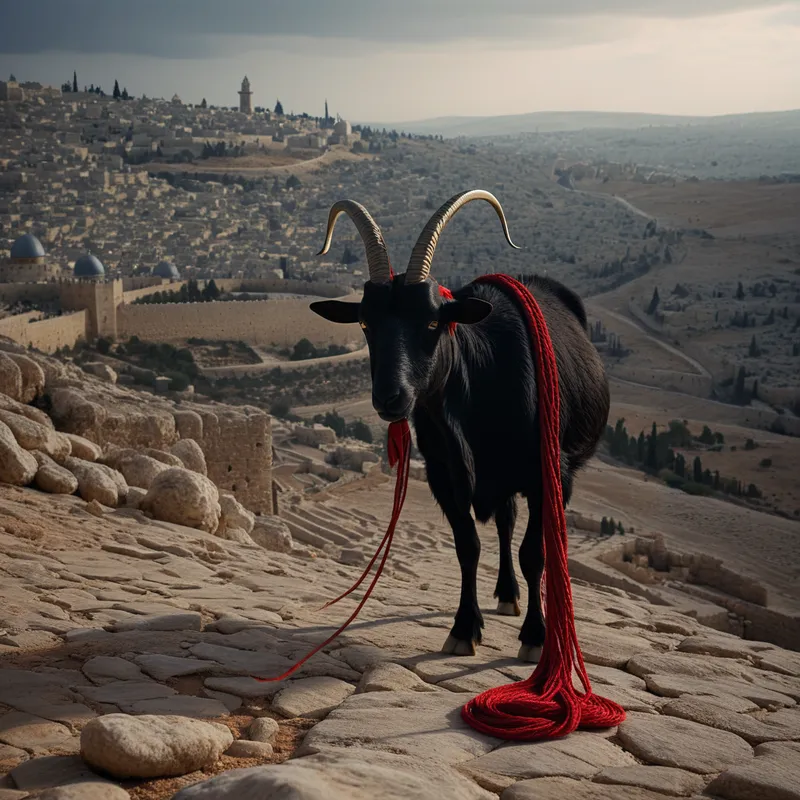
Then, the priest turned to the second goat. Again, he placed his hands upon its head, and again, he poured forth the confession. “And the goat shall bear upon him all their iniquities unto a land not inhabited.” The burden was now tangible. You could almost see it, a miasma of shadow settling on the animal’s pure white fleece. A man chosen for the task, his own heart likely heavy with his private faults, took the goat’s lead. He did not walk with it; he led it away, out of the camp, out of the city gates, into the ascending desolation of the wilderness.
The journey was the ritual. Through dry riverbeds and over barren hills, the goat stumbled forward, bearing what was not its own. The escort, his duty one of exile, not companionship, finally reached a place of profound isolation—a precipice overlooking a shattered landscape. Here, tradition says, he would push the goat over the edge, or simply set it loose to wander and perish. The act was not one of cruelty, but of absolute severance. As the goat disappeared into the vast, indifferent emptiness, so too did the accumulated sin of the people. They were left, breath held, in a state of terrifying, pristine cleanliness. The scapegoat was gone, and with it, the weight of the year.
Cultural Origins & Context
This ritual is meticulously detailed in the Book of Leviticus (Chapter 16), forming the heart of the Yom Kippur observances. It was not a folktale but a central, state-sanctioned liturgical act performed by the Aaronid priesthood. Its societal function was paramount: to manage the existential anxiety of moral impurity (tum’ah) that was believed to literally infect the community and, crucially, the Tabernacle or Temple, God’s dwelling place. Without this purification, the divine presence would withdraw, leaving the people vulnerable.
The ritual ingeniously combined two mechanisms: a blood sacrifice to cleanse the sacred altar (the goat for YHWH), and a removal sacrifice to eliminate the impurity entirely from the social body (the goat for Azazel). The figure of Azazel is enigmatic—likely a pre-Israelite desert demon or a personification of the chaotic wilderness itself, the antithesis of the ordered camp. Sending the sin to Azazel was a way of returning chaos to its proper domain, restoring cosmic and social order.
Symbolic Architecture
At its core, the Scapegoat is the ultimate symbol of projection and containment. The community, unable to integrate its own shadow—its collective failures and aggressions—finds a vessel to carry it away.
The scapegoat is the embodied sigh of relief for a community that cannot yet bear to look its own shadow in the eye.
Psychologically, the goat represents the carrier of the disowned self. All that is deemed unacceptable, sinful, or impure within the group is psychically loaded onto an innocent other. The goat’s innocence is essential; it is a blank screen. Its exile is not a punishment for its crimes, but a magical solution for the group’s inner conflict. The wilderness represents the unconscious, the realm of the repressed, where what is banished from conscious life is sent to wander. The ritual creates a clean slate, but one achieved through expulsion, not integration.
The dual-goat mechanism is profoundly wise. One goat dies in the center (the altar), dealing with the guilt through sacred payment. The other is sent to the periphery (the desert), dealing with the shame through banishment. It acknowledges that sin has both an internal, relational cost and an external, exilic consequence.
The Dreamer’s Resonance
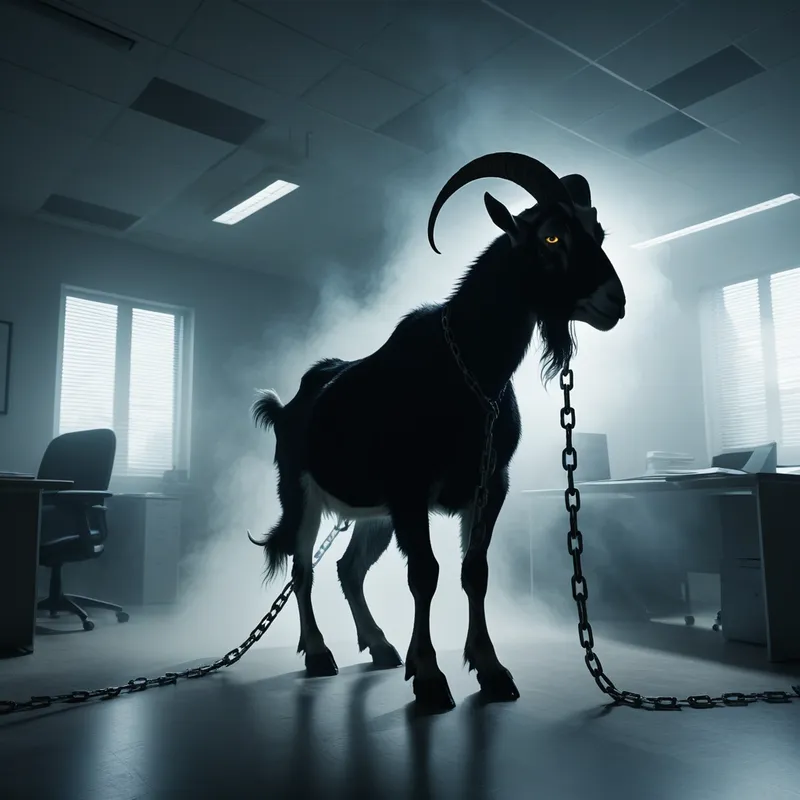
When this myth stirs in modern dreams, it rarely appears as an ancient ritual. Instead, one might dream of being falsely accused at work, carrying a family secret that isn’t theirs, or feeling a heavy, inexplicable burden that makes them a social pariah. The dreamer is the scapegoat. Somatic sensations are key: a crushing weight on the shoulders, difficulty breathing under pressure, or legs that refuse to move, mirroring the goat being led unwillingly.
This dream pattern signals a psychological process where the individual is internalizing a projected shadow. They may be in a family system, workplace, or relationship where they have unconsciously agreed to carry the disowned anger, incompetence, or fragility of others. The dream is a cry from the psyche against this wrongful burdening. It marks the beginning of a crucial question: “Is this weight truly mine to bear?” The feeling of being exiled in the dream—left out, abandoned, sent away—reflects the real-world alienation that comes with this archetypal role.
Alchemical Translation
For the modern individual, the path of individuation requires not the expulsion of the scapegoat, but its reclamation. The alchemical work is to turn the ritual on its head.
The true atonement (at-one-ment) begins not when the goat is sent away, but when we have the courage to call it back from the wilderness and ask, “What part of you belongs to me?”
The first step is recognition: identifying where we play the scapegoat for others, or where we scapegoat parts of ourselves—our anger, our vulnerability, our creativity—casting them into the inner desert. The second is retrieval: a perilous journey into our own psychic wilderness to find these exiled fragments. This is shadow work. We must confront our own Azazel, the chaotic, demonized aspects of our nature we have been taught to fear.
The final, most sacred transmutation is integration. The sin borne by the goat is not eliminated; it is transformed. Collective anger, when owned, becomes healthy boundaries. Repressed desire becomes life force. The “impurity” becomes raw material for consciousness. We no longer need a ritual of exile because we have developed the capacity to hold our own complexity. The goat is not pushed over the cliff; it is brought home, and its white fleece, once a screen for projection, is seen for what it always was: a part of our own wholeness, waiting in the desert to be reclaimed.
Associated Symbols
Explore related symbols from the CaleaDream lexicon: